For decades, the standard corporate response to systemic discrimination, workplace harassment, and calls for greater diversity has been the implementation of mandatory unconscious bias training. From the global reckoning following the #MeToo movement in 2017 to the urgent calls for racial justice spurred by the death of George Floyd in 2020, organizations have consistently turned to seminar-based interventions as a primary remedy. Despite the expenditure of billions of dollars annually on these programs, empirical evidence increasingly suggests that such training—when used as a standalone solution—is not only ineffective at driving long-term behavioral change but may, in certain contexts, be counterproductive.
The Rise of the Bias Training Industrial Complex
The emergence of unconscious bias training as a corporate staple can be traced back to the early 2000s, gaining significant momentum as social media amplified public scrutiny of workplace culture. Companies, facing pressure from stakeholders, employees, and the public, sought scalable, quantifiable actions. Bias training offered a convenient, "off-the-shelf" solution that could be quickly deployed across global workforces.
Data from the Harvard Business Review and various longitudinal studies indicate that the diversity, equity, and inclusion (DEI) training industry has ballooned into a multi-billion-dollar sector. However, the prevalence of these programs has not historically correlated with increased representation of marginalized groups in leadership. Instead, the reliance on these sessions often functions as a "defensive shield"—a way for organizations to demonstrate commitment to equity without undertaking the more arduous, structural changes required to shift workplace power dynamics.
The Cognitive Dissonance of Training
The primary failure of traditional bias training lies in a fundamental misunderstanding of human cognitive processing. Psychological research frequently cites the dual-process model of the mind: System 1, which is fast, intuitive, and largely unconscious; and System 2, which is slow, analytical, and conscious.
Most corporate training programs are designed to engage System 2. They provide information, data, and rational arguments about why diversity is good and why bias is bad. While this appeals to an employee’s conscious intent, it fails to account for the fact that the vast majority of cognitive functioning—and consequently, biased decision-making—occurs in the automatic, rapid-fire environment of System 1. When an employee is under pressure, multitasking, or experiencing mental fatigue, the conscious "lessons" learned in a seminar are often the first to be discarded in favor of established cognitive shortcuts.
Research Findings and Counterproductive Outcomes
Recent academic studies have begun to highlight the unintended consequences of awareness-focused training. A 2020 study published in the Journal of Personality and Social Psychology suggests that simply exposing individuals to the existence of systemic inequality does not necessarily lead to a desire for reform among those in positions of privilege. In some instances, such awareness reinforces the belief that the current system is already fair, as individuals rationalize the status quo to maintain their own sense of moral equilibrium.
Furthermore, the phenomenon known as "moral licensing" poses a significant risk to organizational culture. When an employee completes a diversity seminar, they may subconsciously feel they have "checked the box" on being a fair and equitable person. This internal validation can lead to moral licensing, where an individual feels entitled to act in ways that are, in fact, biased or exclusionary, because they have "earned" their non-prejudiced credentials through the training.
A Chronology of Corporate Response
The trajectory of corporate DEI efforts shows a repeating pattern:
- 2017-2018: The #MeToo movement forces a global conversation on gender-based harassment. Organizations respond by rolling out widespread "respect in the workplace" and unconscious bias modules.
- 2020: The murder of George Floyd and the subsequent #BlackLivesMatter protests create a surge in corporate statements and pledges. Training programs are updated to focus on racial equity, yet critics note that few companies pair these with transparent hiring or promotion data.
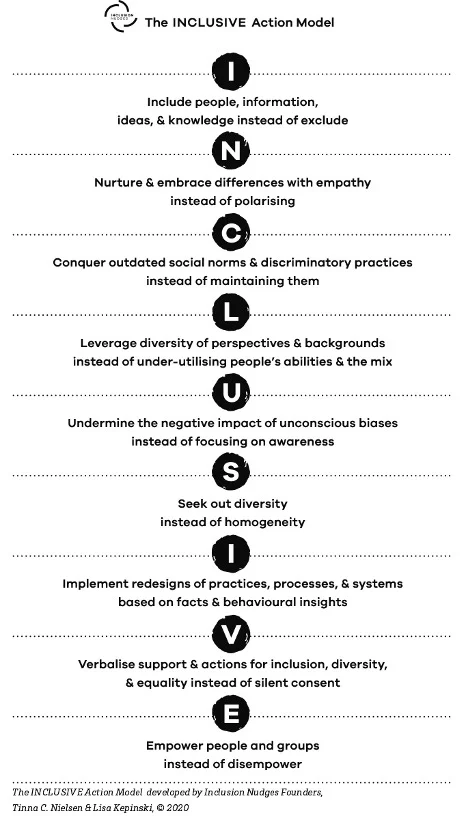
- 2021-Present: A growing body of meta-analysis begins to challenge the efficacy of these programs. HR departments and consultants begin to pivot toward "inclusion nudges"—structural, design-based interventions rather than purely educational ones.
The Shift Toward Structural Design: The Inclusion Nudge
As the limitations of traditional training become more apparent, organizational psychologists and management experts are advocating for "Inclusion Nudges." Unlike educational seminars, these are architectural changes to systems and processes designed to make the equitable choice the default choice, bypassing the need for conscious effort.
The most cited historical success story for this approach is the adoption of "blind auditions" in symphony orchestras. In the 1970s, as gender and ethnic homogeneity in orchestras faced scrutiny, institutions began requiring musicians to audition behind a screen. The results were immediate and transformative: the probability of women advancing to the final round increased by 50%. The intervention did not require the judges to "unlearn" their biases; it simply removed the visual cues—gender and appearance—that triggered their unconscious biases in the first place.
Modern applications of this concept include:
- Anonymized Recruitment: Removing names, universities, and photos from resumes during the initial screening process to focus strictly on skills and experience.
- Structured Interviewing: Utilizing standardized question sets and scoring rubrics for all candidates, which minimizes the "affinity bias" that often leads managers to hire people who "feel like a good fit."
- Default Opt-ins: Setting organizational policies, such as inclusive meeting times or diverse panel requirements, as the default state, requiring an explicit action to opt-out rather than an explicit action to include.
Implications for Future Organizational Strategy
The transition from awareness to design carries significant implications for the future of work. Organizations that continue to prioritize traditional training as their sole DEI strategy risk not only wasting resources but also fostering an environment of cynicism. When employees perceive training as a superficial exercise, it can diminish the perceived importance of real inclusion efforts.
Legal and HR experts suggest that the most effective organizations are those that treat bias like a design flaw in a product. Just as engineers build safety features into a vehicle to mitigate human error, managers must build safeguards into organizational processes to mitigate cognitive bias.
Moving Forward
The goal of creating a more equitable workplace is not to eliminate human thought, but to acknowledge the limits of our own biological hardware. If the last decade has taught us anything, it is that "awareness" is not a strategy. True progress requires moving beyond the lecture hall and into the architecture of the organization.
By auditing existing processes—from performance reviews and promotion tracks to procurement and vendor selection—leaders can identify where bias is most likely to creep in. Once these friction points are identified, they can be redesigned. This approach shifts the burden of inclusion from the individual’s conscious mind to the organizational system itself.
As the industry moves away from the "quick fix" of one-off seminars, the focus must remain on sustainability. Inclusion should not be a task on a to-do list, but the default state of the workplace. Only by embedding equity into the foundational design of corporate life can organizations hope to bridge the gap between their stated values and their lived reality. The evidence is clear: while awareness might be the first step, it is the design that ensures the destination is reached.