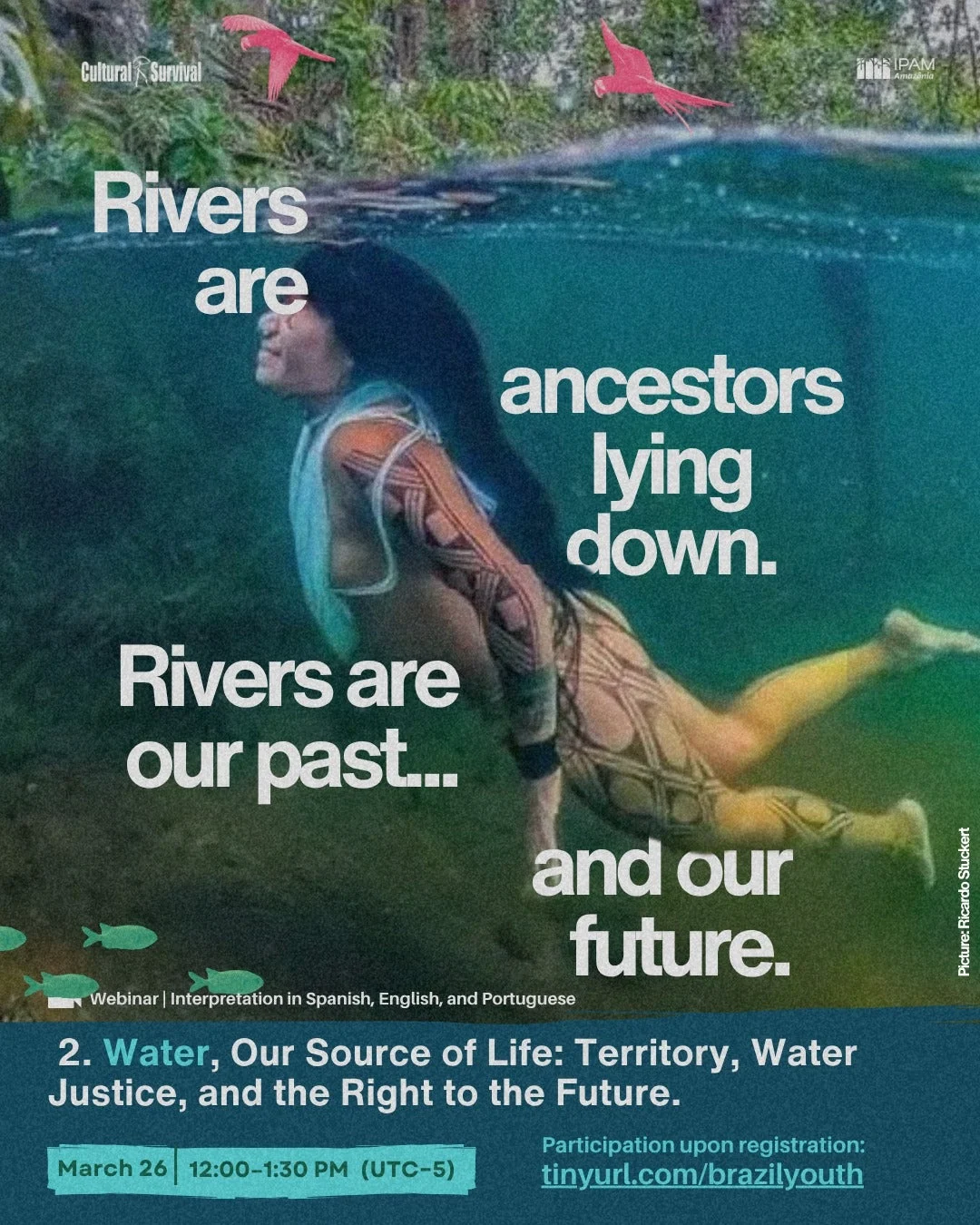
Cultural Survival has announced an upcoming webinar focused on the critical issue of water rights and their profound connection to Indigenous communities worldwide. The event, scheduled for Thursday, March 26, 2026, at 10:17 AM EST, aims to illuminate the challenges and advocate for the self-determination of Indigenous Peoples concerning their ancestral water resources. This initiative by Cultural Survival, an organization dedicated to advocating for Indigenous Peoples’ rights and supporting their self-determination, cultures, and political resilience since 1972, underscores the growing global recognition of water as a fundamental human right and a cornerstone of Indigenous identity and survival.
The Imperative of Water Rights for Indigenous Peoples
Water is not merely a resource for Indigenous communities; it is intrinsically linked to their spiritual traditions, cultural practices, health, livelihoods, and sovereignty. For centuries, Indigenous Peoples have managed and protected their water sources, often developing sophisticated and sustainable systems that harmonize with the natural environment. However, these relationships are increasingly threatened by external forces, including industrial development, resource extraction, climate change, and the expansion of state and corporate interests. The webinar is expected to delve into these multifaceted challenges, providing a platform for dialogue and the sharing of strategies for effective advocacy.
Cultural Survival’s mission is to empower Indigenous communities to protect their lands, cultures, and human rights. Their vision is of a future where Indigenous Peoples’ inherent rights and dynamic cultures are respected and honored, deeply interwoven with their lands, languages, spiritual traditions, and artistic expressions, all rooted in self-determination and self-governance. This webinar directly aligns with these core principles, focusing on an issue that is central to Indigenous well-being and the preservation of their unique heritage.
Background and Context: A Global Water Crisis
The global water crisis is a complex and escalating issue. According to the United Nations, by 2025, 1.8 billion people will be living in countries with absolute water scarcity, and two-thirds of the world’s population could live in water-stressed conditions. For Indigenous Peoples, this crisis is often exacerbated by historical injustices, marginalization, and a lack of recognition of their customary water rights. Many Indigenous territories are rich in natural resources, making them targets for exploitation, which frequently leads to the pollution or diversion of vital water sources.
The United Nations Declaration on the Rights of Indigenous Peoples (UNDRIP), adopted in 2007, recognizes Indigenous Peoples’ rights to their lands, territories, and resources, including water. Article 26 states that Indigenous Peoples have the right to own, use, develop, and control the lands, territories, and resources that they possess by reason of traditional ownership or other occupation or use, as well as those which they have otherwise acquired. This includes the right to the conservation and protection of the environment and the productive capacity of their lands, territories, and resources. However, the implementation of UNDRIP remains a significant challenge in many parts of the world, leaving Indigenous communities vulnerable.

Expected Themes and Discussions
While specific details of the webinar’s agenda are yet to be fully released, based on Cultural Survival’s past work and the urgency of the issue, several key themes are anticipated to be central to the discussions:
- Indigenous Water Governance Systems: Exploring traditional Indigenous methods of water management, their ecological wisdom, and their effectiveness in ensuring sustainable water use. This would include examining how these systems are being adapted to contemporary challenges.
- Impact of Development Projects: Analyzing how large-scale development projects, such as dams, mining operations, and agricultural expansion, disproportionately affect Indigenous water sources and the communities that depend on them. Case studies from various regions are likely to be presented.
- Legal and Political Advocacy: Discussing strategies for Indigenous Peoples to assert their water rights through legal channels, political engagement, and international advocacy. This might include examining successful legal battles and policy changes.
- Climate Change and Water Security: Understanding the compounded impacts of climate change on water availability and quality in Indigenous territories, and exploring adaptation and resilience strategies.
- Water as a Sacred Element: Emphasizing the cultural and spiritual significance of water in Indigenous cosmologies and the importance of protecting these sacred connections.
- Building Alliances and Solidarity: Fostering collaboration between Indigenous communities, environmental organizations, human rights advocates, and policymakers to strengthen the collective voice for water justice.
Cultural Survival’s Role and Commitment
Cultural Survival has a long-standing history of supporting Indigenous Peoples’ struggles for self-determination and the protection of their natural resources. Through its grants program, media initiatives, and advocacy efforts, the organization has consistently amplified Indigenous voices and provided resources for community-led initiatives. The organization’s "Stay Informed" initiative, which encourages sign-ups for updates on news, program developments, and events, serves as a vital channel for disseminating information and mobilizing support for Indigenous causes.
The organization’s commitment is rooted in the belief that Indigenous Peoples are the best stewards of their ancestral lands and waters. Their vision of a future that respects and honors Indigenous Peoples’ inherent rights is directly challenged by the ongoing appropriation and degradation of water resources. By hosting this webinar, Cultural Survival aims to contribute to a broader understanding of these issues and to empower participants with knowledge and tools for advocacy.
Broader Implications and Future Outlook
The outcomes of this webinar could have significant implications. By bringing together diverse perspectives and fostering a deeper understanding of Indigenous water rights, it can:
- Raise Global Awareness: Educate a wider audience about the critical link between Indigenous rights and water security, potentially influencing public opinion and policy.
- Strengthen Indigenous Advocacy: Provide a platform for Indigenous leaders and activists to share their experiences, strategies, and challenges, fostering solidarity and mutual learning.
- Inform Policy and Practice: Offer valuable insights for policymakers, legal professionals, and international organizations working on water management, Indigenous rights, and sustainable development.
- Promote Sustainable Solutions: Highlight Indigenous-led solutions for water conservation and management, which often offer more sustainable and equitable approaches than conventional methods.
As the world grapples with increasing water scarcity and the impacts of climate change, the rights and knowledge of Indigenous Peoples are becoming more crucial than ever. This webinar represents a timely and important step in recognizing and upholding these rights, contributing to a more just and sustainable future for all. Cultural Survival’s continued dedication to these principles offers a beacon of hope for Indigenous communities striving to protect their most vital resource.