The global landscape, marked by unprecedented volatility, uncertainty, complexity, and ambiguity (VUCA), has underscored the critical need for robust, adaptable, and innovative organizational structures. While the discourse around diversity, equity, and inclusion (DEI) has gained significant traction, often centering on demographic representation, a deeper, more nuanced understanding of diversity is emerging as paramount: cognitive diversity. This form of diversity, encompassing varied ways of thinking, processing information, and approaching problems, is increasingly recognized as a potent catalyst for innovation, superior problem-solving, and effective risk mitigation, especially when integrated within a culture of psychological safety and inclusive leadership.
The Evolving Paradigm of Diversity in Business
For decades, the business world’s engagement with diversity primarily revolved around compliance and ethical considerations, focusing on legal frameworks and anti-discrimination policies. The late 20th and early 21st centuries saw a shift, with the "business case for diversity" gaining prominence. This phase emphasized the tangible benefits of demographic diversity—gender, race, ethnicity, age, sexual orientation—on financial performance, market access, and employee engagement. Reports from leading consulting firms, such as McKinsey & Company’s "Diversity Wins" series, consistently demonstrate that companies with greater ethnic and gender diversity on their executive teams are significantly more likely to outperform their peers financially. For instance, McKinsey’s 2020 report found that companies in the top quartile for gender diversity on executive teams were 25% more likely to have above-average profitability than companies in the fourth quartile. Similarly, companies in the top quartile for ethnic and cultural diversity were 36% more likely to outperform.
However, as organizations matured in their DEI journeys, it became evident that achieving demographic parity, while crucial, did not automatically translate into the full realization of diversity’s potential. The missing link, often identified by researchers and practitioners, was the actual leverage of diverse perspectives. This realization has paved the way for cognitive diversity to take center stage, highlighting that how people think is as important as who they are. This deeper layer of diversity moves beyond visible characteristics to embrace the invisible differences in how individuals process information, solve problems, and make decisions.
Unpacking Cognitive Diversity: Insights from Leading Research
The concept of cognitive diversity, though intuitively understood, has been rigorously studied by academics to quantify its impact. Professors Alison Reynolds and David Lewis, renowned researchers and authors, have dedicated decades to investigating how individuals and teams approach novel, uncertain, and complex situations. Their extensive body of work unequivocally demonstrates that teams characterized by high cognitive diversity, coupled with a strong sense of psychological safety, consistently emerge as the fastest and most effective problem-solvers. These teams naturally exhibit higher levels of curiosity and experimentation, fostering an environment where ideas are freely exchanged and critically evaluated. Conversely, teams lacking these traits often fall prey to groupthink or become mired in unproductive conflict, stifling innovation and effective decision-making.
Reynolds and Lewis’s research, building upon assessment tools like those developed by psychiatrist Peter Robertson, categorizes cognitive diversity along two primary axes:
-
Knowledge and Information Processing: This dimension measures an individual’s predisposition when confronting new, uncertain, or complex challenges. It assesses whether a person primarily prefers to consolidate and apply existing knowledge and established frameworks or to generate entirely new knowledge and explore uncharted territories. A team with high diversity in this area would comprise individuals who can both efficiently leverage proven solutions and fearlessly venture into novel conceptualizations.
-
Perspective and Expertise Facilitation: This aspect evaluates an individual’s preferred mode of engagement when leveraging expertise. It distinguishes between those who tend to apply their own specialized knowledge and experience to a problem and those who are more inclined to orchestrate and synthesize the ideas and expertise of others. A cognitively diverse team would therefore include both deep specialists and skilled facilitators, ensuring that both individual brilliance and collective intelligence are fully utilized.
The synergistic combination of high diversity across both these parameters is what Reynolds and Lewis identify as the hallmark of top-performing teams in challenging environments. Such teams possess a broader repository of knowledge and a wider array of perspectives, which, when nurtured by a psychologically safe culture, encourages constructive debate, thorough exploration, and ultimately, more robust and innovative solutions. This framework suggests that cognitive diversity also encompasses variations in personality styles, such as extroversion and introversion, and differing mental models related to risk assessment, process adherence, and complexity management. The complementarity of these diverse cognitive styles is crucial for holistic problem-solving.
The logic underpinning these findings is compelling: addressing unknown issues inherently demands both the application of existing wisdom and the courageous exploration of the unknown. However, striking this delicate balance is a significant challenge, often exacerbated by the prevailing focus on demographic diversity overshadowing the equally vital aspect of cognitive diversity in team formation. While demographic diversity remains indispensable for equity and representation, organizations risk leaving significant potential untapped if they do not also prioritize diverse ways of thinking and processing information.
The Indispensable Role of Psychological Safety
Cognitive diversity, however potent, cannot thrive in a vacuum. The research by Reynolds and Lewis, echoed by other organizational psychologists, consistently highlights psychological safety as the essential bedrock. Psychological safety, defined by Harvard Business School professor Amy Edmondson as "a shared belief held by members of a team that the team is safe for interpersonal risk-taking," is the environment where individuals feel comfortable speaking up, challenging ideas, admitting mistakes, and sharing unconventional perspectives without fear of embarrassment, punishment, or retribution.
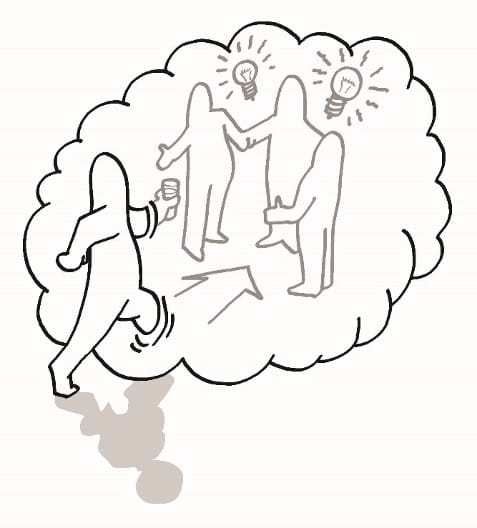
Without psychological safety, cognitively diverse teams can devolve into environments of friction or silence. Diverse perspectives, if not encouraged and respected, might remain unvoiced. Introverted team members, or those whose thinking styles differ significantly from the majority, might self-censor. This can lead to a phenomenon where teams appear diverse on paper but function homogeneously in practice, effectively neutralizing the benefits of varied thought processes. Studies have shown that organizations with high levels of psychological safety report higher rates of innovation, better employee engagement, and reduced turnover. Google’s Project Aristotle, a multi-year research initiative into team effectiveness, famously identified psychological safety as the single most important factor for high-performing teams, underscoring its foundational role for any form of diversity to flourish.
Inclusive Leadership: The Catalyst for Cognitive Diversity
Cultivating cognitive diversity and psychological safety is not an organic process; it requires intentional, sustained effort, spearheaded by inclusive leadership. Inclusive leaders are those who actively foster an environment where every team member feels treated with fairness and respect, feels valued for their unique contributions, feels a sense of belonging, is invited to speak up and share their perspectives, and feels empowered to act. This multifaceted approach demands a deep understanding of human behavior and a commitment to continuous action.
Deloitte Australia’s extensive diversity research indicates that leadership behaviors can account for up to 70 percentage points of difference in the proportion of employees who feel highly included versus those who do not. This effect is even more pronounced for members of minority groups, for whom inclusive leadership can be a decisive factor in their experience of belonging and empowerment. Despite the growing awareness and executive-level support for DEI initiatives, a significant challenge remains in cascading this commitment across all management levels. Many leaders, while acknowledging the importance of inclusion, often report feeling "ill-equipped" or lacking the practical tools to act inclusively, particularly when navigating sensitive conversations about exclusion or discrimination.
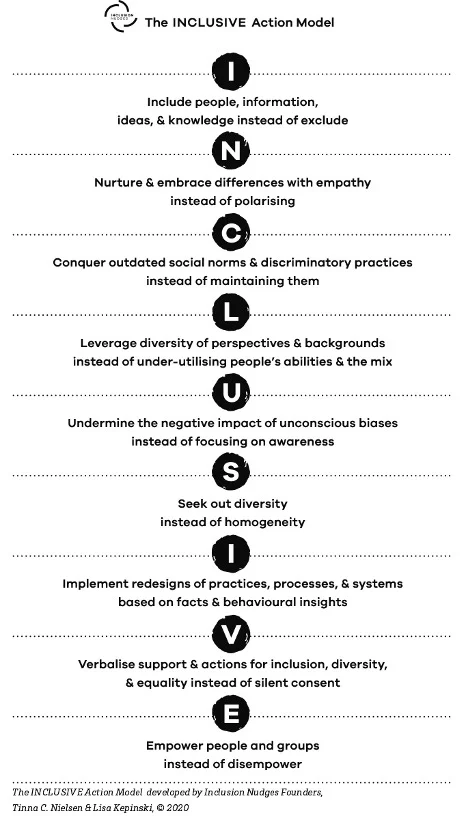
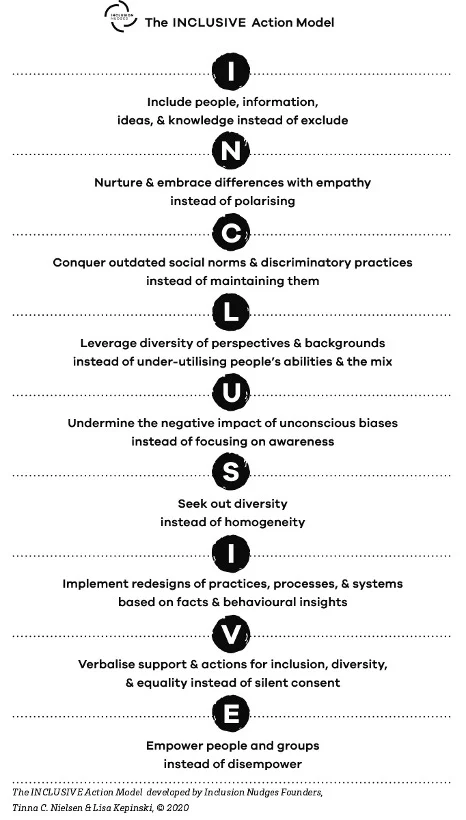
Recognizing this gap, practitioners like Tinna Nielsen and Lisa Rasmussen, co-creators of the Inclusion Nudges Inclusive Action Model, have developed practical frameworks and tools to empower leaders. Their work emphasizes a holistic approach to creating inclusive cultures, structures, and behaviors. By providing actionable, behavioral design interventions, they aim to make inclusion the default and norm within organizations. For instance, their "Inclusion Nudges for Leaders" action guide offers 30 easy-to-apply inclusive actions designed to build leaders’ confidence in fostering inclusive environments. The premise is that by enabling leaders to take small, consistent steps, they can gradually transform organizational culture, moving from a state of uncertainty about how to act to one of proactive, effective inclusion.
Implications for Organizational Strategy and Future Outlook
The heightened understanding of cognitive diversity carries profound implications for various aspects of organizational strategy:
-
Talent Acquisition and Development: Recruitment processes must evolve beyond seeking "culture fit" to prioritize "culture add," actively looking for candidates who bring different cognitive styles, problem-solving approaches, and perspectives. Assessment methods should be designed to identify these traits, rather than simply matching skills to job descriptions. Development programs should focus on equipping employees with the skills to collaborate effectively across cognitive differences, emphasizing active listening, empathy, and constructive conflict resolution.
-
Team Formation and Design: Leaders must move beyond assembling teams based on availability or pre-existing relationships. Intentional team design, leveraging insights from cognitive diversity assessments, can ensure that teams are optimally configured to tackle specific challenges, balancing consolidate-and-implement thinkers with generate-new-knowledge thinkers, and individual experts with orchestrators.
-
Decision-Making Processes: Cognitively diverse teams, supported by psychological safety, naturally lead to more rigorous debate and scrutiny of assumptions, resulting in more robust decision-making. Organizations should embed processes that encourage dissenting opinions and diverse viewpoints before critical decisions are finalized.
-
Innovation and Problem Solving: By combining different cognitive styles, teams can approach problems from multiple angles, leading to more creative solutions and breakthrough innovations. This is particularly crucial in rapidly evolving industries where conventional thinking can quickly become obsolete.
-
Organizational Culture: Ultimately, fostering cognitive diversity requires a cultural shift towards valuing differences in thought as much as differences in identity. This necessitates open communication, a willingness to challenge the status quo, and a commitment to continuous learning and adaptation.
In conclusion, while demographic diversity remains a moral and strategic imperative, the next frontier for organizations seeking sustained competitive advantage and resilience in uncertain times is the deliberate cultivation of cognitive diversity. By understanding, valuing, and actively leveraging the myriad ways people think, and by embedding these efforts within a foundation of psychological safety and inclusive leadership, businesses can unlock unparalleled potential for innovation, superior performance, and a truly inclusive future. The journey requires conscious effort, ongoing learning, and a commitment from leaders at all levels to transform intentions into impactful actions, thereby harvesting the full spectrum of human potential within their teams.