Our cognitive systems, constantly under pressure to process vast amounts of information rapidly, often inadvertently steer our thinking away from our conscious intentions of open-mindedness, respect, and inclusion. The vast majority of our daily thinking operates on an automatic, intuitive level, often referred to as System 1 thinking. This rapid, subconscious processing, while efficient, can lead to faulty judgments rooted in immediate feelings, superficial observations, past experiences, entrenched stereotypes, societal norms, and deeply held beliefs from our upbringing. However, a deliberate strategy of reframing—consciously altering what we perceive and how we articulate it—offers a powerful mechanism to reshape these inherent mental shortcuts, aligning them more accurately with our desired interactions with ourselves and others.
The Pervasive Influence of Normative Patterns on Perception
From an early age, individuals are subtly and continuously exposed to and internalize messages that define normative patterns within society. These patterns dictate who is implicitly considered "good," "attractive," "smart," "trustworthy," "a leader," "friendly," "caring," "strong," or "talented," among countless other attributes. Such snap mental associations are not only prevalent but are also profoundly reinforced through a myriad of social channels, including family dynamics, peer groups, influential figures, mainstream media, educational institutions, reward systems, organizational cultures, and broader societal narratives.
The constant bombardment with these perceptions inexorably shapes our worldviews and influences our interactions with other people, as well as the design and utilization of the systems we collectively create. This can have significant discriminatory impacts, leading to the exclusion of numerous individuals who do not conform to these dominant, often unstated, normative patterns. The imperative to challenge and change these exclusionary dynamics serves as a fundamental motivation for the ongoing work in diversity, equity, and inclusion (DEI) initiatives globally.
The Dual-Process Theory: Understanding Cognitive Shortcuts
To grasp the depth of this challenge, it’s crucial to understand the dual-process theory of cognition, popularized by Nobel laureate Daniel Kahneman. System 1 thinking is fast, intuitive, emotional, and largely unconscious. It operates continuously, making quick assessments and drawing immediate conclusions based on heuristics and existing mental models. This system is incredibly efficient for navigating daily life, allowing us to perform routine tasks without conscious effort. However, its reliance on shortcuts makes it susceptible to biases. System 2 thinking, in contrast, is slower, more deliberate, logical, and effortful. It engages when we consciously analyze information, solve complex problems, or override System 1’s initial impulses. The challenge for fostering inclusion lies in the fact that System 1 often overrides our System 2 intentions for open-mindedness before we even have a chance to engage critical thought.
Sociological research consistently demonstrates how media representation, for example, disproportionately portrays certain demographics in leadership roles, while others are relegated to supporting or stereotypical positions. A 2022 study by the Geena Davis Institute on Gender in Media, for instance, found persistent underrepresentation and stereotypical portrayals of women and minority groups in popular entertainment, reinforcing societal biases from a young age. Similarly, organizational studies frequently reveal how unconscious biases in hiring and promotion processes favor candidates who fit a pre-conceived "ideal" profile, often mirroring the existing demographic of leadership.
The Personal Dimension: Internalized Bias and the Rise of "Zoom Dysmorphia"
Beyond the societal impact, these normative patterns also manifest on a deeply personal level. Individuals frequently internalize negative associations about themselves, often unconsciously aligning with perceived deficiencies against societal ideals. A contemporary illustration of this phenomenon is the emergence of "Zoom dysmorphia," a term coined during the COVID-19 pandemic. With nearly two years of widespread video-based online work, many individuals found themselves constantly viewing their own reflections on screens, leading to an intensified negative fixation on their appearance. This self-critical judgment often occurs unconsciously, directly contradicting rationally held positive self-beliefs.
Experts in cognitive psychology and body image have noted a significant increase in consultations related to appearance anxiety since 2020. A survey conducted by the American Academy of Facial Plastic and Reconstructive Surgery in 2021 reported that 71% of facial plastic surgeons saw an increase in demand for procedures, with many patients citing their appearance on video calls as a primary motivation. This illustrates how external circumstances can exacerbate internalized biases, even among individuals who typically possess robust self-esteem. The experience of feeling like an "outlier"—not fitting the prevailing norms—is a common thread, impacting individuals across diverse backgrounds and at various points in their lives. The struggle against these internalized biases is a universal human experience.
Behavioral Design as a Tool for Self-Intervention: The "That’s a Human…" Experiment
Recognizing the pervasive nature of these unconscious biases, behavioral change designers frequently employ themselves as subjects for experimentation, seeking to interrupt and reshape internalized negative messages, biases, and exclusionary behaviors. It is from this practical, introspective approach that a specific design, "That’s a human…", was conceived and tested.
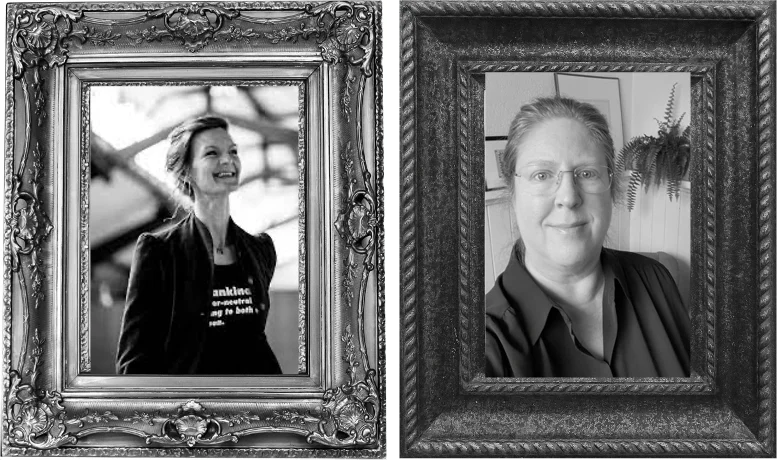
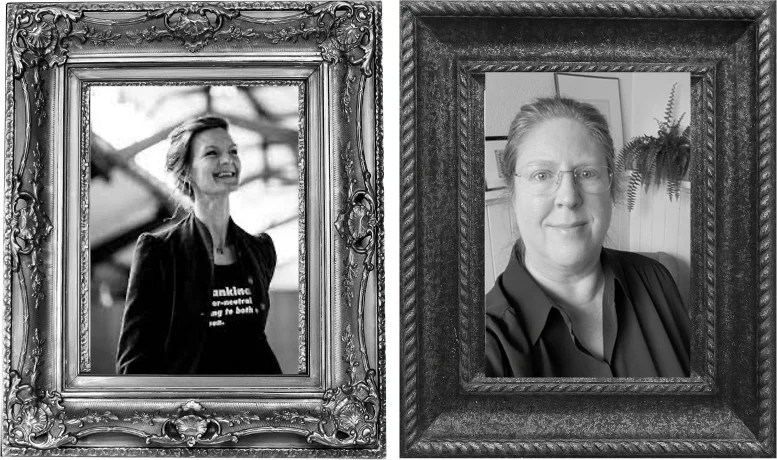
Lisa, one of the designers, embarked on this personal experiment during the 18 months of lockdown, aiming to counter negative thoughts about her appearance. Her routine often involved quick glances in the mirror, checking superficial aspects like hair, teeth, or clothing. However, any gaze that lingered "too long" would inevitably invite a barrage of negative internal commentary, triggering an exhausting internal debate between her critical and confident selves. Lisa’s objective was to redirect this wasted energy by intentionally reshaping her internal dialogue upon looking in the mirror. The extended periods of self-reflection during lockdown provided an opportune environment for this self-intervention.
Her inspiration stemmed from the Inclusion Nudge example, "Re-Frame ‘Migrant’ to ‘Human’," detailed in The Inclusion Nudges Guidebook. This design describes how members of the South African non-profit organization PASSOP actively engaged on social media, commenting on posts that used terms like "refugee" or "migrant" by substituting them with "human." For instance, a "refugee crisis" would be reframed as a "human crisis." The strategic choice of language in this context served to reorient perspectives towards a fundamental recognition of shared humanity, emphasizing the importance of seeing and treating all individuals as humans. This approach underscores a core principle: shifting perceptions often begins with a deliberate alteration of the language we use, both externally and internally.
Drawing from this powerful precedent, Lisa developed her personal reframing exercise. While the original text did not detail the exact steps, a reconstruction based on behavioral design principles would likely involve:
- Awareness and Identification: Noticing the initial negative thought or judgment about her appearance.
- Interruption: Consciously stopping the negative internal monologue.
- Reframing Statement: Immediately replacing the negative thought with the affirmative phrase, "That’s a human…" (e.g., "That’s a human face," "That’s a human body").
- Reflection: Briefly acknowledging the shift in perception and the intention behind it.
Lisa found that these statements rapidly evolved into a regular habit. Intriguingly, she extended the practice to her observations of other people, noting that this felt less effortful—a testament to the often-observed phenomenon that individuals tend to be their own harshest critics. She would catch herself thinking, "That’s a human face" or "That’s a human body" when observing others. The internal trigger of this statement prompted her to reflect on her preceding thoughts about the person. While the automatic nature of mental associations meant she couldn’t always consciously recall the initial biased thought, in many instances, she could. This dissonance—the clash between her inclusive intentions and her actual unconscious thoughts—served as a powerful motivator to persist with the reframing technique, both for herself and in her interactions with others. This ongoing practice reinforces the understanding that bias is not something that can be simply "cured" or made to "go away"; rather, it requires continuous, intentional behavioral design interventions to interrupt its influence, create space for more deliberate thought, and literally alter our perceptions.
Tinna, inspired by Lisa’s experiment, adopted a similar approach. She began saying "There’s a human being" to herself when observing people in public spaces. Tinna had become acutely aware of her mind’s tendency to focus on others’ appearances, often accompanied by judgment (e.g., "she is skinny," "he is overweight," "ugly shoes"). This judgmental inclination caused her personal discomfort and shame, yet she struggled to alter it. The introduction of the default statement, "there is a human being," remarkably shifted her internal experience. She reported a noticeable increase in positive energy and found that the judgmental state dissolved almost as quickly as it arose. This practice also positively impacted her self-perception; as a tall woman (185 cm), she often felt like an outlier. The reframing helped her realize, "I am also just a human being among others." Both Lisa and Tinna’s experiences underscore the profound personal impact of such simple, yet powerful, reframing techniques.
The Science of Reframing: Inclusion Nudges and Cognitive Reconfiguration
The personal struggles with self-perception and judgment of others highlight a curious absurdity: despite possessing a strong sense of self, accomplishment, and value, individuals often allow judgments of body shape, appearance, or voice to dominate their internal narratives. This internal conflict, where conscious intentions clash with unconscious biases, cannot be simply wished away. It necessitates leveraging behavioral insights to design strategies that actively reshape harmful mental messages. This is where "Framing Perceptions Inclusion Nudges" become particularly effective.
As defined in The Inclusion Nudges Guidebook by Kepinski & Nielsen, "Framing Perceptions Inclusion Nudges are designs that alter perceptions to help the brain perceive issues related to inclusion, diversity, equality in a resource discourse. The designs also prime specific associations and counter stereotypes. Altering the framing of an issue or message and changing the anchor of a thought process helps to promote inclusive behaviour because it influences the reactions in the automatic, stereotyped, and unconscious mind."
This theoretical framework explains the efficacy of "That’s a human…" and similar techniques. By consciously introducing a new "frame" or "anchor"—the concept of shared humanity—the intervention directly targets the automatic, System 1 processing. It bypasses the slower, more effortful System 2 by creating a new default response. This isn’t about eradicating bias, which is deeply ingrained, but about designing an immediate, pre-emptive interruption that diverts the cognitive pathway away from stereotypical or judgmental conclusions.
The consistent application of such nudges trains the brain to form new, more inclusive associations. For instance, instead of categorizing an individual based on their visible traits (e.g., "skinny," "tall," "overweight"), the brain is prompted to immediately categorize them as "human." This shifts the primary lens of perception from superficial characteristics to fundamental shared identity, fostering empathy and reducing the likelihood of discriminatory snap judgments.
These Framing Perceptions designs are regularly utilized in both personal and professional contexts. A notable example is the Inclusion Nudge design titled "Ask Flip Questions to Change Your Perceptions in the Moment," described across various Inclusion Nudges publications. This design encourages individuals to consciously ask counter-intuitive or "flip" questions when faced with a decision or observation, thereby challenging their initial assumptions and broadening their perspective. For example, if a team is consistently hiring from a particular demographic, a "flip question" might be, "What if we specifically sought candidates from a completely different background? What skills or perspectives might we be missing?" This simple cognitive tool has been widely reported as highly impactful for expanding thinking, improving information gathering, and enhancing decision-making in daily work and life.
Broader Implications: Cultivating a More Inclusive Society
The insights derived from personal reframing experiments, supported by the principles of behavioral science, carry significant broader implications for cultivating a more inclusive society. When individuals consciously practice reframing, they not only improve their personal interactions but also contribute to a collective shift in societal discourse and norms. The cumulative effect of many individuals challenging their biases, even in small, consistent ways, can lead to a more empathetic and equitable environment.
Organizations, in particular, stand to benefit immensely from integrating such behavioral design principles into their DEI strategies. Beyond traditional awareness training, which often fails to shift unconscious behaviors, inclusion nudges provide actionable, low-effort interventions that target the root causes of bias. By designing processes and communication strategies that subtly reframe perceptions—for example, by using inclusive imagery, language that emphasizes shared goals over demographic differences, or structured decision-making tools that mitigate bias—organizations can foster environments where inclusive behavior becomes the default, rather than an exception.
The journey towards true diversity, equity, and inclusion is continuous and multi-faceted. It requires systemic changes, but also profound individual commitment to self-awareness and self-correction. The act of reframing, whether applied to personal appearance or societal stereotypes, serves as a powerful reminder that while biases may be deeply ingrained, they are not insurmountable. Through intentional design and consistent practice, individuals and organizations can actively reshape their mental landscapes, moving closer to a reality where open-mindedness, respect, and inclusion are not just aspirations, but lived experiences.
Resources and Engagement
To delve deeper into the application of Framing Perceptions designs and their role in fostering inclusivity, several resources offer further inspiration and practical guidance. These examples illustrate how targeted behavioral interventions can effectively counter deeply embedded biases and stereotypes.
These Framing Perceptions Inclusion Nudges can support reframing for inclusivity:
- Re-Frame ‘Migrant’ to ‘Human’ in The Inclusion Nudges Guidebook
- Images Framing Immigrants as One of Us in The Inclusion Nudges Guidebook and in Inclusion Nudges for Motivating Allies
- Interrupt Gender Caregiver Stereotypes with Images in The Inclusion Nudges Guidebook and in Inclusion Nudges for Motivating Allies
Want to read more about re-framing designs? See these other blog articles:
- Reframe Language on How We Work Today
- Diversity Is About People, Not Flowers, Candy, or Pencils
- Don’t Set Targets for Women – But for Max 70% of the Same Gender
We are keen to learn from your experiences. How have you utilized reframing techniques to diminish the influence of negative biases and stereotypes in your own life? Please share your insights with us at [email protected].