In an era characterized by unprecedented global challenges, from economic volatility and geopolitical shifts to rapid technological advancement and environmental crises, the imperative for organizational agility and robust decision-making has never been more acute. While the conversation around diversity, equity, and inclusion (DEI) has gained significant momentum over the past two decades, a crucial dimension often remains overshadowed: cognitive diversity. This distinct form of diversity, which delves into the varying ways individuals process information, solve problems, and approach situations, is increasingly recognized by researchers and leading organizations as a paramount driver of innovation, superior problem-solving, and enhanced resilience—a differentiator that extends far beyond the more commonly emphasized demographic traits of gender and race.
The Evolution of Diversity Initiatives: From Demographics to Deep-Level Differences
The journey of organizational diversity initiatives has seen significant evolution. Early efforts, often spurred by legal mandates and social justice movements in the mid-20th century, primarily focused on achieving representation and addressing historical inequalities based on visible characteristics like race, gender, and ethnicity. This period laid the groundwork for affirmative action policies and the initial understanding that diverse workforces could reflect broader society and offer a fairer playing field. By the late 20th and early 21st centuries, the "business case for diversity" began to gain prominence. This paradigm shifted the narrative from solely ethical considerations to strategic advantages, arguing that diverse teams lead to better financial performance, improved market understanding, and a stronger employer brand. However, much of this initial business case literature, while impactful, largely concentrated on surface-level or demographic diversity, which is more readily quantifiable and observable.
As organizations matured in their understanding of DEI, the limitations of a purely demographic focus became apparent. Simply having a mix of genders or ethnicities in a room did not automatically translate into improved outcomes if those diverse perspectives were not genuinely heard, valued, or integrated. This realization paved the way for a deeper exploration into the multifaceted nature of diversity, shifting the spotlight towards what is often termed "deep-level diversity," which encompasses personality, values, beliefs, and, critically, cognitive styles. The global pandemic of 2020-2022, alongside other complex global uncertainties, served as a stark reminder that static, homogenous thinking struggles to navigate dynamic, ambiguous environments. It underscored the urgent need for teams capable of anticipating novel problems, generating unconventional solutions, and adapting rapidly—capabilities intrinsically linked to cognitive diversity.
Defining Cognitive Diversity: More Than Meets the Eye
Cognitive diversity refers to differences in how individuals perceive, process, and act on information, as well as their preferred styles of thinking, problem-solving, and engaging with complex situations. It is distinct from demographic diversity, although the two can sometimes intersect. While demographic diversity focuses on visible characteristics, cognitive diversity explores the invisible architecture of the mind. It encompasses a spectrum of intellectual preferences, including approaches to risk, complexity, process, and creativity. For instance, a cognitively diverse team might include individuals who are highly analytical and data-driven alongside those who are intuitive and conceptual, or members who prefer to consolidate existing knowledge alongside those who are driven to generate entirely new ideas.
Decades of research have illuminated the profound impact of this form of diversity. Professors Alison Reynolds and David Lewis, for example, have dedicated extensive study to understanding how individuals approach new, uncertain, and complex situations, and what characterizes the highest-performing problem-solving teams. Their findings consistently underscore that such teams are not only cognitively diverse but also operate within an environment of robust psychological safety. This combination fosters a culture of curiosity and experimentation, enabling teams to explore novel solutions without fear of judgment. Conversely, teams lacking these attributes often fall prey to group conformity, where dissenting opinions are suppressed, or become overly combative, where conflict is destructive rather than constructive.
Reynolds and Lewis’s research further delineates cognitive diversity into two primary dimensions, informed by an assessment tool developed by psychiatrist Peter Robertson:
- Knowledge and Information Processing: This dimension examines an individual’s preference when confronted with novel, uncertain, or complex issues. Do they tend to consolidate and implement existing knowledge, drawing on established frameworks and proven solutions? Or do they lean towards generating new knowledge, exploring uncharted territories, and developing innovative approaches from scratch? A balance of both "consolidators" and "generators" is crucial for comprehensive problem-solving.
- Perspective and Expertise Facilitation: This aspect assesses whether individuals prefer to apply their own specialized expertise and insights directly or if they are more inclined to orchestrate and synthesize the ideas and expertise of others. Teams benefit immensely from both deep specialists and "orchestrators" who can weave together disparate viewpoints into a coherent strategy.
Teams demonstrating a high degree of diversity across both these parameters consistently outperform their homogenous counterparts in navigating complex and ambiguous scenarios. They naturally access a broader spectrum of knowledge and perspectives, and when coupled with psychological safety, they engage in behaviors that promote healthy debate, constructive conflict, and thorough exploration of options. Beyond these specific dimensions, cognitive diversity also encompasses varied personality styles, such as introversion and extroversion, and different mental frameworks for approaching challenges, risk assessment, and process adherence. Recognizing and leveraging these complementary styles is paramount for team effectiveness.
The Irrefutable Business Case: Why Cognitive Diversity Drives Superior Outcomes
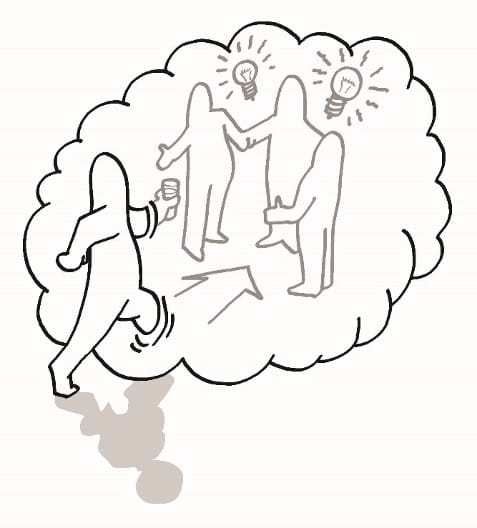
The benefits of intentionally cultivating cognitive diversity are manifold and deeply impactful for organizational success, particularly in the current volatile business landscape.
- Enhanced Innovation and Problem-Solving: Cognitively diverse teams are inherently better equipped to innovate. When individuals approach problems from different angles, leveraging varied thought processes and experiences, the likelihood of generating truly novel and effective solutions dramatically increases. A study published in Harvard Business Review, for instance, highlighted that cognitively diverse teams solve problems faster and more effectively, especially complex ones, because they bring a wider array of mental models to bear. This richness of perspective challenges assumptions, uncovers blind spots, and fosters breakthrough thinking that homogenous teams often miss.
- Mitigating Risk and Improving Decision-Making: A primary advantage of cognitive diversity is its ability to reduce organizational risk. Teams composed of individuals with similar thinking patterns are prone to groupthink, where a desire for conformity leads to poor decision-making and a failure to critically evaluate alternatives. Cognitively diverse teams, by contrast, naturally engage in more thorough analysis, question underlying assumptions, and consider a broader range of potential outcomes and contingencies. This leads to more robust, well-vetted decisions and a greater capacity to anticipate and mitigate potential pitfalls. For example, a team with members who are both detail-oriented and big-picture thinkers will likely identify both granular operational risks and broader strategic threats.
- Increased Organizational Resilience and Adaptability: In an environment characterized by constant change, an organization’s ability to adapt and remain resilient is a critical determinant of long-term survival. Cognitively diverse teams are more adaptable because they possess a wider repertoire of responses to unforeseen circumstances. They are less likely to be paralyzed by novelty or to fall back on outdated solutions. Their varied perspectives allow them to reframe challenges, identify new opportunities, and pivot strategies more effectively than teams trapped in conventional thinking. This inherent flexibility is a strategic asset, particularly when facing market disruptions, technological shifts, or global crises.
While the business case for demographic diversity is now well-established, with research from McKinsey & Company consistently showing that ethnically and gender-diverse companies outperform their less diverse counterparts, the specific contribution of cognitive diversity is emerging as the next frontier. It provides the mechanism through which surface-level diversity can truly be leveraged for tangible performance improvements.
The Critical Role of Psychological Safety and Inclusive Leadership
The mere presence of cognitive diversity within a team is insufficient to unlock its full potential. Without a culture of psychological safety, diverse thoughts can remain unspoken, leading to frustration and underperformance. Psychological safety, as popularized by Google’s Project Aristotle research, is the belief that one can speak up, ask questions, or make mistakes without fear of punishment or humiliation. In a cognitively diverse team, this means creating an environment where an analytical thinker feels safe to challenge an intuitive idea, or a process-oriented individual can voice concerns about an experimental approach, and vice-versa. It is the bedrock upon which constructive conflict and genuine exploration thrive.
This environment is not self-sustaining; it must be actively cultivated through inclusive leadership. Inclusive leaders are those who not only value diverse perspectives but actively solicit them, ensure equitable participation, and foster a sense of belonging among all team members. They create a space where individuals feel treated with fairness and respect, feel valued for their unique contributions, and are empowered to share their perspectives without reservation. According to research by Deloitte Australia, the behaviors of leaders can account for up to a 70 percentage-point difference between the proportion of employees who feel highly included and those who do not. For members of minority groups—whether demographic or cognitive—the impact of inclusive leadership behavior is even more pronounced.
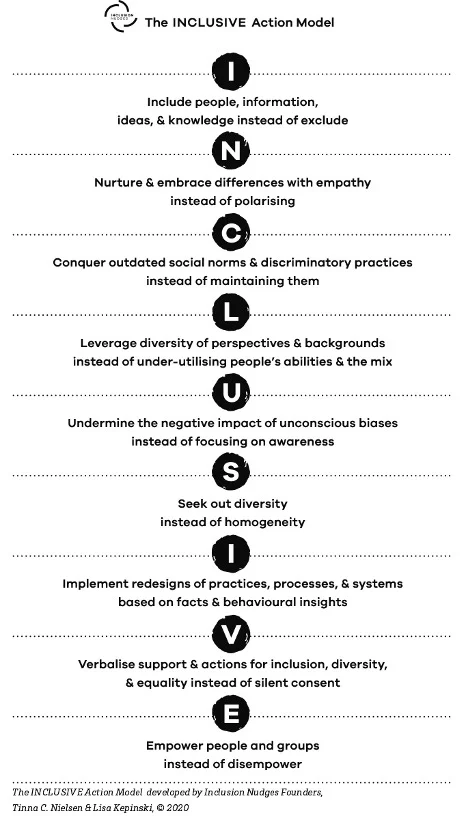
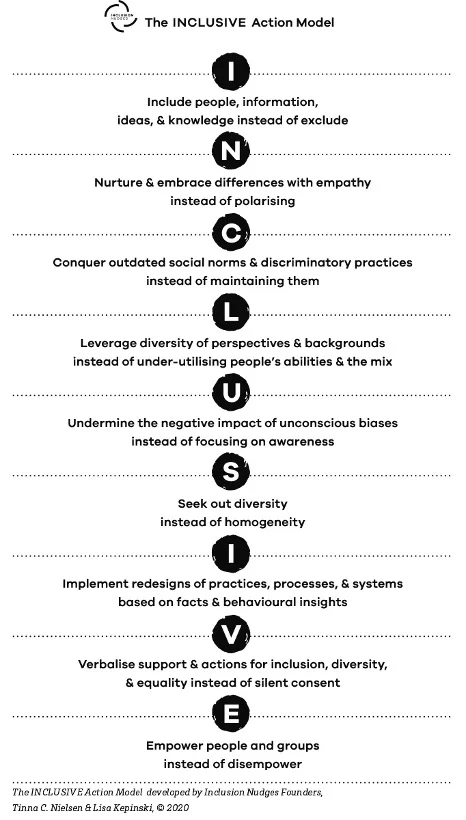
However, a significant challenge persists: many leaders, despite recognizing the importance of DEI, report feeling ill-equipped to act inclusively. They often lack the practical tools and confidence to facilitate difficult conversations about exclusion or discrimination, or to consciously design for cognitive diversity in their team compositions and processes. This leadership "skills gap" represents a critical bottleneck in translating executive-level DEI support into tangible, organizational-wide cultural change. Recognizing this pervasive need, experts like Tinna C. Nielsen and Lisa H. Rasmussen, through their "Inclusion Nudges" framework, have developed practical, evidence-based behavioral designs to empower leaders. Their "Inclusion Nudges for Leaders" action guide, for instance, offers 30 easy-to-apply inclusive actions, providing step-by-step guidance that builds leaders’ confidence to actively foster more inclusive and cognitively diverse environments. By making inclusion the default and norm in daily leadership practices, these tools help to cascade executive support for DEI down to all levels of management, ultimately sparking broader cultural transformation.
Navigating the Path Forward: Challenges and Strategic Imperatives
Implementing and maximizing cognitive diversity presents several strategic challenges that organizations must address proactively.
- Overcoming the Measurement Hurdle: Unlike demographic diversity, which is relatively straightforward to measure, assessing cognitive diversity requires more sophisticated tools. Organizations need to move beyond simple self-assessments to incorporate validated psychometric tools, behavioral assessments, and structured interview processes that can identify individual preferences in information processing, problem-solving, and decision-making styles. Integrating these insights into talent acquisition, team formation, and leadership development programs is crucial.
- Integrating Cognitive Diversity into Talent Management: A conscious effort is needed to embed cognitive diversity considerations throughout the entire talent lifecycle. This means intentionally designing job descriptions to attract a range of cognitive styles, implementing bias-mitigation strategies in recruitment to prevent hiring for "culture fit" that inadvertently leads to cognitive homogeneity, and developing training programs that help employees understand and appreciate different cognitive approaches. Performance management systems should also reward collaboration that leverages diverse thinking, rather than just individual output.
- Cultivating a Culture of Constructive Conflict: Cognitively diverse teams, by their very nature, are likely to experience more disagreement. This "constructive conflict" is vital for challenging assumptions and generating superior outcomes, but it requires careful facilitation. Leaders must be skilled in mediating discussions, ensuring all voices are heard, and guiding the team towards synthesis rather than stalemate. Training in active listening, respectful debate, and conflict resolution becomes essential for every team member. Without this, cognitive diversity can devolve into unproductive friction.
- Beyond Tokenism: True Integration of Diverse Thought: The ultimate goal is not just to have cognitively diverse individuals on a team, but to ensure their unique perspectives are genuinely integrated into decision-making processes. This means creating structures that allow for diverse input at critical junctures, empowering individuals to challenge the status quo, and establishing feedback loops that reinforce the value of varied viewpoints. It requires a fundamental shift from simply "tolerating" differences to actively "seeking out" and "leveraging" them as a strategic asset.
Conclusion: A Strategic Imperative for Future Success
In an increasingly complex and uncertain world, cognitive diversity is no longer a peripheral concern but a strategic imperative for organizations aiming for sustainable success. While demographic diversity remains fundamental for equity and representation, it is the deeper layer of cognitive diversity that unlocks true innovation, resilience, and superior decision-making. Organizations that consciously prioritize and cultivate a rich tapestry of thought—backed by robust psychological safety and inclusive leadership—will be best positioned to navigate future challenges, seize emerging opportunities, and thrive amidst ambiguity. The journey requires a commitment to understanding, measuring, and actively fostering diverse thinking at every level, transforming teams into dynamic engines of progress capable of solving the problems of today and inventing the solutions of tomorrow.