Our cognitive architecture, constantly under immense pressure to rapidly process information, frequently steers human thought away from stated intentions of open-mindedness, respect, and inclusion. This inherent propensity for deviation is largely due to the vast majority of our thinking, often termed System 1 cognition, operating on an automatic, intuitive autopilot. This automaticity, while efficient, can lead to faulty judgments rooted in immediate feelings, superficial observations, past experiences, entrenched stereotypes, pervasive societal norms, and deeply held beliefs absorbed from upbringing. However, emerging insights from behavioral science suggest that deliberate reframing—actively altering what we perceive and articulate—offers a potent mechanism to reshape these inherent mental shortcuts, aligning them more accurately with our aspirations for self and interactions with others. This strategic intervention, often manifested as "inclusion nudges," provides a pathway to foster genuine diversity, equity, and inclusion in both personal and societal spheres.
The Architecture of Thought: System 1 and System 2
The foundational understanding of these cognitive shortcuts stems from the work of Nobel laureate Daniel Kahneman and his collaborator Amos Tversky, who popularized the distinction between two modes of thinking: System 1 and System 2. System 1 is fast, automatic, frequent, emotional, stereotypic, and unconscious. It’s responsible for instantaneous judgments, driving behaviors like recognizing faces, understanding simple sentences, or reacting to sudden noises. This system is a powerful evolutionary tool, enabling quick decisions in a complex world. However, its efficiency comes at a cost: it is prone to biases and heuristics, mental shortcuts that, while often useful, can lead to systematic errors in judgment. Conversely, System 2 is slow, effortful, infrequent, logical, calculating, and conscious. It’s engaged when solving complex math problems, comparing intricate features of products, or deliberating on a moral choice. While System 2 is capable of overriding System 1, it requires significant cognitive effort, which humans often seek to conserve. The challenge, therefore, lies in the dominance of System 1 in daily life, where rapid assessments frequently bypass deeper, more reflective System 2 analysis, particularly in social interactions. Research consistently shows that implicit biases, operating at this System 1 level, can influence everything from hiring decisions to medical diagnoses, often without conscious awareness or malicious intent. A 2017 study published in the Journal of Personality and Social Psychology revealed that even individuals who explicitly endorse egalitarian views can exhibit unconscious biases against certain groups in Implicit Association Tests (IATs).
Societal Blueprints: How Norms Shape Perception
Throughout their lives, individuals are constantly, often unwittingly, internalizing messages that construct their self-perception and their views of others. These messages reflect a pervasive "normative pattern" dictating who is deemed "good," "attractive," "smart," "trustworthy," "a leader," "friendly," "caring," "strong," "talented," and countless other desirable traits. These rapid mental associations are powerfully reinforced and disseminated through a myriad of societal channels: family units, peer groups, social media influencers, traditional media (television, film, advertising), educational institutions, reward systems within organizations, and broader cultural narratives. This continuous exposure to specific perceptions profoundly shapes our interactions with people and the very systems we design and utilize.
The discriminatory impact of these deeply ingrained normative patterns on society can be profound, leading to the systemic exclusion of countless individuals who do not conform to the dominant archetype. For example, studies by the Geena Davis Institute on Gender in Media have repeatedly highlighted the underrepresentation and stereotypical portrayal of women and minorities in film and television, reinforcing narrow ideas of leadership, beauty, and competence. Similarly, historical and ongoing biases in educational curricula can perpetuate certain narratives while marginalizing others. The result is a self-perpetuating cycle where limited representation in media or leadership roles feeds into unconscious biases, which in turn affect opportunities, access, and social acceptance. This motivation—to dismantle these exclusionary structures and foster environments of diversity, equity, and inclusion—drives many behavioral scientists and DEI practitioners.
The Digital Mirror: "Zoom Dysmorphia" and Self-Perception
The influence of normative patterns extends beyond external perceptions, profoundly impacting individuals’ self-image. It is not uncommon for individuals to internalize negative associations about themselves, aligning with an equally distorted personal normative pattern. A contemporary illustration of this phenomenon, exacerbated by the global shift to remote work, is the emergence of "Zoom dysmorphia." With nearly two years of video-based online work becoming the norm for many, there has been a documented increase in individuals becoming negatively fixated on their own appearance during virtual meetings. This term, coined by dermatologists and plastic surgeons, describes a phenomenon where individuals scrutinize their reflections on screen, often distorted by webcam lenses and unflattering lighting, leading to heightened self-consciousness and a desire for cosmetic alterations. A 2021 study published in the Journal of Clinical and Aesthetic Dermatology noted a significant increase in patient consultations for cosmetic procedures, with many directly citing their appearance on video calls as the primary motivator. These self-judgments often occur unconsciously, directly contradicting rationally held positive self-beliefs. The relentless exposure to one’s own image, combined with the often-unrealistic standards projected by social media and filters, creates a fertile ground for self-criticism. Many individuals, like the behavioral change designers Lisa and Tinna mentioned in the original account, have personally experienced feeling like "outliers" who do not fit prevailing norms at various points in their lives.
Behavioral Science to the Rescue: The Power of Reframing
Recognizing the pervasive nature of unconscious bias and internalized negative messaging, behavioral change designers are increasingly leveraging targeted interventions, often practiced on themselves, to interrupt and reshape these patterns. One such technique is "reframing," a powerful cognitive tool that involves consciously altering the way an issue, person, or situation is perceived and described. This approach draws inspiration from successful "inclusion nudges"—subtle shifts in the environment or presentation of information that guide behavior towards more inclusive outcomes without restricting choice.
A notable example of reframing, detailed in "The Inclusion Nudges Guidebook," is the initiative to "Re-Frame ‘Migrant’ to ‘Human.’" In this design, members of the South African non-profit organization PASSOP actively monitor social media postings that use dehumanizing terms like "refugee crisis" or "migrant influx." Their intervention is simple yet profound: they comment on these posts, replacing the categorical term with "human," thereby reframing the narrative to "human crisis." This linguistic shift is designed to refocus public perception on the inherent humanity of the individuals involved, rather than reducing them to a problematic label. The underlying principle is that by changing the words we use, we begin to change the way we think and, consequently, the way we act.
Applying this principle to personal self-perception, individuals can develop their own reframing "nudges." For instance, an experiment involving a simple, repetitive internal statement like "That’s a human…" when encountering one’s own reflection or observing others, directly counters the automatic judgmental thoughts. The objective is to replace ingrained critical associations with a fundamental acknowledgement of shared humanity. This technique, through consistent practice, aims to create new mental pathways, gradually diminishing the influence of negative self-talk and external judgments.
Case in Point: "That’s a Human…" – A Practical Application
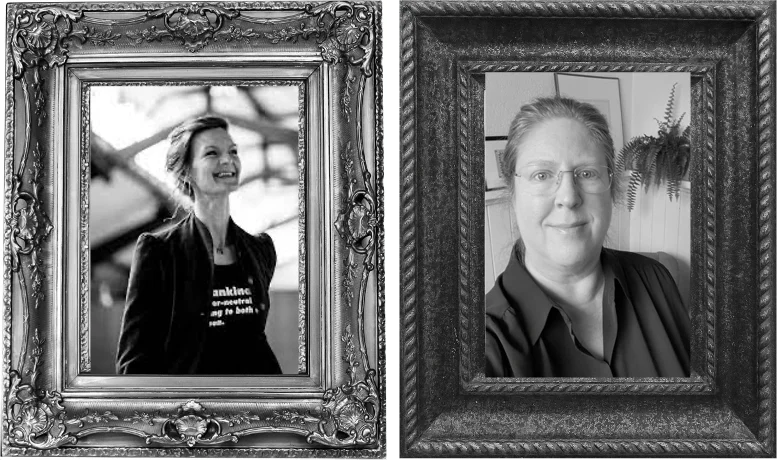
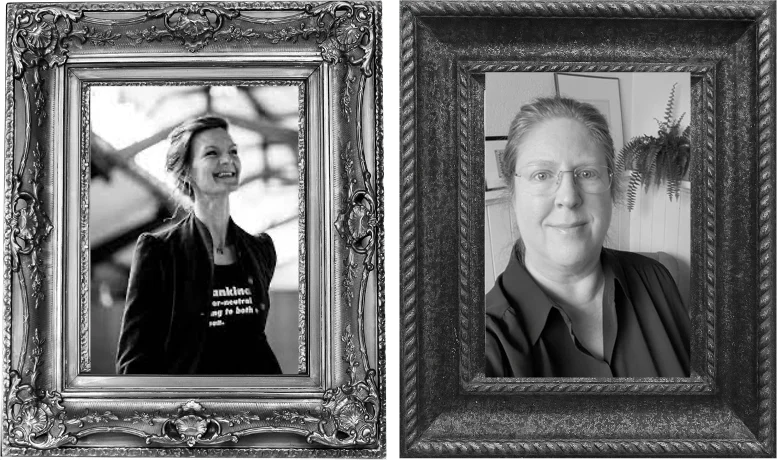
The personal experiments conducted by Lisa and Tinna, as behavioral change designers, provide compelling anecdotal evidence for the efficacy of such reframing techniques. Lisa, during a period of extended lockdown, focused on countering negative self-perception regarding her appearance. She observed her tendency to take only quick glances in the mirror, followed by an immediate surge of critical thoughts if she lingered "too long." Inspired by the "Re-Frame ‘Migrant’ to ‘Human’" nudge, she began a conscious practice of internalizing statements such as "That’s a human face" or "That’s a human body" when looking at herself. Over time, this conscious intervention developed into a habitual mental statement, redirecting her energy from self-criticism to a more neutral, foundational acceptance.
Significantly, Lisa extended this practice to her observations of other people, noting that it felt less effortful than self-critique, perhaps reflecting the common human tendency to be harshest on oneself. She would catch herself thinking "That’s a human face" or "That’s a human body" when observing others. This mental check-in allowed her to retrospectively identify preceding judgmental thoughts, revealing a stark dissonance between her inclusive intentions and her unconscious reactions. This realization provided ongoing motivation to continue the practice, acknowledging that while bias cannot be "cured" or made to "disappear," intentional designs can effectively interrupt its influence, create space for more considered thought, and literally alter what one perceives.
Tinna, inspired by Lisa’s account, adopted a similar practice, using the phrase "There’s a human being" when observing people in public spaces. She recognized her own ingrained tendency to make immediate, often judgmental, assessments of others’ appearances— "she is skinny," "he is overweight," "ugly shoes." The consistent application of the "there is a human being" default statement created a cognitive interrupt. The judgmental thought, upon arising, would be quickly superseded, preventing it from fully forming or lingering. Tinna reported a noticeable shift towards a more positive internal energy and a reduction in judgmental tendencies. Crucially, this practice also positively impacted her own self-perception, particularly as someone who had often felt like an "outlier" due to her height (185 cm). By viewing others, and herself, fundamentally as "human beings," she experienced a greater sense of belonging and normalcy.
Evidence and Efficacy: The Impact of Nudges
The success of these personal experiments aligns with broader behavioral science principles regarding the efficacy of "Framing Perceptions Inclusion Nudges." These designs are specifically engineered to alter perceptions, guiding the brain to process issues related to inclusion, diversity, and equality through a more constructive and resource-oriented discourse. They operate by priming specific associations and actively countering deeply embedded stereotypes. By modifying the framing of an issue or message, and by changing the cognitive anchor of a thought process, these nudges effectively promote inclusive behavior. This effectiveness stems from their ability to influence reactions within the automatic, often stereotyped, and unconscious System 1 mind, bypassing the need for constant, effortful System 2 intervention.
As Kepinski & Nielsen articulate in "The Inclusion Nudges Guidebook," Framing Perceptions Inclusion Nudges are "designs that alter perceptions to help the brain perceive issues related to inclusion, diversity, equality in a resource discourse. The designs also prime specific associations and counter stereotypes. Altering the framing of an issue or message and changing the anchor of a thought process helps to promote inclusive behaviour because it influences the reactions in the automatic, stereotyped, and unconscious mind." This framework is not merely theoretical; it is applied in numerous practical designs. One widely impactful design is "Ask Flip Questions to Change Your Perceptions in the Moment," described across various Inclusion Nudges publications. This technique encourages individuals to consciously challenge their initial assumptions or judgments by asking questions that force an alternative perspective, thereby expanding their thinking and improving decision-making in daily life and work.
Broader Implications: Cultivating Inclusive Environments
The implications of reframing and inclusion nudges extend far beyond individual self-perception. In professional settings, these techniques can be instrumental in mitigating bias in hiring, promotion, and team collaboration. For instance, reframing job descriptions to focus on skills and contributions rather than gendered language or specific demographic profiles has been shown to increase the diversity of applicant pools. Similarly, actively reframing feedback during performance reviews to focus on growth and potential rather than perceived shortcomings can foster a more equitable development environment.
On a societal level, the consistent application of reframing in media, public discourse, and policy-making can gradually shift collective unconscious biases. For example, governmental campaigns that reframe public health messages to emphasize collective well-being rather than individual blame can significantly impact compliance and social cohesion. Educational initiatives that consciously reframe historical narratives to be more inclusive and representative can shape future generations’ understanding of diversity and equity.
The challenge of combating deeply ingrained biases—both internal and external—is ongoing. Judgments based on body shape, appearance, and voice often dominate perceptions, even in individuals with strong senses of self-worth and accomplishment. This absurdity, where rational self-beliefs are negated by unconscious biases, highlights the limitations of willpower alone. Behavioral science offers a critical pathway forward, providing scientifically validated designs to reshape harmful mental messages. By understanding how our brains process information and by strategically intervening with "nudges" and reframing techniques, individuals, organizations, and societies can move closer to their stated intentions of open-mindedness, respect, and inclusion, fostering environments where every human being is recognized and valued for their inherent worth.