The Equality Trust has officially unveiled the results of its inaugural Community Economist project, a nationwide initiative designed to demystify economic systems and amplify the voices of those most affected by financial disparity. Launched as a hybrid of grassroots research, educational programming, and social action, the project seeks to challenge the traditional top-down approach to economic theory by positioning ordinary citizens as the primary narrators of their own financial realities. By training a cohort of volunteers from across the United Kingdom—ranging from the urban centers of London to the rural highlands of Scotland—the project has produced a comprehensive insight report and documentary film that argue for a radical shift in how the "economy" is defined and managed in the 21st century.
The central thesis of the project is that the economy should function as a tool for human flourishing rather than an abstract force to which the public must simply submit. For decades, economic discourse has been dominated by technical jargon and macroeconomic indicators that often feel disconnected from the lived experiences of the working class. The Community Economist project aims to bridge this gap, asserting that the people who navigate the challenges of housing, labor, and social services every day possess a unique and vital expertise that professional economists often overlook.
The Evolution of the Community Economist: A Twelve-Week Chronology
The project began with a competitive recruitment phase that attracted hundreds of applications from individuals across the UK. Despite varying backgrounds, applicants shared a common thread: firsthand experience with economic inequality and a desire to see systemic change. The Equality Trust eventually selected ten volunteers to serve as the core cohort. Notably, none of these participants possessed formal academic training in economics, a deliberate choice intended to ensure the research remained grounded in "unfiltered" community perspectives.
Over a twelve-week period, these ten individuals underwent rigorous training in community reporting. The curriculum was designed to equip them with the skills necessary to conduct qualitative research and thematic analysis. Workshops focused on:
- Storytelling and Narrative Construction: Learning how to translate individual anecdotes into coherent social critiques.
- Interview Techniques: Developing the interpersonal skills to gather deep, honest reflections from neighbors and peers.
- Thematic Analysis: Identifying recurring patterns in community feedback to draw broader conclusions about the state of the UK economy.
The training culminated in the formulation of a central research question that guided the data collection phase: "What would it be like if everyone had what they needed to live a good life, and how would that be different from how things are now?" This prompt was designed to move beyond mere complaints about the status quo, instead encouraging respondents to envision a proactive and inclusive alternative.
Data Collection and Narrative Findings
The Community Economists returned to their respective regions to conduct extensive field interviews. This phase resulted in over ten hours of high-quality interview footage and hundreds of pages of transcripts. The Equality Trust’s analysis of this data revealed several critical themes that underscore the current "disconnect" between official economic policy and community needs.
The Housing-Education Nexus
A primary finding in the report is the inextricable link between housing stability and educational attainment. Interviewees consistently reported that the volatility of the private rental market—characterized by short-term tenancies and rising costs—frequently forced families to relocate, disrupting children’s schooling and severing local support networks. The "Community Economists" noted that in the current framework, housing is treated as an asset class for investment rather than a fundamental component of a productive workforce.
The Psychological Toll of Economic Insecurity
Beyond the material data, the project captured the profound psychological impact of inequality. Respondents described a sense of "perpetual precarity," where the inability to plan for the future hindered personal aspirations and strained familial relationships. The report argues that this "aspiration gap" is a direct byproduct of an economy that prioritizes short-term market efficiency over long-term social stability.
The "Poverty Premium"
The research highlighted the "poverty premium," where low-income individuals end up paying more for basic goods and services. From pre-payment energy meters to the lack of access to affordable credit, the Community Economists documented how the current economic structure effectively penalizes those with the least capital, creating a cycle that is nearly impossible to break without systemic intervention.
Supporting Data: The Broader UK Economic Context
The launch of this report comes at a pivotal moment for the UK economy. According to data from the Office for National Statistics (ONS) and the Joseph Rowntree Foundation, the wealth gap in the United Kingdom has remained stubbornly high throughout the mid-2020s. As of late 2025, the richest 1% of households held more wealth than the bottom 70% combined. Furthermore, real wage growth has struggled to keep pace with the cost of essential services, particularly in the energy and transport sectors.
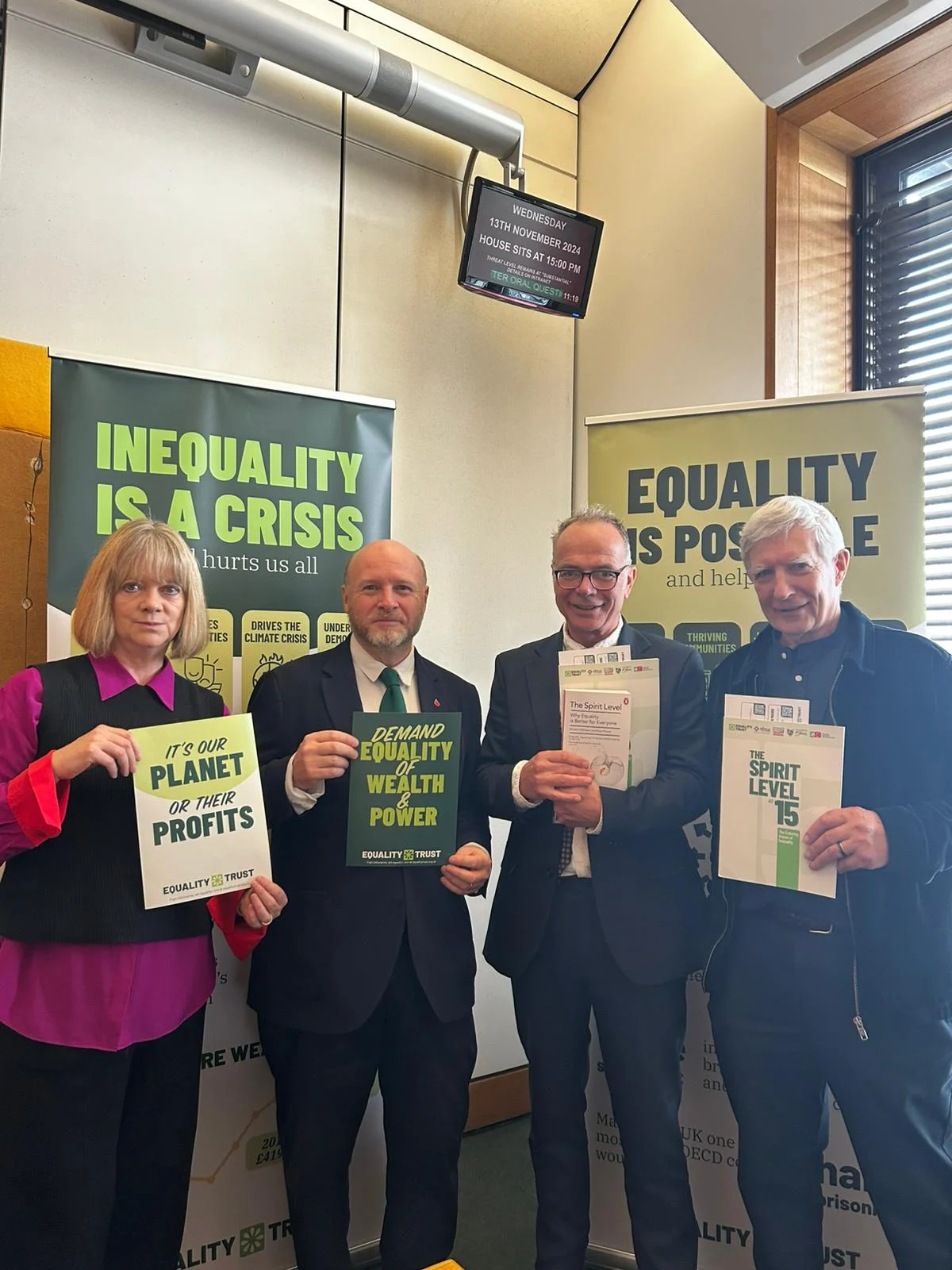
The Equality Trust’s project builds on the "Spirit Level" theory—named after the seminal work by Richard Wilkinson and Kate Pickett—which posits that societies with high levels of inequality perform worse across nearly every social indicator, including life expectancy, literacy, and trust. By introducing the "Community Economist" model, the Trust is attempting to operationalize these theories into a form of democratic participation.
Official Responses and Strategic Implications
While the project is a grassroots initiative, it has garnered attention from social policy analysts and advocates for economic reform. Dr. Sarah Henderson, a senior fellow at the Center for Economic Justice (who was not directly involved in the project), noted that the "unfiltered" nature of this research provides a necessary counterpoint to traditional modeling.
"The value of the Community Economist project lies in its ability to capture the ‘friction’ in the system," Henderson stated in a briefing following the report’s release. "Traditional economic indicators like GDP or the FTSE 100 don’t tell us how a mother in Glasgow feels about her ability to provide a ‘good life’ for her children. When we ignore those voices, we make bad policy."
The Equality Trust has signaled that the release of this report is merely the first stage of a three-phase strategy. The project is now moving into Phase 2, which involves:
- Focused Workshops: Translating the report’s findings into specific policy recommendations.
- Message Testing: Determining how to communicate economic concepts to the broader public in a way that inspires action rather than apathy.
- Coalition Building: Partnering with trade unions, housing associations, and local councils to create a unified front for economic reform.
Phase 3, slated for late 2026, will focus on "Social Action," where the evidence gathered by the Community Economists will be used to lobby for legislative changes, such as rent controls, universal basic services, or more progressive taxation structures.
Analysis: Moving from Private Worry to Shared Action
The Community Economist project represents a significant departure from standard advocacy. Rather than acting as a voice for the marginalized, the Equality Trust is attempting to provide the tools for the marginalized to act as their own advocates. This shift from "private worry" to "shared action" is a cornerstone of the project’s philosophy.
By framing the economy as something that "people make," the project challenges the neoliberal assumption that markets are quasi-natural forces governed by immutable laws. Instead, it suggests that the economy is a series of political choices. If the current choices lead to inequality and social fragmentation, the project argues, then different choices can—and must—be made.
The implications for the future of UK social policy are substantial. If the Community Economist model is adopted more widely, it could lead to a more participatory form of economic governance. This might include participatory budgeting at the local level or the inclusion of "lived experience" consultants in the development of national budgets.
Conclusion: A Foundation for Real Change
The "Community Economist" insight report and accompanying film serve as both a critique of the present and a blueprint for the future. The project has demonstrated that when provided with the right tools and platform, ordinary citizens are more than capable of engaging with complex economic concepts and proposing viable solutions.
As the UK continues to grapple with the long-term effects of regional inequality and the rising cost of living, the voices captured in this project provide a necessary reminder of what is at stake. The economy, as the report concludes, should be judged not by the wealth it accumulates for the few, but by the security and dignity it provides for the many. The work of the ten volunteers from London to Scotland has laid the groundwork for a movement that seeks to ensure that everyone, regardless of their background, has what they need to live a "good life."