Majorities in most of the three dozen countries surveyed express an unfavorable view of Israel and little or no confidence in Prime Minister Benjamin Netanyahu. These findings stem from a comprehensive Pew Research Center survey conducted between February 8 and May 13, 2026. Notably, most interviews were completed after the United States and Israel initiated a military campaign in Iran on February 28, 2026, a significant geopolitical event that likely influenced public sentiment.
The survey, which polled 44,657 individuals across 36 countries—including nations in North America, Europe, Asia-Pacific, the Middle East, Africa, and Latin America, as well as the West Bank and East Jerusalem—reveals a predominantly negative global perception of Israel. A median of 67% of adults surveyed held an unfavorable view of the country, compared to only 25% who expressed a favorable opinion.
Key Findings: Global Sentiment Towards Israel

The data paints a stark picture of global sentiment:
- Widespread Unfavorability: Across the surveyed nations, unfavorable views of Israel were the norm. In Europe, particularly in Italy, the Netherlands, and Spain, a substantial proportion of adults reported a "very unfavorable" opinion.
- Regional Disparities: Views were overwhelmingly negative in Muslim-majority countries, including Bangladesh, Indonesia, Malaysia, Pakistan, Turkey, and the West Bank and East Jerusalem. Conversely, some sub-Saharan African nations exhibited more positive assessments.
- Generational Divide: In several countries, particularly in North America and Europe, younger demographics consistently expressed more negative views of Israel than older generations. For instance, in Hungary, 72% of those aged 18-34 held unfavorable views, a stark contrast to the 45% among those 50 and older.
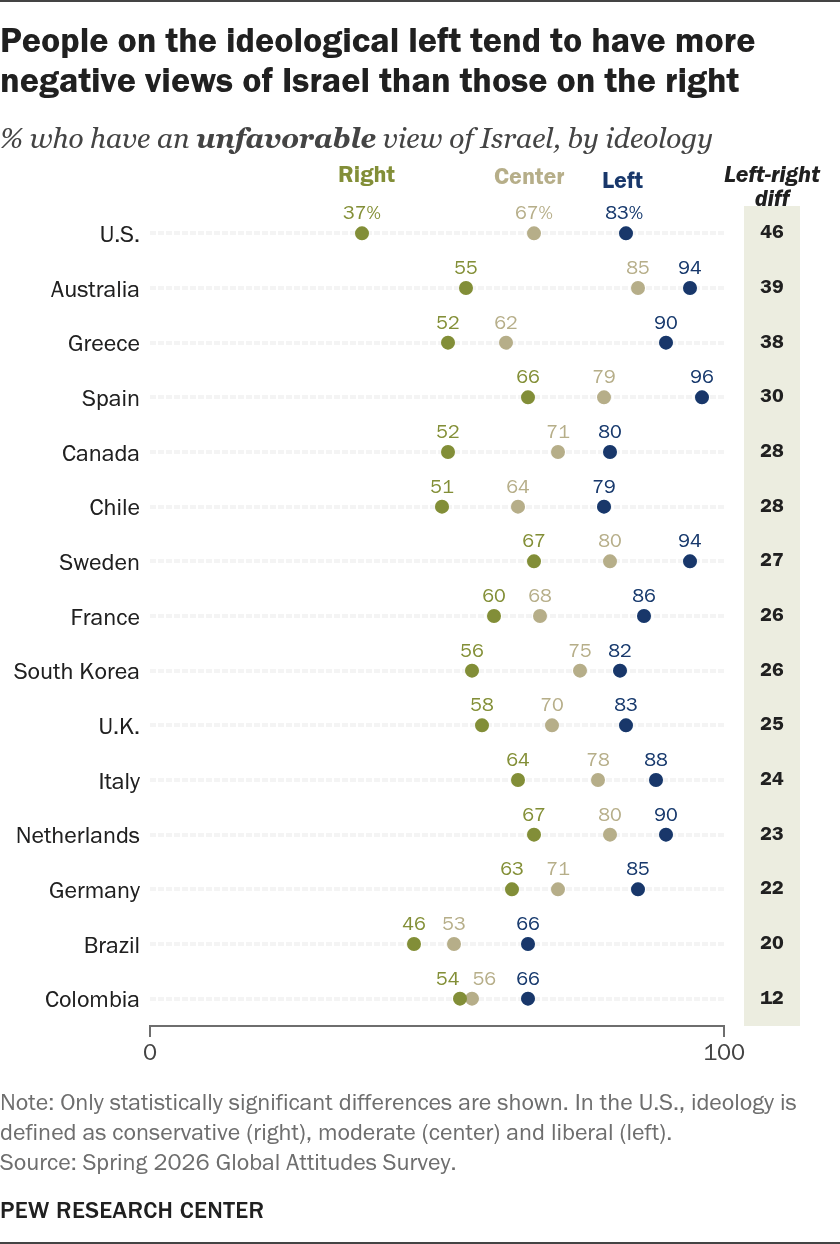
- Ideological Polarization: A significant ideological divide was observed in many nations, with individuals identifying with the political left generally holding more negative views of Israel than those on the right. This gap was particularly pronounced in the United States, where 83% of liberals and 37% of conservatives reported unfavorable views.
Shifting Perceptions: Trends Since 2025
The survey also highlighted changes in public opinion since the previous year. In 13 out of 24 countries with comparable data, unfavorable views of Israel have become more prevalent. Argentina, for example, saw a shift from a 46% unfavorable rating in 2025 to a majority 55% in 2026. Similarly, Australia, Italy, Nigeria, Poland, and the United Kingdom experienced significant increases in "very unfavorable" views. Greece was an exception, showing a slight warming of sentiment, though still with a predominantly unfavorable outlook.
Low Confidence in Prime Minister Netanyahu

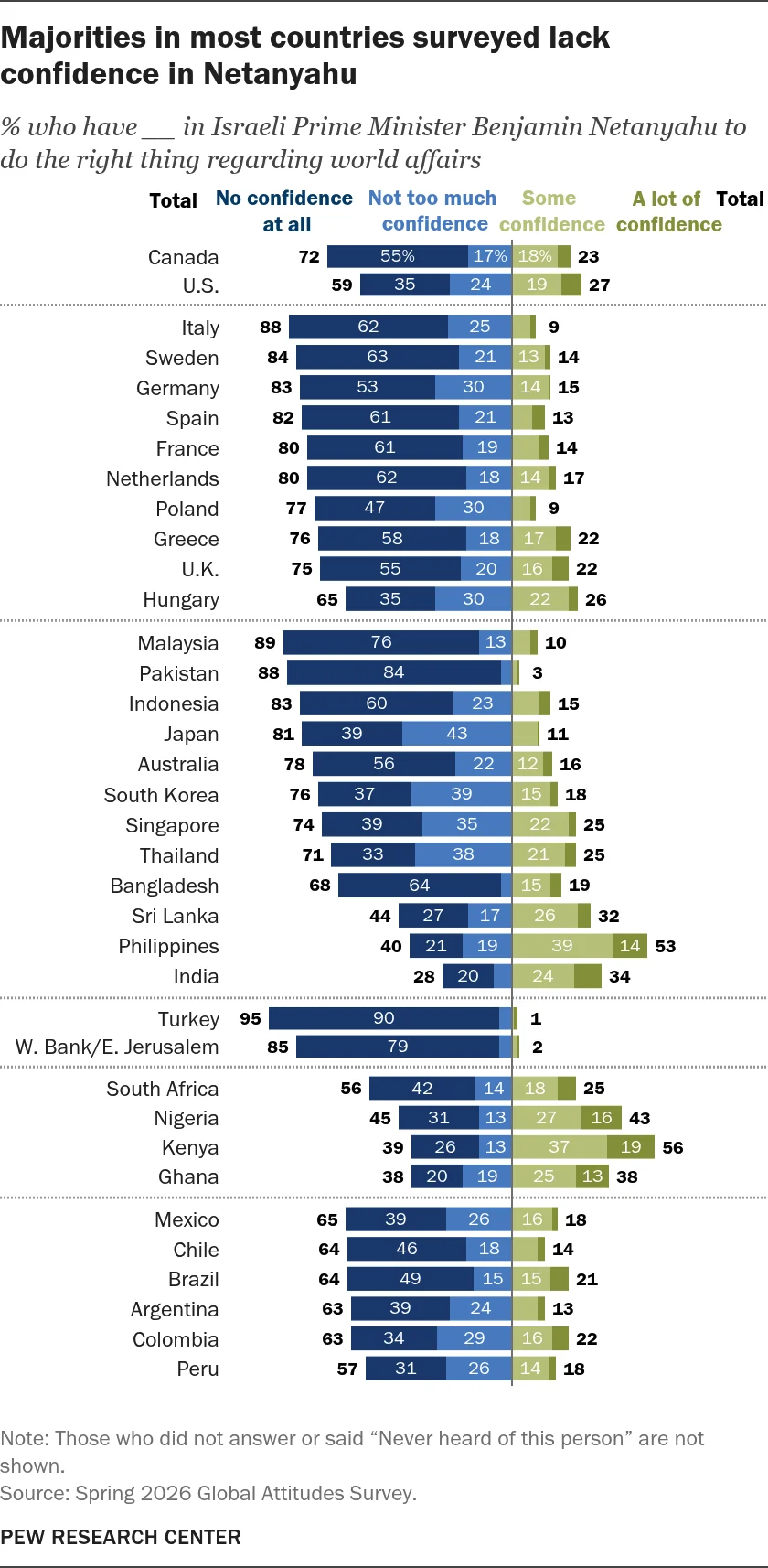
The survey also delved into global confidence levels in Israeli Prime Minister Benjamin Netanyahu’s ability to handle world affairs. The results indicate a widespread lack of trust:
- Dominance of "No Confidence": In a majority of the surveyed countries, a significant portion of respondents expressed "no confidence at all" or "not too much confidence" in Netanyahu. This was particularly acute in Australia, Bangladesh, Canada, France, Germany, Greece, Indonesia, Italy, Malaysia, the Netherlands, Pakistan, Spain, Sweden, Turkey, the United Kingdom, and the West Bank and East Jerusalem, where majorities voiced a lack of confidence.
- Exceptions to the Trend: Kenya and the Philippines stood out as the only surveyed nations where more than half of the population expressed confidence in Netanyahu.
- Demographic Similarities: Similar to views on Israel, confidence in Netanyahu also showed disparities based on age and ideology. Younger individuals and those on the political left generally expressed less confidence compared to older individuals and those on the right.
Evolving Global Stance: Netanyahu’s Confidence Decline
The trend data reveals a concerning pattern for Prime Minister Netanyahu, with confidence levels dropping since 2025 in 13 of the 24 countries with comparable data. South Korea registered the most significant decline, with 76% of adults now lacking confidence, an increase from 64% the previous year. In several nations, the percentage of respondents expressing "no confidence at all" surged by double digits. For instance, in Italy, this figure rose from 45% in 2025 to 62% in 2026.
Methodology and Context
The Pew Research Center’s Spring 2026 Global Attitudes Survey was conducted from February 8 to May 13, 2026, encompassing interviews with 44,657 adults across 36 countries. The survey’s timing is significant, with a considerable portion of interviews taking place following the joint U.S.-Israel military operation in Iran on February 28, 2026. This operation, a response to escalating regional tensions and perceived threats, was a pivotal event that likely cast a long shadow over international perceptions of Israel and its leadership.
The decision to conduct military action in Iran followed months of heightened geopolitical instability in the Middle East, marked by increased missile exchanges and proxy conflicts. The operation itself was described by U.S. and Israeli officials as a targeted strike aimed at degrading specific military capabilities and deterring future aggression. However, such significant military engagements invariably draw international scrutiny and can profoundly influence global public opinion, often exacerbating existing sentiments or creating new ones. The Pew survey’s findings suggest that this particular military action may have contributed to the predominantly unfavorable views observed in the study’s aftermath.
Implications and Analysis
The consistent global trend of unfavorable views towards Israel and a lack of confidence in Prime Minister Netanyahu carries significant diplomatic and geopolitical implications. It suggests a growing international disconnect between Israel’s policies and the perceptions held by a substantial portion of the global populace.

- Diplomatic Challenges: The widespread negative sentiment could pose challenges for Israel in international forums, potentially impacting its ability to garner support for its security concerns and foreign policy objectives.
- Shifting Alliances: The data may indicate a need for recalibration in international relations, as public opinion can sometimes influence governmental policies and alliances. The strong ideological divisions, particularly in Western democracies, highlight the complex domestic political landscapes within which foreign policy decisions are made.
- Information Warfare and Media Narratives: The consistently negative views, especially among younger demographics and those on the left, could be influenced by prevailing media narratives and the accessibility of information about the Israeli-Palestinian conflict and regional security dynamics. The rapid dissemination of information, particularly through social media, plays a crucial role in shaping these perceptions.
- The Role of the Military Campaign: The timing of the survey relative to the U.S.-Israel military campaign in Iran cannot be overstated. Such actions, regardless of their stated objectives, are often viewed critically by a significant segment of the international community, potentially intensifying existing negative perceptions of Israel. The campaign, aimed at deterring perceived threats, may have inadvertently fueled broader international disapproval.
The Pew Research Center’s comprehensive survey provides a valuable snapshot of global sentiment, underscoring the complex and often critical international landscape in which Israel and its leadership operate. The findings suggest a persistent need for nuanced diplomatic engagement and a deeper understanding of the diverse global perspectives that shape perceptions of Israel’s role in the world.
About the Research
This Pew Research Center analysis is part of its ongoing commitment to understanding global attitudes toward significant geopolitical issues. The Center regularly reports on how people in the United States and around the world view various countries and leaders. Previous research has documented both U.S. domestic views and broader global perspectives on Israel and its leadership. The full survey questions and detailed methodology are available on the Pew Research Center website for transparency and further academic analysis. The survey’s inclusion of the West Bank and East Jerusalem, while notably excluding Gaza, provides specific insights into Palestinian sentiment within the surveyed territories.