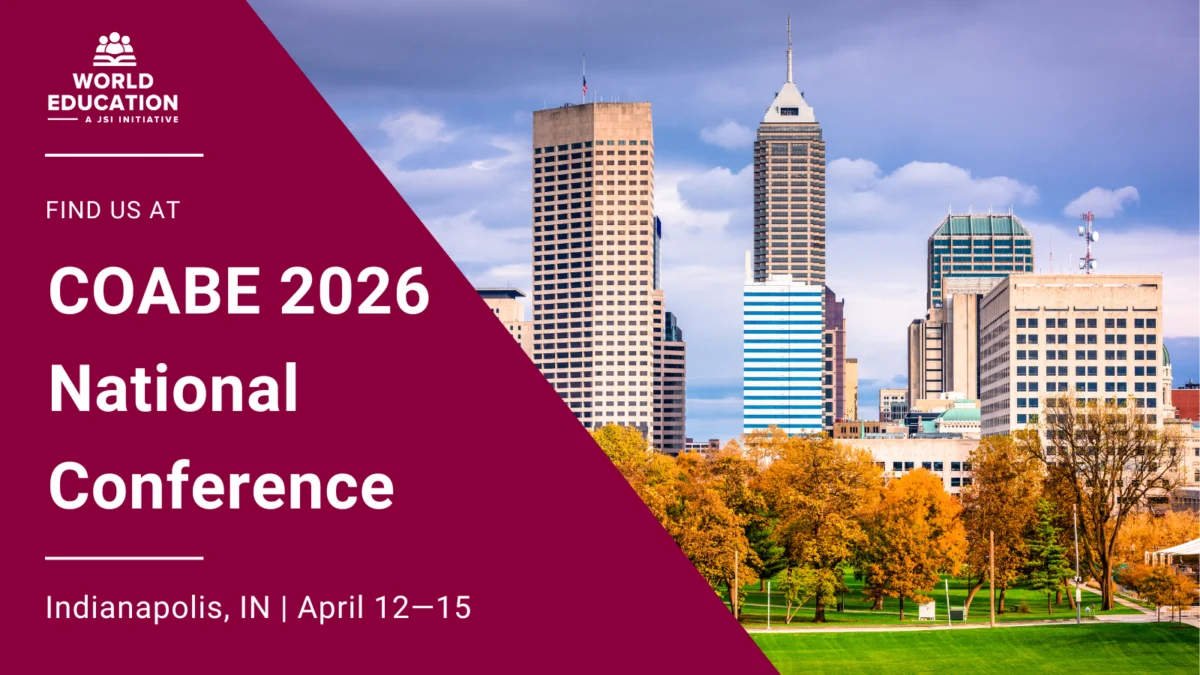
World Education, a prominent initiative of JSI Research & Training Institute, Inc. (JSI), has finalized its extensive programming schedule for the Coalition on Adult Basic Education (COABE) 2026 National Conference. Set to take place in Indianapolis, Indiana, from April 12 to April 15, 2026, the conference serves as the premier gathering for adult education professionals, policymakers, and advocates in the United States. World Education’s presence at the event underscores a pivotal shift in the adult foundational education sector, where the integration of generative artificial intelligence (AI) and the pursuit of digital equity have become central to workforce development and social mobility.
The 2026 conference arrives at a critical juncture for the American education system. As the digital divide continues to evolve from a matter of hardware access to one of "usage and fluency," World Education is positioning itself as a primary architect of the frameworks necessary to support adult learners. By sending a diverse delegation of experts—including Jeff Goumas, Jen Vanek, Rachel Riggs, and Sandy Goodman—the organization aims to provide practitioners with scalable, research-backed solutions to the challenges of the modern classroom.
A Strategic Timeline of Expert Contributions
The four-day event is structured to provide both in-person and virtual attendees with a comprehensive look at the future of adult education. World Education’s schedule is designed to move from foundational digital skills to the high-level application of emerging technologies.
Monday, April 13: Foundations of Digital Fluency and Policy Implementation
The first full day of the conference focuses on the practical application of digital skills across various learning environments. Starting at 8:00 AM, Jeff Goumas will lead a session titled "Using BRIDGES Skills Checklists to Drive Digital Skills Development in Any Context." This session, held in the JW Grand Ballroom 2, addresses the urgent need for standardized assessment tools that help educators track and validate the digital competencies of their students.
Later that morning, the focus shifts to municipal-level strategy. Sandy Goodman and Catalina González will present "From Policy to Practice: Implementation Lessons from Boston’s Digital Literacy Initiative." This session is expected to provide a blueprint for how city-wide collaborations between government agencies and non-profits can successfully tackle literacy gaps in urban environments.
The afternoon of Monday concludes with a research-heavy presentation. Jen Vanek and Jeff Goumas, joining forces with the American Institutes for Research (AIR) and the CREATE Network, will share findings in "Practical Solutions from Research: Digital Tools to Support Teaching and Learning." This session is exclusive to in-person attendees in Room 205, highlighting the collaborative nature of federal research initiatives.
Tuesday, April 14: The Artificial Intelligence Frontier
Tuesday marks the conference’s deep dive into the most transformative technology of the decade: Generative AI. Rachel Riggs, a leading voice in educational technology at World Education, will open the day in JW Grand Ballroom 3 with "Aligning AI Literacy with Learning and Work Goals in Adult Ed." As AI becomes a standard requirement in the workplace, this session explores how to ensure adult learners are not left behind in the "AI divide."
Midday sessions include a look at open-access resources. Jen Vanek and Jeff Goumas, alongside Stephen Sireci of UMass Amherst, will present on "SkillBlox" and "ASAP," two platforms designed to provide free, high-quality curriculum to adult readers.
The afternoon features a double-header of innovation. While Stephanie Cronen and Neha Nanda of AIR join Vanek and Goumas to discuss "Practitioner-Friendly Findings" in Room 206, Rachel Riggs will simultaneously lead a session in the Grand Ballroom on "Generative AI and the EdTech Maker Space." This presentation focuses on the "EdTech Maker Space" model, which empowers teachers to use AI to fill gaps in existing learning resources, effectively crowdsourcing the creation of customized educational materials.
Wednesday, April 15: Professional Development and Literacy Strategies
The final day of the conference addresses the "educator gap"—the need for teachers themselves to be supported as they navigate new technologies. Dani Scherer will present "Maximum Impact Professional Development: A Three-Pronged Approach," emphasizing that teacher training must be continuous, collaborative, and classroom-centered.
The conference concludes with two sessions led by Eliana Stanislawski. Her first session, "EdTech in Action," provides a roadmap for structuring digital literacy learning series for educators. Her final presentation, "Engaging Strategies for Online Instruction of Literacy-Level Adults," addresses the unique pedagogical challenges of teaching adults with very low literacy levels in a virtual environment—a demographic that has traditionally been the hardest to reach through digital means.
Supporting Data: The State of Adult Literacy in 2026
The urgency of World Education’s mission is supported by sobering national statistics. According to data from the Program for the International Assessment of Adult Competencies (PIAAC), approximately 21% of adults in the United States possess low literacy skills, and nearly 30% lack the digital problem-solving skills required for most entry-level jobs.
Furthermore, the "Digital Equity Act" funding, which began flowing into states in the years leading up to 2026, has created a massive demand for the types of professional development and curriculum design services World Education provides. Research indicates that for every dollar invested in adult education, there is a significant return on investment (ROI) in the form of increased tax revenue and decreased reliance on social services. However, this ROI is only realized when programs are high-quality and aligned with the actual needs of the 21st-century workforce.
Official Responses and Collaborative Spirit
While the conference is a showcase for World Education’s expertise, the organization emphasizes that these advancements are the result of a "partnership-first" philosophy. "World Education fosters enduring partnerships across regions and sectors to advance education outcomes for all," the organization stated in its pre-conference briefing.
This sentiment is echoed by the Coalition on Adult Basic Education. COABE leadership has frequently noted that the participation of organizations like JSI/World Education is vital for translating academic research into "practitioner-ready" tools. By bridging the gap between the lab and the classroom, these presenters enable teachers in rural, urban, and correctional settings to utilize the same high-caliber resources.
Industry analysts suggest that the focus on AI at the 2026 conference reflects a broader trend in the non-profit sector. As educational technology becomes more complex, the role of "intermediary" organizations like World Education becomes crucial. They act as a filter, ensuring that technology serves the learner, rather than the learner being forced to adapt to poorly designed tools.
Broader Impact and Future Implications
The long-term implications of the strategies presented at COABE 2026 extend far beyond the classroom. By focusing on "AI Literacy" and "Digital Skills Checklists," World Education is essentially redefining what it means to be "literate" in the mid-2020s.
- Workforce Readiness: As automation and AI reshape the labor market, the ability to interact with digital systems is no longer an "extra" skill; it is a fundamental requirement. World Education’s sessions on aligning AI literacy with work goals directly address the looming threat of technological unemployment among low-skilled workers.
- Systemic Equity: By advocating for free and open online literacy curricula (such as SkillBlox), World Education is pushing back against the "paywalling" of education. This ensures that even the most underfunded adult education centers have access to gold-standard materials.
- Professionalization of the Field: The emphasis on "Maximum Impact Professional Development" signals a shift toward treating adult education as a specialized discipline. This is expected to lead to better teacher retention and improved student outcomes over the next decade.
As the delegates prepare to gather in Indianapolis, the overarching theme is one of cautious optimism. The challenges of digital inequity are significant, but the tools being showcased by World Education—from AI-driven resource creation to robust skills checklists—offer a tangible path forward. For the thousands of educators attending COABE 2026, the insights shared by the World Education team will likely serve as the foundation for their programs for years to come.
World Education continues to invite stakeholders, including state directors of adult education, community college administrators, and technology partners, to engage with their experts during the conference. Through continued research, evaluation, and policy development, the initiative aims to ensure that the "Indianapolis 2026" sessions translate into measurable improvements in the lives of adult learners across the globe.