Our inherent cognitive architecture, under constant pressure to rapidly process vast amounts of information, frequently deviates from our conscious intentions of open-mindedness, respect, and inclusion. This often leads to unintentional biases and exclusionary behaviours. With the vast majority of our daily thinking operating on an automatic, intuitive mode — what psychologists refer to as System 1 thinking — judgments can be inadvertently shaped by fleeting feelings, superficial observations, past experiences, societal stereotypes, cultural norms, and ingrained beliefs from our upbringing. However, by deliberately reframing our internal narratives and external expressions, we possess a powerful tool to reshape these mental shortcuts, aligning them more accurately with our aspirations for how we wish to interact with ourselves and others. This behavioural intervention, often termed an "Inclusion Nudge," offers a practical pathway to mitigate deeply entrenched biases.
The Two Systems of Thought: Understanding Our Cognitive Landscape
To comprehend the pervasive nature of unconscious bias, it is essential to understand the dual-process theory of cognition, famously popularized by Nobel laureate Daniel Kahneman in his seminal work, "Thinking, Fast and Slow." This framework posits two distinct systems of thought:
- System 1 (Fast Thinking): This operates automatically and quickly, with little or no effort and no sense of voluntary control. It is responsible for our intuitions, snap judgments, and automatic responses. Examples include recognizing faces, understanding simple sentences, or reacting to sudden noises. While incredibly efficient and vital for daily functioning, System 1 is prone to biases and heuristics, leading to systematic errors in judgment when precision or objectivity is required.
- System 2 (Slow Thinking): This allocates attention to effortful mental activities that demand it, including complex computations. It is associated with agency, choice, and concentration. Examples include solving a complex math problem, comparing two products, or deliberating a difficult decision. System 2 is critical for logical reasoning and self-control but is inherently lazy and easily fatigued, often deferring to System 1 whenever possible.
The challenge in fostering inclusion arises because our System 1 thinking, which accounts for an estimated 95% of our daily cognitive processes, is heavily influenced by external stimuli and deeply ingrained associations. These associations, formed over a lifetime, can override our conscious System 2 intentions for fairness and equity, manifesting as unconscious biases. Data from various Implicit Association Tests (IATs) consistently demonstrate that a significant portion of the population holds implicit biases related to race, gender, age, and other social categories, even when they explicitly disavow such prejudices. For instance, studies show that job applicants with traditionally "white-sounding" names often receive more callbacks than those with "black-sounding" names, despite identical qualifications, illustrating the real-world impact of these automatic associations.
Normative Patterns: The Unseen Architects of Our Perceptions
Throughout our lives, we are relentlessly and often unwittingly exposed to and internalize messages that dictate "normative patterns" – who is perceived as "good," "attractive," "smart," "trustworthy," "a leader," "friendly," "caring," "strong," or "talented." These archetypes are powerfully reinforced through a myriad of societal channels: family upbringing, peer groups, social media influencers, traditional media portrayals, educational systems, corporate reward structures, and broader cultural narratives.
This constant bombardment of idealized images and stereotypes profoundly shapes our perceptions and interactions, not only with others but also with the systems and institutions we create and utilize. The insidious nature of these normative patterns is their capacity to foster discriminatory impacts, leading to the systemic exclusion of individuals who do not conform to the dominant mold. For example, leadership roles are often implicitly associated with masculine traits or specific racial demographics, leading to fewer opportunities for women or minorities, regardless of their actual capabilities. Research by Catalyst has frequently highlighted how unconscious biases in performance reviews and promotion processes disproportionately affect women and underrepresented groups, perpetuating gender and racial gaps in leadership. This fundamental drive to counteract such pervasive societal exclusion is a core motivation for many working in diversity, equity, and inclusion (DEI).
The impact of these normative patterns is not limited to external perceptions; it extends inward, shaping our self-image. Many individuals develop negative self-associations, perceiving themselves as outliers or inadequate when measured against these often unattainable societal ideals. This phenomenon has been exacerbated in recent years by the rise of video-based online work. Nearly two years into the pandemic, a significant psychological effect emerged, termed "Zoom dysmorphia." This condition describes an increased negative fixation on one’s own appearance, fueled by constant self-viewing during virtual meetings. Psychologists note that the distorted, often unflattering, mirror-image effect of webcams, coupled with the heightened self-awareness of being constantly "on camera," has led to a surge in body dissatisfaction and, in some cases, an increase in cosmetic procedures. These unconscious judgments against ourselves persist despite our rationally held positive self-beliefs, demonstrating the powerful grip of internalized normative pressures.
The Rise of Behavioural Science in DEI: Nudges for Inclusion
Recognizing that bias cannot simply be wished away, the field of behavioural science offers a proactive, design-led approach to mitigating its influence. The concept of "nudges," first articulated by Richard Thaler and Cass Sunstein, refers to subtle interventions that steer people’s choices in a predictable direction without forbidding any options or significantly changing their economic incentives. Applied to DEI, "Inclusion Nudges" are behavioural designs aimed at interrupting automatic biases and promoting more inclusive behaviours.
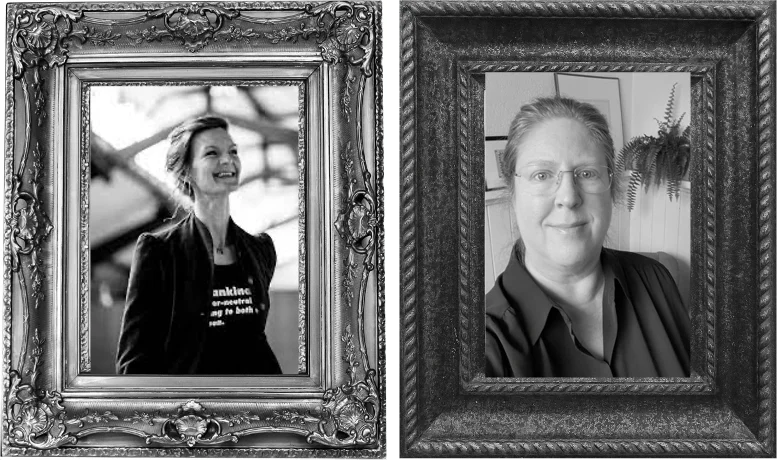
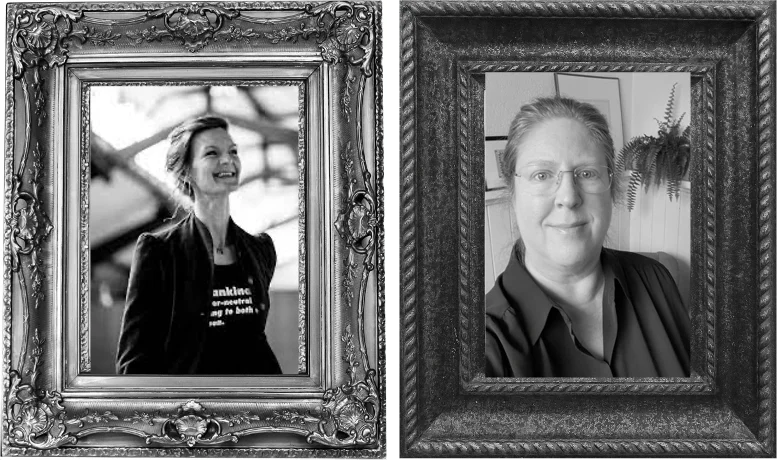
The work of Tinna C. F. Rasmussen and Lisa Kepinski, pioneers in applying behavioural science to DEI, exemplifies this approach. As behavioural change designers, they frequently "practice on themselves" to test and refine interventions aimed at interrupting and reshaping internalized negative messages, biases, and exclusionary behaviours. Their personal experiments provide compelling evidence for the efficacy of reframing.
Personal Reframing: The "That’s a Human…" Experiment
One particularly insightful design they developed and experimented with is dubbed, "That’s a human…" This simple yet profound reframing technique aims to consciously shift internal perceptions.
Lisa’s Story:
Lisa recounts her personal struggle with negative self-perception, particularly concerning her appearance during the prolonged lockdown periods. She noticed a pattern: quick glances in the mirror to check practicalities (hair, teeth, clothes) would often extend "a second too long," allowing negative self-critical thoughts to creep in. This internal conflict between her critical and confident selves represented a significant drain on energy. Inspired by the "Re-Frame ‘Migrant’ to ‘Human’" Inclusion Nudge from The Inclusion Nudges Guidebook, she sought to redirect this energy.
The "Re-Frame ‘Migrant’ to ‘Human’" design, pioneered by the South African non-profit organization PASSOP (People Against Suffering, Oppression and Poverty), involved actively commenting on social media posts using terms like "refugee crisis" or "migrant issue" by interjecting with "human crisis" or "human being." This strategy aimed to re-focus public perception on the inherent humanity of the individuals involved, shifting from dehumanizing labels to a recognition of shared personhood. This demonstrated how a simple linguistic shift could powerfully reframe perspectives towards seeing and treating people as humans.
Drawing from this principle, Lisa began her own experiment. When looking in the mirror, instead of allowing negative thoughts to take root, she would consciously say to herself, "That’s a human face," or "That’s a human body." This immediate, intentional reframing served as an interruptive mechanism. Over time, this practice became a regular habit, and its impact extended beyond her self-perception. She found herself applying the same principle when observing others, mentally noting, "That’s a human face" or "That’s a human body." This external application felt surprisingly less effortful, perhaps due to the common tendency for self-criticism to be more intense than external judgment.
The power of this technique lies in its ability to create a moment of cognitive dissonance. When she caught herself thinking "That’s a human…" while simultaneously recalling a prior, perhaps superficial or judgmental, thought about the person, it served as a powerful motivator. This stark contrast between her inclusive intentions and her automatic, unconscious thoughts reinforced the need to continue practicing reframing. It underscored the critical insight that bias is not something that can be "cured" or simply "go away"; rather, it requires continuous, deliberate interventions to interrupt its influence, create space for more thoughtful consideration, and literally change how we perceive.
Tinna’s Story:
Tinna was equally inspired by Lisa’s experiment. She adopted a similar practice, mentally stating, "There’s a human being" whenever she observed people in public spaces. She noticed her mind frequently defaulting to judgmental assessments of others’ appearances – "she is skinny," "he is overweight," "ugly shoes." This tendency caused her shame and frustration, as it conflicted with her values. The simple, default statement, "there is a human being," proved remarkably effective. It interrupted the automatic judgment cycle, often dissolving the critical thought before it could fully form. This shift fostered a more positive internal energy. An unexpected benefit was a reduction in her own feelings of being an outlier due to her height (185 cm). By viewing others as "just human beings," she extended that same acceptance to herself, recognizing her own shared humanity.
Framing Perceptions Inclusion Nudges: A Deeper Dive
The effectiveness of these personal experiments underscores the broader power of Framing Perceptions Inclusion Nudges. These designs are rooted in the understanding that judgments about body shape, appearance, and voice can disproportionately dominate our self-perception, often eclipsing our sense of accomplishment, inherent value, and strong self-identity. This internal conflict highlights the challenge of bias mitigation: it cannot be willed away. Instead, it necessitates leveraging behavioural insights to design deliberate interventions that reshape harmful mental messages.
As defined in The Inclusion Nudges Guidebook by Kepinski & Nielsen, "Framing Perceptions Inclusion Nudges are designs that alter perceptions to help the brain perceive issues related to inclusion, diversity, equality in a resource discourse. The designs also prime specific associations and counter stereotypes. Altering the framing of an issue or message and changing the anchor of a thought process helps to promote inclusive behaviour because it influences the reactions in the automatic, stereotyped, and unconscious mind."
These nudges work by consciously manipulating the context or presentation of information to guide System 1 thinking towards more inclusive outcomes. By changing the "frame" through which we view a person, situation, or even ourselves, we can subtly but effectively shift our automatic reactions. This might involve:
- Cognitive Reframing: Consciously reinterpreting a situation or characteristic in a more positive or neutral light.
- Priming: Exposing individuals to specific stimuli (words, images) that activate desired associations or mindsets.
- Counter-Stereotyping: Presenting information or examples that directly challenge existing stereotypes, weakening their automatic influence.
For instance, another highly impactful Framing Perceptions design highlighted by Kepinski and Nielsen is "Ask Flip Questions to Change Your Perceptions in the Moment." This involves consciously asking questions that challenge initial assumptions or biases, forcing System 2 engagement. For example, instead of thinking, "This candidate doesn’t seem like a leader," one might ask, "What qualities does this candidate possess that could make them an effective leader, even if they don’t fit my typical mold?" Such questions compel a broader search for information and mitigate the risk of premature, biased judgments. This particular nudge has been widely adopted by individuals and organizations, proving highly effective in expanding thinking and improving decision-making processes in daily work and life.
Broader Implications and Societal Impact
The principles behind reframing perceptions extend far beyond personal self-talk. They have profound implications for creating more equitable and inclusive societies and organizations.
In the Workplace:
- Hiring and Promotion: Applying reframing techniques during resume reviews or interviews can help mitigate affinity bias (favoring those similar to ourselves) or confirmation bias (seeking information that confirms initial impressions). For example, anonymizing resumes or using structured interviews with predefined criteria can "nudge" hiring managers towards objective assessments.
- Performance Reviews: Training managers to use objective language and focus on demonstrable outcomes, rather than subjective personality traits, can reduce gender or racial bias in performance evaluations.
- Team Dynamics: Encouraging team members to "reframe" perceived weaknesses of colleagues into potential strengths, or to view diverse perspectives as assets rather than challenges, can foster stronger, more innovative teams.
In Society:
- Media Representation: Media outlets can employ Framing Perceptions Nudges by consciously diversifying images and narratives, challenging stereotypes, and portraying a broader spectrum of humanity. The "Images Framing Immigrants as One of Us" Inclusion Nudge, for example, advocates for media to use images that highlight common humanity and positive contributions, rather than perpetuating fear or othering.
- Public Policy: Policymakers can design public campaigns that reframe stigmatized groups or issues in a more inclusive light, fostering empathy and understanding.
- Education: Integrating lessons on cognitive biases and the power of reframing from an early age can equip future generations with tools to navigate a complex, diverse world more equitably.
The sustained application of Framing Perceptions Inclusion Nudges offers a tangible, actionable pathway to bridge the gap between our intentions and our actions regarding diversity, equity, and inclusion. By understanding the automatic nature of bias and consciously designing interventions to reshape our perceptions, individuals and organizations can cultivate environments where everyone feels seen, valued, and included. This ongoing work, rooted in behavioural science, is not about eliminating bias entirely – an unrealistic goal – but about strategically minimizing its negative influence, one reframed thought at a time. The collective impact of these small, deliberate shifts holds the potential to build a more just and equitable future.
For those interested in exploring these behavioural interventions further, resources such as "The Inclusion Nudges Guidebook" and the "Inclusion Nudges Action Guide" series provide detailed methodologies and case studies. The journey towards true inclusion is continuous, demanding constant vigilance and proactive design. The call to action remains: observe your own internal narratives, experiment with reframing, and contribute to a world where our shared humanity is always the default perception.