The upcoming local council elections, scheduled for May 7, 2026, represent a significant milestone in the British political calendar, with 5,014 seats contested across 136 English local authorities. While these elections are frequently characterized as barometers for national party popularity, their primary function remains the selection of representatives who manage the essential services—from housing and social care to urban planning and procurement—that directly influence the socio-economic fabric of local communities. As the United Kingdom continues to grapple with one of the highest levels of income inequality among developed nations, the 2026 polls offer a critical opportunity for the electorate to demand concrete strategies from candidates to mitigate the widening divide between the affluent and the marginalized.
The Scope and Scale of the 2026 Elections
The May 2026 elections are geographically diverse, covering a substantial portion of the English local government landscape. Of the 136 authorities holding elections, the vast majority are metropolitan boroughs, unitary authorities, and district councils. Simultaneously, voters in Wales and Scotland will go to the polls to elect representatives for their respective devolved administrations, adding a layer of national constitutional significance to the local contests.
Historically, local election turnout in the United Kingdom hovers between 30% and 40%, significantly lower than general election participation. However, analysts suggest that the 2026 cycle may see increased engagement due to the acute pressures of the cost-of-living crisis and the precarious financial state of many local authorities. Since 2010, local government funding has faced unprecedented challenges, with many councils reporting a "breaking point" in their ability to provide statutory services. This fiscal environment has placed the issue of inequality at the center of the political discourse, as the withdrawal of local services often disproportionately affects low-income households and vulnerable populations.
The Context of the Inequality Crisis
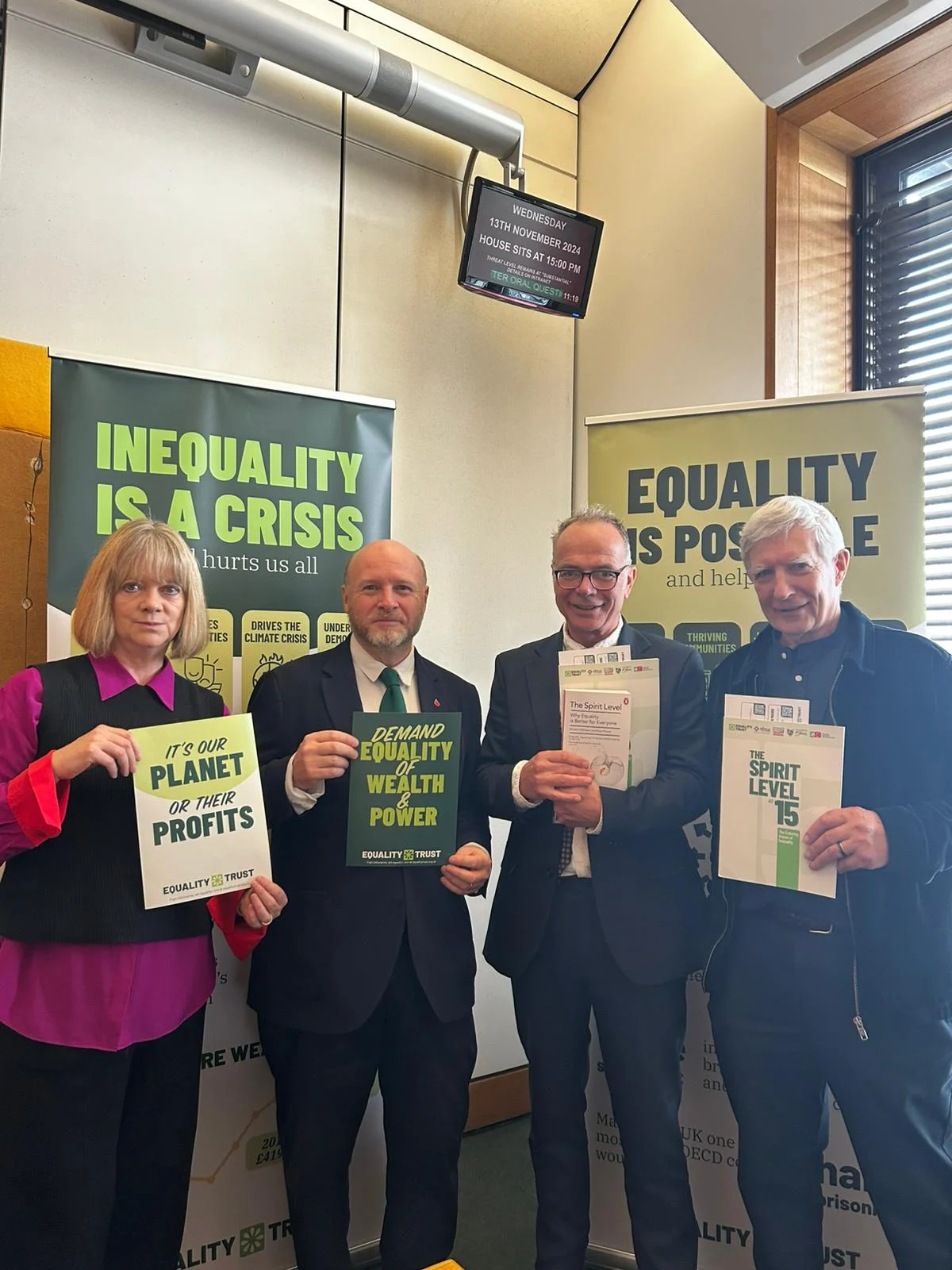
The backdrop to these elections is a national inequality crisis that has deepened over the last decade. Research from organizations such as The Equality Trust indicates that the UK’s wealth is heavily concentrated at the top, with the richest 1% of the population holding more wealth than the bottom 70% combined. This disparity is not merely a matter of economic statistics; it translates into tangible differences in life expectancy, educational attainment, and mental health outcomes across different postcodes.
In the local government context, inequality is manifested through the "postcode lottery" of service provision. For example, the availability of social housing, the quality of youth services, and the accessibility of public community spaces vary wildly between neighboring authorities. Advocates for greater equality argue that local councils possess the legislative and administrative levers necessary to challenge these disparities, provided there is the political will to implement progressive reforms.
Critical Policy Levers: Housing and the Socio-Economic Duty
One of the most pressing issues facing candidates in the 2026 elections is the chronic shortage of affordable housing. Local councils hold significant powers in this arena, including the ability to set planning requirements for developers, manage social housing stocks, and utilize legal powers to bring empty homes back into use. Currently, many authorities face burgeoning waiting lists for social housing, while "affordable" housing targets—often defined as 80% of market rates—remain out of reach for those on the lowest incomes.
Furthermore, the implementation of the "socio-economic duty" (SED) has emerged as a key demand from equality campaigners. Contained within Section 1 of the Equality Act 2010, the SED requires public bodies to adopt measures to address the inequalities arising from socio-economic disadvantage. While the UK government has never formally commenced this duty in England, several local authorities have voluntarily adopted it to ensure that their decision-making processes consider the impact on class and income inequality. In Wales and Scotland, the duty is already a statutory requirement, creating a divergent landscape that English voters are increasingly questioning.
Economic Strategy: Procurement and Community Wealth Building
The 2026 elections also spotlight the enormous economic power held by local councils through procurement. Collectively, English councils spend billions of pounds annually on goods and services. Traditionally, this spending has favored large, often multinational, private contractors. However, a growing movement toward "Community Wealth Building"—frequently referred to as the "Preston Model"—seeks to redirect this spending toward local businesses, cooperatives, and social enterprises.
By utilizing strategic procurement, councils can ensure that public money circulates within the local economy, supporting local jobs and raising labor standards. This approach also extends to council pension funds. There is increasing pressure from environmental and human rights groups for local authorities to divest the billions currently held in fossil fuels, the arms trade, and other exploitative industries. The 2026 candidates are expected to face rigorous questioning on whether they will commit to ethical investment strategies that align with the long-term well-being of their constituents.
The Crisis of Local Democracy and Resident Trust
A significant challenge for the incoming 2026 councilors will be addressing the erosion of trust in local democracy. Recent polling by the Local Government Information Unit (LGIU) suggests that only a quarter of voters trust the government to act in the best interests of local people. This disillusionment is often attributed to a feeling that decisions—particularly regarding large-scale urban developments—are made behind closed doors, favoring powerful developers over resident concerns.
The 2026 election cycle has seen a surge in calls for more participatory forms of governance. This includes the use of citizens’ assemblies, participatory budgeting, and more transparent consultation processes. Candidates who can demonstrate a commitment to "opening up" the council and using language that is accessible rather than exclusionary are likely to resonate with an electorate that feels increasingly alienated from the centers of power.
Fiscal Realities and the Future of Social Care
The most daunting task for any newly elected council in 2026 remains the management of social care and other essential services under severe budget constraints. Since 2010, many authorities have been forced to make devastating cuts to youth services, libraries, and community centers to protect statutory social care for children and the elderly. However, even these core services are under threat, with several councils having issued Section 114 notices, effectively declaring bankruptcy.
The debate on the doorstep is expected to focus on how candidates will protect these services without further burdening low-income residents through council tax increases. While national government funding is the primary driver of these fiscal pressures, local voters are demanding to know how their representatives will prioritize limited resources. Will they protect the community spaces that act as a safety net for the poor, or will further austerity measures be implemented?
Voter Mobilization and Public Discourse
In the lead-up to May 7, civil society organizations are mobilizing to ensure that inequality remains the focal point of the campaign. Strategies being employed include:
- Public Hustings: Non-partisan debates where candidates are questioned directly by residents on their specific plans for the ward or borough.
- Radio and Media Engagement: Utilizing call-in shows on stations like LBC and BBC local radio to elevate structural inequality issues to a broader audience.
- Direct Correspondence: Leveraging digital tools to email candidates specific questions regarding their stance on the socio-economic duty and affordable housing targets.
- Local Journalism: Writing letters to local newspapers to highlight specific community grievances, such as the approval of luxury developments over social housing.
These efforts aim to move the conversation beyond partisan slogans and toward measurable policy commitments.
Analysis: The Implications of the 2026 Results
The outcome of the 2026 local elections will have far-reaching implications. For the major political parties, the results will provide a definitive map of regional support and the effectiveness of their local messaging. For the communities themselves, the stakes are even higher. The election of councilors committed to tackling inequality could lead to a wave of voluntary adoptions of the socio-economic duty, a shift toward ethical procurement, and a more robust defense of local services.
Conversely, if the status quo remains, the "inequality gap" is likely to widen as councils continue to manage decline rather than fostering growth. The 2026 elections are therefore not merely a footnote to national politics, but a decisive moment for the future of local governance in England. As candidates knock on doors and participate in debates, the burden of proof lies with them: are they prepared to take the radical action necessary to ensure that their councils work for everyone, or will they continue to oversee a system that entrenches disadvantage? The answers provided over the coming weeks will determine the trajectory of 136 local authorities for the remainder of the decade.