In an era defined by rapid information flow and complex social dynamics, the human cognitive system often defaults to efficiency over accuracy, leading to unconscious biases that undermine intentions of open-mindedness, respect, and inclusion. The vast majority of human thought, operating within what Nobel laureate Daniel Kahneman terms "System 1" thinking, functions on autopilot, prone to making swift judgments influenced by emotions, immediate observations, past experiences, ingrained stereotypes, societal norms, and deeply held beliefs. This automatic processing, while essential for navigating daily life, can inadvertently steer individuals and organizations off course from their aspirational goals of equity and diversity. A strategic intervention, known as reframing—the deliberate act of changing what one sees and says—offers a powerful mechanism to reshape these inherent mental shortcuts, aligning them more closely with conscious values and fostering more accurate, inclusive interactions both internally and externally.
The Cognitive Architecture of Bias: System 1 and System 2 Thinking
The foundational understanding of how biases manifest lies in the dual-process theory of cognition, famously articulated by Kahneman and Amos Tversky. System 1 is characterized by its speed, intuition, and automaticity. It is the part of our brain that quickly recognizes faces, understands simple sentences, and reacts instinctively. While incredibly efficient, System 1 relies heavily on heuristics—mental shortcuts that, while often useful, can lead to systematic errors in judgment, or biases. These biases are not necessarily malicious but are products of our brain’s attempt to conserve energy and make sense of a complex world with limited information. For instance, snap judgments about an individual’s capabilities based on their appearance or accent are typical System 1 operations.
In contrast, System 2 thinking is slow, deliberate, analytical, and effortful. It is engaged when we solve complex math problems, learn a new language, or consciously weigh evidence before making a decision. While System 2 has the capacity for rational thought and bias correction, it is easily fatigued and often overridden by the faster, more persuasive impulses of System 1. In high-pressure environments, or when cognitive load is high, individuals are even more susceptible to System 1 biases. Research from institutions like Project Implicit, a collaboration of researchers from Harvard University, the University of Virginia, and the University of Washington, has consistently demonstrated the widespread prevalence of implicit biases across various demographics and contexts, revealing how deeply ingrained these unconscious associations are in collective consciousness. These biases can manifest in subtle but significant ways, impacting hiring decisions, performance evaluations, social interactions, and even public policy, often without conscious awareness of those perpetrating them.
The Pervasive Influence of Normative Patterns on Perception
Throughout an individual’s life, they are relentlessly, often unwittingly, exposed to and internalize a deluge of messages that define normative patterns of what is considered "good," "attractive," "smart," "trustworthy," "a leader," or "friendly." These powerful, snap mental associations are continuously reinforced through diverse channels: family upbringing, peer groups, social media influencers, traditional media portrayals, educational systems, reward structures in organizations, and broader societal narratives.
The cumulative effect of this constant exposure is profound; these perceptions actively shape individuals’ views of themselves and others, influencing their interactions and the very systems they create and operate within. This phenomenon can have a significant discriminatory impact on society, leading to the systemic exclusion of countless individuals who do not conform to these dominant, often narrowly defined, normative patterns. For instance, studies on media representation frequently highlight the disproportionate portrayal of certain groups in leadership roles or as protagonists, subtly reinforcing stereotypes about who is "naturally" suited for power or heroism. Such biases are not merely theoretical; they contribute to real-world disparities in opportunities, access, and social acceptance, fueling the critical impetus for ongoing work in diversity, equity, and inclusion (DEI).
Beyond societal discrimination, these normative patterns can also foster negative self-associations. Individuals may internalize messages that lead them to believe they fall short of an idealized standard, resulting in diminished self-worth or feelings of being an "outlier." The recent surge in video-based online work, accelerated by the global pandemic, has exacerbated this internal struggle for many. The phenomenon termed "Zoom dysmorphia" highlights a new form of self-criticism, where individuals become negatively fixated on their appearance due to prolonged self-scrutiny during video calls. This unconscious self-judgment often stands in stark contrast to an individual’s rationally held positive self-beliefs, creating a significant internal conflict. Dr. Elena Rodriguez, a behavioral psychologist specializing in digital well-being, notes, "Zoom dysmorphia is a stark illustration of how technology can amplify pre-existing insecurities, turning a mirror into a magnifying glass for perceived flaws. It underscores the urgent need for strategies that help individuals reframe their self-perception in this new visual landscape." This experience resonates deeply with many, including practitioners in the DEI space, who themselves have navigated feelings of not fitting societal molds at various points in their lives.
Reframing as a Strategic Behavioral Intervention: The Power of Inclusion Nudges
Recognizing the deep-seated nature of these cognitive shortcuts and normative influences, behavioral change designers have increasingly turned to reframing as a potent tool to interrupt and reshape internalised negative messages, biases, and exclusionary behaviors. This approach is rooted in the principles of behavioral economics, which posits that by subtly altering the "choice architecture" or "perception architecture" of an environment, individuals can be nudged towards more desirable outcomes without coercion.
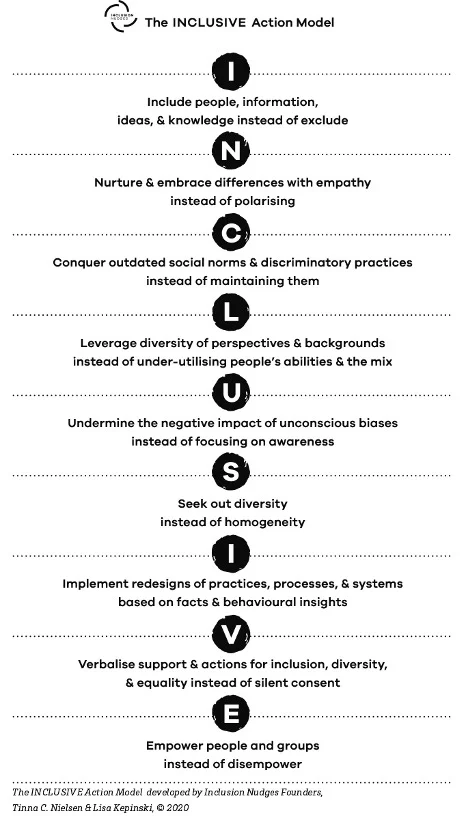
Framing Perceptions Inclusion Nudges are specifically designed to leverage these behavioral insights. As defined in The Inclusion Nudges Guidebook by Kepinski & Nielsen, these are "designs that alter perceptions to help the brain perceive issues related to inclusion, diversity, equality in a resource discourse. The designs also prime specific associations and counter stereotypes. Altering the framing of an issue or message and changing the anchor of a thought process helps to promote inclusive behaviour because it influences the reactions in the automatic, stereotyped, and unconscious mind." The power of nudges lies in their ability to bypass conscious resistance by influencing the automatic, System 1 processing. Instead of demanding a conscious change of mind, they subtly guide perception to foster more inclusive reactions.
The evolution of behavioral science’s application to DEI has seen a significant acceleration over the past decade. What began in academic research has transitioned into practical tools for organizations seeking to create more equitable environments. Early interventions focused on awareness training, but increasingly, the understanding is that awareness alone is insufficient. It must be paired with actionable, behavioral designs that make the inclusive choice the easy choice.
Personal Experiments in Reframing: The "That’s a Human…" Nudge
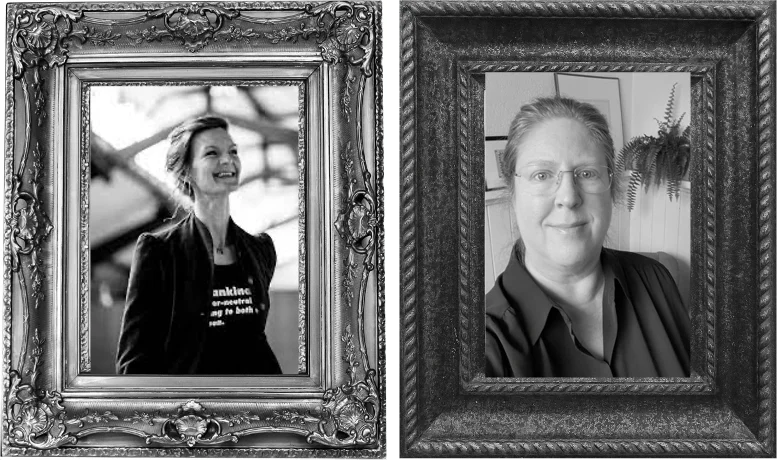
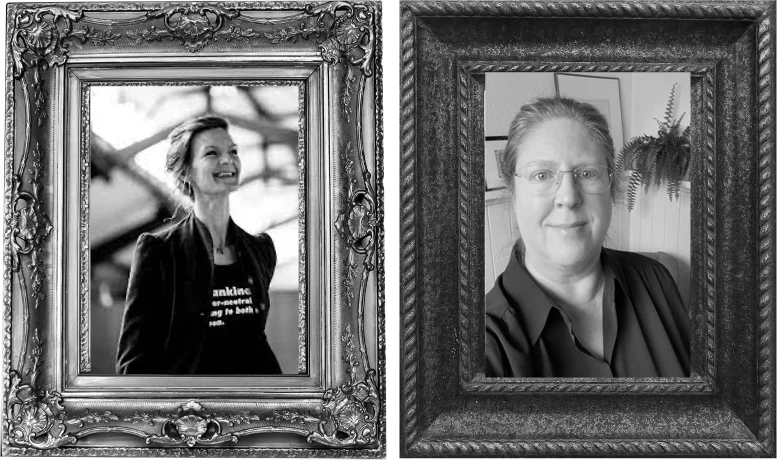
The efficacy of reframing is perhaps best illustrated through personal application. Behavioral change designers often pilot interventions on themselves to gain firsthand insight into their impact. One such design, developed and experimented with by practitioners Lisa and Tinna, is called "That’s a human…" This simple yet profound reframe directly targets both self-perception and external judgments.
Lisa’s experience during prolonged lockdowns provided an ideal environment for this personal experiment. Confronted with the pervasive negative self-talk often associated with "Zoom dysmorphia" and general self-image concerns, she sought to redirect energy from internal arguments between critical and confident self-parts. Her inspiration stemmed from the "Re-Frame ‘Migrant’ to ‘Human’" Inclusion Nudge, detailed in The Inclusion Nudges Guidebook. This design highlights the work of PASSOP (People Against Suffering, Oppression and Poverty), a South African non-profit. PASSOP members actively comment on social media posts that use dehumanizing terms like "refugee crisis" or "migrant issue," reframing them as "human crisis" or "human issue." By shifting the language, the design aims to refocus perspectives on the inherent humanity of individuals, fostering empathy and challenging stereotypes. This powerful linguistic intervention underscores the principle that changing what we say can fundamentally alter what we see and how we treat people.
Applying this principle to her own life, Lisa initiated a practice of consciously reframing her self-perception. Instead of succumbing to quick, critical glances in the mirror that triggered negative internal commentary about her appearance, she began to deliberately state, "That’s a human face," or "That’s a human body." This simple act created a crucial interruption in her automatic thought patterns. Over time, this conscious reframing evolved into a regular habit, extending beyond self-perception to observations of others. When encountering people, she would find herself internally thinking, "That’s a human face" or "That’s a human body." This internal statement often served as a prompt to reflect on any preceding unconscious judgments she might have made. The dissonance between her inclusive intentions and her initial, automatic thoughts served as a powerful motivator to continue practicing this technique. It reinforced the understanding that bias cannot be simply "wished away," but requires continuous, deliberate interventions to interrupt automatic processes and create space for more conscious, empathetic responses.
Tinna’s experience further corroborates the power of this reframe. Inspired by Lisa’s experiment, she adopted a similar practice, consciously acknowledging "There’s a human being" when observing people in public spaces. She noticed a persistent tendency for her mind to fixate on external appearances—judgments like "she is skinny," "he is overweight," or "ugly shoes." This judgmental inclination was a source of personal discomfort and shame, yet difficult to alter. The introduction of the default statement "there is a human being" served as an effective interruption. It swiftly diffused the judgmental impulse, replacing it with a more positive internal energy and preventing the formation of negative associations. A significant personal benefit for Tinna was a reduction in her own feelings of being an "outlier" due to her height (185 cm). By reframing others as simply "human beings," she also internalized the message that she, too, was simply a human being among others, fostering a greater sense of belonging and self-acceptance.
These personal narratives demonstrate that reframing is not merely an abstract concept but a practical, actionable strategy that can profoundly impact individual perception and well-being. By consciously altering the internal narrative, individuals can disrupt entrenched biases, both self-directed and externally focused, leading to more inclusive thought patterns and behaviors.
Broader Applications and Implications of Framing Perceptions Nudges
The efficacy of reframing extends far beyond personal self-talk. Framing Perceptions Inclusion Nudges are versatile tools applicable in various contexts to counter stereotypes and promote inclusivity. One widely adopted design is "Ask Flip Questions to Change Your Perceptions in the Moment," featured prominently in The Inclusion Nudges Guidebook and its companion action guides. This technique involves deliberately posing questions that challenge initial assumptions or conventional perspectives. For example, when evaluating a job candidate, instead of asking, "Why is this candidate the best fit?", a flip question might be, "What if this candidate were from a different demographic? How would their resume be perceived?" or "What are the reasons we shouldn’t hire them, even if they seem perfect on paper?" Such questions force a cognitive shift, encouraging a more thorough examination of information, broadening perspectives, and actively countering confirmation bias, which often leads individuals to seek out information that confirms their existing beliefs. Numerous professionals have reported significant positive impacts from incorporating flip questions into their daily work, leading to more equitable decision-making processes.
Furthermore, the power of visual and linguistic framing in shaping perceptions is well-documented. Designs like "Images Framing Immigrants as One of Us" and "Interrupt Gender Caregiver Stereotypes with Images" emphasize the strategic use of media and visual representation to challenge harmful stereotypes. By intentionally presenting images that depict immigrants as integrated, contributing members of society, or by showcasing men in caregiving roles, these nudges directly confront and gradually erode biased associations. Research indicates that exposure to diverse and inclusive imagery can subtly shift implicit biases over time, fostering greater acceptance and understanding. Organizations that adopt inclusive language guides and diversify their marketing and recruitment materials are actively implementing these framing nudges to cultivate a more inclusive environment.
Challenges, Continuous Effort, and Future Outlook
While reframing offers a powerful pathway to greater inclusion, it is crucial to acknowledge that biases, particularly implicit ones, cannot be "cured" or permanently eliminated. They are an inherent part of human cognition. Instead, the goal is continuous management and mitigation. This necessitates ongoing conscious effort and the persistent application of well-designed behavioral interventions. The work of fostering diversity, equity, and inclusion is not a one-time initiative but an ongoing journey that requires vigilance, adaptability, and a commitment to understanding and reshaping our cognitive processes.
The broader implications of widespread adoption of reframing techniques are substantial. At an organizational level, they can lead to more equitable hiring practices, fairer performance evaluations, and a more inclusive workplace culture where diverse perspectives are genuinely valued. Societally, these techniques can help dismantle discriminatory practices, reduce prejudice, and foster a more empathetic and understanding citizenry. On a personal level, reframing offers individuals a tool to achieve greater self-acceptance, reduce internal conflict, and engage with the world in a more compassionate and open-minded way.
The ongoing research and practical application of behavioral insights, particularly through frameworks like Inclusion Nudges, underscore a promising future where intentional design can significantly contribute to building a more equitable and inclusive world. Individuals and organizations are encouraged to explore these powerful designs, experiment with reframing in their own lives, and contribute to the collective knowledge by sharing their experiences. For further engagement, [email protected] serves as a platform for dialogue and collaboration on these transformative practices.