In an increasingly volatile, uncertain, complex, and ambiguous (VUCA) world, characterized by global pandemics, geopolitical shifts, rapid technological advancements, and evolving market demands, the imperative for organizational resilience and adaptive capacity has never been greater. While traditional diversity, equity, and inclusion (DEI) initiatives have commendably focused on demographic representation across gender, race, and ethnicity—areas crucial for social justice and broader societal equity—a deeper, often overlooked dimension of diversity is increasingly recognized as a critical differentiator for team performance: cognitive diversity. This distinct form of diversity, which pertains to differences in how individuals process information, solve problems, and approach situations, is proving to be a cornerstone for enhancing innovation, improving decision-making, and mitigating risks, thereby equipping organizations to navigate the complexities of the modern landscape more effectively.
The contemporary business environment demands more than just a mix of backgrounds; it requires a blend of minds. For decades, the business case for diversity has largely centered on the moral and social imperatives of representation, alongside the measurable benefits of improved financial performance and market understanding. However, as organizations mature in their DEI journey, the focus is broadening to encompass the intricate ways in which diverse perspectives and thought patterns contribute directly to strategic advantage. Studies consistently highlight that while demographic diversity opens doors, cognitive diversity unlocks potential, fostering environments where novel solutions can emerge from a rich tapestry of ideas rather than a homogeneous echo chamber. This distinction is particularly salient in times of crisis, where established paradigms often fail, and the ability to think differently becomes paramount.
The Scientific Foundation: Decades of Research Uncover Cognitive Advantages
The understanding of cognitive diversity is not new but has gained significant traction through dedicated research. Prominent academics and authors, Alison Reynolds and David Lewis, have spent decades meticulously studying human cognition in the context of new, uncertain, and complex scenarios. Their extensive body of work, spanning various organizational settings, consistently reveals a compelling pattern: the most effective and fastest problem-solving teams are those characterized by high cognitive diversity coupled with robust psychological safety.
Reynolds and Lewis’s research underscores that teams excelling in complex situations typically exhibit high levels of curiosity and a propensity for experimentation. Conversely, teams lacking these traits often fall prey to groupthink, characterized by conformity and an aversion to challenging established norms, or become overly combative, where disagreements devolve into unproductive conflict rather than constructive debate. This highlights a critical balance: cognitive diversity must be nurtured within a psychologically safe environment where individuals feel empowered to express divergent views without fear of negative repercussions.
Deconstructing Cognitive Diversity: Two Core Dimensions
Based on an assessment tool developed by psychiatrist Peter Robertson, Reynolds and Lewis delineate cognitive diversity into two primary dimensions, each playing a crucial role in how teams tackle challenges:
-
Knowledge and Information Processing: This dimension assesses an individual’s preferred approach to leveraging knowledge when confronted with novelty, uncertainty, or complexity. It spans a spectrum from those who prefer to consolidate and implement existing knowledge and proven methodologies (often termed "consolidators" or "implementers") to those who are predisposed to generate new knowledge, explore uncharted territories, and innovate from scratch (often termed "generators" or "explorers"). A team with a healthy mix ensures that while existing best practices are considered and efficiently applied, there is also a continuous drive to question, learn, and create novel solutions when current knowledge proves insufficient.
-
Perspective and Expertise Facilitation: This dimension relates to how individuals engage with expertise and ideas within a team setting. It distinguishes between those who primarily prefer to apply their own specialized expertise and individual insights ("specialists" or "individual contributors") and those who excel at orchestrating, synthesizing, and leveraging the diverse ideas and expertise of others within the team ("orchestrators" or "facilitators"). A team rich in this type of diversity can avoid the pitfalls of siloed thinking, ensuring that individual brilliance is amplified through collective wisdom, and that all relevant perspectives are brought to bear on a problem.
Teams that exhibit a high degree of diversity across both these parameters are demonstrably superior in navigating ambiguity and complexity. They gain access to a broader spectrum of knowledge and perspectives, and when combined with a culture of psychological safety, they foster behaviors that encourage constructive conflict and deep exploration. This dynamic interplay allows them to critically evaluate situations, anticipate unforeseen challenges, and develop more comprehensive and resilient solutions.
Beyond these two core dimensions, cognitive diversity also encompasses a myriad of other individual differences, including personality styles (e.g., introversion and extroversion), mental frameworks, and varying approaches to risk, process, and complexity. For instance, an introverted analytical thinker might provide a methodical, data-driven perspective, while an extroverted, risk-tolerant individual might champion bold, experimental initiatives. The synergy of these complementary styles is what truly empowers a team to perform optimally across diverse scenarios.
The Evolution of DEI: A Shifting Paradigm Towards Holistic Inclusion
The journey of Diversity, Equity, and Inclusion (DEI) in the corporate world has seen a significant evolution. Initially, the discourse was heavily dominated by the ethical imperative of achieving demographic parity and representation, particularly in terms of gender and race. This focus was, and remains, vital for addressing historical injustices and ensuring equitable opportunities. Organizations poured resources into setting quotas, implementing unconscious bias training, and creating affinity groups, all aimed at leveling the playing field.
However, a growing body of research, including the work by Deloitte Australia which highlights that inclusive leadership can drive up to a 70 percentage point difference in employee inclusion, reveals that simply having a diverse group of individuals in a room does not automatically translate into diverse outcomes. Without inclusive practices and a deep understanding of cognitive differences, teams can still suffer from groupthink, underperformance, and high turnover. The current challenge is to expand DEI efforts beyond mere demographic representation to actively cultivate and harness the benefits of diverse ways of processing information, applying expertise, and approaching problems. The focus on visible diversity, while critical, has at times overshadowed the equally important, yet less immediately apparent, dimensions of cognitive diversity.
Operationalizing Cognitive Diversity: Challenges and Opportunities
While the benefits of cognitive diversity are clear, operationalizing it presents unique challenges. Unlike demographic diversity, which can often be quantified through straightforward metrics, cognitive diversity is more nuanced and harder to measure. It requires a deeper understanding of individual thought processes, preferences, and working styles. This necessitates a shift in organizational practices, from recruitment and team formation to leadership development and cultural reinforcement.
For example, traditional hiring processes often inadvertently favor candidates who fit a pre-existing cultural mold, leading to cognitive homogeneity. To build cognitively diverse teams, organizations must adopt assessment methods that identify varying cognitive styles, problem-solving approaches, and personality traits, rather than solely focusing on technical skills or past experience. This might involve using psychometric assessments, scenario-based interviews, or behavioral analyses designed to reveal how individuals think and interact with uncertainty.
Moreover, simply assembling a cognitively diverse team is insufficient. The true potential of such a team is unlocked only when an inclusive culture and inclusive leadership are firmly in place. This involves creating an environment where every team member feels:
- Fairly treated and respected: Ensuring equitable opportunities and unbiased decision-making.
- Valued: Recognizing and appreciating the unique contributions of each individual.
- A sense of belonging: Fostering an environment where everyone feels connected and accepted.
- Empowered to speak up: Actively encouraging diverse perspectives and constructive dissent.
- Encouraged to share perspectives: Creating channels and opportunities for all voices to be heard.
Inclusive Leadership: The Catalyst for Success
Inclusive leadership emerges as the single most critical factor in translating cognitive diversity into tangible organizational benefits. Leaders play a pivotal role in shaping team dynamics, fostering psychological safety, and actively eliciting and integrating diverse perspectives. However, despite the growing recognition of DEI, many leaders confess to feeling "ill-equipped" to effectively lead inclusively, especially when it comes to facilitating difficult conversations about exclusion or discrimination. This gap in leadership capability often stems from a lack of practical tools and a fear of making mistakes or being blamed.
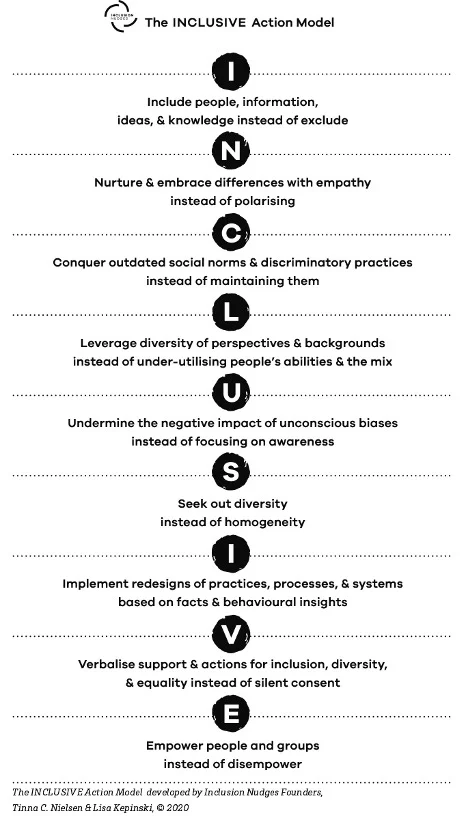
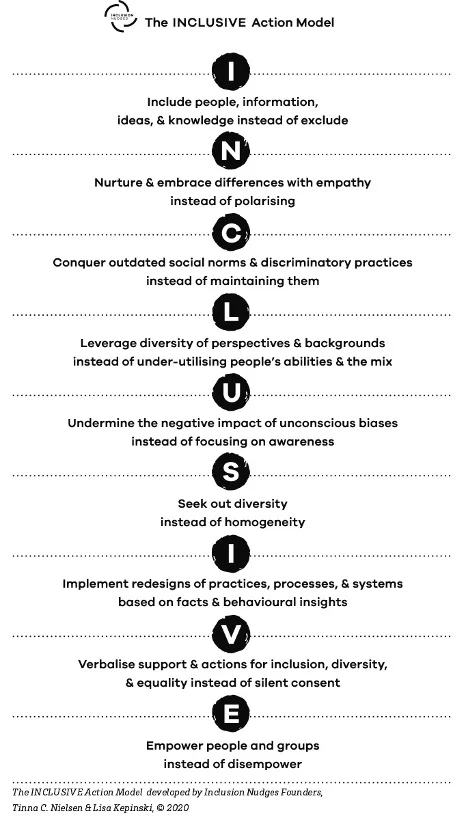
Organizations like Inclusion Nudges, founded by Tinna C. Nielsen and Lisa H. Rasmussen, are actively addressing this leadership deficit. Their Inclusive Action Model provides a holistic framework for creating inclusive cultures, structures, and behaviors, recognizing that sustained change requires simultaneous effort across multiple fronts. Their "Inclusion Nudges for Leaders" Action Guide offers 30 easy-to-apply behavioral designs, empowering leaders with practical, evidence-based strategies to embed inclusion into their daily routines. By providing step-by-step guidance, these tools aim to build leader confidence, enabling them to move from passive support to active, impactful change. When leaders are confident in taking one inclusive action, it sparks a ripple effect, increasing their willingness to take more, thereby catalyzing broader cultural transformation.
Broader Impact and Strategic Implications
The implications of embracing cognitive diversity extend far beyond individual team performance. At a strategic level, organizations that prioritize and cultivate cognitive diversity are better positioned to:
- Innovate more effectively: By bringing together different thinking styles, teams can generate a wider array of ideas, challenge assumptions, and develop truly novel solutions that resonate with diverse customer bases.
- Improve problem-solving: Complex problems rarely have simple solutions. Cognitively diverse teams can dissect problems from multiple angles, identify root causes more accurately, and devise comprehensive strategies.
- Reduce risks: A variety of perspectives can help identify potential blind spots, anticipate threats, and develop robust contingency plans, thereby mitigating financial, operational, and reputational risks.
- Enhance decision-making: Diverse thought processes lead to more thorough analyses, richer debates, and ultimately, better-informed decisions that are more likely to be accepted and implemented due to broader buy-in.
- Foster organizational agility: In a rapidly changing world, organizations need to adapt quickly. Cognitively diverse teams are inherently more agile, capable of processing new information, adjusting strategies, and pivoting effectively.
- Attract and retain top talent: A culture that values and leverages diverse thinking is more appealing to a broader pool of talent, especially those who seek environments where their unique contributions are recognized and utilized.
The shift towards embracing cognitive diversity represents a maturation of the DEI agenda, moving beyond surface-level representation to a deeper, more profound engagement with the power of human differences. It acknowledges that true inclusion means not just inviting people to the table, but ensuring their unique ways of thinking are actively sought, heard, and integrated into the fabric of organizational life. As global uncertainties persist, organizations that proactively build and nurture cognitively diverse teams, underpinned by inclusive leadership and psychological safety, will undoubtedly be those best equipped to thrive, innovate, and lead in the future. The time has come to elevate cognitive diversity from an overlooked advantage to a strategic imperative.