In an era defined by rapid information flow and constant demands on our attention, the human cognitive system often defaults to efficient, yet sometimes flawed, processing mechanisms. Our inherent drive to quickly categorize and understand the world can inadvertently steer our thinking away from our conscious intentions of open-mindedness, respect, and inclusion. This dynamic is largely governed by what psychologists refer to as System 1 thinking – the automatic, intuitive, and often unconscious mode of thought that accounts for the vast majority of our daily mental operations. While incredibly efficient, System 1 can lead to snap judgments rooted in feelings, superficial observations, past experiences, ingrained stereotypes, societal norms, and deeply held beliefs from our upbringing. To counter these automatic biases and align our actions with our inclusive values, behavioral scientists and change designers advocate for "reframing," a powerful technique that involves consciously altering what we perceive and how we articulate it. This approach aims to reshape our mental shortcuts, making them more accurate, equitable, and aligned with our desired interactions with ourselves and others.
Understanding the Cognitive Roots of Bias: System 1 and System 2 Thinking
The seminal work of Nobel laureate Daniel Kahneman and Amos Tversky elucidated the dual-process theory of human cognition, categorizing thought into two distinct systems. System 1, as mentioned, is fast, automatic, intuitive, and often emotional. It operates effortlessly, allowing us to navigate the world without constant conscious deliberation – recognizing faces, understanding simple sentences, or reacting to sudden noises. However, its efficiency comes at a cost: it is prone to biases, heuristics, and shortcuts that can lead to systematic errors in judgment. For instance, confirmation bias, where individuals seek out and interpret information in a way that confirms their pre-existing beliefs, is a classic System 1 shortcut. Similarly, availability heuristic, where people rely on immediate examples that come to mind when evaluating a specific topic, can distort perceptions.
In contrast, System 2 thinking is slow, effortful, deliberate, and logical. It is engaged when we solve complex math problems, learn a new skill, or consciously weigh pros and cons before making a decision. While System 2 has the capacity for rational thought and bias correction, it requires significant cognitive resources and is often overridden by the quicker System 1, especially under pressure or when faced with ambiguous information. The challenge for fostering inclusion, therefore, lies not in eliminating System 1 – an impossible task given its fundamental role in survival and daily functioning – but in designing interventions that gently nudge it towards more equitable outcomes or create moments for System 2 to engage.
The Pervasive Influence of Normative Patterns and Societal Conditioning
Throughout our lives, individuals are subjected to a continuous, often unwitting, internalization of messages about themselves and others. These messages, disseminated through family, friends, media, educational institutions, popular culture, and organizational structures, construct and reinforce "normative patterns" – unspoken ideals of who is considered "good," "attractive," "smart," "trustworthy," "a leader," "friendly," "caring," or "strong." These snap mental associations are powerfully ingrained, shaping not only our perceptions of others but also our self-perception.
The impact of these normative patterns on society is profound and often discriminatory. Individuals who deviate from these dominant ideals frequently face exclusion and marginalization across various domains, from employment opportunities and social acceptance to representation in media and leadership roles. For instance, studies by organizations like the World Economic Forum consistently highlight gender and racial biases in hiring processes, demonstrating how unconscious adherence to normative patterns can disadvantage qualified candidates who do not fit preconceived molds. A 2017 study published in the Journal of Applied Psychology found that identical resumes received significantly different callback rates based on names that signal racial or ethnic background. Similarly, research on media representation frequently exposes the perpetuation of narrow beauty standards and leadership archetypes, reinforcing biases in the collective consciousness. It is this systemic discriminatory impact that motivates many advocates and behavioral scientists, including the proponents of "Inclusion Nudges," to actively work towards greater diversity, equity, and inclusion.
Beyond societal discrimination, these normative patterns can also inflict significant personal harm. Many individuals internalize negative associations about themselves when they perceive they do not fit the established norms. This self-critical tendency has been exacerbated in recent years, particularly with the widespread adoption of video-based online work during the COVID-19 pandemic. The constant exposure to one’s own image on screen has led to the emergence of "Zoom dysmorphia," a phenomenon where individuals become negatively fixated on their appearance, often leading to increased anxiety and, in some cases, seeking cosmetic procedures. A 2021 study by the American Academy of Facial Plastic and Reconstructive Surgery reported a significant increase in consultations for cosmetic procedures, with many patients citing dissatisfaction with their appearance on video calls. This internal judgment occurs unconsciously, often contradicting rationally held positive self-beliefs, highlighting the powerful, automatic nature of System 1 thinking.
The Genesis of Behavioral Design and "Inclusion Nudges"
Addressing these deeply ingrained biases requires more than just awareness; it demands actionable strategies rooted in behavioral science. This is where the concept of "behavioral design" and specifically "Inclusion Nudges" comes into play. Behavioral design is a discipline that applies insights from psychology, cognitive science, and behavioral economics to create interventions that guide human behavior towards desired outcomes. It moves beyond traditional educational approaches, which often rely on System 2 (conscious reasoning), to target System 1 (automatic processing) by subtly altering choices, environments, and mental frameworks.
The term "nudge," popularized by Richard Thaler and Cass Sunstein in their book Nudge: Improving Decisions About Health, Wealth, and Happiness, refers to any aspect of the choice architecture that alters people’s behavior in a predictable way without forbidding any options or significantly changing their economic incentives. Inclusion Nudges, developed by Tinna C. Nielsen and Lisa Kepinski, specifically leverage these principles to foster diversity, equity, and inclusion. They are concrete, actionable designs that interrupt unconscious biases, counter stereotypes, and make inclusive choices the default, easier, or more appealing option. These designs are not about shaming or blaming but about gently steering cognitive processes towards more equitable results.
A Personal Experiment in Reframing: The "That’s a Human…" Initiative
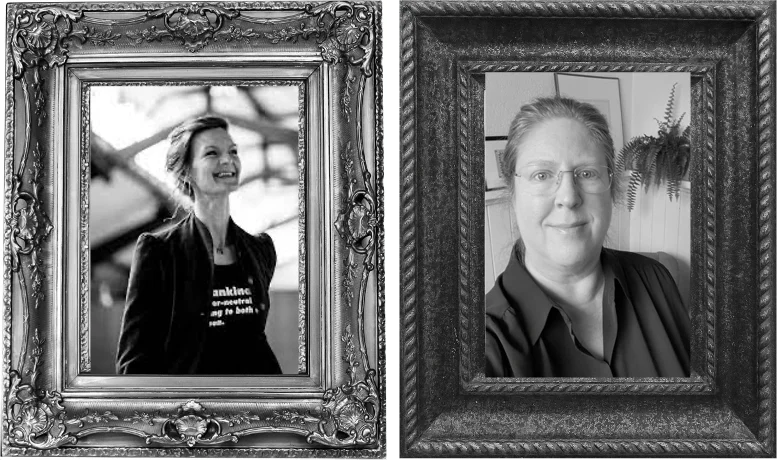
As practitioners in behavioral change design, Tinna C. Nielsen and Lisa Kepinski often apply their methodologies to their own cognitive processes, aiming to interrupt and reshape internalised negative messages, biases, and exclusionary behaviors. Lisa Kepinski, co-founder of Inclusion Nudges, initiated a personal experiment during the extensive lockdowns of the past 18 months, focusing on countering negative self-perceptions related to appearance. Her experience with "Zoom dysmorphia" and the tendency for quick, critical self-assessment in mirrors motivated her to redirect this energy.
"When looking in a mirror, I often would only take quick glances at parts of me (was my hair brushed, teeth clean, clothes neat, …?)," Kepinski recounted. "When I would look for just a second ‘too long’, in would creep negative headlines and my own internal argument with this. What a waste of energy between the critical and the confident parts of me! I wanted to redirect that energy to re-setting what I heard and said when I looked in the mirror."
Inspired by an existing Inclusion Nudge design from The Inclusion Nudges Guidebook, titled "Re-Frame ‘Migrant’ to ‘Human’," Kepinski developed her own reframing exercise. The original design highlights the work of the South African non-profit organization PASSOP (People Against Suffering, Oppression and Poverty), which actively comments on social media posts using terms like "refugee crisis" or "migrant crisis" by substituting them with "human crisis." This linguistic shift aims to re-focus public perception on the inherent humanity of individuals, rather than their categorized status, thereby promoting empathy and more inclusive treatment.
Applying this principle, Kepinski designed her personal intervention:
- Conscious Observation: When looking in a mirror, she would consciously pause, allowing a fraction of a second for any initial, automatic negative thought about her appearance to surface.
- Immediate Reframing: Before the negative thought could fully solidify or trigger an internal argument, she would intentionally say to herself, "That’s a human face," or "That’s a human body." The key was the immediate, deliberate insertion of this neutral, humanizing statement.
- Reinforcement: This simple, repetitive act served as a mental interruption, gradually building a new neural pathway.
This practice quickly evolved into a regular habit for Kepinski, extending beyond self-perception to her observations of others. She found herself internally uttering, "That’s a human face," or "That’s a human body," when encountering other individuals. This automatic internal statement often triggered a check-in, revealing the prior unconscious judgment that had almost surfaced. The dissonance between her inclusive intentions and her automatic, often critical, thoughts served as a powerful motivator to continue the practice. As Kepinski noted, "We know that bias will never be ‘cured’ or ‘go away’, but we can put in designs to help interrupt, allow space for better thinking, and literally change what we see."
Tinna C. Nielsen, also co-founder of Inclusion Nudges, was inspired by Kepinski’s experiment and adopted a similar practice. She observed her own tendency to make quick, often judgmental, assessments of people’s appearances in public spaces – "she is skinny," "he is overweight," "ugly shoes." Ashamed of this automatic behavior, she struggled to change it until she adopted the "That’s a human being" reframing technique. "With this default statement of ‘there is a human being’, I started noticing more positive energy within and I didn’t get to the judgmental state because just as quickly as the moment arose, just as quickly it disappeared," Nielsen shared. This practice not only reduced her critical thoughts about others but also fostered greater self-acceptance, helping her feel less like an "outlier" due to her height (185 cm) and more simply "a human being among others."
Framing Perceptions: A Foundational Inclusion Nudge Strategy
The personal successes of Kepinski and Nielsen underscore the effectiveness of "Framing Perceptions Inclusion Nudges." These designs are specifically crafted to alter perceptions, guiding the brain to process issues related to inclusion, diversity, and equality through a more resourceful and empathetic lens. They function by priming specific positive associations and actively countering deeply embedded stereotypes.
As defined in The Inclusion Nudges Guidebook by Kepinski & Nielsen, "Framing Perceptions Inclusion Nudges are designs that alter perceptions to help the brain perceive issues related to inclusion, diversity, equality in a resource discourse. The designs also prime specific associations and counter stereotypes. Altering the framing of an issue or message and changing the anchor of a thought process helps to promote inclusive behaviour because it influences the reactions in the automatic, stereotyped, and unconscious mind."
The power of reframing lies in its ability to directly influence System 1. By changing the language we use or the mental anchors we apply, we can bypass the conscious effort required by System 2 and subtly shift our automatic reactions. This is crucial because, despite strong intentions to be open-minded, deeply ingrained biases often persist, leading to internal conflict and unintended exclusionary behaviors. Reframing offers a practical tool to lessen the influence of these biases without requiring constant, exhausting cognitive vigilance.
Another widely impactful Framing Perceptions design is "Ask Flip Questions to Change Your Perceptions in the Moment." This technique, detailed in The Inclusion Nudges Guidebook and its companion Action Guide books, encourages individuals to ask themselves questions that challenge their initial assumptions or biases. For example, if a hiring manager finds themselves questioning a female candidate’s leadership potential, a flip question might be: "Would I be asking this same question if this candidate were male?" This simple act of ‘flipping’ the perspective forces System 2 to engage, expanding thinking, prompting more thorough information gathering, and leading to more equitable decision-making.
Broader Impact and Implications for Individuals and Organizations
The implications of mastering reframing techniques extend far beyond personal self-acceptance; they have significant potential to foster more inclusive environments in workplaces, communities, and society at large.
For Individuals:
- Enhanced Self-Compassion: By actively reframing negative self-talk, individuals can cultivate greater self-acceptance and reduce the mental energy wasted on internal criticism. This can lead to improved mental well-being and a stronger sense of self-worth.
- Reduced Interpersonal Bias: Consciously applying reframing to observations of others helps to dismantle automatic judgments and stereotypes, fostering more empathetic and respectful interactions. This can lead to richer relationships and a more harmonious social fabric.
- Increased Agency: Understanding that one can actively reshape cognitive patterns empowers individuals to take control of their internal landscape, moving from passive recipients of societal messaging to active architects of their own perceptions.
For Organizations:
- More Equitable Decision-Making: Implementing reframing nudges in processes like hiring, performance reviews, and promotions can significantly reduce unconscious bias, leading to more diverse and merit-based outcomes. For example, structuring interview questions to focus on specific skills rather than subjective "fit" or using blinded resume reviews are forms of reframing.
- Inclusive Culture: When leaders and employees are equipped with tools to identify and reframe biases, it contributes to a culture where diversity is genuinely valued, and all individuals feel respected and included. This can lead to higher employee engagement, innovation, and retention.
- Improved Communication and Collaboration: By promoting an understanding of how language shapes perception, organizations can encourage more inclusive communication practices, leading to better team dynamics and stronger collaboration across diverse groups.
While bias cannot be entirely eradicated, behavioral science offers powerful, actionable strategies to mitigate its influence. The practice of reframing, exemplified by the "That’s a human…" initiative and other Inclusion Nudges, provides a practical and effective pathway towards greater open-mindedness, respect, and inclusion for both individuals and society. The continuous application of these behavioral designs allows for ongoing learning and adaptation, moving us closer to a world where our cognitive shortcuts align with our deepest intentions for equity and humanity.
For those interested in exploring these powerful techniques further, several Framing Perceptions Inclusion Nudges offer additional inspiration and guidance:
- Re-Frame ‘Migrant’ to ‘Human’ (The Inclusion Nudges Guidebook)
- Images Framing Immigrants as One of Us (The Inclusion Nudges Guidebook and Inclusion Nudges for Motivating Allies)
- Interrupt Gender Caregiver Stereotypes with Images (The Inclusion Nudges Guidebook and Inclusion Nudges for Motivating Allies)
The journey towards a more inclusive world begins within our own minds, and reframing offers a tangible starting point for that transformative process. We encourage readers to experiment with these designs and share their experiences, contributing to a collective understanding of how behavioral insights can drive meaningful change.