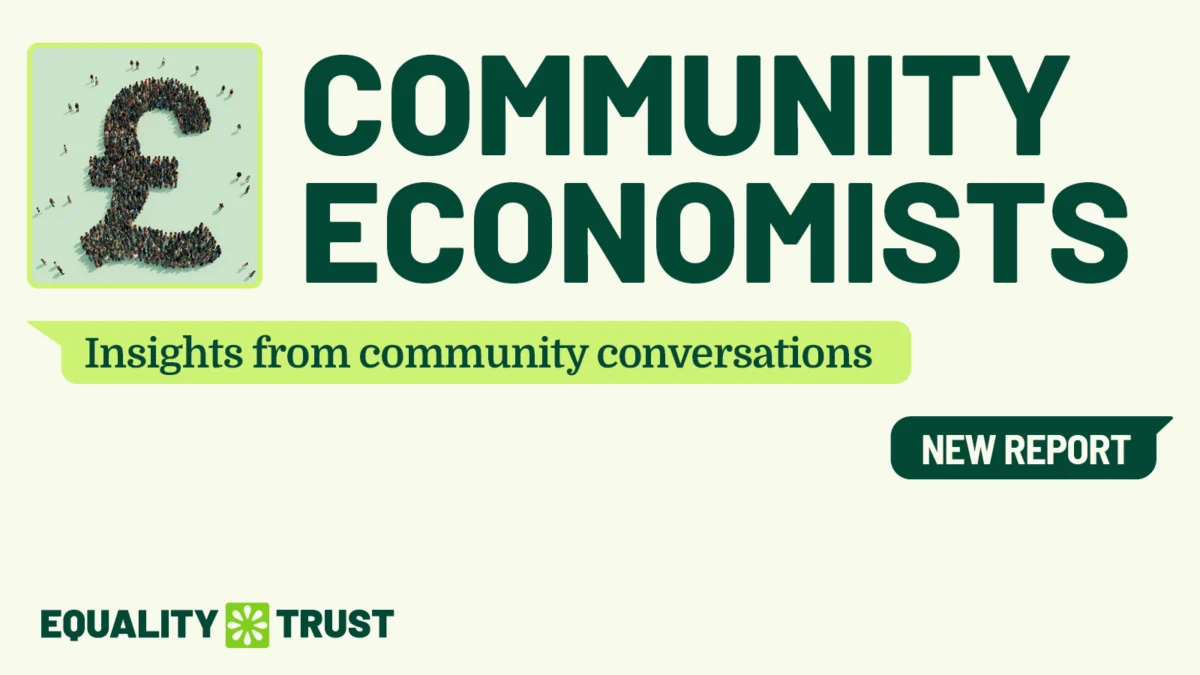
In an era defined by fluctuating market dynamics and persistent wealth disparities, The Equality Trust has officially inaugurated the Community Economist project, a multi-faceted initiative designed to bridge the gap between complex macroeconomic theories and the lived experiences of citizens across the United Kingdom. Launched in late January 2026, the project represents a strategic pivot toward "community reporting," a methodology that seeks to democratize economic discourse by training non-experts to analyze and articulate the financial forces shaping their lives. The initiative arrives at a critical juncture for the UK, as the nation continues to navigate the long-term effects of the cost-of-living crisis and a widening gap between the highest and lowest earners.
By recruiting volunteers from a diverse geographical range—spanning from London to the Scottish Highlands—The Equality Trust has established a grassroots network of "Community Economists." These individuals, none of whom possess formal academic training in economics, were selected based on their personal histories with economic inequality and their commitment to social advocacy. The project aims to challenge the prevailing sentiment that the economy is an inscrutable force beyond the control of the average citizen, asserting instead that economic systems are human-made constructs that should prioritize collective well-being over abstract metrics.
The Evolution of the Community Economist Model
The genesis of the Community Economist project lies in the recognition that traditional economic indicators, such as Gross Domestic Product (GDP) or Consumer Price Index (CPI), often fail to capture the nuanced realities of household stability and social mobility. The Equality Trust identified a need for a "bottom-up" approach to economic analysis, where the data is derived from qualitative human experiences rather than purely quantitative financial reports.
To facilitate this, the organization launched a rigorous recruitment process that attracted a significant volume of applicants from across the UK. The selection committee eventually narrowed the field to 10 primary volunteers. These individuals were chosen not for their mathematical prowess, but for their ability to connect with their local communities and their willingness to undergo a 12-week intensive training program. This curriculum was designed to equip them with the tools of professional researchers, focusing on three core pillars: narrative storytelling, qualitative interviewing, and thematic analysis.
During the training phase, the Community Economists collaborated to refine the project’s central research question: “What would it be like if everyone had what they needed to live a good life, and how would that be different from how things are now?” This inquiry served as the catalyst for over ten hours of recorded interview footage, which the volunteers collected by engaging with neighbors, colleagues, and local residents who had previously felt excluded from economic discussions.
Socio-Economic Context and the Case for Change
The launch of this project comes against a backdrop of significant economic pressure within the United Kingdom. According to data from the Office for National Statistics (ONS) and independent think tanks like the Resolution Foundation, wealth inequality in the UK has remained stubbornly high throughout the mid-2020s. As of early 2026, the top 10% of households hold approximately 43% of the nation’s wealth, while the bottom 50% hold less than 5%.
Furthermore, the regional "levelling up" agenda has seen mixed results, with significant disparities remaining between the economic hubs of the Southeast and the industrial heartlands of the North and Scotland. The Equality Trust argues that these statistics, while stark, often remain abstractions to the people they affect most. By transforming these figures into human narratives, the Community Economist project seeks to create a more visceral and actionable understanding of inequality.
Project organizers state that the current economic paradigm often treats labor and housing as mere commodities, ignoring the psychological and social toll of financial instability. The Community Economists’ findings suggest that when the economy fails to provide basic security, it erodes the fabric of local communities, impacting everything from educational attainment to the quality of interpersonal relationships.
Chronology of the Project’s Development
The Community Economist project is structured as a multi-year initiative, divided into distinct phases to ensure that the data collected leads to tangible social action.
- Phase 1: Foundation and Reporting (Late 2025 – January 2026): This phase focused on the recruitment and training of the 10 core volunteers. It culminated in the collection of extensive interview data and the production of a comprehensive insight report and a documentary film. These materials were released to the public on January 29, 2026, providing a baseline of evidence for the project’s future work.
- Phase 2: Advocacy and Coalition Building (Spring – Autumn 2026): Moving forward, the project will transition into a period of focused workshops and message testing. The Equality Trust plans to use the insights gathered by the Community Economists to build broader coalitions with trade unions, local councils, and other non-governmental organizations (NGOs). The goal is to turn "private worries" into "shared action."
- Phase 3: Social Action and Policy Influence (2027): The final phase will involve a coordinated social action campaign. This will leverage the energy and evidence gathered in the previous years to lobby for specific policy changes, such as living wage adjustments, social housing reforms, and more equitable taxation structures.
Key Insights from the Narrative Report
The insight report released by the group highlights several recurring themes that define the modern British economic experience. One of the most prominent findings is the "housing-education-aspiration" nexus. Storytellers interviewed by the Community Economists frequently cited the high cost of housing as a primary barrier to educational advancement and career risk-taking.
Participants noted that when a disproportionate amount of income is diverted to rent or mortgages, there is little "innovation capital" left for individuals to pursue further training or start small businesses. This creates a cycle of stagnation that the report describes as a "quiet crisis of potential."
Additionally, the project explored the impact of the economy on human relationships. Interviewees described how financial stress acts as a corrosive element in family life, leading to increased rates of domestic tension and social isolation. The report argues that a "successful" economy must be measured by its ability to foster social cohesion and allow individuals the time and resources to maintain healthy personal networks.
Official Responses and Institutional Analysis
While the project is a grassroots endeavor, it has drawn interest from various sectors of the political and academic landscape. Economic historians have noted that the Community Economist model mirrors past movements where marginalized groups sought to reclaim control over their financial destinies, such as the cooperative movements of the 19th century.
Dr. Aris Thorne, a researcher in social policy, commented on the project’s methodology: "By utilizing community reporting, The Equality Trust is bypassing the traditional gatekeepers of economic knowledge. This is not just about collecting stories; it is about building ‘economic literacy’ in a way that is accessible and empowering. It shifts the role of the citizen from a passive consumer of policy to an active analyst of their own environment."
Representatives from The Equality Trust have emphasized that the project is not merely an academic exercise. "The Community Economists project starts from a simple claim that people make economies," the organization stated in its launch summary. "If that’s true, then economies should function to make it easier, not harder, for people to live the lives they value."
Future Implications for Economic Policy
As the project enters Phase 2, the focus will shift toward how these community insights can be translated into the language of policymakers. The Equality Trust intends to use the collected narratives to challenge the "inevitability" of current economic structures. By presenting human-centric alternatives—such as universal basic services or community-led investment trusts—the project seeks to broaden the scope of what is considered "fiscally responsible."
The broader implications of this work suggest a growing demand for "Wellbeing Economics" in the UK. This school of thought, which has gained traction in nations like New Zealand and Iceland, prioritizes health, environment, and social equity alongside financial growth. The Community Economist project serves as a localized pilot for how these high-level concepts can be grounded in the everyday realities of British towns and cities.
In conclusion, the launch of the Community Economist report and film marks the beginning of a significant experiment in democratic economics. By empowering ten individuals to act as the "eyes and ears" of their communities, The Equality Trust has created a platform for a more inclusive and humanized discussion about wealth and poverty. The success of the project’s subsequent phases will likely depend on its ability to convert these powerful narratives into a sustained movement for systemic reform, ensuring that the economy finally serves the people who constitute it.