In a world demanding rapid information processing, the human cognitive system often veers from conscious intentions of open-mindedness, respect, and inclusion. The vast majority of human thought, often referred to as System 1 thinking, operates on an automatic, intuitive autopilot. This default mode, while efficient, can lead to faulty judgments rooted in immediate feelings, superficial observations, past experiences, ingrained stereotypes, societal norms, and deeply held beliefs from upbringing. A growing body of research in behavioral science suggests that reframing – a deliberate alteration of how we perceive and articulate situations – offers a powerful pathway to reshape these inherent mental shortcuts, aligning them more accurately with our aspirations for self-acceptance and equitable interaction with others.
The Pervasive Influence of Normative Patterns on Perception
Throughout an individual’s life, there is a continuous, often unconscious, internalization of societal messages. These messages subtly define normative patterns, dictating who is perceived as ‘good,’ ‘attractive,’ ‘smart,’ ‘trustworthy,’ ‘a leader,’ ‘friendly,’ ‘caring,’ ‘strong,’ or ‘talented.’ Such snap mental associations are powerfully reinforced through a myriad of channels, including family, friends, social influencers, traditional and digital media, educational institutions, reward systems in organizations, and broader societal narratives.
Constantly subjected to these often-unspoken perceptions, individuals’ views and interactions with others, as well as the systems they create and utilize, are profoundly shaped. This pervasive influence can lead to significant discriminatory impacts, resulting in the exclusion of countless individuals who do not conform to the dominant, normative patterns. The imperative to challenge and change these entrenched patterns forms the bedrock of contemporary efforts in diversity, equity, and inclusion (DEI).
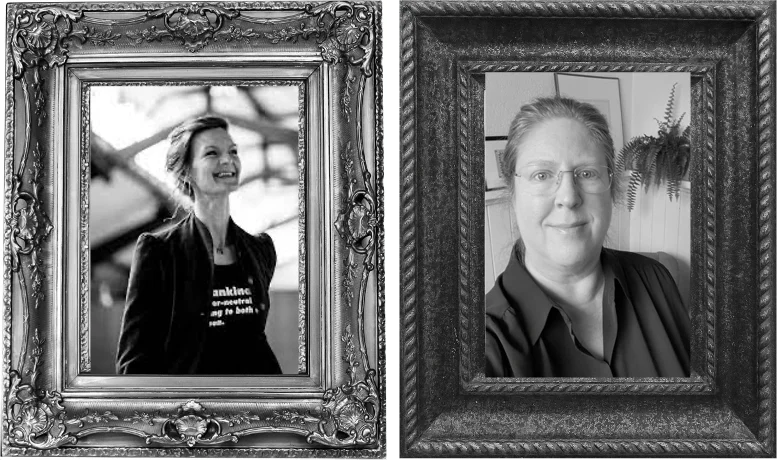
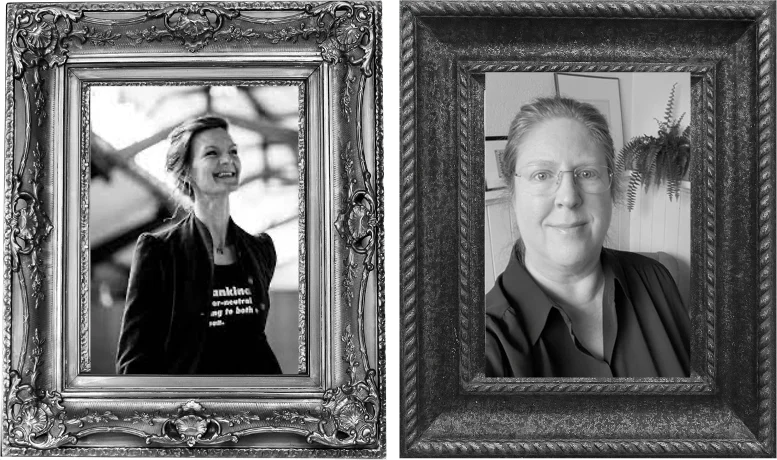
Beyond societal impact, these normative patterns also profoundly affect personal self-perception. Many individuals internalize negative associations about themselves, often unconsciously measuring their worth against these unattainable or exclusionary societal benchmarks. A striking example of this phenomenon, exacerbated by recent global shifts, is the emergence of "Zoom dysmorphia." This condition, first widely discussed during the period of extensive video-based online work, describes a negative fixation on one’s appearance, often triggered by prolonged exposure to one’s own image on screen. Individuals find themselves making harsh, unconscious judgments against their own rationally held positive self-beliefs, highlighting the deep-seated nature of these internalized normative pressures. Behavioral change designers, such as Tinna C. Nielsen and Lisa Kepinski, co-founders of Inclusion Nudges, have openly shared their own experiences of feeling like ‘outliers’ at various points in their lives, underscoring the universality of this struggle against normative ideals.
Behavioral Science: A Framework for Interrupting Bias
The challenge of mitigating unconscious bias and self-criticism lies in the difficulty of simply "wishing it away." Bias, deeply embedded in System 1 thinking, continues to influence perceptions despite conscious intentions. This reality necessitates the application of behavioral insights to design interventions that can effectively reshape harmful mental messages. Framing Perceptions Inclusion Nudges represent such an approach, designed to alter perceptions by influencing automatic, stereotyped, and unconscious reactions.
According to "The Inclusion Nudges Guidebook" by Kepinski and Nielsen, Framing Perceptions Inclusion Nudges are "designs that alter perceptions to help the brain perceive issues related to inclusion, diversity, equality in a resource discourse. The designs also prime specific associations and counter stereotypes. Altering the framing of an issue or message and changing the anchor of a thought process helps to promote inclusive behaviour because it influences the reactions in the automatic, stereotyped, and unconscious mind." This methodology leverages principles of cognitive psychology and behavioral economics to create subtle yet powerful shifts in perception and behavior.
The "That’s a Human…" Experiment: A Personal Case Study in Reframing
As pioneers in behavioral change design, Nielsen and Kepinski often apply their principles to their own lives, experimenting with techniques to interrupt and reshape internalized negative messages, biases, and exclusionary behaviors. One such design, developed and experimented with by Lisa Kepinski, is titled "That’s a human…" This technique specifically targets the often-unconscious negative self-talk and judgmental thoughts about others.
Lisa Kepinski’s personal journey with this experiment began during a period of extended lockdown, offering a unique opportunity for introspection and behavioral modification. She observed a recurring pattern of negative thoughts about her appearance when glancing in a mirror. These quick glances, initially intended for practical checks, would often extend into moments of self-criticism, leading to an internal argument between her critical and confident selves. Recognizing this drain on energy, Kepinski sought to redirect it by consciously reframing her internal dialogue.
Her inspiration stemmed from an existing Inclusion Nudge design, "Re-Frame ‘Migrant’ to ‘Human’," detailed in The Inclusion Nudges Guidebook. In that initiative, members of the South African non-profit organization PASSOP actively commented on social media posts using terms like ‘refugee’ or ‘migrant’ by replacing them with ‘human.’ For instance, a ‘refugee crisis’ would be reframed as a ‘human crisis.’ This linguistic intervention aimed to shift public perception towards seeing individuals as people first, emphasizing shared humanity over categorizing labels. The underlying principle is that by changing the words we use, we can fundamentally alter the perspectives we hold, moving towards more empathetic and inclusive outcomes.
Applying this principle to her own self-perception, Kepinski initiated a systematic practice:
- Conscious Observation: Deliberately pausing when looking in a mirror or at herself on screen.
- Verbal Intervention: Immediately stating, "That’s a human face" or "That’s a human body," either aloud or internally.
- Mindful Reflection: Noting the immediate feeling or thought that followed this statement.
Over time, this practice evolved into a regular habit. The statements became an automatic internal response, even extending to observations of other people. Kepinski noted catching herself thinking, "That’s a human face" or "That’s a human body" when encountering others. This automatic internal declaration served as a prompt for self-reflection, allowing her to recall any prior judgmental thoughts. The dissonance between her inclusive intentions and the initial unconscious judgments served as a powerful motivator to continue practicing the reframing technique. This ongoing self-awareness reinforces the understanding that while bias may never be entirely eradicated, intentional design can interrupt its influence, create space for more deliberate thinking, and literally change how one perceives the world.
Tinna C. Nielsen was similarly inspired by Kepinski’s experiment. She adopted a similar practice, internalizing the phrase "There’s a human being" when observing people in public spaces. Nielsen recognized her own tendency to make quick, often judgmental, assessments based on appearance – "she is skinny," "he is overweight," "ugly shoes." This realization brought feelings of shame and a desire for change, which she found difficult to achieve without a structured approach. The simple, default statement, "there is a human being," proved effective in interrupting these automatic judgments. She observed a surge of positive internal energy and a rapid dissipation of judgmental thoughts. This practice also had a profound impact on her self-perception; as someone who had often felt like an outlier due to her height, she began to internalize the idea that she, too, was simply "a human being among others."
The Broader Implications: Fostering Inclusivity Through Cognitive Redirection
The experiences of Kepinski and Nielsen underscore a critical insight: judgments based on body shape, appearance, and voice can dominate how individuals perceive themselves and others, often overshadowing their accomplishments, values, and inherent worth. This internal conflict, where rational self-belief battles unconscious criticism, highlights the need for intentional behavioral interventions. Framing Perceptions Inclusion Nudges provide a scientifically grounded method to address this.
Such designs are not merely theoretical constructs; they are practical tools for cognitive redirection. Another widely impactful Framing Perceptions design, "Ask Flip Questions to Change Your Perceptions in the Moment," has been cited by numerous users as significantly expanding their thinking, information gathering, and decision-making capabilities in both professional and personal contexts. These ‘flip questions’ encourage individuals to consider alternative perspectives or challenge initial assumptions, thereby disrupting biased thought processes.
The impact of such reframing techniques extends far beyond individual self-improvement. By consciously altering how we perceive and articulate issues related to inclusion, diversity, and equality, we can collectively steer societal discourse towards more resource-focused and empathetic directions. This involves actively countering stereotypes and priming specific, inclusive associations. For instance, the "Images Framing Immigrants as One of Us" nudge uses visual cues to challenge dehumanizing narratives, while "Interrupt Gender Caregiver Stereotypes with Images" aims to broaden perceptions of caregiving roles beyond traditional gender norms.
The work of behavioral change designers like Kepinski and Nielsen is pivotal in translating complex psychological principles into actionable strategies. Their approach acknowledges that bias is an inherent feature of human cognition, but its negative impact can be mitigated through deliberate design. By creating "nudges" – subtle interventions that guide choices without restricting them – organizations and individuals can foster environments where inclusive behaviors are the default, rather than an afterthought.
The ongoing dialogue and experimentation within the field of behavioral science offer tangible pathways for individuals and institutions to move closer to their stated intentions of open-mindedness, respect, and inclusion. The "That’s a human…" experiment, alongside other Framing Perceptions Inclusion Nudges, provides a compelling demonstration of how small, consistent changes in internal and external dialogue can lead to significant shifts in perception, ultimately contributing to a more equitable and empathetic society. The journey to lessen the influence of negative biases and stereotypes is continuous, but through innovative behavioral designs, it is a journey that can be consciously and effectively navigated.