
Mental health has ascended to a prominent position in the national discourse on health and wellness in the United States. A significant majority of Americans are now dedicating considerable effort to their mental well-being, a commitment nearly on par with the attention they give to their physical health. This heightened focus comes as the nation observes Mental Health Awareness Month, a period dedicated to fostering understanding and reducing stigma surrounding mental health challenges. Pew Research Center surveys offer a comprehensive look into how Americans perceive their own mental health, the efforts they are making to nurture it, and the individuals with whom they feel most comfortable discussing these deeply personal matters.
The State of Mental Health in America: A Varied Landscape
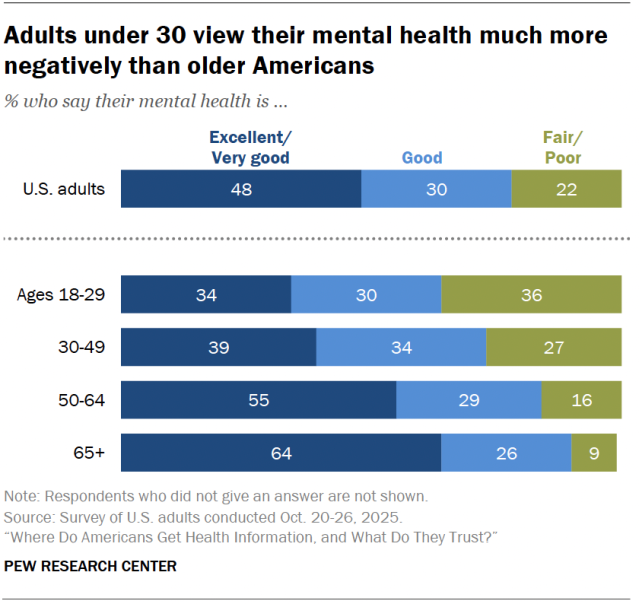
Recent data from Pew Research Center surveys reveal a complex picture of mental health across the U.S. adult population. In an October 2025 survey, a substantial 48% of American adults reported their mental health as either excellent or very good. Another 30% described their mental health as good. However, a concerning 22% indicated that their mental health is fair or poor, highlighting that a significant portion of the population faces mental health challenges. This data underscores that while many Americans are experiencing positive mental well-being, a considerable minority are struggling.
Demographic Disparities in Mental Health Perception
The perception of mental health is not uniform across all demographic groups. Younger Americans, in particular, report more negative experiences. Adults under the age of 30 are four times more likely than those aged 65 and older to rate their mental health as fair or poor (36% versus 9%). This stark difference points to potential generational factors, increased societal pressures, or differing coping mechanisms among younger demographics.
Income also plays a notable role. Approximately one-third of adults with lower incomes (32%) categorize their mental health as fair or poor, a significantly higher proportion compared to middle-income (19%) and upper-income (13%) adults. This suggests that socioeconomic factors can exacerbate mental health struggles, potentially due to limited access to resources, increased stress related to financial instability, or other related challenges.

Gender differences, while present, are less pronounced. Women are only slightly more likely than men to report their mental health as fair or poor, with 23% of women and 20% of men holding this view. While not a dramatic disparity, it still indicates a nuanced difference in how genders experience and report their mental well-being.
Effort and Engagement in Mental Health Care
Despite the varying perceptions of mental health, a strong majority of U.S. adults report actively engaging in efforts to improve their mental well-being. The October 2025 survey found that 36% of adults are putting a lot of effort into taking care of their mental health. An additional 49% are putting in a little effort, while only 15% claim to be making no effort at all. This data indicates a widespread acknowledgment of the importance of mental health maintenance.
Interestingly, younger adults, who are more likely to report negative mental health, do not necessarily lag in their efforts to address it. The proportion of younger adults putting in a lot of effort to manage their mental health is comparable to most other age groups and only slightly lower than that of adults aged 65 and older. This suggests that while external factors might be impacting their mental health more profoundly, younger generations are actively seeking to mitigate these effects through dedicated effort.
Trusted Confidants for Mental Health Discussions
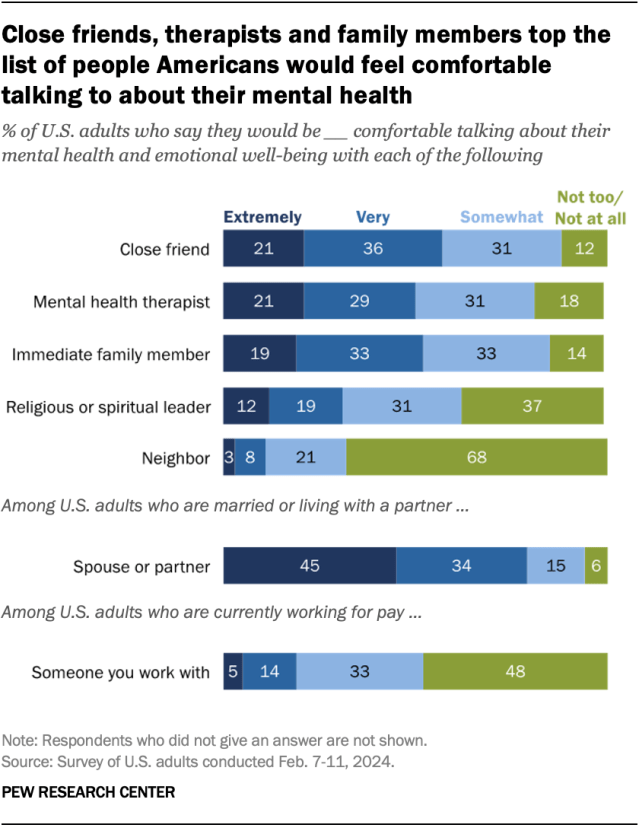
The willingness and comfort level in discussing mental health issues vary significantly depending on the recipient of these conversations. A February 2024 Pew Research Center survey revealed that over half of adults feel extremely or very comfortable discussing their mental health with a close friend (57%), an immediate family member (52%), or a mental health therapist (50%). These relationships represent the primary pillars of support for many Americans navigating mental health challenges.
Conversely, comfort levels decrease considerably when considering other figures in their social or spiritual networks. Only 31% of adults feel extremely or very comfortable discussing mental health with a religious or spiritual leader, and a mere 11% feel the same about discussing it with a neighbor. This suggests that while spiritual and community connections are valued, they may not be perceived as primary avenues for deep mental health disclosures.
For those in committed relationships, the comfort level is exceptionally high. A significant majority of adults who are married or living with a partner (79%) report being extremely or very comfortable discussing their mental health and emotional well-being with their significant other. This highlights the crucial role of romantic partnerships as a source of intimate support.
In the workplace, however, the comfort level for discussing mental health is significantly lower. Only 19% of employed adults feel extremely or very comfortable discussing these topics with a co-worker. This indicates a prevalent hesitancy to disclose personal mental health information in professional settings, likely due to concerns about stigma, professional repercussions, or workplace culture.
Teen Mental Health: A Growing Concern
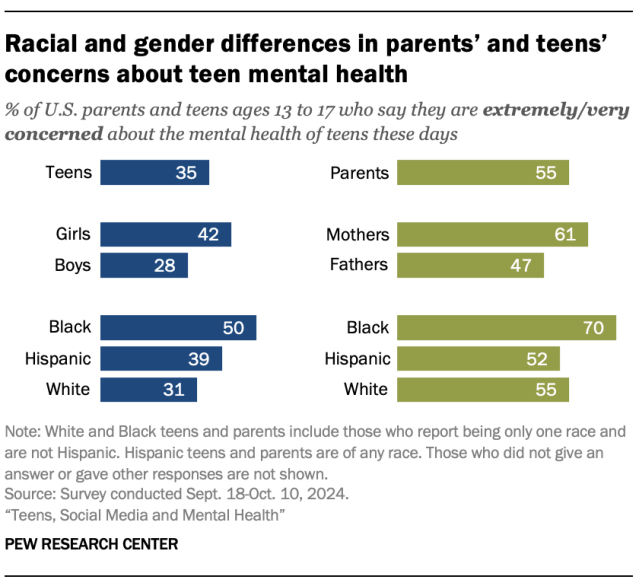
The mental well-being of teenagers is also a significant area of focus, particularly during Mental Health Awareness Month. A fall 2024 Pew Research Center survey indicated that 35% of U.S. teens (ages 13 to 17) are extremely or very concerned about the mental health of their peers. An additional 42% express some level of concern, while 23% are not too or not at all concerned. This collective concern suggests an awareness of mental health challenges within adolescent communities.
Gender and racial disparities are also evident among teens. Teen girls are more likely than boys to report extreme or very high levels of concern regarding teen mental health (42% vs. 28%). Furthermore, Black teens (50%) express higher levels of concern compared to Hispanic teens (39%) and White teens (31%). These differences may reflect varying societal pressures, cultural attitudes towards mental health, or access to support systems within these groups.
Parental Perspectives on Teen Mental Health
Parents of teens are even more attuned to the mental health landscape of their adolescent children. The same fall 2024 survey revealed that over half of parents with a teen aged 13 to 17 (55%) are extremely or very concerned about teen mental health. Another third (34%) are somewhat concerned, and 11% are not particularly worried. This heightened parental concern underscores the perceived vulnerability of adolescents during this critical developmental stage.
Similar to teens, demographic factors influence parental concern. Mothers of teens are more likely than fathers to be highly concerned (61% vs. 47%). Racial differences are also pronounced among parents, with Black parents of teens expressing the highest levels of concern (70%), followed by White parents (55%) and Hispanic parents (52%). These patterns may correlate with the teens’ own reported concerns and highlight the intersection of parental and adolescent experiences.
Communication Channels for Teen Mental Health
When it comes to discussing mental health, teens show a preference for familiar and trusted figures. Approximately half of teens (52%) feel extremely or very comfortable talking about their mental health with a parent, and 48% feel the same about talking to a friend. These findings suggest that familial and peer relationships serve as the primary conduits for adolescent mental health conversations.
Comfort levels decrease for other potential confidants. Only 31% of teens feel comfortable discussing their mental health with a therapist, 26% with a family member other than their parents, and a mere 12% with a teacher. This indicates a potential gap in accessible and comfortable professional mental health support for adolescents, with a strong reliance on their immediate social circles.
Background and Context of Mental Health Awareness Month
Mental Health Awareness Month, observed annually in May, traces its origins back to the 1940s. Initially established as "Mental Health Week" by the Mental Health Association in Delaware, it was later expanded to a full month to increase public awareness and education about mental illness and to promote mental health. The month serves as a critical period for advocacy groups, healthcare providers, and individuals to share resources, challenge stigma, and encourage open conversations about mental well-being. The ongoing efforts to destigmatize mental health issues are crucial, especially in light of the data showing that while many Americans prioritize their mental health, significant portions still experience negative well-being and face barriers to open communication.
Broader Implications and Future Outlook
The data presented by Pew Research Center offers a compelling snapshot of the current mental health landscape in the United States. The near-parity in effort invested in mental and physical health signals a positive societal shift towards recognizing mental well-being as a fundamental aspect of overall health. However, the persistent demographic disparities in mental health perception, particularly among younger adults and lower-income individuals, highlight the need for targeted interventions and support systems.
The comfort levels in discussing mental health reveal the enduring importance of close personal relationships – friends, family, and partners – as primary sources of support. The lower comfort levels with other figures, such as religious leaders, neighbors, and colleagues, suggest that broader societal efforts are needed to foster more inclusive and accepting environments for mental health discussions across various spheres of life.
For teenagers, the findings underscore the critical role of parents and peers in their mental health journey. The concern expressed by both teens and their parents about adolescent mental well-being necessitates continued investment in school-based mental health services, accessible community programs, and educational initiatives for both young people and their caregivers.
As Mental Health Awareness Month continues to gain traction, this research provides valuable insights for policymakers, healthcare professionals, educators, and community leaders. Addressing the identified disparities, strengthening communication channels, and fostering a culture of open dialogue are essential steps towards ensuring that all Americans have the opportunity to achieve and maintain optimal mental health. The journey towards comprehensive mental well-being is ongoing, and continued research and focused action are paramount to navigating its complexities and building a more supportive society.