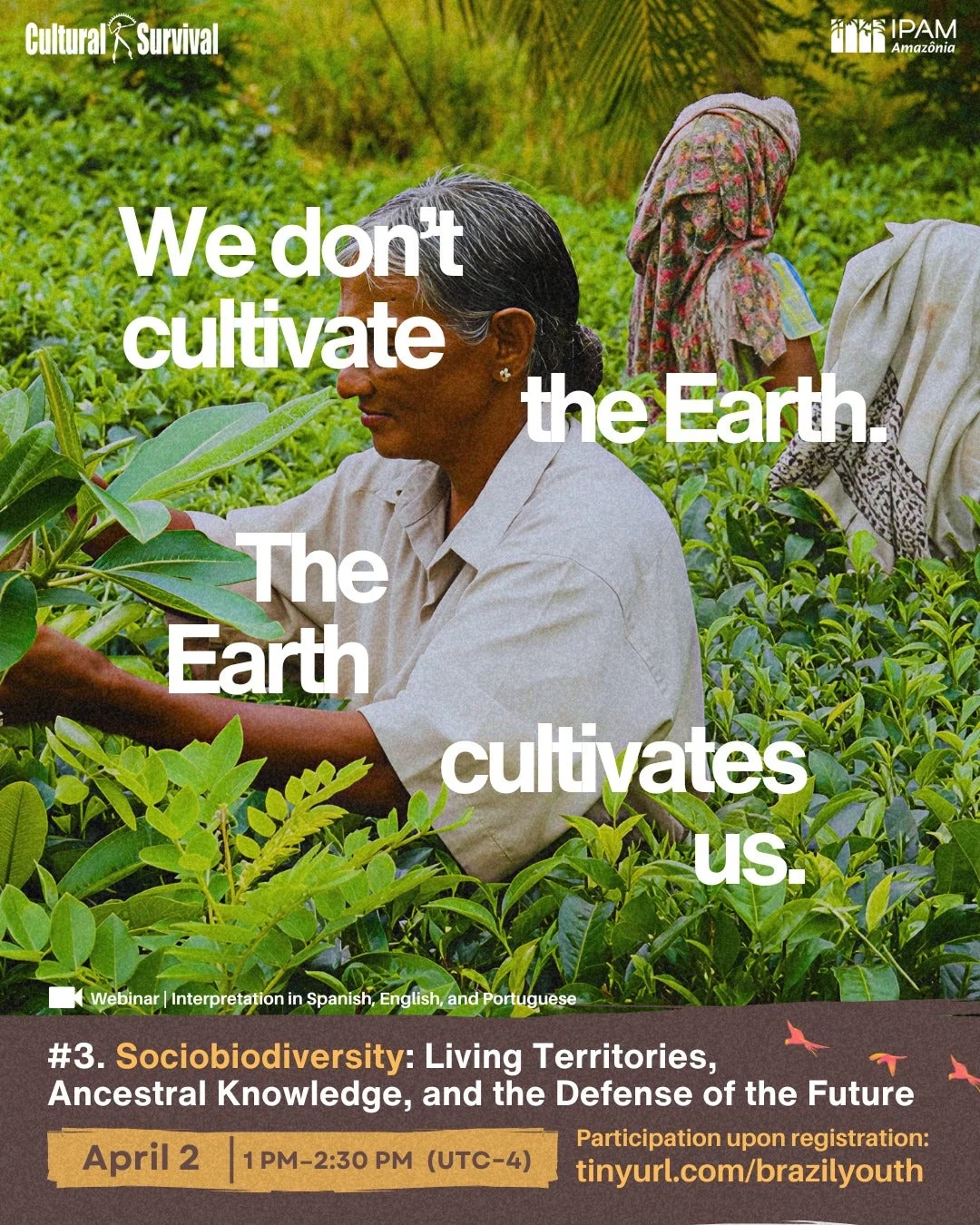
Cultural Survival, a globally recognized organization dedicated to advocating for Indigenous Peoples’ rights and supporting their self-determination, cultures, and political resilience, has announced an upcoming webinar. The event is scheduled for Thursday, April 2, 2026, at 10:20 AM Eastern Time. While the specific title and detailed agenda of the webinar are not explicitly provided in the initial announcement, the organization’s long-standing mission strongly suggests a focus on the intersection of Indigenous rights and environmental justice, a critical and increasingly urgent global issue.
Background: The Crucial Link Between Indigenous Rights and Environmental Stewardship
For decades, Cultural Survival has been at the forefront of amplifying Indigenous voices and supporting their efforts to protect their ancestral lands, biodiversity, and cultural heritage. Indigenous communities worldwide are often the most effective stewards of the environment, possessing invaluable traditional ecological knowledge passed down through generations. However, these communities disproportionately face threats from resource extraction, industrial development, climate change, and land grabbing, often exacerbated by governmental policies and corporate interests.
The organization’s mission, established in 1972, is to "advocate for Indigenous Peoples’ rights and support Indigenous communities’ self-determination, cultures and political resilience." Their vision is "a future that respects and honors Indigenous Peoples’ inherent rights and dynamic cultures, deeply and richly interwoven in lands, languages, spiritual traditions, and artistic expression, rooted in self-determination and self-governance." This foundational commitment naturally leads to a focus on environmental issues, as the health of Indigenous cultures and their ability to exercise self-determination are inextricably linked to the health of their lands and ecosystems.
The Growing Urgency of Environmental Justice for Indigenous Peoples
The timing of this webinar, scheduled for April 2026, places it within a critical period for global environmental action and Indigenous rights advocacy. Scientific consensus, as highlighted by reports from the Intergovernmental Panel on Climate Change (IPCC), consistently underscores the disproportionate impact of climate change on vulnerable populations, including Indigenous communities. These communities are often on the front lines, experiencing the most severe consequences of rising sea levels, desertification, extreme weather events, and biodiversity loss.
Furthermore, the expansion of extractive industries, such as mining, logging, and oil and gas exploration, continues to encroach upon Indigenous territories. These activities not only threaten ecosystems but also lead to social disruption, human rights violations, and the erosion of cultural practices. The struggle for Indigenous land rights is thus intrinsically tied to the fight for environmental protection.
Potential Themes and Expected Discussions
Given Cultural Survival’s expertise and the global context, this webinar is likely to delve into several key areas:
- Indigenous Knowledge and Conservation: Exploring how Indigenous ecological knowledge can inform and enhance contemporary conservation strategies. This could include discussions on sustainable resource management, traditional land-use practices, and the role of Indigenous governance in protecting biodiversity.
- Climate Change Adaptation and Resilience: Examining the challenges faced by Indigenous communities due to climate change and the innovative strategies they are employing to adapt and build resilience. This might involve discussions on traditional agricultural practices, water management, and community-led adaptation projects.
- Land Rights and Resource Management: Addressing the ongoing struggles of Indigenous Peoples to secure and protect their ancestral lands from encroachment and exploitation. This could include legal battles, advocacy for policy changes, and the importance of Free, Prior, and Informed Consent (FPIC) in development projects.
- Corporate Accountability and Environmental Impact: Analyzing the role of corporations in environmental degradation on Indigenous territories and the mechanisms for holding them accountable. This might involve case studies of successful advocacy efforts and calls for stronger regulatory frameworks.
- Policy and Advocacy: Discussing current national and international policies affecting Indigenous Peoples and their environments, and outlining strategies for effective advocacy to promote Indigenous rights and environmental justice.
Cultural Survival’s Long-Standing Commitment to Advocacy
Founded in 1972, Cultural Survival has a rich history of supporting Indigenous Peoples worldwide. The organization works through various programs, including grantmaking to Indigenous-led organizations, a radio program that broadcasts Indigenous voices globally, advocacy at the United Nations, and educational initiatives. Their work has consistently highlighted the interconnectedness of cultural survival and environmental well-being.

For instance, Cultural Survival has supported numerous projects focused on land tenure security, the protection of sacred sites, the revitalization of Indigenous languages, and the promotion of sustainable livelihoods. These initiatives often have direct environmental benefits, as they empower Indigenous communities to manage their lands and resources in ways that are both culturally appropriate and ecologically sound.
Data and Statistics Highlighting the Issue
The urgency of the webinar’s likely themes is underscored by compelling data:
- Indigenous Land Guardianship: Indigenous Peoples manage approximately 25% of the world’s land surface, which harbors 80% of the planet’s biodiversity. (Source: UN-REDD Programme, various studies). This highlights their critical role in global conservation efforts.
- Deforestation Rates: Areas managed by Indigenous Peoples often experience significantly lower rates of deforestation compared to surrounding areas, demonstrating the effectiveness of their land management practices. (Source: Center for International Forestry Research (CIFOR), World Bank).
- Environmental Defenders: Indigenous activists are disproportionately represented among those who are murdered or threatened for defending their lands and environments. A significant percentage of environmental defenders killed globally are Indigenous. (Source: Global Witness).
- Climate Vulnerability: Indigenous communities, particularly in the Arctic, small island developing states, and arid regions, are experiencing the impacts of climate change more acutely than many other populations, leading to food insecurity, displacement, and loss of traditional livelihoods. (Source: IPCC Reports, academic research).
Inferred Reactions and Stakeholder Perspectives
While specific speakers and their affiliations are not yet announced, it is reasonable to infer that the webinar will feature Indigenous leaders, activists, legal experts, and perhaps representatives from allied environmental and human rights organizations.
Indigenous leaders would likely emphasize the inherent right of their peoples to self-determination and to manage their lands and resources according to their own customs and laws. They may share firsthand accounts of the challenges they face and highlight the successes of their community-led initiatives.
Environmental scientists and legal experts could provide data-driven analysis on the ecological consequences of development and the legal frameworks—or lack thereof—that protect Indigenous environmental rights. They might discuss international law, such as the UN Declaration on the Rights of Indigenous Peoples (UNDRIP), and its application to environmental protection.
Representatives from allied organizations would likely underscore the importance of solidarity and the need for broader societal support for Indigenous environmental stewardship. They may call for increased funding for Indigenous-led conservation projects and advocate for policy reforms that recognize and uphold Indigenous rights.
Broader Impact and Implications
The outcomes of this webinar could have significant implications:
- Increased Awareness: By bringing together diverse voices and perspectives, the webinar can raise public awareness about the critical role of Indigenous Peoples in environmental protection and the challenges they face.
- Policy Advocacy: The discussions and insights shared can inform policy debates at local, national, and international levels, potentially leading to more effective legal protections for Indigenous rights and environments.
- Empowerment of Indigenous Communities: The event can serve as a platform for Indigenous leaders to share their experiences, connect with allies, and mobilize support for their ongoing struggles.
- Strengthening Global Environmental Efforts: By highlighting the effectiveness of Indigenous-led conservation and advocating for their rights, the webinar can contribute to more robust and equitable global efforts to address climate change and biodiversity loss.
Cultural Survival’s commitment to "Stay Informed" through its outreach initiatives, including newsletters and event announcements, indicates a desire to engage a broad audience. This webinar is a testament to their ongoing dedication to amplifying Indigenous voices and fostering a deeper understanding of the vital connections between human rights, cultural survival, and environmental sustainability. As the world grapples with unprecedented environmental challenges, the insights and leadership of Indigenous Peoples, as likely to be showcased in this forum, are more crucial than ever.