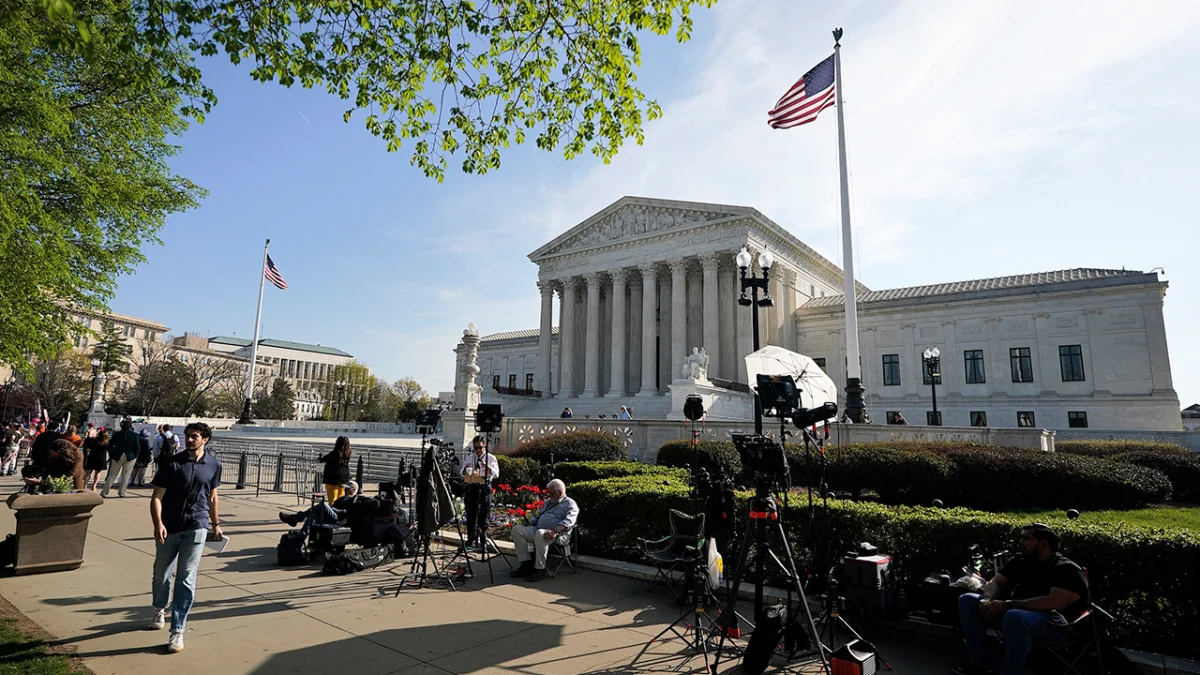
The U.S. Supreme Court is currently poised to potentially overturn two significant legal precedents, sparking considerable public and legal interest. These cases involve the scope of presidential power over federal agencies, a doctrine that has been established for over nine decades, and the intricate rules governing campaign financing by political parties. This judicial scrutiny comes in the wake of the Court’s highly consequential decision in June 2022 to overturn Roe v. Wade, a landmark ruling that had protected abortion rights nationwide for nearly half a century. The implications of these pending decisions are being closely watched, not only for their immediate impact on policy and law but also for their potential to reshape the Court’s own jurisprudential landscape.
The Weight of Precedent: A Statistical Overview
Historically, the U.S. Supreme Court has demonstrated a pronounced tendency to uphold its prior rulings, a principle often referred to as stare decisis, meaning "to stand by things decided." An extensive analysis of Supreme Court decisions, conducted by the Pew Research Center using data from the Library of Congress and the Supreme Court Database at Pennsylvania State University, reveals a consistent pattern of judicial restraint. From the Court’s inception in 1789 through its most recently completed term in 2024, fewer than 1% of all rulings—precisely 236 out of 29,202 cases—have resulted in the overturning of an earlier high court decision.
This trend of upholding precedent has been particularly pronounced in recent decades. Between the 2005 and 2024 terms, a period encompassing 20 years, only 21 out of 1,471 cases, or approximately 1.4%, led to the reversal of one or more prior rulings. This statistical evidence underscores the significant hurdle that any legal challenge faces when seeking to overturn established case law.
For a Supreme Court decision to be formally considered overturned, a majority of the justices must explicitly state as much, or employ language that is "functionally equivalent" to such a declaration, according to the criteria used by the Library of Congress. It is also crucial to note that these figures pertain only to cases that the Supreme Court has agreed to review. The modern Court hears a relatively small fraction—fewer than 100 cases annually—of the thousands of petitions it receives each term, suggesting that the cases reaching the docket are already subject to a degree of judicial selection and scrutiny.

Historical Context: The Evolution of Overturning Precedent
The practice of the Supreme Court overturning its own decisions, while statistically rare, has a long history. The first instance recorded dates back to 1810, with the ruling in Hudson and Smith v. Guestier. This case, which addressed broad issues of international jurisdiction, reversed a decision rendered just two years prior.
Over the centuries, the lifespan of precedents before they are eventually overturned has varied significantly. On average, decisions that have been subsequently reversed by the Court have remained in effect for approximately 29 years. However, this average masks a wide range of durations. Some rulings have stood for over a century before being overturned, while a substantial number, nearly 71 precedents, were in place for a decade or less. In the more recent period, between the 2005 and 2024 terms, the average overturned decision had a longer "shelf life" of approximately 38 years.
The Pew Research Center’s analysis also categorizes the duration of precedents before being overturned. Their data indicates that 57% of Supreme Court rulings that were later overturned had been in place for fewer than 25 years. Another 27% stood for between 25 and 49 years. A smaller proportion, 7%, remained binding for 50 to 74 years, with 6% lasting 75 to 99 years, and only 3% enduring for a century or more. This suggests that while deeply entrenched precedents can persist for generations, a notable portion of overturned rulings are reversed within a quarter-century of their issuance.
Landmark Cases Under Review: Presidential Power and Campaign Finance
The two cases currently before the Supreme Court highlight the potential for significant shifts in established legal doctrines.
One case directly challenges the long-standing precedent regarding presidential authority over federal executive agencies. For over 90 years, the Court has recognized a broad power vested in the President to oversee and direct the actions of these agencies. This principle, often associated with the "unitary executive theory," posits that the President possesses the constitutional authority to control the executive branch. A ruling that significantly curtails this power could have profound implications for the administrative state and the balance of power between the executive and legislative branches. Legal scholars and commentators are closely divided on the potential outcomes, with some predicting a substantial redefinition of executive authority and others anticipating a more nuanced or limited alteration of existing law.

The second case delves into the complex and often contentious area of campaign finance law. Specifically, it examines the extent to which political parties can contribute to federal campaigns. Decades of Supreme Court jurisprudence have shaped the regulations surrounding political donations, aiming to balance free speech rights with concerns about corruption and the influence of money in politics. The current case presents an opportunity for the Court to re-evaluate these established norms, potentially leading to changes in how political campaigns are funded and the role of parties in the electoral process. Reactions from campaign finance reform advocates and political strategists indicate significant concern about the potential for increased financial influence in elections if current restrictions are loosened.
Broader Impact and Implications: The Shifting Legal Landscape
The Supreme Court’s decision to potentially overturn established precedents, particularly following the momentous reversal of Roe v. Wade, signals a period of significant legal reevaluation. The Roe decision, which had stood for 49 years, was a foundational ruling on reproductive rights. Its overturning has led to a patchwork of abortion laws across the United States and has intensified debates about the Court’s role in interpreting constitutional rights.
The data on overturned precedents provides a crucial backdrop for understanding the current judicial climate. While the Court is generally hesitant to reverse course, the recent high-profile decision and the pending cases suggest a Court potentially more willing to reconsider long-standing legal principles. This willingness can be influenced by various factors, including changes in the Court’s composition, evolving societal norms, and new legal arguments presented in specific cases.
The types of cases that have historically been overturned offer further insight. According to the Pew Research Center’s analysis, rulings concerning civil rights, economic activity, and criminal procedure have been disproportionately represented among those that were later reversed. For instance, the overturning of Roe v. Wade fell under the broad category of civil rights. Similarly, the recent decision in Loper Bright Enterprises v. Raimondo (June 2024), which effectively ended the doctrine of "Chevron deference"—a 40-year-old precedent granting federal agencies significant power to interpret statutes—pertains to economic activity and administrative law. Criminal procedure has also seen a significant number of overturned precedents, with cases like Ramos v. Louisiana (2020) reversing nearly 50-year-old rulings on jury unanimity requirements.
The implications of the Court’s potential actions are far-reaching. They can affect fundamental rights, the structure of government power, and the mechanisms of democratic participation. As the Court deliberates on these critical cases, its decisions will not only shape the immediate legal and political landscape but also contribute to the ongoing narrative of the Supreme Court’s evolving jurisprudence and its relationship with American society. The public’s perception of the Court’s legitimacy and its commitment to stability in the law are also at stake, particularly in an era where views of the institution remain near historic lows. The Court’s historical reluctance to overturn precedent, juxtaposed with its recent and potential future actions, underscores the profound impact that each decision carries.