The Trump administration is injecting an additional $144 million into state and local programs supporting students with disabilities, a significant investment aimed at bolstering services under the Individuals with Disabilities Education Act (IDEA). In a notable policy shift, federal officials are also enabling states to utilize IDEA Part C funds to engage with expectant parents of infants with disabilities, a move designed to facilitate earlier identification and intervention. This dual approach signifies a renewed focus on early support and a commitment to extending the reach of critical disability services.
Increased Funding Allocation for IDEA Programs
The U.S. Department of Education announced this week that the $144 million in new funding will be distributed to support various facets of IDEA. A substantial portion, approximately $123.6 million, will be allocated to IDEA Part B. This part of the act primarily serves individuals with disabilities between the ages of 3 and 21, covering a wide spectrum of educational needs, from preschool programs to secondary education. The remaining $20.5 million will be directed towards IDEA Part C, which focuses on early intervention services for infants and toddlers from birth up to their second birthday. These funds are crucial for providing critical developmental support during a child’s formative years.
An official from the Department of Education, speaking to Disability Scoop, explained that the administration is repurposing "non-expiring funds that have been returned to the agency in recent years" for these special education services. While the specific reasons for the return of these funds were not elaborated upon in the initial announcement, the decision to reallocate them underscores a prioritization of disability support within the current federal budget. This strategic use of existing, unspent funds represents an effort to maximize federal resources without necessarily requiring new appropriations, though advocates often call for increased overall congressional funding.
The distribution of these funds is scheduled to occur via formula grants on July 1 and October 1, allowing states ample time to integrate these resources into their upcoming fiscal year planning. This timely allocation is expected to provide a significant boost to state and local educational agencies that have often grappled with budget constraints in meeting the ever-growing demand for special education services.
Expanding the Scope of Early Intervention
Beyond the direct financial infusion, the Trump administration is also championing a new initiative that allows states to leverage IDEA Part C funds in unprecedented ways. For the first time, states can use these early intervention funds to engage in "child find, public awareness, and referral activities" aimed at expectant parents of infants who may have disabilities. This forward-thinking provision, made possible by a federal spending law enacted earlier this year, aims to identify potential needs and connect families with resources even before a child is born.
The Department of Education has issued detailed guidance to states on how to implement this new flexibility. The seven-page document outlines the permissible uses of Part C funds for these pre-birth engagement activities. For instance, if genetic testing or prenatal screening reveals a potential disability, such as Down Syndrome, a state choosing to utilize this provision could proactively reach out to the expectant parents. This outreach would involve educating them about the IDEA Part C system, referring them to necessary services, and initiating the process for establishing an Individualized Family Services Plan (IFSP) within 45 days of the child’s birth.
This proactive approach is designed to significantly reduce the lag time between a child’s birth and the commencement of critical early intervention services. The department emphasizes that by addressing potential needs during the prenatal period, children with disabilities can begin receiving vital support services as early as possible, thereby maximizing their developmental potential and setting them on a stronger trajectory.
Voices from the Field: Support and Advocacy
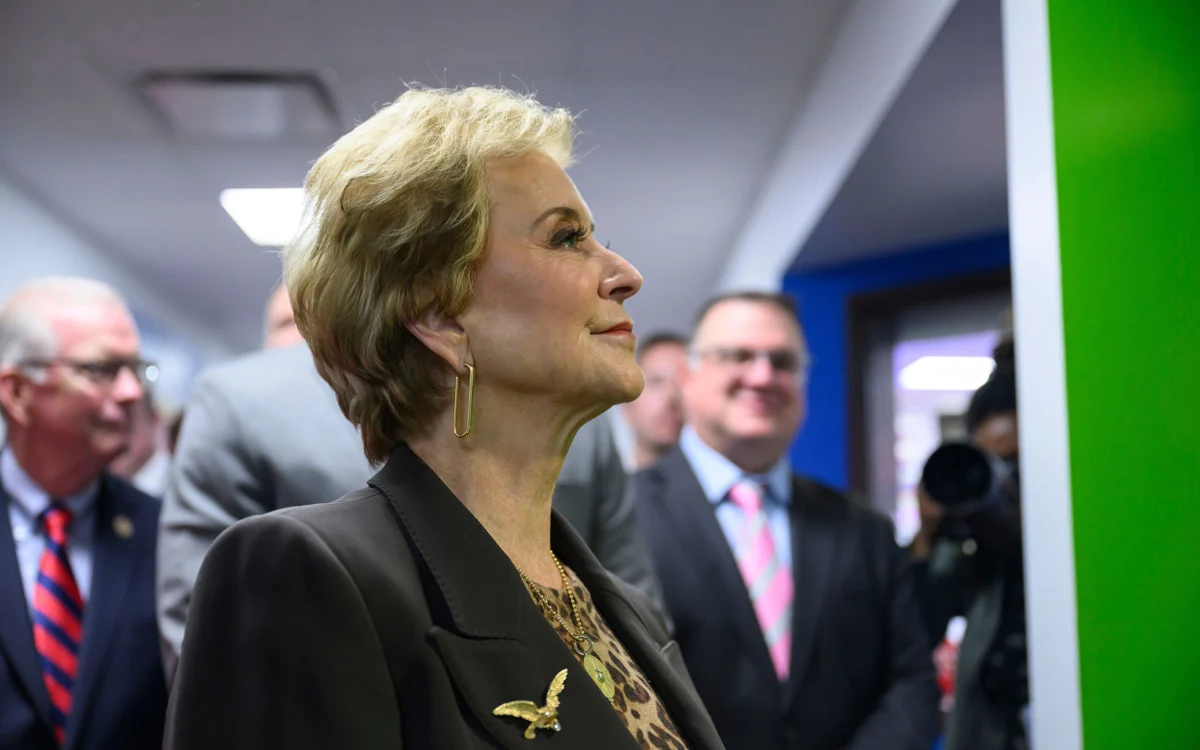
The announcement of increased funding has been met with cautious optimism and strong advocacy from organizations representing individuals with disabilities and special education professionals. Secretary of Education Linda McMahon lauded the investment as "a substantial expansion of resources for students with disabilities and their families," highlighting the administration’s commitment to this vulnerable population.
Chad Rummel, executive director of the Council for Exceptional Children (CEC), an organization dedicated to improving educational outcomes for children with disabilities, expressed the critical need for such financial support. "As the number of eligible children under IDEA continues to rise and funding remains stagnant, I am pleased to see that additional funds for IDEA will be distributed by the U.S. Department of Education," Rummel stated. This sentiment reflects a long-standing concern among educators and advocates about the gap between the increasing number of children requiring specialized services and the available funding to provide them.
Rummel further articulated a hope for sustained and increased federal commitment. "It is my hope that Congress will build on this momentum and provide increased funding for all parts of IDEA in fiscal year 2027, ensuring all IDEA programs are well supported," he urged. This call for continued congressional action underscores the perception that while this new funding is a welcome development, it is a step towards addressing a larger, ongoing funding challenge. The CEC and other advocacy groups consistently work to educate lawmakers about the importance of IDEA and the need for consistent, robust federal investment to ensure equitable access to education for all students, regardless of their abilities.
Historical Context and the Evolution of IDEA
The Individuals with Disabilities Education Act, originally signed into law in 1975 as the Education for All Handicapped Children Act, has undergone significant transformations over the decades. Its foundational principle is to ensure that all children with disabilities have access to a free appropriate public education (FAPE) in the least restrictive environment (LRE). The act mandates that states develop and implement policies that provide for special education and related services to meet the unique needs of each child with a disability.
IDEA is divided into several parts, with Part B and Part C being the most prominent for the recent funding announcement. Part B, enacted in 1975, covers the provision of special education and related services to children and youth with disabilities aged 3 through 21. Part C, established through amendments in 1986, focuses on early intervention services for infants and toddlers (birth to age 2) and their families. The evolution of Part C reflects a growing understanding of the critical impact of early intervention on long-term developmental outcomes. Research consistently demonstrates that early, targeted support can mitigate developmental delays, improve cognitive and social-emotional skills, and reduce the need for more intensive services later in life.
The current administration’s move to allow Part C funds to be used for pre-birth outreach is a logical extension of this growing emphasis on early intervention. By engaging with families before a child’s birth, the system can be better prepared to offer immediate support upon diagnosis or at the earliest signs of developmental concern. This aligns with a broader trend in healthcare and education to shift towards preventative and proactive strategies.
Broader Implications and Future Outlook
The infusion of $144 million into IDEA programs and the expanded use of Part C funds carry significant implications for families, educators, and the broader landscape of disability services.
For Families: The increased funding is expected to translate into enhanced services, potentially reducing waitlists for assessments, therapies, and specialized instruction. For families of newborns, the new pre-birth outreach initiative offers a crucial opportunity to access information and support before their child even arrives, potentially alleviating some of the stress and uncertainty associated with a prenatal diagnosis of a disability. This early engagement can empower parents with knowledge and resources, enabling them to advocate effectively for their child’s needs from day one.
For Educators and Service Providers: The additional funds can support professional development for teachers and therapists, allowing them to stay abreast of the latest research and best practices in special education. It can also contribute to the hiring of more specialized personnel, such as speech-language pathologists, occupational therapists, and special education teachers, to meet the growing demand. The flexibility in Part C funding might also enable early intervention providers to dedicate more resources to outreach and public awareness campaigns, thereby identifying more children in need of services.
For Policy and Advocacy: The administration’s actions, particularly the expansion of Part C’s reach, highlight the ongoing evolution of federal policy in disability services. It underscores the recognition that effective intervention begins long before a child enters the traditional school system. However, as echoed by advocates like Chad Rummel, this funding increase, while substantial, may be viewed as a partial solution to a systemic issue of underfunding. The ongoing dialogue between federal agencies, state governments, and advocacy groups will be crucial in determining the long-term sustainability and adequacy of funding for IDEA programs. Future legislative efforts and congressional appropriations will play a pivotal role in building upon this momentum and ensuring that all students with disabilities receive the comprehensive support they are entitled to.
The recent developments signal a commitment from the Trump administration to bolster support for students with disabilities. The allocation of additional funds to both Parts B and C of IDEA, coupled with the innovative expansion of early intervention outreach, represents a multi-pronged approach to enhancing the lives and educational trajectories of children with disabilities and their families across the nation. The coming months will reveal the full impact of these initiatives as states begin to implement the new funding and utilize the expanded flexibilities.