The past two years have plunged the global workforce into an unprecedented era of rapid experimentation, fundamentally reshaping the landscape of employment and challenging long-held assumptions about work. While the pandemic introduced new modalities of operation, it simultaneously amplified existing societal fissures, leading to a profound re-evaluation of organizational purpose, employee expectations, and the role of Diversity, Equity, and Inclusion (DEI) initiatives. This period, characterized by persistent ambiguity and fast-evolving data, has underscored the critical impact of escalating polarization and burgeoning employee activism within the corporate sphere.
The Intensification of Societal Division
As global societies tentatively emerged from successive lockdowns, a complex tapestry of emotions — ranging from loss and fear to frustration and anger — became palpable. This emotional landscape inevitably spilled over into the public domain, manifesting as heightened societal division. Research conducted across 17 countries revealed that a staggering 60% of individuals perceived their societies as more fragmented than before the pandemic, representing a 30% increase from pre-pandemic levels. This surge in perceived division underscores a growing chasm in collective experience and outlook, impacting everything from daily interactions to national policy debates.
Within the workplace, these societal divisions translated into novel and often contentious challenges. Policies such as "no jab, no job," mandating vaccinations for office return or customer interaction, became a flashpoint. For some, these measures were seen as essential for public health and collective well-being, embodying a responsible corporate stance. For others, they represented an overreach into personal autonomy, infringing on individual liberties. This divergence in perspective created deep-seated tensions, pitting colleagues against each other and challenging leadership’s ability to foster a cohesive work environment.
The pervasive frustration and fatigue stemming from the prolonged pandemic period fueled widespread unrest. Globally, more than 50,000 protests related to the pandemic erupted, signaling a collective exasperation with restrictions, economic instability, and perceived government failures. This "COVID rage" also manifested in escalating instances of customer abuse directed at frontline workers, particularly within the hospitality and service sectors. Reports indicated that up to 80% of workers in these industries had witnessed or directly experienced such abuse, highlighting the intense pressure and emotional toll on those interacting directly with a stressed and divided public. Compounding these issues was the stark amplification of global inequalities, with vaccine access becoming a new frontier for the "haves" and "have-nots," further impeding equitable economic recovery and deepening existing socioeconomic disparities.
Erosion of Trust and the Youth Imperative
Beyond pandemic-specific grievances, a broader erosion of trust in public officials and civic institutions had been steadily building over many years, only to be exacerbated by the crisis. A global study in August 2021 painted a stark picture of profound disillusionment among younger generations. Millennials and Generation Z, in particular, exhibited such deep-seated distrust that they expressed higher "faith in governance by a system of artificial intelligence than by a fellow human being." This startling revelation points to a generation fed up with perceived corruption, stagnant political leadership, and the constant threat to physical safety, particularly concerning surveillance and militarized policing targeting activists and people of color.
This generational skepticism reflects a broader societal shift, where traditional power structures are increasingly scrutinized and found wanting. The digital age, with its rapid dissemination of information and misinformation, has contributed to a more informed yet often more cynical populace. Young people, having grown up in an era of multiple crises – climate change, economic recessions, and global pandemics – expect more from their leaders and institutions, demanding authenticity, accountability, and demonstrable action. Their preference for AI governance, while perhaps hyperbolic, underscores a desire for impartial, data-driven decision-making untainted by human fallibility or self-interest, reflecting a deep-seated frustration with the status quo.
The Catalytic Moment: Social Justice at the Forefront
The tragic murder of George Floyd in May 2020 served as a global flashpoint, igniting a powerful resurgence of the Black Lives Matter movement and anti-racism activism. Protests and solidarity actions spread to over 60 countries, transcending national borders and bringing issues of systemic racism and police brutality to the forefront of global consciousness. This pivotal event, occurring amidst the initial stages of the pandemic, forced organizations worldwide to confront their own roles in perpetuating or combating inequality and discrimination.
The ensuing wave of activism transformed what might once have been considered external societal issues into urgent workplace discussions. Employees began to demand that their employers acknowledge and address racial injustice, gender inequality, LGBTQ+ rights, disability inclusion, and other forms of discrimination not merely as philanthropic endeavors but as fundamental components of ethical business practice. The silence of corporate leaders, once an acceptable stance on controversial social issues, rapidly became an untenable position. Companies were increasingly expected to articulate clear values, demonstrate tangible commitment through policy changes, and foster inclusive cultures that actively challenged bias and discrimination.
Employee Empowerment and Activism in the Workplace
The confluence of societal division, eroded trust, and heightened social justice awareness fundamentally altered the employer-employee dynamic. Employees, now more than ever, expect and demand that their workplace leaders take a definitive stand on key social issues. Global research indicated that as high as 76% of employees held this expectation, signaling a profound shift from a purely transactional relationship to one where shared values and social responsibility are paramount.
Moreover, employees are not merely observers; they are increasingly energized and empowered to take action themselves when they perceive it as necessary. An August 2021 global survey revealed that 60% of employees felt empowered to act as change-makers within their organizations. A remarkable 75% globally stated they would take action to advance urgently needed changes, with 40% explicitly indicating a willingness to go public through whistleblowing, protesting, or social media posts. This willingness to challenge the status quo, even at personal risk, reflects a generation of workers who view their employment not just as a means of livelihood but as a platform for enacting positive societal change.
This era has also witnessed a significant resurgence of interest in labor unions, particularly in countries like the U.S. Employees, emboldened by collective action and driven by concerns over workplace safety, fair wages, benefits, and broader human rights, increasingly sought unionization to safeguard their interests and actively participate in redesigning organizational cultures. The month of October 2021, for instance, saw over 25,000 workers on strike, a substantial increase compared to the average of 10,000 in the preceding three months. This wave of industrial action, spanning various sectors from manufacturing to tech, underscored a renewed emphasis on worker power and a demand for greater equity and voice in corporate decision-making. These movements signify a fundamental re-balancing of power, where employees are no longer passive recipients of corporate policy but active stakeholders demanding accountability and systemic change.
The Leadership Disconnect and Its Consequences
Despite these clear shifts in employee expectations and behaviors, a significant leadership gap persists. The same global survey indicated that only 48% of employees believed their employers were genuinely acting on their stated values. This disconnect carries substantial risks, threatening to erode trust, diminish leaders’ credibility, and severely impact employee engagement. In an environment where authenticity and action are paramount, performative gestures or empty statements are quickly identified and dismissed.
The consequences of this leadership inaction are tangible and contribute directly to phenomena like "The Great Resignation." Data revealed that 33% of employees quit their jobs when their employer failed to speak out about a societal or political issue that the employee felt the organization had an obligation to address. This demonstrates that for a substantial portion of the workforce, an employer’s stance on social justice and ethical conduct is now a critical factor in talent attraction and retention, rivaling traditional considerations such as salary and benefits. The era of the silent executive on DEI issues is unequivocally over, as is the tolerance for well-intentionintentioned but ultimately superficial public statements devoid of substantive change. The new benchmark for leadership is to be an inclusive leader who demonstrates allyship through concrete actions, not merely through social media posts or corporate platitudes.
Strategic Imperatives for Navigating the New Landscape
Organizations grappling with these complex dynamics must recognize that the shifts observed are not transient but represent a fundamental reordering of the employer-employee relationship and the role of business in society. Navigating this new landscape requires proactive, empathetic, and action-oriented leadership.
1. Cultivating Authentic Dialogue and Psychological Safety: Leaders must foster environments where diverse perspectives, even those leading to polarization, can be discussed respectfully and constructively. This requires establishing psychological safety, ensuring employees feel safe to voice concerns, challenge norms, and engage in difficult conversations without fear of retribution. Training in inclusive communication and conflict resolution can equip managers to mediate these discussions effectively.
2. Data-Driven DEI Strategies: To move beyond performative actions, organizations must adopt a data-centric approach to DEI. By collecting and analyzing internal data on representation, pay equity, promotion rates, and employee sentiment, companies can identify systemic issues and track progress. This "Show Data to Easily See Problems & Do Actions" approach provides a factual basis for interventions, building trust and demonstrating genuine commitment.
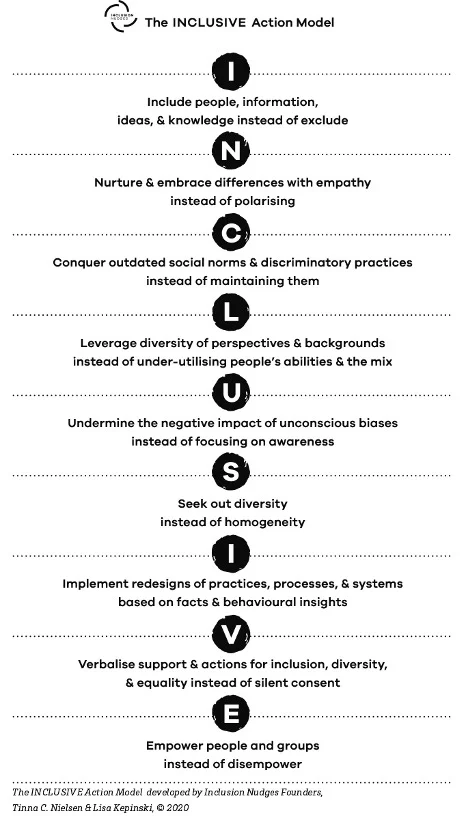
3. Actionable Allyship and Inclusive Leadership: The expectation for leaders to be "allies by action" necessitates a shift in leadership development. Inclusive leaders must actively listen, demonstrate empathy, take accountability for organizational shortcomings, and transparently communicate plans for change. This involves moving beyond personal biases to challenge systemic inequities and championing marginalized voices. Practical tools like "Ally Through Empathic Perspective Taking" can guide leaders in fostering deeper understanding and more effective support.
4. Addressing Wider Inequalities and Countering Stereotypes: The pandemic highlighted and exacerbated global inequalities and xenophobia. Organizations have a role in countering these trends internally and externally. This includes consciously challenging stereotypes in hiring, promotion, and marketing materials ("Counter Stereotypes Using Images & Social Media"). Furthermore, humanizing narratives and reframing language, such as "Re-frame ‘Migrant’ to ‘Human’" and using "Images Framing Immigrants as One of Us," can combat harmful biases and foster a more inclusive global perspective within the workforce.
5. Proactive Engagement with Employee Activism: Instead of viewing employee activism as a threat, organizations should see it as a valuable feedback mechanism and an opportunity for co-creation. Establishing clear channels for feedback, supporting Employee Resource Groups (ERGs), and involving employees in policy development can harness this energy constructively. When employees feel heard and empowered, their drive for change becomes a force for positive organizational evolution.
6. Bridging the Trust Gap: Rebuilding trust requires consistent demonstration of values through actions. This means ensuring that corporate policies align with stated DEI commitments, investing in employee well-being, and demonstrating ethical leadership at all levels. Transparency in decision-making and accountability for leaders are crucial for restoring faith in institutional integrity.
Closing Notes and Future Outlook
The insights from the pandemic era illuminate a profound transformation in the world of work, where the lines between societal issues and workplace dynamics have blurred irrevocably. This period, explored across a series of articles covering "Purpose," "People," "Process & Policy," and "Polarization & Activism," underscores the interconnectedness of these trends. The imperative for organizational leaders is clear: to move beyond reactive measures and embrace a proactive, values-driven approach to DEI and inclusive leadership.
This summary of research on emerging workplace trends serves as a critical reflection point for organizations committed to fostering equitable and thriving environments. The call for an inclusive leader who is an ally by action is not merely a moral plea but a strategic necessity for talent retention, organizational resilience, and long-term success in a world increasingly shaped by both division and the demand for justice. For those seeking to navigate these complex waters, engaging with advisory consulting, coaching, and speaking services focused on these critical areas can provide invaluable guidance. The future of work demands not just adaptation, but a conscious, deliberate reshaping towards a more just and inclusive paradigm.