Virginia Governor Abigail Spanberger this week signed into law House Bill 167 (HB167), a pivotal piece of legislation that officially terminates state tax exemptions for several organizations with historical ties to the Confederacy. The move represents a significant departure from decades of state policy that had financially supported groups such as the United Daughters of the Confederacy (UDC) and the Sons of Confederate Veterans, effectively ending a segregation-era carve-out embedded in Virginia’s tax code since the 1950s. This legislative action, championed by Delegate Alex Askew, signals a decisive shift in how the Commonwealth of Virginia officially acknowledges and reconciles with its complex past.
A Landmark Legislative Action
HB167, which passed through both chambers of the Virginia General Assembly with bipartisan support, specifically targets exemptions that have long benefited organizations perpetuating the "Lost Cause" narrative of the Civil War. These exemptions, initially codified during a period of intense racial segregation, provided financial relief to groups that actively glorified the Confederacy and, by extension, its core mission of preserving slavery. Delegate Askew, the bill’s sponsor, articulated the measure as a step towards a "fairer, more inclusive tax policy that truly reflects our commitment to equality and progress," emphasizing the need to cease "providing tax relief to historically pro-slavery institutions." The signing of this bill into law by Governor Spanberger underscores Virginia’s evolving stance on historical memory and its commitment to confronting the enduring legacy of slavery and Jim Crow.
Roots of State Support: The Jim Crow Era and the Lost Cause
To fully grasp the significance of HB167, it is essential to understand the historical context in which these tax exemptions were granted. The mid-20th century in Virginia, much like the rest of the American South, was characterized by the entrenched system of Jim Crow segregation and "Massive Resistance" to federal desegregation efforts. It was during this period, specifically in the 1950s and 1960s, that a renewed wave of Confederate monument construction swept across the Southern landscape, often in direct defiance of the burgeoning Civil Rights Movement and rulings like Brown v. Board of Education.
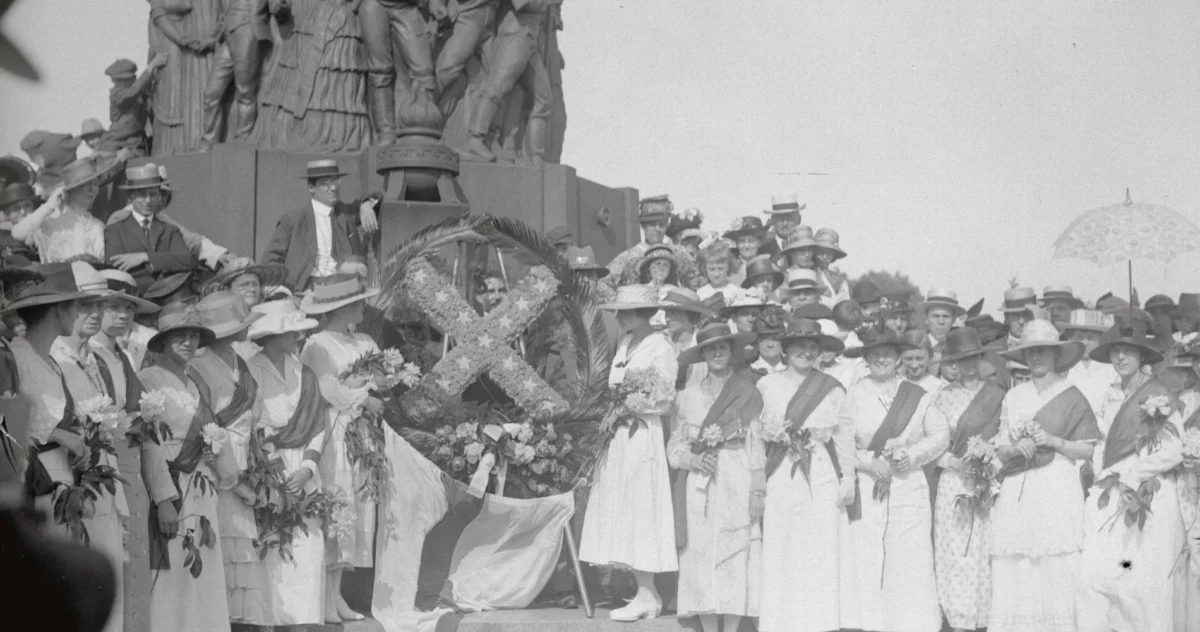
The organizations now losing their tax-exempt status, particularly the United Daughters of the Confederacy and the Sons of Confederate Veterans, played a central role in this historical revisionism. They meticulously curated and propagated the "Lost Cause" narrative, which sought to reframe the Confederacy’s fight. Instead of acknowledging slavery as the primary cause of secession, the Lost Cause narrative presented the Civil War as a noble struggle for "states’ rights" and "local autonomy," minimizing the centrality of slavery and portraying Confederate leaders as heroic figures defending a romanticized Southern way of life. This narrative, disseminated through monuments, textbooks, and public commemorations, served to legitimize the racial hierarchy of the Jim Crow South and reinforce white supremacy.
Virginia, as the former capital of the Confederacy and a state with a deeply intertwined history with the Civil War, provided substantial, explicit support to these groups. This support was not merely passive but an active endorsement of the Lost Cause ideology, intended to bolster resistance to racial integration and civil rights advancements. As WHRO reported, the state’s financial assistance was "part of a wave of resistance to racial integration and civil rights efforts in the commonwealth."
The Role of Confederate Monuments in Racial Hierarchy
The physical manifestations of the Lost Cause — the hundreds of Confederate monuments that dot the Southern landscape — were far from benign historical markers. In Virginia, which boasts more Confederate monuments than any other state, these towering effigies and memorials served a potent political and social purpose. Erected predominantly during the post-Reconstruction era of racial terror and later during the Civil Rights era, they were powerful symbols designed to intimidate African Americans, assert white dominance, and re-establish the racial hierarchy that had been momentarily disrupted by Emancipation and Reconstruction.
Delegate Askew succinctly articulated this purpose, telling WHRO that these monuments were put in place "to show African Americans and certain individuals, certain communities, that they were second-class citizens." The explicit intent behind their proliferation was to send an unmistakable message about who held power and who was relegated to a subordinate status. By framing Southern secession as a defense of local autonomy rather than an effort to preserve human bondage, these groups and their monuments effectively whitewashed the brutal realities of slavery and the systemic oppression that followed.
Financial Endorsements of a Divisive Past
Virginia’s financial entanglement with these pro-Confederate groups runs deep. In 1950, then-Governor John S. Battle signed a deed granting the UDC land in Richmond for its headquarters. This land now hosts a stately, marble-clad building reportedly valued at approximately $4.7 million today, underscoring the significant public asset provided to the organization. Just two years later, in 1952, the General Assembly further solidified this support by explicitly exempting the UDC from the state recordation tax, a tax typically levied when property sales are registered. Notably, the UDC’s Virginia division was the only organization singled out by name in this section of the tax code, highlighting the targeted nature of this state patronage.
Beyond the recordation tax, lawmakers also extended property tax exemptions for real and personal property owned by the Virginia Division of the UDC, the General Organization of the UDC, the Confederate Memorial Literary Society, and the Stonewall Jackson Memorial, Incorporated. These exemptions translated into tangible financial benefits for these groups. For instance, The New York Times reported that the UDC saved an estimated $57,000 annually in property taxes on its Richmond headquarters alone. For an organization like the UDC, which reported approximately $2.1 million in revenue and $1.1 million in expenses in 2025, according to the Times, these tax breaks represented a consistent and substantial state subsidy.
The cumulative effect of these policies was more than just financial; it was a powerful symbolic endorsement of the organizations’ mission to romanticize slavery, glorify the Confederacy, and, by extension, reinforce the structures of Jim Crow segregation. Ending these exemptions, therefore, terminates more than 75 years of state-sanctioned financial support for a narrative that has caused immense pain and division.
A Legislative Path to Reconciliation
The passage of HB167 was the culmination of a focused legislative effort to align Virginia’s public policy with a more accurate and inclusive understanding of its history. Delegate Askew’s persistent advocacy was instrumental in bringing the bill to fruition. The legislative process involved robust debate and public discourse, reflecting the state’s ongoing struggle to reconcile its past with its present aspirations. The bill’s journey through the General Assembly and its subsequent signing by Governor Spanberger on Monday, April 14, 2026 (based on the implied future dates in the original article, e.g., 2026/04/14), mark a definitive moment in this reconciliation process.
In a statement following the governor’s signing, Delegate Askew described it as "a proud moment and an important step forward for Virginia." This sentiment resonates with a growing consensus among Virginians and across the nation that public funds should not be used to perpetuate historical inaccuracies or to honor a cause rooted in human subjugation. The legislation signifies a formal rejection of the idea that state resources should subsidize groups that, in Askew’s words, "help glorify the Confederacy and essentially, I believe, have whitewashed the commonwealth’s history."
Beyond Tax Exemptions: A Broader Reckoning
The repeal of tax exemptions is part of a broader, multi-faceted effort in Virginia to confront and recontextualize its Confederate past. This legislative session saw other significant actions that collectively underscore this commitment. Governor Spanberger also signed into law a bill that discontinues specialty license plates featuring images of Confederate General Robert E. Lee and the Sons of Confederate Veterans. This seemingly small change holds significant symbolic weight, removing a state-sanctioned platform for Confederate iconography from public display.
Furthermore, the governor sent back to the Assembly with recommendations a bill (HB1377) proposing the establishment of a task force. This task force would be charged with recommending changes, particularly aimed at distancing the Virginia Military Institute (VMI) from the "Lost Cause" narrative. VMI, like many Southern institutions, has long grappled with its historical connections to the Confederacy, and this task force aims to ensure that its institutional narrative accurately reflects the complexities of history, rather than perpetuating romanticized or inaccurate accounts of the Civil War. These concurrent legislative actions signal a comprehensive approach to re-evaluating and reforming Virginia’s relationship with its past.
The effort to dismantle the vestiges of the Lost Cause is not confined to the state legislature. The issue continues to play out in local communities, sometimes with contention. For example, in the Shenandoah Valley, a school board’s decision to reinstate the names of two schools originally christened for Confederate generals sparked a lawsuit from Black students. These students argue that the renaming was intended "to make it very clear that Black students were not welcome," citing the generals’ pro-slavery views and overt racism. This ongoing legal battle highlights the deep-seated impact of Confederate symbolism and the continued struggle for equitable and inclusive educational environments.
National Context: Divergent Paths in Confronting History
Virginia’s proactive measures stand in stark contrast to certain actions taken at the federal level, particularly during recent administrations. The Trump administration, for instance, had been criticized for moves that appeared to minimize or erase the history of slavery. This included orders for the removal of content related to slavery at several national parks and reported pressure on the Smithsonian Institution to remove exhibits focusing on "how bad Slavery was," as the president allegedly stated.
Additionally, last year saw the Army reportedly reverse a congressionally mandated, multimillion-dollar effort to remove Confederate names from military bases. Instead, some base names were changed to honor secessionists who fought against the United States to preserve slavery and white supremacy, a move widely criticized by historians and civil rights advocates as "dishonoring American heroes." These federal actions represent a counter-narrative to Virginia’s current trajectory, illustrating the ongoing national debate and differing approaches to historical memory.
However, Virginia is not isolated in its efforts. Other states and private museums across the country are also actively working to preserve accurate history and confront the difficult truths about the nation’s past. Initiatives to recontextualize monuments, update educational curricula, and establish new museums dedicated to the history of slavery and racial injustice are gaining momentum. These collective efforts underscore a growing recognition of the importance of an honest reckoning with historical facts, even when those facts are uncomfortable.
The Ongoing Journey Towards an Inclusive Future
The signing of HB167 marks a significant milestone in Virginia’s journey towards a more inclusive future. By severing financial ties with organizations that have historically promoted a divisive and inaccurate narrative, the state is taking a concrete step towards acknowledging the pain caused by its past and fostering a more equitable society. As Delegate Askew articulated, "It’s truthfully time to move forward from our dark past that our commonwealth has had."
This legislative action is not merely about tax codes; it is about the fundamental principles of historical integrity, racial justice, and the responsible use of public resources. It reflects a societal evolution, a growing understanding that honoring figures and causes associated with slavery and racial oppression is incompatible with the values of a diverse and democratic society. While the echoes of the past will undoubtedly continue to resonate, Virginia’s recent legislative decisions demonstrate a clear intent to build a future grounded in truth, reconciliation, and progress. The journey is ongoing, but this week’s actions signify a powerful commitment to moving forward with courage and clarity.