In an era characterized by unprecedented global challenges—from persistent geopolitical instability and rapid technological disruption to the enduring aftermath of a global pandemic and the accelerating climate crisis—the imperative for organizational resilience and innovation has never been more acute. Within this landscape of pervasive uncertainty, the composition of teams emerges as a critical determinant of success. While traditional discourse on diversity, equity, and inclusion (DEI) has commendably focused on demographic representation, a growing body of evidence points to a distinct, yet often overlooked, dimension of diversity: cognitive diversity. This form of diversity, encompassing varied thinking styles, perspectives, and approaches to problem-solving, is increasingly recognized as a potent differentiator, essential for enhancing innovation, improving decision-making, and mitigating risks in complex environments.
The foundational understanding that diverse perspectives fuel innovation, sharpen problem-solving capabilities, and reduce inherent organizational risks is well-established. When integrated with robust inclusive leadership practices, this diversity not only leads to superior decisions but also facilitates smoother implementation through enhanced buy-in and trust across an organization. Yet, a significant proportion of corporate DEI initiatives continue to prioritize achieving demographic parity, often inadvertently overlooking the profound impact of cognitive differences. True organizational potential is unlocked when these various facets of human diversity—demographic, experiential, and cognitive—are holistically acknowledged and strategically leveraged.
The Evolution of Diversity, Equity, and Inclusion (DEI) Discourse
The journey of DEI within corporate and institutional settings has seen significant evolution over several decades. Initially rooted in compliance-driven efforts of the 1960s and 70s, spurred by civil rights legislation and affirmative action mandates, the focus was primarily on preventing discrimination and ensuring equal employment opportunities. The 1980s and 90s saw a shift towards "managing diversity," recognizing the varied backgrounds of employees and aiming to integrate them into the workforce. This period laid the groundwork for understanding diversity as a competitive advantage, moving beyond mere legal obligation.
By the early 2000s, the "business case for diversity" gained prominence, highlighting how diverse teams could lead to better financial performance, market understanding, and employee engagement. The addition of "equity" and "inclusion" in recent years broadened the scope, emphasizing fair treatment and genuine belonging beyond mere representation. However, even with this expanded understanding, many organizations have remained fixated on visible, demographic markers. The current emphasis on cognitive diversity represents a maturation of the DEI field, acknowledging that while demographic diversity is vital for social justice and broader representation, it is the diversity of thought that directly translates into superior operational and strategic outcomes, particularly in scenarios demanding creativity and resilience.
Research Illuminates the Power of Cognitive Diversity
Decades of rigorous academic inquiry have consistently underscored the transformative power of cognitive diversity. Notably, the extensive research conducted by professors and authors Alison Reynolds and David Lewis has provided invaluable insights into how individuals approach and engage with novel, uncertain, and complex situations. Their studies, spanning a considerable period, have consistently demonstrated that the most effective teams—those capable of solving intricate problems rapidly and efficiently—are characterized by two critical attributes: cognitive diversity and psychological safety.
Reynolds and Lewis’s findings reveal that members of such high-performing teams typically exhibit strong tendencies towards curiosity and experimentation. Conversely, teams lacking in these two traits often succumb to group conformity, stifling innovation, or become overly combative, impeding constructive dialogue and progress. This highlights a delicate balance: while diverse thinking is essential, a safe environment is necessary to allow that diversity to flourish without devolving into unproductive conflict.
Their research further categorizes cognitive diversity into two primary types, drawing upon an assessment tool developed by psychiatrist Peter Robertson, which examines information processing styles and expertise facilitation:
-
Knowledge and Information Processing: This dimension assesses an individual’s preferred approach to leveraging knowledge when confronted with new, uncertain, or complex issues. Some individuals prefer to consolidate and implement existing knowledge, relying on established frameworks and proven solutions. Others lean towards generating new knowledge, exploring novel ideas, and challenging conventional wisdom. A cognitively diverse team would comprise a healthy mix of both these preferences, allowing for both efficient execution and innovative exploration.
-
Perspective and Expertise Facilitation: This aspect evaluates an individual’s inclination to apply their own specialized expertise versus their preference to orchestrate and synthesize the ideas and expertise of others. Teams benefit immensely from members who are adept at applying their unique skills, but equally from those who can act as facilitators, drawing out and integrating diverse viewpoints from across the group. This balance ensures that individual strengths are utilized while also fostering a collaborative environment where collective intelligence can emerge.
Teams that exhibit a high degree of diversity across both these parameters consistently outperform their less diverse counterparts when navigating complex, ambiguous, and novel scenarios. Such teams naturally possess access to a broader spectrum of knowledge and perspectives. When this inherent diversity is coupled with a culture of psychological safety—where individuals feel safe to voice dissenting opinions, take risks, and admit mistakes without fear of retribution—it fosters an environment conducive to constructive conflict and vigorous exploration. This dynamic interplay allows for a more thorough examination of problems, a wider array of potential solutions, and ultimately, more robust and innovative outcomes.
Beyond Traditional Dimensions: The Nuance of Cognitive Styles
Cognitive diversity extends beyond these two core parameters to encompass a myriad of individual differences, including personality styles such as extroversion and introversion, varying mental frameworks, and distinct approaches to risk assessment, process adherence, and complexity management. For instance, an introverted team member might contribute deeply analytical insights after careful deliberation, while an extroverted member might excel at brainstorming and facilitating immediate discussion. Similarly, some individuals are inherently more risk-averse, meticulously planning every step, while others are comfortable with calculated risks and iterative experimentation. Recognizing and valuing these complementary styles is crucial for assembling high-performing teams.
The logic is compelling: addressing unknown issues effectively necessitates both the application of existing knowledge and the exploration of uncharted territory. The challenge, however, lies not merely in understanding this balance, but in actively designing teams to achieve it. The prevalent focus on demographic diversity, while vital for other reasons, has sometimes overshadowed the intentional cultivation of cognitive diversity. It is imperative that organizations broaden their lens to intentionally harvest the benefits of diverse information processing styles, expertise, and applied perspectives, alongside their demographic representation goals.
The Imperative of Inclusive Leadership and Culture
While the presence of cognitive diversity is a powerful asset, its full potential remains untapped without a foundation of inclusive leadership and an inclusive culture. Inclusive leadership is characterized by behaviors that ensure all team members feel treated with fairness and respect, feel valued for their contributions, feel a genuine sense of belonging, are actively invited and encouraged to speak up and share their perspectives, and feel empowered to act.
Research by Deloitte Australia, for example, highlights the profound impact of leadership behavior, demonstrating that inclusive leadership can account for up to 70 percentage points of difference in the proportion of employees who feel highly included versus those who do not. This effect is even more pronounced for members of minority groups, for whom inclusive leadership can be a critical determinant of their workplace experience and engagement.
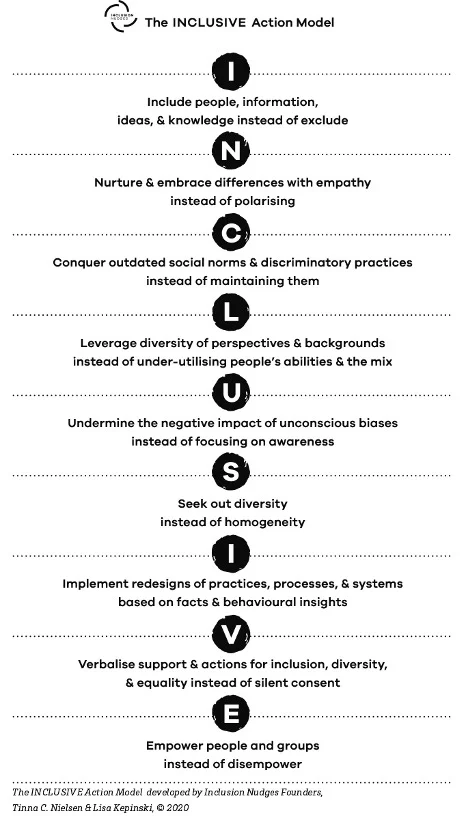
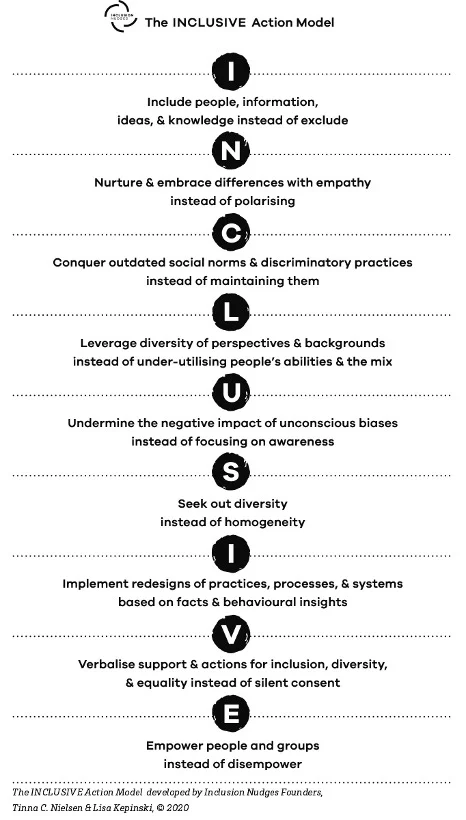
Cultivating such an environment demands a multi-faceted approach, requiring simultaneous effort from both leaders and team members. This complexity is precisely why frameworks like the Inclusion Nudges Inclusive Action Model have been developed. These models provide a holistic overview of the myriad ways to embed inclusive cultures, structures, and behaviors within an organization, moving beyond superficial gestures to systemic change.
Despite an encouraging increase in support for DEI from CEOs and world leaders, a significant challenge remains in cascading this executive-level commitment across all layers of management within organizations and ensuring actionable implementation. This is the crucial bridge between aspiration and cultural transformation. Many leaders, despite their willingness, often report feeling "ill-equipped" to act inclusively, particularly when it comes to facilitating sensitive dialogues about exclusion or discrimination. This lack of practical know-how, coupled with a fear of blame or shame if they admit their uncertainty, creates a significant barrier to progress.
Addressing this gap requires practical, accessible tools and guidance. Resources such as the "Inclusion Nudges for Leaders" Action Guide, offering 30 easy-to-apply inclusive actions, serve as vital aids. These behavioral designs empower leaders to make inclusion the default and norm in their daily interactions and leadership styles. By providing step-by-step descriptions of proven strategies, these guides increase leaders’ confidence, enabling them to take initial actions and, in turn, fostering a positive feedback loop that sparks wider cultural change. The objective is to dismantle the dynamic where leaders hesitate to act due to a perceived lack of knowledge or fear of missteps, thereby accelerating the journey towards genuinely inclusive and cognitively diverse workplaces.
Broader Impact and Strategic Implications
The strategic implications of prioritizing cognitive diversity extend far beyond immediate team performance. In a global economy characterized by relentless change and disruption, organizations that effectively harness cognitive diversity gain a significant competitive advantage. They are better positioned to anticipate market shifts, develop innovative products and services, navigate regulatory complexities, and build more resilient business models.
Furthermore, a culture that explicitly values and leverages diverse thinking styles becomes a powerful magnet for top talent. In today’s competitive labor market, prospective employees increasingly seek workplaces where their unique perspectives are not only tolerated but actively sought out and integrated. Organizations known for their inclusive environments and capacity for innovation through diverse thought will be better equipped to attract, retain, and develop the human capital necessary for future success.
Looking ahead, as automation and artificial intelligence increasingly handle routine tasks, the demand for uniquely human skills—creativity, complex problem-solving, critical thinking, and adaptive leadership—will only intensify. These are precisely the skills that cognitive diversity amplifies. Therefore, investing in the cultivation of cognitive diversity is not merely a matter of good practice; it is a strategic imperative for long-term survival and prosperity in the evolving landscape of the 21st century. By intentionally fostering environments where a rich tapestry of thought styles can converge and collaborate, organizations can unlock their full potential, navigate uncertainty with greater agility, and emerge as leaders in an ever-changing world.