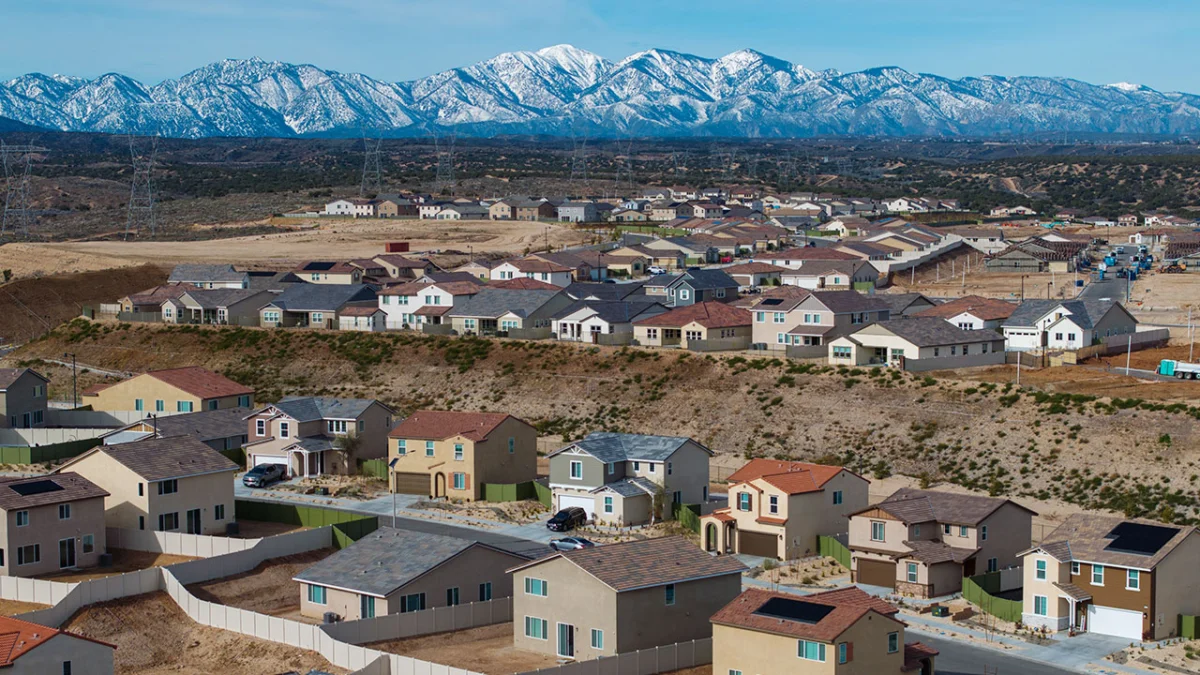
Americans continue to express a marked preference for communities characterized by larger homes situated farther apart, even if it means increased travel time to essential services like schools, stores, and restaurants. A recent Pew Research Center survey conducted in January 2026 reveals that while this desire for more spacious, less dense living remains dominant, it has seen a modest decrease from its peak levels observed during the height of the COVID-19 pandemic.
The survey, which polled 8,512 U.S. adults between January 20th and 26th, 2026, found that 55% of Americans would prefer to live in a community where houses are larger and farther apart. This figure represents a slight dip from the 57% recorded in 2023 and a more noticeable decrease from the 60% who expressed this preference in July 2021, amidst widespread lockdowns and a heightened focus on personal space. Conversely, the proportion of Americans favoring smaller houses that are closer to amenities has edged up to 44%, a slight increase from 42% in 2023, but still lower than the 47% recorded in 2019 before the pandemic.
This ongoing preference for more sprawling residential environments has significant implications for urban planning, infrastructure development, and environmental policy across the United States. The data suggests a persistent cultural value placed on private space and individual property, even as concerns about climate change, traffic congestion, and the cost of living continue to grow.
Shifting Preferences: A Look at the Trend
The desire for larger, more distant homes is not a new phenomenon in American society. Historically, the nation’s development has been shaped by westward expansion and a belief in the ideal of the single-family home with a yard. However, the pandemic appears to have temporarily amplified this preference. As lockdowns forced many to spend more time at home and re-evaluate their living situations, the appeal of spaciousness and a greater distance from others intensified.
- 2019: 53% preferred larger, farther apart houses; 47% preferred smaller, closer houses.
- 2021 (Pandemic Peak): 60% preferred larger, farther apart houses; 39% preferred smaller, closer houses.
- 2023: 57% preferred larger, farther apart houses; 42% preferred smaller, closer houses.
- 2026 (Current Survey): 55% preferred larger, farther apart houses; 44% preferred smaller, closer houses.
While the overall trend shows a slight moderation from pandemic-era highs, the majority preference for more spread-out communities persists. This suggests that the underlying factors driving this preference – such as the pursuit of privacy, perceived value for money in larger properties, and a desire for a less congested environment – remain potent forces shaping American residential choices.
Demographic Divides: Who Prefers What?
The survey also highlights significant demographic variations in these community preferences, revealing a complex tapestry of desires shaped by race, age, education, political affiliation, and current living situation.
Race and Ethnicity
Preferences vary notably across racial and ethnic lines. A significant majority of White adults (59%) continue to favor larger, more spread-out homes. In contrast, Asian adults show a strong inclination towards more compact, walkable communities, with 69% expressing a preference for smaller houses closer to amenities. Black and Hispanic adults appear more evenly divided in their choices, with 47% of Black adults and 52% of Hispanic adults favoring larger, more distant homes.
- White Adults: 59% prefer larger, farther apart houses.
- Asian Adults: 69% prefer smaller, closer houses.
- Black Adults: 47% prefer larger, farther apart houses.
- Hispanic Adults: 52% prefer larger, farther apart houses.
These differences may reflect a range of factors, including differing perceptions of safety, access to services, cultural values, and historical patterns of residential segregation and development.
Age
Generational differences also play a role. Younger adults, aged 18-29, are the only age group more likely to prefer smaller, closer-knit communities, with 54% opting for this lifestyle. This may be attributed to factors such as greater reliance on public transportation, a desire for vibrant urban environments, and potentially a greater awareness of environmental sustainability. As individuals age and their life circumstances change, particularly with family formation and career establishment, preferences appear to shift towards more spacious living. Adults aged 30-64 show a strong preference for larger, farther apart homes, a sentiment echoed by 52% of those aged 65 and older.
- Ages 18-29: 54% prefer smaller, closer houses.
- Ages 30-49: 57% prefer larger, farther apart houses.
- Ages 50-64: 62% prefer larger, farther apart houses.
- Ages 65+: 52% prefer larger, farther apart houses.
Education Level
Educational attainment also correlates with community preferences. Those with some college education or a high school diploma or less are more likely to prefer spread-out communities (58%). This preference slightly decreases among college graduates (52%) and is lowest among those with postgraduate degrees (47%), who are more evenly split or slightly lean towards the more compact community model. This could indicate a greater appreciation for the benefits of proximity and walkability among those with higher education, potentially linked to awareness of environmental or lifestyle advantages.
- Postgraduate Degree: 47% prefer larger, farther apart houses.
- College Graduate: 52% prefer larger, farther apart houses.
- Some College: 58% prefer larger, farther apart houses.
- High School or Less: 58% prefer larger, farther apart houses.
Political Affiliation and Ideology
Political leanings demonstrate a stark divide in community preferences. Republicans and Republican-leaning independents overwhelmingly favor larger, more spread-out communities, with 71% expressing this preference. This aligns with a broader conservative ethos that often emphasizes individual liberty, property rights, and a desire for more private space. Conversely, a majority of Democrats and Democratic-leaning individuals (60%) prefer smaller houses that are closer to amenities, suggesting a greater openness to denser living arrangements and potentially a stronger emphasis on community resources and shared infrastructure.

This partisan divide is even more pronounced when examining ideology:
- Conservative Republicans: 74% prefer larger, farther apart houses.
- Moderate/Liberal Republicans: 67% prefer larger, farther apart houses.
- Conservative/Moderate Democrats: 54% prefer larger, farther apart houses.
- Liberal Democrats: 68% prefer smaller, closer houses.
The data indicates that while Republicans consistently favor sprawling communities across the spectrum of conservatism, Democrats, particularly liberals, lean more strongly towards denser, more walkable environments.
Community Type: Rural Roots, Suburban Aspirations, Urban Realities
The type of community Americans currently inhabit strongly influences their stated preferences. Unsurprisingly, a substantial 70% of those living in rural areas express a desire for even larger, more distant homes. This sentiment is slightly less pronounced among suburban residents (55%), while urban dwellers are the least likely to prefer this model, with only 39% opting for it. Instead, a majority of urban residents (61%) favor communities with smaller houses within walking distance of essential services.
This finding underscores the inherent appeal of existing community structures and the lifestyle associated with them. However, the data also reveals interesting nuances when partisan affiliation is considered within these community types.
Community Type and Partisanship: A Deeper Dive
Even within urban, suburban, and rural settings, partisan divides persist. Republicans, regardless of where they live, are more likely than Democrats to prefer larger, more spread-out homes.
- Urban Residents: While 61% of urban dwellers prefer smaller, closer houses, this preference is stronger among Democrats (70% prefer smaller, closer houses) compared to Republicans (45% prefer smaller, closer houses). Conversely, 55% of urban Republicans prefer larger, farther apart houses, compared to 30% of urban Democrats.
- Suburban Residents: Among those living in suburbs, 55% prefer larger, farther apart houses overall. However, this preference is significantly higher among Republicans (69%) than Democrats (42%).
- Rural Residents: The preference for larger, farther apart houses is most pronounced in rural areas (70%). Here, the partisan gap is also substantial, with 84% of rural Republicans favoring this model, compared to 51% of rural Democrats.
These findings suggest that political identity may be a more powerful predictor of community preference than current living situation, or at least that political identity shapes how individuals perceive and value different community characteristics.
Broader Implications and Future Outlook
The persistent preference for larger, more spread-out communities has far-reaching consequences. From an infrastructure perspective, it necessitates continued investment in road networks, public utilities extending over larger areas, and increased reliance on personal vehicles, contributing to higher rates of vehicle miles traveled and associated emissions.
From an economic standpoint, this preference can drive suburban and exurban development, potentially leading to the conversion of rural land and impacting agricultural sectors. The cost of housing in these less dense areas can also be a factor, with larger lot sizes and more expansive homes often coming with higher price tags, potentially exacerbating affordability challenges.
Environmental concerns are also intrinsically linked to this trend. Increased sprawl often leads to habitat fragmentation, greater energy consumption for heating and cooling larger homes, and a larger carbon footprint due to increased driving.
However, the slight moderation in this preference from its pandemic peak may signal a growing awareness of these issues. Factors such as rising fuel costs, increasing concerns about climate change, and a desire for more connected, walkable lifestyles could contribute to a gradual shift in priorities for some Americans. The strong preference for denser communities among younger adults and liberal Democrats suggests that future generations may increasingly favor alternative living arrangements.
Policymakers and urban planners face the ongoing challenge of balancing these diverse preferences with the imperative for sustainable development, affordable housing, and resilient infrastructure. Understanding these demographic and political divides is crucial for crafting policies that can accommodate a wide range of needs and aspirations while addressing the pressing environmental and economic realities of the 21st century. The continued evolution of American community preferences will undoubtedly remain a key area of study and a significant factor shaping the nation’s landscape.