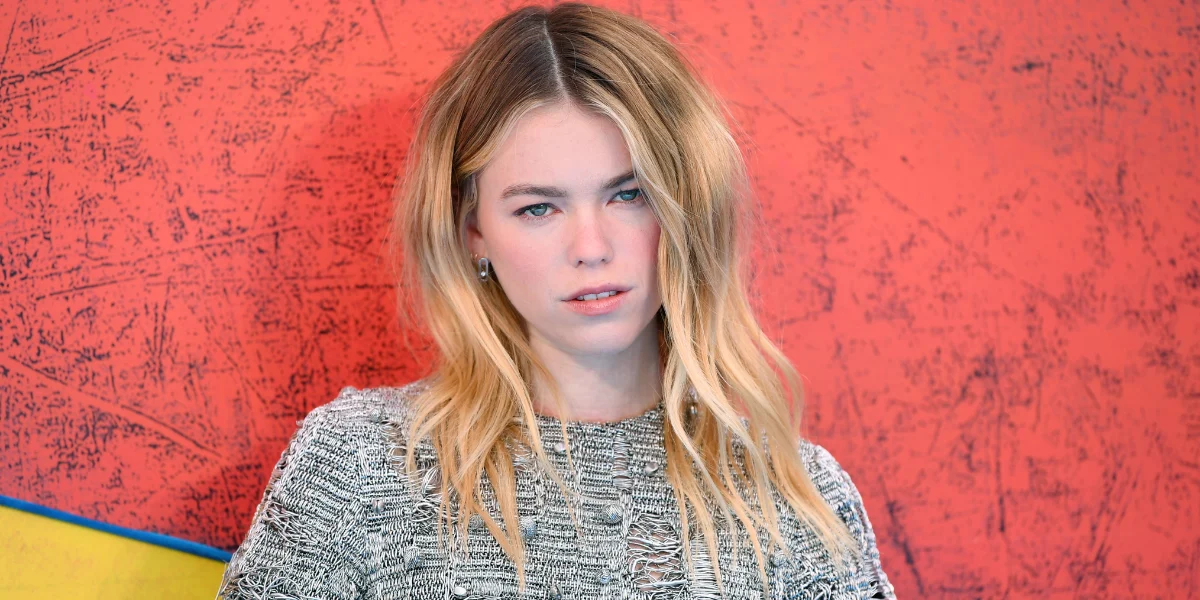
Milly Alcock, the Australian actress who rose to international prominence through her portrayal of the young Rhaenyra Targaryen in HBO’s House of the Dragon, has formally addressed the long-standing queer interpretations of the character Kara Zor-El, whom she is set to portray in the upcoming DC Universe (DCU) film Supergirl: Woman of Tomorrow. In a series of recent press engagements, Alcock acknowledged the character’s status as a queer icon within fan communities and expressed an understanding of why audiences often read the Girl of Steel through an LGBTQ+ lens. Alcock noted that her version of Kara Zor-El exists outside the traditional "expected" behaviors of female characters within the superhero genre, suggesting that a character from an extraterrestrial civilization like Krypton would not necessarily adhere to the binary or heteronormative social structures prevalent on Earth.
The actress further clarified that while she has not had explicit discussions with the film’s writers regarding the character’s sexuality being established as "canon," she personally views the character as possessing a fluid perspective on identity. Alcock’s comments coincide with a broader shift in the superhero film industry, where audiences are increasingly demanding more nuanced and diverse representations of classic characters. By framing Kara Zor-El as an individual who "does what she wants" regardless of societal expectations, Alcock aligns the character with the historical "outsider" status that has made superheroes resonate with LGBTQ+ audiences for decades.
The Evolution of Supergirl and Queer Coding in Superhero Media
The interpretation of Supergirl as a queer or queer-coded character is not a new phenomenon in popular culture. For six seasons on The CW’s Supergirl, actress Melissa Benoist portrayed a version of Kara Danvers that inspired a massive "Supercorp" fan following, which advocated for a romantic relationship between Kara and Lena Luthor. While that specific relationship remained platonic in the television series, the subtext significantly influenced the character’s modern legacy.
In the comic book source material, particularly the 2021-2022 limited series Supergirl: Woman of Tomorrow written by Tom King—which serves as the primary inspiration for the upcoming film—Kara is depicted as a hardened, weary traveler seeking purpose in a harsh galaxy. This iteration moves away from the "girl next door" archetype and focuses on themes of isolation, resilience, and independence. Industry analysts suggest that this version of the character provides a fertile ground for exploring identities that deviate from traditional Western norms.
The lack of a central love interest in the upcoming standalone film has been confirmed by both Alcock and production sources. This narrative choice is being viewed as a significant departure from standard superhero tropes, which often prioritize a romantic subplot for female leads. By focusing solely on Kara’s journey and her internal development, the DCU under the leadership of James Gunn and Peter Safran appears to be prioritizing character depth over formulaic storytelling.
Chronology of the New DC Universe and Supergirl: Woman of Tomorrow
The development of Supergirl: Woman of Tomorrow is a cornerstone of "Chapter One: Gods and Monsters," the inaugural phase of the rebooted DC Universe. The timeline of the project’s development reflects a strategic effort by Warner Bros. Discovery to revitalize the DC brand:
- January 2023: James Gunn and Peter Safran announce Supergirl: Woman of Tomorrow as part of the initial DCU slate, highlighting Tom King’s comic run as the definitive influence.
- January 2024: Following a highly publicized casting search, Milly Alcock is officially cast as Kara Zor-El, beating out several high-profile contenders.
- April 2024: Ana Nogueira is confirmed as the screenwriter, with Craig Gillespie in talks to direct.
- June 2024: Production schedules are solidified, with Alcock beginning her physical training and character research.
The film is expected to contrast sharply with the portrayal of Supergirl by Sasha Calle in 2023’s The Flash, aiming instead for a cosmic adventure that explores the psychological toll of surviving the destruction of Krypton.
Broader Implications for LGBTQ+ Representation in Major Franchises
While Alcock’s statements reflect a supportive stance toward queer interpretations, the broader landscape of superhero cinema remains under scrutiny regarding actual "out" representation. Despite the inclusion of characters like Phastos in Marvel’s Eternals or America Chavez in Doctor Strange in the Multiverse of Madness, major studios have often been criticized for relegating LGBTQ+ identities to minor roles or subtext that can be easily edited for international markets.
Alcock’s suggestion that her Kara "probably goes both ways" places the character in a growing category of major franchise leads whose identities are explored with more fluidity. Should the DCU choose to explicitly depict Supergirl as queer in future installments, it would mark a historic milestone for a "Big Three" DC character (Superman, Batman, Wonder Woman) or their immediate legacy counterparts.
Vivienne Medrano and the Expansion of Independent Animation
In the realm of animation, Vivienne Medrano, the creator of the viral sensation Hazbin Hotel, has announced her next major project. Medrano, known online as Vivziepop, is set to write and direct an original animated musical feature titled Prehistoria. This project marks a significant departure from her "Hellaverse" (comprising Hazbin Hotel and Helluva Boss), which has garnered billions of views on YouTube and a successful streaming debut on Amazon Prime Video.
Hazbin Hotel’s success—becoming the largest global debut for a new animated series on Prime Video—has solidified Medrano’s position as a powerhouse in the animation industry. Prehistoria is expected to leverage her signature musical-storytelling style while exploring an entirely new intellectual property. This move highlights the increasing viability of independent creators transitioning into major feature-film production while maintaining their unique creative voices.
Television Industry Shifts: Cancellations and Season Finales
The television landscape continues to experience significant volatility as streaming platforms reassess their content strategies. Amazon Prime Video recently announced the cancellation of the animated series Kevin, executive produced by and starring Aubrey Plaza, after only one season. The cancellation underscores the high threshold for success in the current "peak TV" era, where even high-profile attachments do not guarantee longevity.
Conversely, FX’s The Bear continues to be a dominant force in both viewership and critical reception. As the series approaches its third and fourth seasons, stars Ayo Edebiri and Jeremy Allen White have begun reflecting on the show’s cultural impact. Production reports indicate that the show has filmed multiple seasons back-to-back to accommodate the rising demand for its lead actors. The Bear has been credited with revitalizing the "prestige dramedy" format, winning multiple Emmy Awards and maintaining a consistent presence in the cultural zeitgeist.
In the fantasy genre, HBO’s House of the Dragon has returned for its second season, recently airing the climactic "Battle of the Gullet." The series remains a flagship for HBO, with the Season 2 premiere drawing approximately 7.8 million viewers across linear and streaming platforms. The network has already renewed the series for a third season, ensuring the continuation of the Targaryen civil war narrative.
Cultural Milestones and Live Performance Highlights
The 2024 BET Awards are set to feature a high-profile lineup of performers, including Cardi B, Doechii, Kehlani, and Queen Latifah. The awards ceremony remains a critical platform for celebrating Black excellence in music, film, and sports. Industry experts note that the inclusion of diverse artists like Kehlani and Doechii reflects the evolving landscape of hip-hop and R&B, where genre-blending and authentic self-expression are increasingly prioritized.
In a moment of viral cultural intersection, actresses Brittany Snow and Malin Akerman garnered significant social media attention following a comedic interaction at the Las Culturistas Culture Awards. The event, hosted by Bowen Yang and Matt Rogers, has become a staple of the New York comedy and queer scenes, bridging the gap between niche podcasting and mainstream entertainment.
Reality Television and Social Advocacy
The United Kingdom continues to lead in LGBTQ+-centric reality programming with the announcement of the second season of I Kissed a Girl. Hosted by Dannii Minogue, the series follows the success of I Kissed a Boy and serves as a rare example of a dating show dedicated entirely to queer women. The production has been praised for its authentic casting and for providing a platform that avoids many of the heteronormative tropes found in traditional dating shows.
In the sphere of social advocacy, digital pioneer Gigi Gorgeous recently shared reflections on her decade-long journey as a trans icon. As one of the first creators to document a medical transition on YouTube, her retrospective advice to her younger self highlights the progress made in transgender visibility while acknowledging the ongoing challenges faced by the community in the current political climate.
Furthermore, Hayley Kiyoko, often referred to by fans as "Lesbian Jesus," has released her debut film Girls Like Girls. Based on her hit song and subsequent novel, the film represents a full-circle moment for Kiyoko, who has spent the last decade advocating for queer representation in music videos and literature.
Analysis of the Entertainment Landscape
The convergence of these news items suggests a broader trend in the entertainment industry: the blurring of lines between "niche" representation and mainstream blockbuster storytelling. Whether through Milly Alcock’s interpretation of a legendary superhero or Vivienne Medrano’s expansion into feature animation, the industry is increasingly leaning into creators and performers who challenge traditional norms.
From a business perspective, these developments indicate that diversity and authentic characterization are no longer just social imperatives but are essential components of commercial viability. As the DCU prepares to launch its new era and streaming services navigate a period of consolidation, the focus remains on high-quality, character-driven narratives that resonate with a global, multifaceted audience.