As the United States approaches its 250th anniversary, the nation’s demographic landscape has undergone a profound transformation, becoming significantly more racially and ethnically diverse than in previous decades. This evolving tapestry of American society is largely viewed positively by its citizens, according to extensive surveys conducted by the Pew Research Center. While a strong majority of Americans acknowledge the benefits of this increasing diversity, the nuanced perspectives on its impact, particularly concerning culture and societal fairness, reveal differing viewpoints shaped by political affiliation and racial or ethnic identity.
A Nation Embracing Diversity: Shifting Demographics and Public Opinion
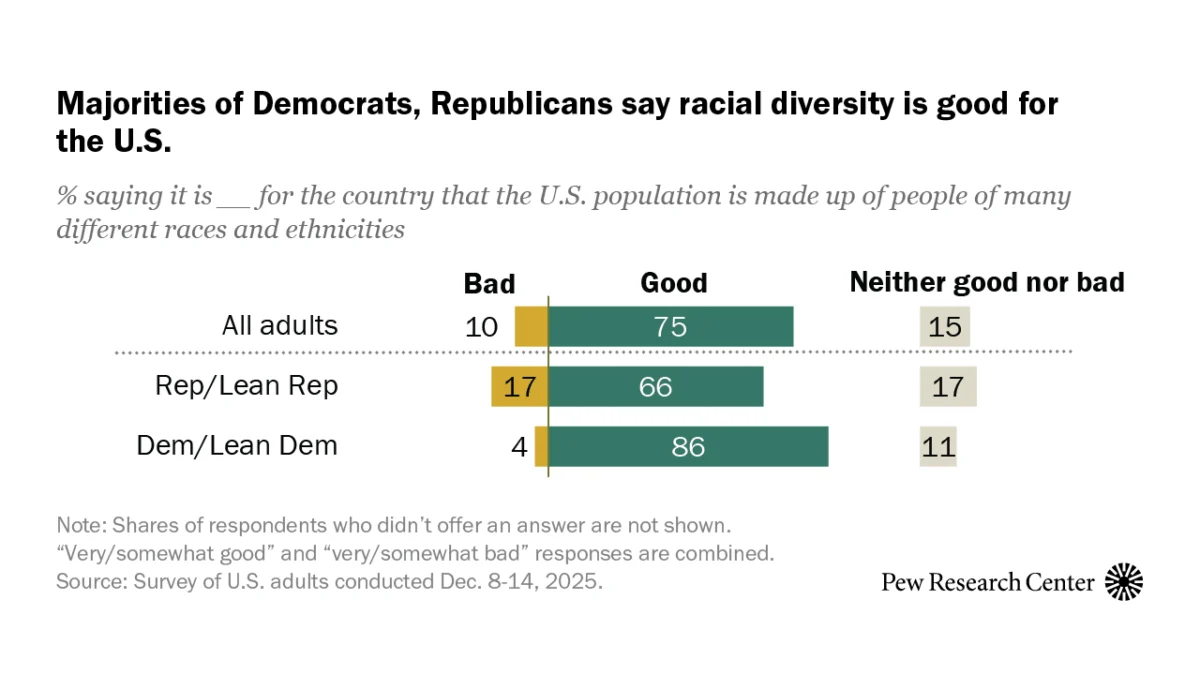
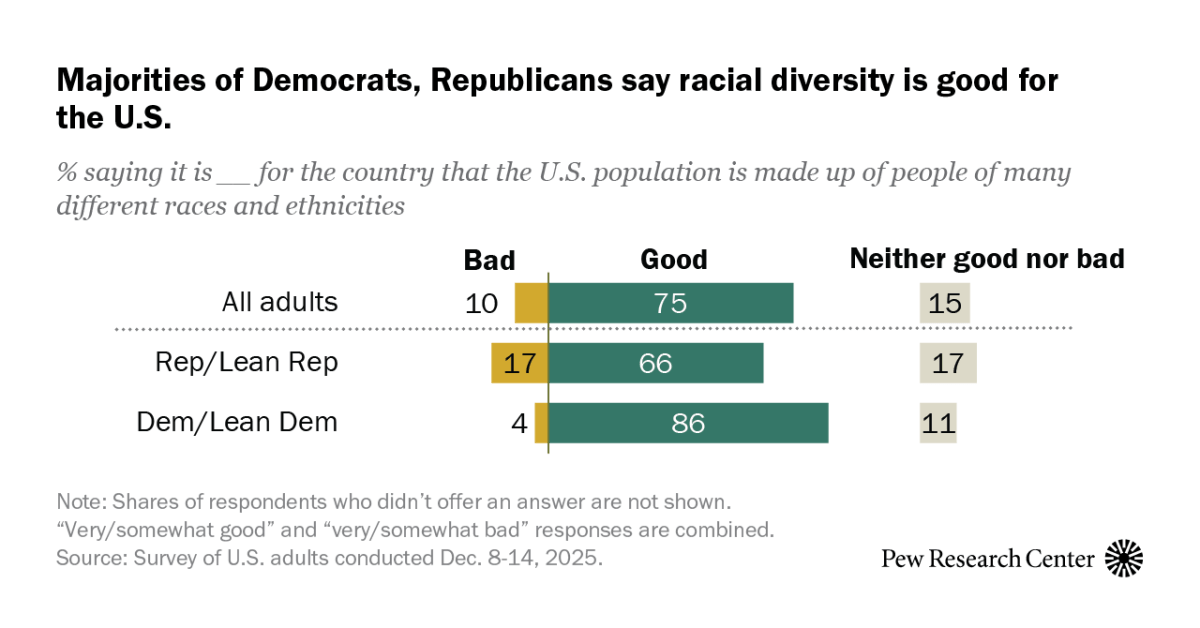
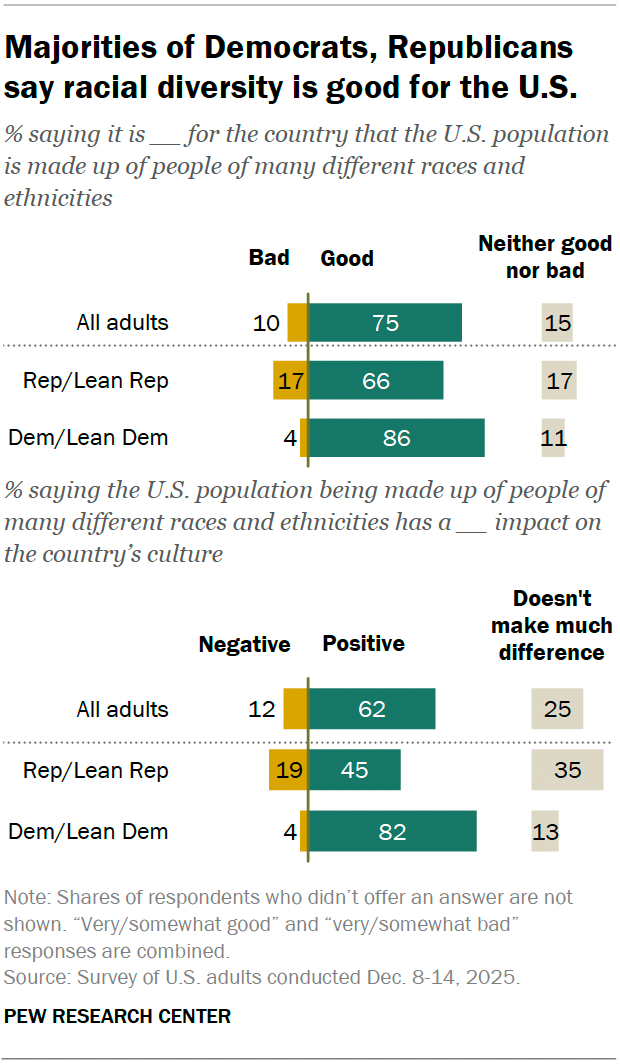
The Pew Research Center’s comprehensive analysis, drawing on surveys conducted in late 2025, indicates that a substantial three-quarters of U.S. adults perceive racial and ethnic diversity as a positive force for the country. This sentiment extends to the nation’s cultural fabric, with 62% of Americans believing that diversity positively impacts American culture. These findings underscore a broad societal acceptance of the nation’s changing demographics as it stands on the cusp of a significant historical milestone.
The perception of diversity as a "good thing" is remarkably bipartisan, with majorities across the political spectrum affirming this view. Eighty-six percent of Democrats and 66% of Republicans agree that a population composed of individuals from various racial and ethnic backgrounds is beneficial for the United States. This widespread agreement suggests a shared understanding of the inherent value of a multifaceted society, a testament to the nation’s ongoing evolution.
However, a discernible divergence emerges when Americans are asked about the specific impact of diversity on the nation’s culture. While 82% of Democrats view this impact as positive, the proportion among Republicans is significantly lower, with 45% holding the same opinion. This disparity highlights differing perspectives on how cultural evolution is shaped and experienced within a diverse society.
While the overall sentiment that diversity is a "good thing" has remained stable since 2019, there has been a slight decrease in the intensity of this feeling. The proportion of Americans who describe racial and ethnic diversity as "very good" for the country has declined from 57% to 48%. This subtle shift could indicate a growing complexity in public discourse or a reassessment of the immediate benefits and challenges associated with rapid demographic change.
The Role of Diversity in the Workplace and Society
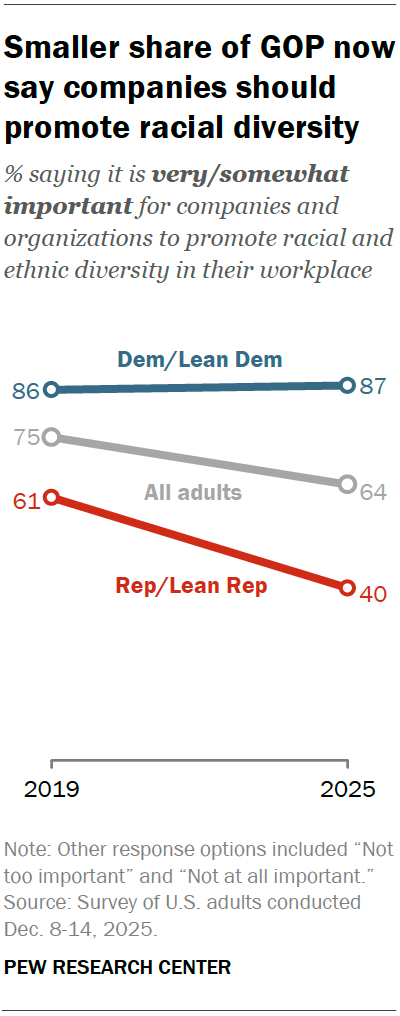
Beyond the general perception of diversity, its importance in professional settings is also a significant consideration for Americans. A majority of U.S. adults, 64%, consider it important for companies and organizations to actively promote racial and ethnic diversity. This figure represents a decrease from 75% in 2019, a decline largely attributable to shifting views among Republicans. The emphasis on diversity in the workplace reflects a broader societal understanding that equitable representation can foster innovation and a more inclusive professional environment.
The question of whether diversity initiatives have led to a fairer society elicits a more divided response. Approximately 42% of adults believe that efforts to promote diversity in workplaces and schools have indeed made society more fair. Conversely, a notable 32% contend that these initiatives have made society less fair, while a quarter (25%) feel they have had no impact on fairness. This division suggests ongoing debate about the effectiveness and equitable implementation of diversity, equity, and inclusion (DEI) strategies.
Political affiliation plays a significant role in these perceptions. A substantial 70% of Democrats believe that diversity efforts have made society fairer, contrasting sharply with only 13% of Republicans who share this view. Conversely, a larger proportion of Republicans (53%) believe these efforts have made society less fair, compared to a mere 9% of Democrats. This stark contrast underscores the partisan polarization surrounding DEI initiatives and their perceived outcomes.
Intersectional Views: Diversity and Race/Ethnicity
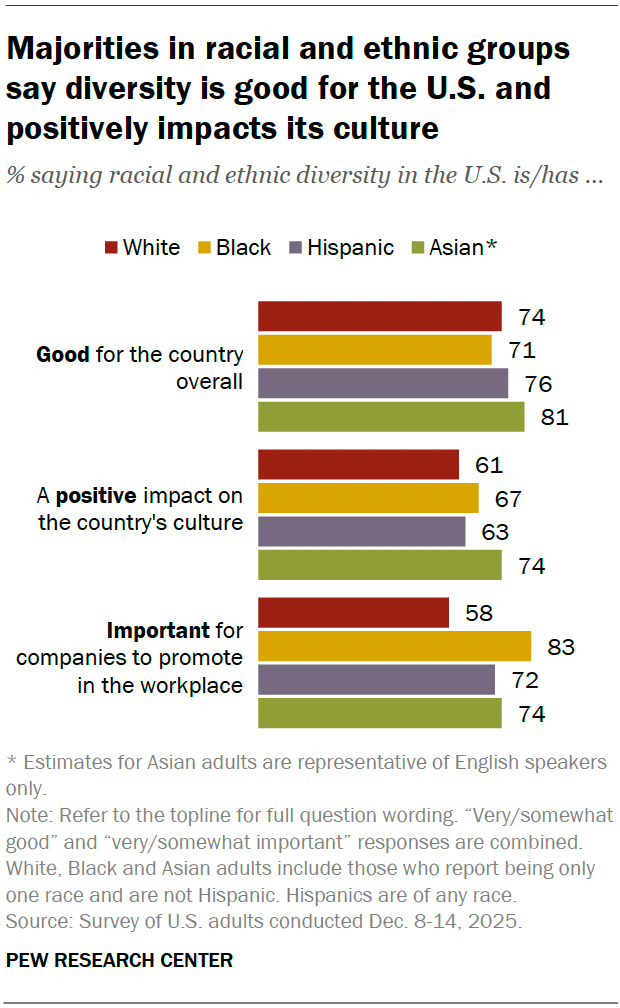
The Pew Research Center’s analysis also delves into how views on diversity differ across racial and ethnic groups. Consistently, majorities within each surveyed group – Black, Hispanic, Asian, and White adults – affirm that a diverse U.S. population is beneficial for the country and positively influences its culture. This common ground suggests a shared appreciation for the richness that varied backgrounds bring to the national identity.
However, when it comes to the importance of promoting racial and ethnic diversity in the workplace, differences emerge. While 58% of White adults deem it important, this figure rises to 83% for Black adults, 72% for Hispanic adults, and 74% for Asian adults. This indicates a stronger emphasis on workplace diversity among minority groups, potentially reflecting experiences of underrepresentation and a desire for more equitable professional landscapes.
Furthermore, perspectives on the fairness impact of diversity initiatives also vary by race and ethnicity. Approximately 38% of White adults believe that diversity efforts have made society fairer, while higher proportions of Black adults (53%), Hispanic adults (46%), and Asian adults (48%) hold this view. These findings suggest that while diversity is broadly valued, the lived experiences of different racial and ethnic groups may shape their perceptions of the tangible societal benefits derived from diversity initiatives.
Historical Context and Future Implications
The demographic shifts observed today are the culmination of decades of immigration, evolving social norms, and ongoing civil rights movements. The United States, founded on the ideal of being a melting pot, has continuously redefined its identity through waves of immigration and the integration of diverse populations. The period leading up to the nation’s 250th anniversary marks a critical juncture where the country’s growing diversity is not just a statistical reality but a central theme in its ongoing narrative.
The findings from the Pew Research Center offer valuable insights into the public’s engagement with this evolving national identity. The broad agreement on the value of diversity, juxtaposed with partisan divides on its cultural and societal impacts, suggests a complex public discourse. As the nation moves forward, understanding these nuances will be crucial for fostering inclusive policies and promoting social cohesion.
The divergence in views on DEI initiatives, particularly between Democrats and Republicans, points to a potential area of continued societal friction. The declining perception of the importance of workplace diversity among Republicans, and the belief among some that such efforts have made society less fair, may reflect broader political and cultural debates about meritocracy, affirmative action, and the perceived beneficiaries of diversity policies.
The differences in how various racial and ethnic groups perceive the impact of diversity initiatives highlight the importance of considering lived experiences. The higher affirmation of fairness by Black, Hispanic, and Asian adults suggests that for these communities, diversity efforts may be seen as more directly addressing historical inequities and promoting tangible positive change.
Research Methodology and Scope
The insights presented are derived from rigorous research conducted by the Pew Research Center, a non-partisan fact tank that informs the public about the issues, attitudes, and trends shaping the world. The analysis on views of diversity is based on two surveys conducted in late 2025. The first, administered from November 17 to 30, 2025, included 10,357 adults. The second, conducted from December 8 to 14, 2025, surveyed 3,560 adults. All participants were members of the Pew Research Center’s American Trends Panel, a nationally representative online survey panel. These methodologies ensure that the findings reflect the views of the broader U.S. adult population.
The Pew Research Center’s commitment to transparency is evident in its publication of detailed survey questions, topline responses, and methodologies for each survey. This allows for a thorough understanding of the data and the research process, reinforcing the credibility of the findings. This ongoing effort to study demographic changes and public reactions is a vital contribution to understanding the evolving American landscape.
As the United States celebrates its semiquincentennial, the nation’s increasing diversity stands as a defining characteristic. The Pew Research Center’s findings illuminate a public that largely embraces this evolution, while also acknowledging the intricate and sometimes contentious conversations that accompany such profound societal transformation. The nuanced perspectives on cultural impact, workplace importance, and societal fairness underscore the ongoing dialogue about what it means to be American in an increasingly diverse world.