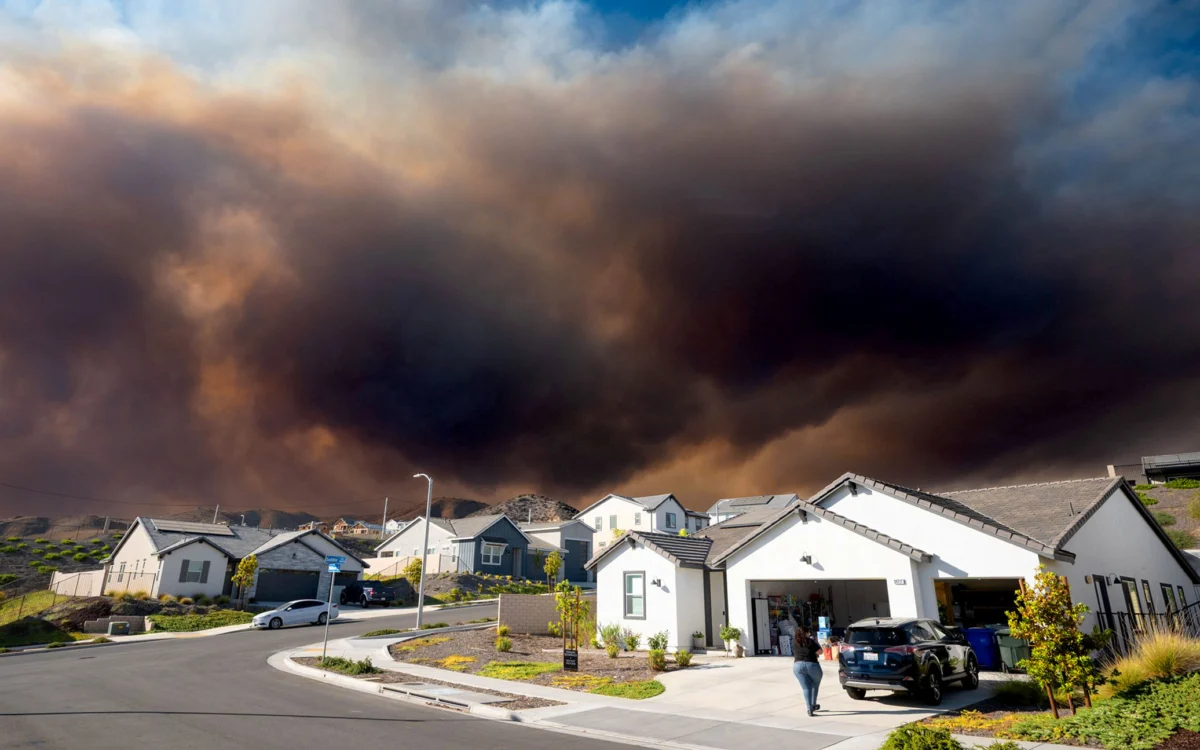
A groundbreaking study conducted by researchers at Tulane University has revealed a concerning association between exposure to wildfire smoke during the third trimester of pregnancy and an elevated risk of a child later being diagnosed with autism spectrum disorder (ASD). The findings, published in the journal Environmental Science & Technology, underscore the profound impact of environmental pollutants on prenatal development, even with short-term exposure.
The comprehensive study, which meticulously analyzed medical records and estimated fine particulate matter (PM2.5) exposure levels at mothers’ home addresses, followed over 204,000 mother-child pairs in Southern California between 2006 and 2014. The results indicate a significant correlation: women who experienced more than 10 days of wildfire smoke exposure during the critical 28th to 40th weeks of gestation were approximately 23% more likely to have a child diagnosed with autism compared to those with no reported smoke exposure during this period.
However, the research did not stop at prolonged exposures. Dr. Mostafijur Rahman, an assistant professor of environmental health sciences at Tulane University’s Celia Scott Weatherhead School of Public Health and Tropical Medicine and a co-author of the study, emphasized the impact of even brief encounters with wildfire smoke. "Even a one-day or two-day exposure is still 10%," Dr. Rahman stated, highlighting that this seemingly small percentage represents a substantial increase in risk. He further elaborated, "Ten percent is also a big number." While the absolute risk for an individual pregnancy remains statistically small, the cumulative impact across a population exposed to such environmental hazards is a significant public health concern.
Understanding the Threat: Fine Particulate Matter and Developing Bodies
Wildfires release a complex mixture of pollutants into the atmosphere, with fine particulate matter, known as PM2.5, being a primary concern. These particles are incredibly small, measuring about 30 times smaller than the diameter of a human hair, making them easily inhalable and capable of penetrating deep into the lungs. The composition of PM2.5 from wildfires is a toxic cocktail, comprising particles from burned vegetation, soot generated by incomplete combustion, chemical salts formed within the smoke plumes, trace metals volatilized from burning materials, and secondary particles that form in the air as gaseous emissions react with other atmospheric pollutants.
The developing fetus, particularly during the third trimester, is exceptionally vulnerable to environmental insults. While major organogenesis largely concludes in earlier stages of pregnancy, the third trimester is a crucial period for rapid brain and lung development. During this phase, these vital organs are highly susceptible to disruptions in oxygen delivery and increased oxidative stress, both of which can be exacerbated by inhaling polluted air.
Dr. Stefania Papatheodorou, an OB-GYN and environmental epidemiologist at Rutgers University, explained the biological mechanisms at play. "Air pollution can increase inflammation and oxidative stress in the mother, potentially affecting placental function and blood flow," she noted. These physiological changes can directly impact the nutrient and oxygen supply to the fetus, potentially interfering with critical developmental processes.
The Louisiana Context: Beyond Wildfire Smoke
While Southern California is a region frequently affected by extensive wildfire seasons, the findings of the Tulane study hold significant relevance for other areas, including Louisiana. Although Louisiana does not typically experience the same scale of wildfire smoke exposure as the West Coast, the state is not immune to air pollution from various sources.
The year 2023 witnessed significant air quality challenges in Louisiana. Smoke from peat fires – smoldering layers of marshland – blanketed the New Orleans area for weeks, impacting respiratory health and daily life. Simultaneously, wildfires in western Louisiana consumed an estimated 60,000 acres, contributing to regional air pollution. Furthermore, industrial incidents, such as a 2025 fire at Smitty’s Supply, an industrial facility in Roseland, sent smoke and black soot raining down into nearby communities, raising immediate health concerns.
Perhaps more persistently, the heavily industrialized corridor known as "Cancer Alley" between Baton Rouge and New Orleans has long been a hotspot for air pollution. This region, characterized by a high concentration of petrochemical plants, refineries, and manufacturing facilities, contributes a continuous stream of pollutants into the atmosphere.
"We do know that air pollution – whatever form it is – is not good," stated David Luglio, another author of the Tulane study. The research team’s prior work has consistently demonstrated a link between general air pollution and an increase in autism diagnoses. Dr. Rahman echoed this sentiment, asserting, "Air pollution itself is bad, whether it is coming from wildfire, petrochemical industry or traffic." This broad perspective underscores that the detrimental effects on prenatal development are not limited to a single source of pollution but are a consequence of the toxic components present in various forms of contaminated air.
Third Trimester Vulnerability: A Critical Window
The specific focus on the third trimester in the Tulane study is not arbitrary. This period represents a critical developmental window where the brain and lungs undergo significant growth and refinement. Disruptions during this time can have lasting consequences on neurodevelopment and respiratory health.
Dr. Papatheodorou explained that while the initial formation of most major organs occurs earlier in pregnancy, the third trimester is characterized by rapid maturation of neural pathways and lung structures. "The brain is undergoing significant synaptogenesis and myelination, processes that are highly sensitive to environmental factors," she elaborated. Similarly, the lungs are preparing for independent breathing, and any compromise in oxygen supply or increase in inflammatory markers can impede this crucial development.
Broader Implications and Risk Reduction Strategies
The implications of the Tulane study extend beyond the immediate findings to encompass public health strategies and policy considerations. Dr. Papatheodorou emphasized the relevance of these findings for regions like Louisiana, even with differing primary sources of pollution. "Although the sources and composition differ, many of the harmful components overlap," she stated. "Both wildfire smoke and industrial pollution contain fine particulate matter and other toxic gases that can be inhaled and enter the bloodstream." This commonality means that strategies to mitigate the impact of one type of pollution may offer co-benefits for reducing exposure to others.
For pregnant individuals living in areas with compromised air quality, proactive measures can significantly reduce exposure risks. Public health officials and medical professionals recommend closely monitoring air quality alerts. On days with poor air quality, limiting outdoor activity is crucial. Utilizing air conditioning and keeping windows closed can help create a cleaner indoor environment. For those who must be outdoors, wearing a well-fitted N-95 mask has been shown to be effective in filtering out PM2.5 particles.
Dr. Papatheodorou offered a message of empowerment rather than anxiety: "This is about risk reduction. Pregnant people shouldn’t feel guilty or overly anxious, just informed and supported." By understanding the potential risks and implementing protective measures, expectant mothers can take proactive steps to safeguard their pregnancies and the future health of their children. The study serves as a stark reminder of the interconnectedness between environmental health and developmental outcomes, urging continued research and robust public health initiatives to protect vulnerable populations from the pervasive impacts of air pollution.