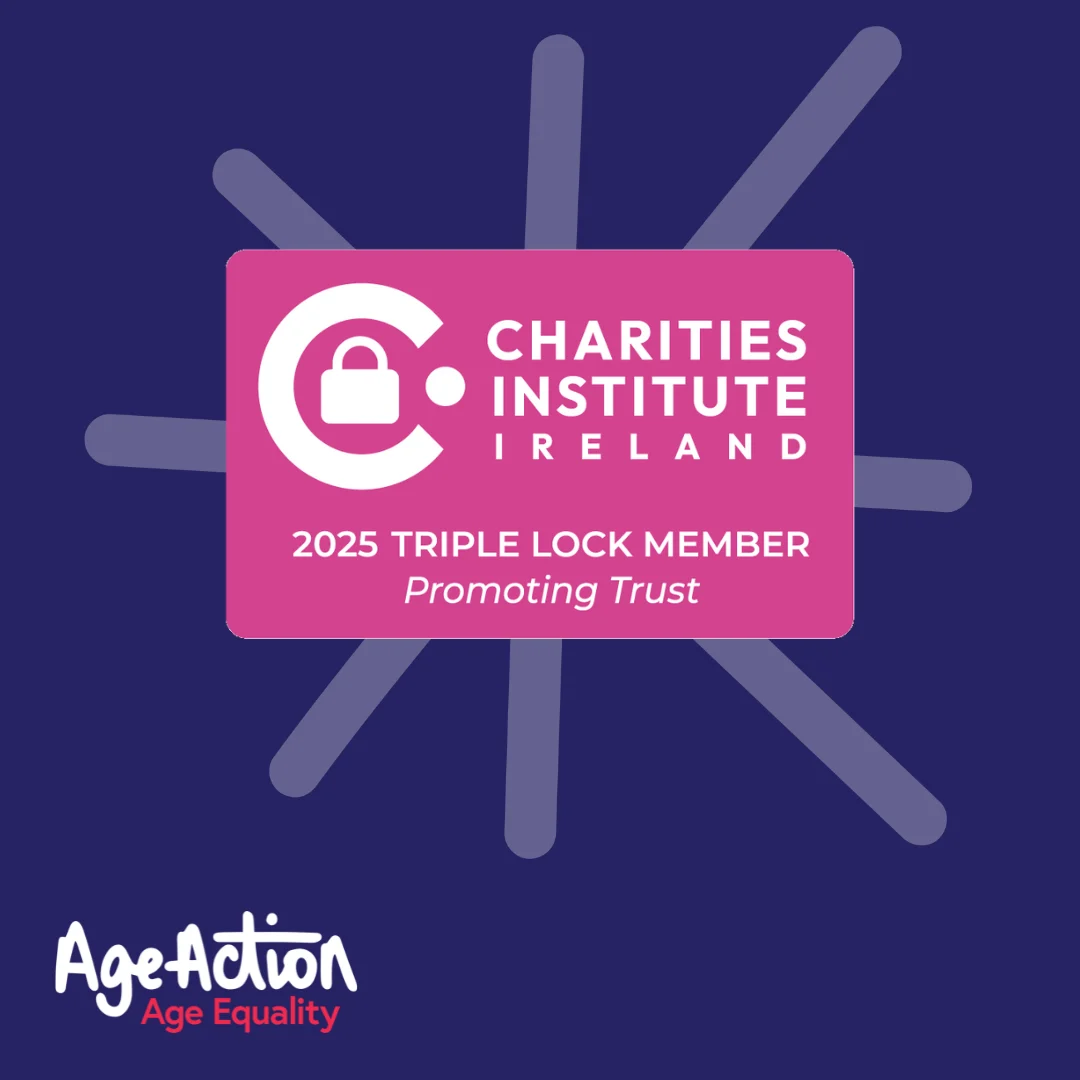
Age Action, Ireland’s leading advocacy organization for older people, has officially announced its successful re-accreditation for the Triple Lock Standard, a prestigious designation awarded by Charities Institute Ireland (CII). This hallmark of excellence serves as a rigorous verification of the charity’s internal operational standards, specifically regarding financial reporting, governance frameworks, and fundraising ethics. In an era where the public demand for accountability within the non-profit sector is at an all-time high, this re-accreditation functions as a critical validation for donors, stakeholders, and the beneficiaries the organization serves.
Understanding the Triple Lock Standard
The Triple Lock Standard is not merely an honorary designation; it is a structural audit of a charitable organization’s integrity. To achieve this status, an organization must meet three distinct, non-negotiable criteria. First, the organization must ensure its financial reporting adheres to the Statement of Recommended Practice (SORP) for charities, ensuring that the financial accounts are presented in a transparent, standardized format that allows for external scrutiny. Second, the charity must demonstrate compliance with the Charities Governance Code, which encompasses the leadership, organizational culture, and internal controls required to manage resources effectively. Third, the organization must commit to the Guidelines for Charitable Organisations on Fundraising from the Public, ensuring that all donation-gathering activities are ethical, respectful, and honest.
For Age Action, maintaining this status represents a deliberate investment of resources into administrative oversight. While the primary mission of the charity is the empowerment of older citizens, the organization has consistently argued that the quality of its advocacy is intrinsically linked to the stability of its internal infrastructure. By securing this status again, Age Action reaffirms its position within a small cohort of Irish charities that prioritize institutional maturity alongside their social objectives.
A Chronology of Accountability
The history of the Triple Lock Standard in Ireland is relatively recent, emerging in response to high-profile governance scandals in the mid-2010s that eroded public trust in the charitable sector. Following the establishment of the Charities Regulator, the Charities Institute Ireland sought to create a "gold standard" to differentiate organizations that went above and beyond statutory requirements.
Age Action has been a consistent participant in this accountability movement. Over the past decade, the organization has undergone a significant digital and operational transformation. This evolution began in the late 2010s with a systematic overhaul of its financial reporting software and the implementation of a new board-level oversight committee. By 2020, as the COVID-19 pandemic placed unprecedented pressure on the older population in Ireland, Age Action faced a surge in demand for its digital literacy and advocacy services. During this period, the need for transparent financial stewardship became paramount as the organization transitioned to virtual fundraising models.
The current re-accreditation follows a comprehensive internal audit conducted throughout the 2023 financial year, culminating in the submission of evidence to the CII. This process involved an independent review of the organization’s annual report, board meeting minutes, and fundraising documentation, ensuring that every euro contributed is traceable and aligned with the organization’s stated objectives.
Supporting Data and Financial Transparency
The implications of this re-accreditation can be understood through the lens of sectoral data. According to the Charities Regulator, there are over 11,000 registered charities in Ireland, yet only a fraction achieve the Triple Lock status. This rarity is a testament to the administrative burden required to maintain the accreditation.
For Age Action, the financial data supporting this achievement is found in their annual impact reports. The organization operates on a multi-pronged funding model, balancing government grants, corporate partnerships, and individual donations. In recent years, the organization has reported that administrative costs remain consistently within the industry-standard range, typically falling below 15% of total expenditure. This efficiency is a direct result of the governance structures recognized by the Triple Lock.
Furthermore, public trust data from the Charities Institute Ireland suggests that organizations holding the Triple Lock see a measurable increase in donor retention. Donors are statistically more likely to contribute to organizations that provide clear, SORP-compliant financial statements. By maintaining this status, Age Action secures its fiscal health, ensuring that it can continue to provide essential services—such as the Care & Repair programme and the Getting Started digital literacy initiative—without interruption.
Official Responses and Organizational Vision
While the re-accreditation is a procedural achievement, it carries significant weight for the leadership at Age Action. A spokesperson for the organization noted that the Triple Lock is a commitment to the "social contract" that exists between the charity and the public. "Our work is predicated on trust," the statement read. "Whether we are lobbying for pension reform or providing home maintenance support to an older person living alone, we operate as a steward of public goodwill. The Triple Lock ensures that our internal house is in order so that our external impact remains focused on those who need it most."
From the perspective of Charities Institute Ireland, Age Action’s continued compliance acts as a benchmark for smaller non-profits. The CII has frequently cited Age Action as an example of how legacy organizations can modernize their governance structures while scaling their advocacy efforts to meet the needs of an aging demographic. By embedding these standards into their core strategy, Age Action has mitigated the risks of operational failure, ensuring continuity for their staff and the vulnerable populations they represent.
Broader Implications for the Non-Profit Sector
The significance of Age Action’s re-accreditation extends beyond its own offices; it sets a precedent for the wider NGO sector in Ireland. As the nation faces a demographic shift—with the Central Statistics Office (CSO) projecting that the number of people aged 65 and over will continue to rise sharply over the next two decades—the role of advocacy organizations becomes increasingly complex.
Organizations like Age Action are no longer just service providers; they are major stakeholders in national policy. When an organization of this size demonstrates a commitment to the Triple Lock, it provides policymakers with the confidence to partner with them on national initiatives. This creates a feedback loop: high standards of governance lead to greater institutional credibility, which leads to better access to policy discussions, which in turn leads to more effective advocacy for the older population.
However, the analysis of this achievement must also acknowledge the challenges that remain. The Triple Lock, while rigorous, is voluntary. As the sector faces rising costs and the challenges of the digital divide, the administrative burden of compliance can be a deterrent for smaller organizations. Age Action’s ability to sustain this level of scrutiny serves as a model for how mid-to-large scale charities can balance the "bureaucracy of integrity" with the "urgency of service."
Impact on Beneficiaries and Future Goals
At the center of this governance framework is the individual older person. For the thousands of individuals who utilize Age Action’s services annually, the Triple Lock is a silent protector. It guarantees that the funds raised to provide, for instance, a digital training session or a home safety check, are not lost to inefficient management or ethical lapses.
Looking toward the future, Age Action has signaled that its next phase of development will focus on expanding its advocacy reach to ensure that older citizens have a seat at the table in national housing and healthcare debates. By anchoring this growth in the governance stability verified by the Triple Lock, the organization is positioning itself to be a long-term, sustainable advocate.
In conclusion, the re-accreditation of Age Action by the Charities Institute Ireland is a significant milestone that underscores the vital importance of professional, transparent, and ethical management in the voluntary sector. It confirms that the organization has the necessary oversight to handle public funds with the utmost care, a factor that will be essential as it continues its mission to promote the rights, dignity, and independence of older people across Ireland. For donors and supporters, this recognition provides the necessary assurance that their contributions are part of a robust, accountable, and impactful effort to create meaningful societal change. As the demographic landscape of Ireland continues to evolve, Age Action stands as a pillar of reliability, demonstrating that the pursuit of social justice must be built upon a foundation of unquestionable integrity.