On January 20, 2025, the United States inaugurated a significant shift in immigration policy when the Trump administration implemented a sweeping asylum ban, effectively dismantling the established mechanisms for individuals fleeing persecution to seek protection on American soil. This policy, framed by the executive branch as a necessary measure to address national security concerns and manage an alleged "invasion" at the southern border, has fundamentally altered the humanitarian landscape of the United States. Nearly two years after its inception, the repercussions of this ban continue to reverberate through legal, humanitarian, and diplomatic channels, raising profound questions about the nation’s commitment to international obligations.
A Chronology of Policy and Legal Challenges
The implementation of the ban was immediate. Upon taking office for a second term, the administration issued a presidential proclamation that effectively barred the vast majority of migrants from claiming asylum if they crossed the border outside of designated ports of entry. This action bypassed standard legislative processes, relying instead on executive authority to mandate that Customs and Border Protection (CBP) officials "repel, repatriate, or remove" those attempting to enter the country.
The legal response was swift. Within days of the proclamation’s enactment, a coalition of non-profit organizations, including the American Civil Liberties Union (ACLU) and local advocacy groups, filed a lawsuit in the U.S. District Court for the District of Columbia. The litigation argued that the ban violated both the Immigration and Nationality Act and international treaties, specifically the 1951 Refugee Convention, which prohibits the return of individuals to countries where their lives or freedom would be threatened.
For over a year, the policy remained in a state of legal flux. However, on April 24, 2026, the D.C. Circuit Court of Appeals delivered a landmark ruling, declaring the asylum ban unlawful. The court reasoned that the executive branch had exceeded its statutory authority by effectively eliminating the "credible fear" screening process, a cornerstone of U.S. asylum law that ensures individuals are not returned to danger without a due process review. Despite this judicial setback, the Trump administration has appealed to the Supreme Court, seeking a stay on the lower court’s ruling. As of October 2026, the Supreme Court has yet to issue a definitive decision, leaving thousands of asylum seekers in a state of legal limbo.
Statistical Impact on Border Dynamics
The administrative data provided by Customs and Border Protection highlights the sheer scale of the policy’s impact. Following the January 2025 proclamation, border encounters saw a precipitous decline, dropping by more than 87% within the first few months. By late 2026, CBP reported a record-breaking 16 consecutive months of "zero releases" at the border, a metric the administration cites as a success in border security but which humanitarian organizations characterize as a total failure of humanitarian protection.
The reduction in encounters is largely attributed to the militarization of the 1,954-mile border, featuring increased personnel, heightened surveillance, and the immediate expulsion of migrants without the processing of asylum claims. For those who do manage to cross, the reality is a transition from an open-door policy—or at least a procedural one—to a system of mandatory, indefinite detention. Current reports suggest that the detention system is operating at maximum capacity, with facilities struggling to maintain basic human rights standards.
Humanitarian and Ethical Implications
The humanitarian toll of these policies is described by organizations such as HIAS as an escalating crisis. The denial of the right to seek asylum is not merely a procedural shift; it has real-world consequences for families, children, and political dissidents fleeing violence. Vanessa Dojaquez-Torres, Director of Policy and Advocacy at HIAS, has noted that the conditions within detention centers have deteriorated alongside the hardening of policy. Reports of medical neglect, lack of adequate nutrition, and instances of physical mistreatment have become more frequent in the public discourse.
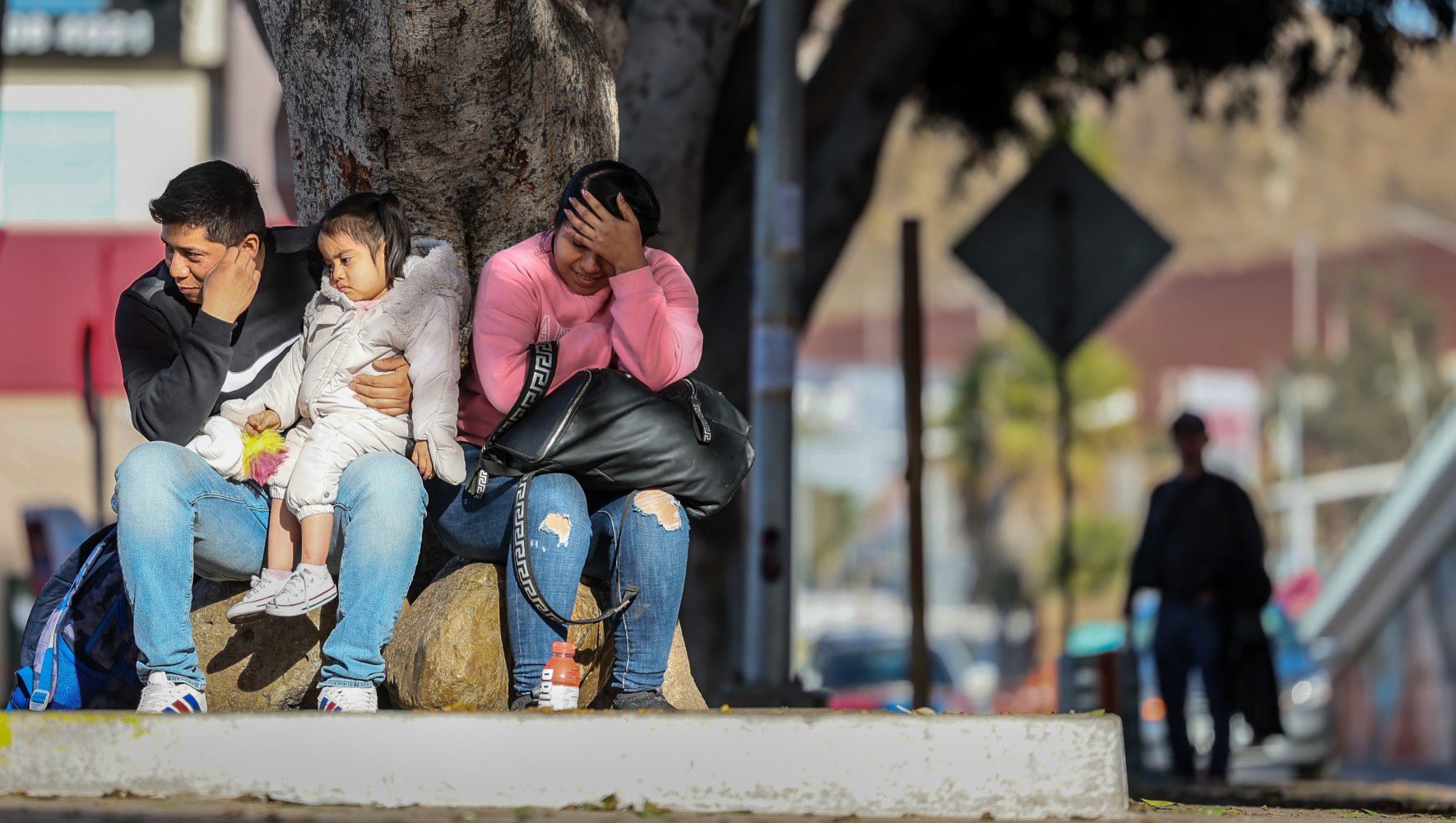
Furthermore, the practice of "third-country" removals—where migrants are sent to countries other than their home of origin—has created a secondary crisis. Thousands of individuals are now stranded in unfamiliar regions, often without legal status, local support, or the ability to work, leaving them vulnerable to exploitation by criminal organizations and cartels. This policy has effectively externalized the burden of the U.S. immigration crisis onto neighboring countries, many of which lack the infrastructure to handle the sudden influx of displaced populations.
Analysis: The Erosion of Due Process
The fundamental argument against the current asylum ban centers on the concept of "credible fear." Under previous legal frameworks, any individual who physically reached U.S. territory had the right to express a fear of returning home. This initiated a screening process, followed by a hearing before an immigration judge. By effectively removing this step, the current administration has shifted the adjudication of asylum cases from the judiciary to border enforcement officers.
Critics argue that this creates a lack of due process, as CBP officers are not trained as immigration judges and are not tasked with evaluating the merits of complex legal claims regarding persecution. This, combined with the lack of access to legal counsel for those in detention, makes it nearly impossible for legitimate asylum seekers to successfully present their cases. The result is a system where the "rule of law" is supplanted by administrative fiat, and the distinction between a criminal entrant and a refugee is entirely obscured.
Institutional and International Responses
The international community has expressed concern regarding the U.S. trajectory. Global human rights monitors have periodically warned that the U.S. is moving toward a position that ignores the spirit of international refugee law. Domestically, the political divide remains stark. Proponents of the administration’s policies argue that the sovereignty of the border is the primary responsibility of the government, and that the "invasion" rhetoric is a necessary tool to maintain order in a chaotic international environment.
Conversely, civil rights groups continue to emphasize that the right to seek asylum is a moral and legal imperative. They maintain that the U.S. can uphold its border security obligations while simultaneously adhering to the due process requirements established after the horrors of World War II. As the Supreme Court considers the potential for a hearing on the D.C. Circuit Court’s ruling, the eyes of the nation are focused on the tension between executive power and the preservation of long-standing civil rights.
The Future of Asylum in the United States
The situation as of October 2026 remains deeply volatile. The administrative and legal structures governing the border are currently at a stalemate, with the administration pushing for the permanent exclusion of asylum seekers and the judiciary attempting to uphold the statutory requirements of the past. The impact on the migrant population is, by all accounts, severe. Beyond the legal arguments, the human cost is measured in the thousands of lives currently held in detention or stranded in dangerous environments along the U.S.-Mexico border.
As the debate continues, the role of non-profit agencies like HIAS has become increasingly critical. These organizations are working to provide legal support, basic necessities, and advocacy for those caught in the gaps of the current system. Whether the Supreme Court chooses to uphold the current ban or mandate a return to previous processing standards will determine the future of U.S. immigration policy for the foreseeable future.
The overarching question for the United States remains whether it can balance the management of its borders with the humanitarian values that it has historically championed. For now, the asylum ban stands as a testament to a shift in national priorities, marking a departure from the mid-20th-century consensus on refugee protection toward a more restrictive, security-centric paradigm that prioritizes deterrence over the legal right to seek safety. With the legal battles ongoing, the fate of thousands of individuals remains in the hands of the high court, while the reality on the ground continues to challenge the moral and legal foundations of the U.S. immigration system.