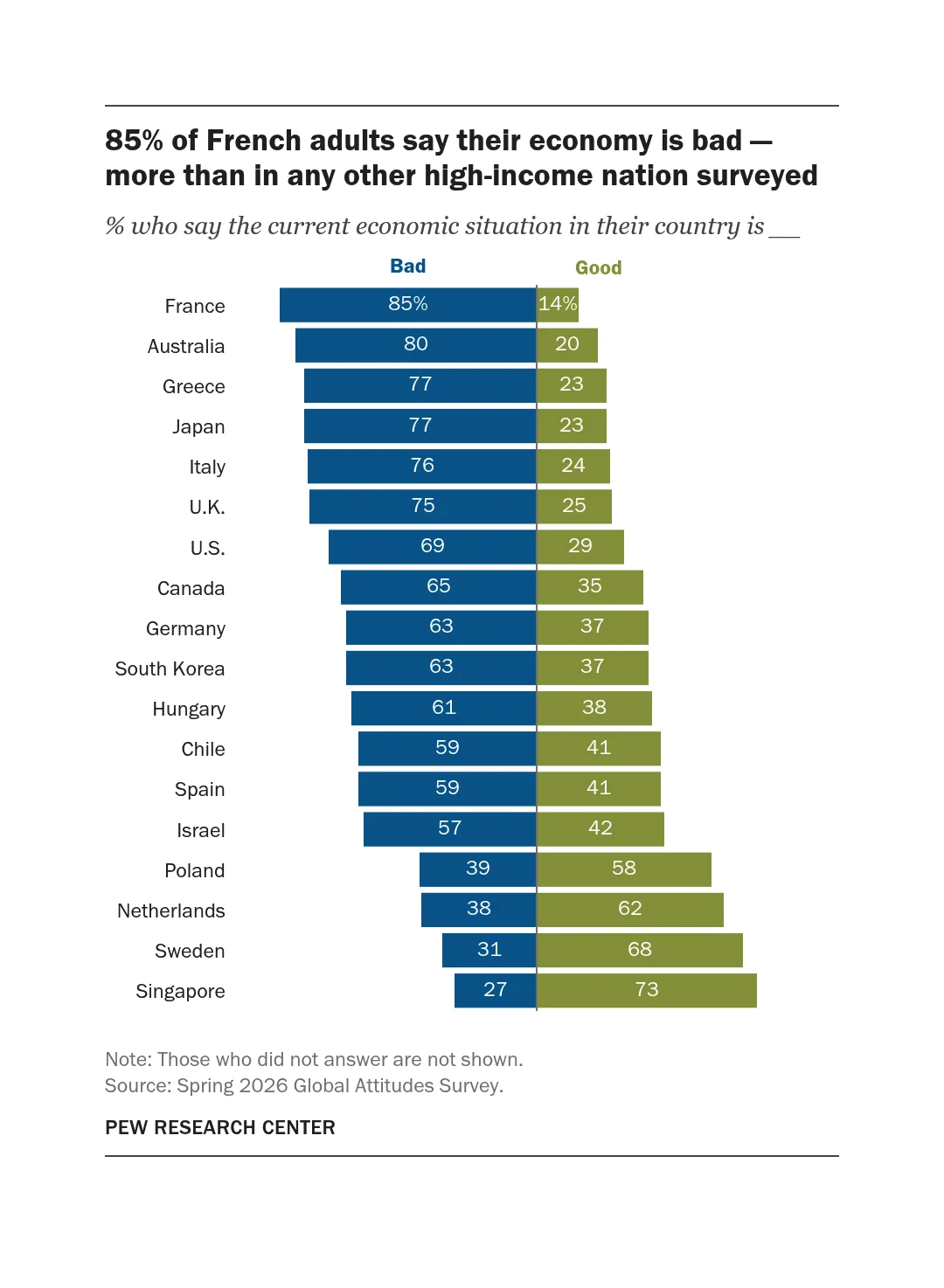
The data, gathered from a representative sample of 5,062 U.S. adults, suggests that the political environment is increasingly being shaped by kitchen-table anxieties. As voters prepare to head to the polls, the persistent burden of inflation—manifested through the prices of food, gasoline, and housing—appears to be overshadowing other policy debates, creating a volatile atmosphere for political candidates on both sides of the aisle.

The Erosion of Economic Sentiment
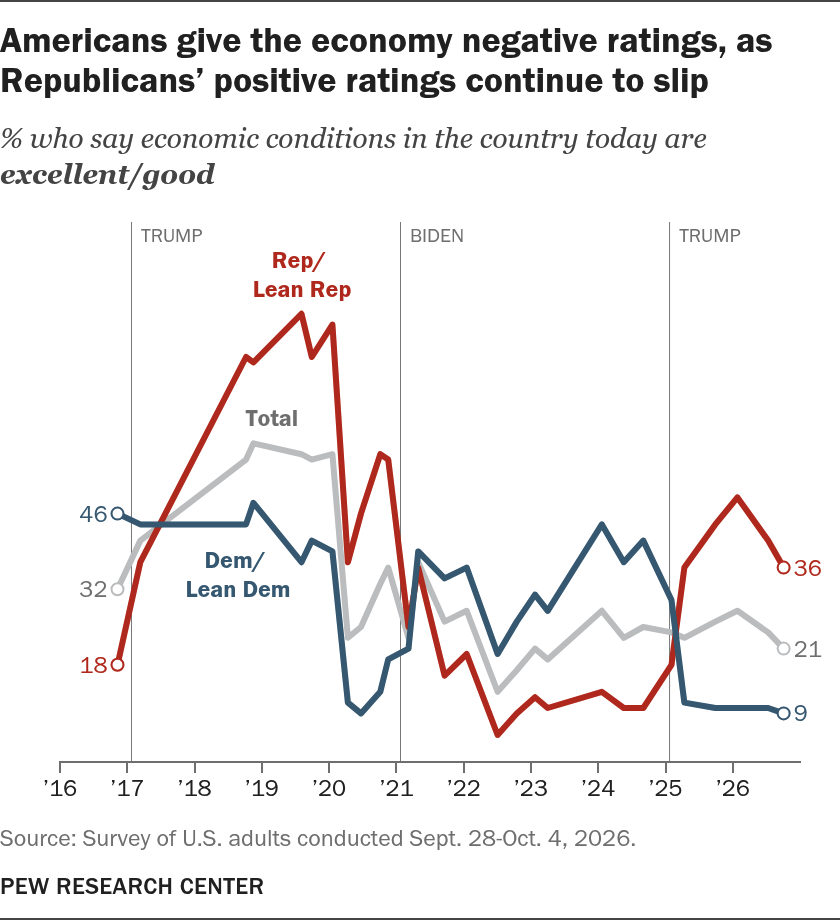
The survey results paint a bleak picture of the national mood. Only 21% of American adults currently describe the state of the U.S. economy as "excellent" or "good." This represents a notable drop from the 28% who held a positive view at the beginning of 2026. Conversely, the majority of the public holds a dim outlook, with 42% labeling conditions as "poor" and 37% describing them as "only fair."
This downward trend is particularly significant when compared to historical data from the current presidential term. The current level of pessimism is among the lowest recorded during the administration’s two terms, reflecting a public that feels increasingly alienated from the country’s macroeconomic performance. The shift is most pronounced among Republican voters, whose previous optimism has continued to wane throughout the year. In January 2026, 49% of Republicans viewed the economy as excellent or good; that figure has since fallen to 36% in the October polling. Meanwhile, Democratic sentiment has remained consistently low, with only 9% currently viewing the economy in a positive light, while the proportion of Democrats who characterize the economy as "poor" has climbed to 56%.
A Chronology of Economic Anxiety
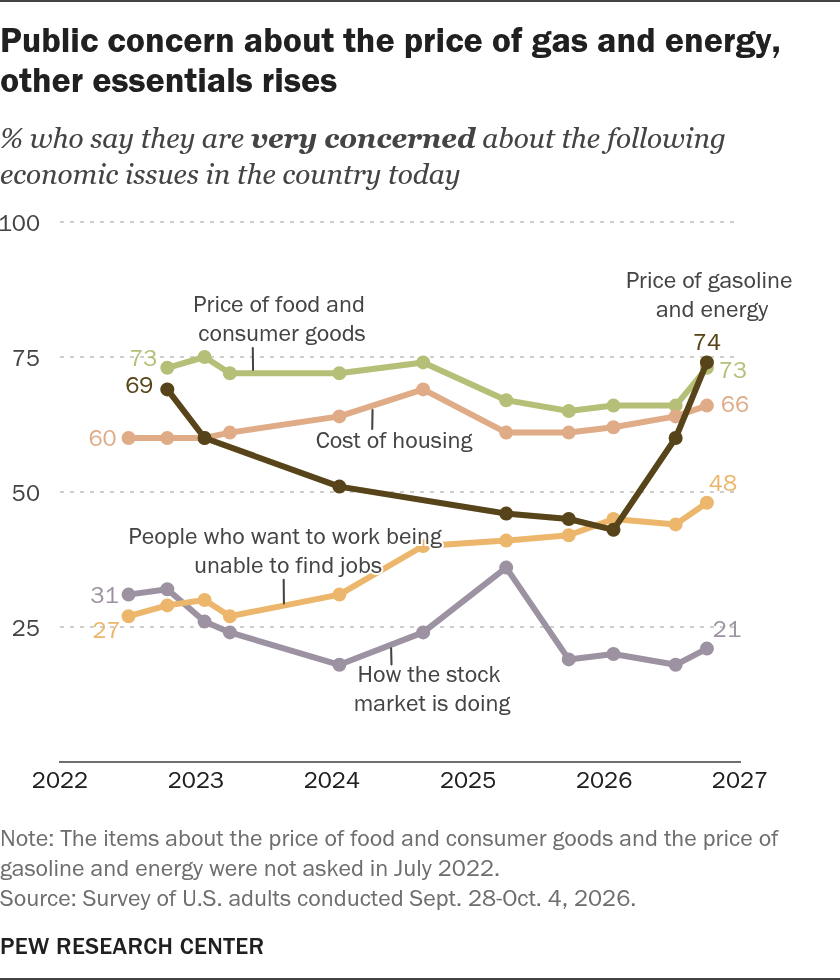
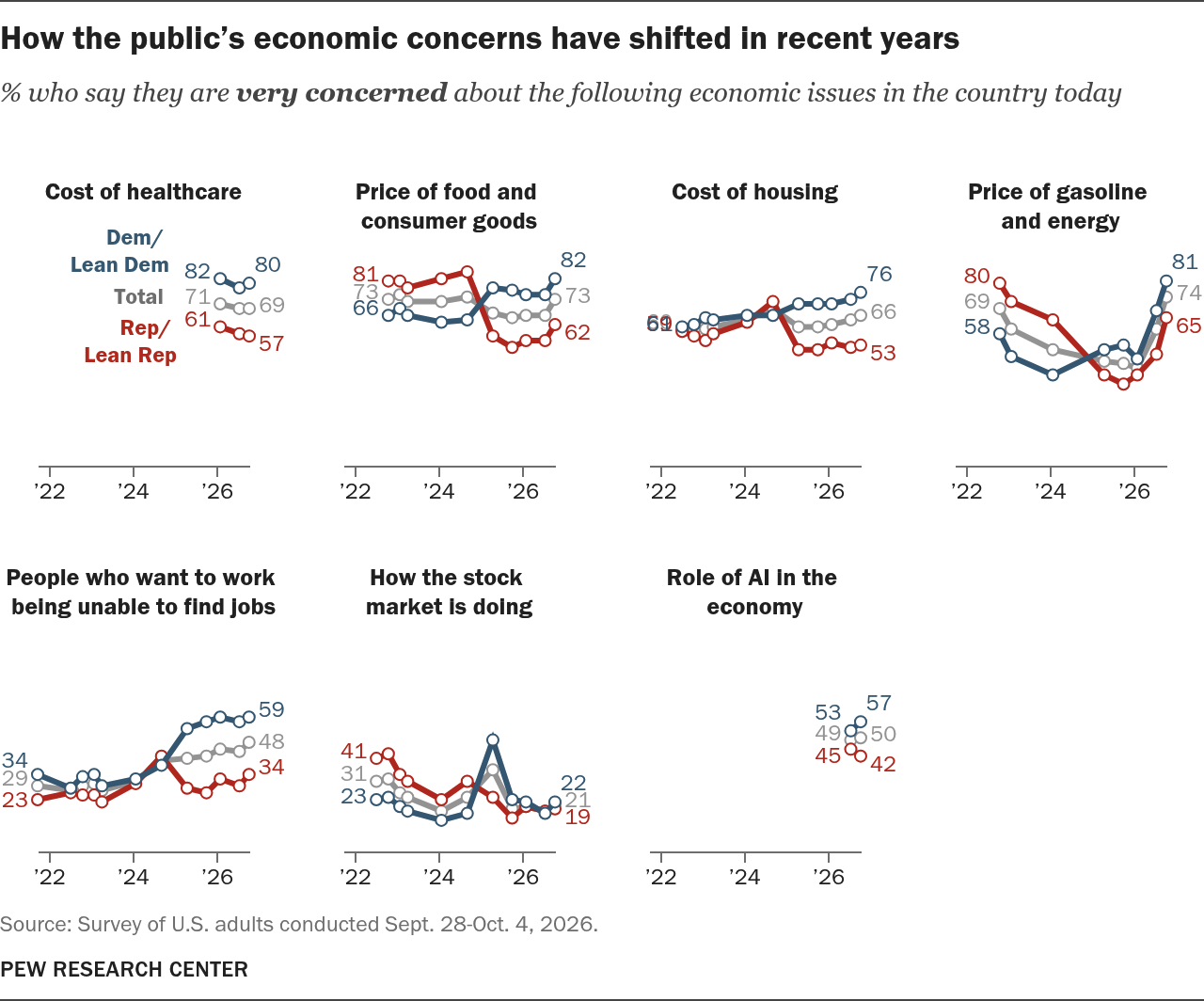
To understand the current climate, one must look at the trajectory of these concerns over the past several years. The period from 2022 to 2026 has been marked by a shifting focus of public distress. In July 2022, 60% of Americans identified the cost of housing as a top concern, a figure that has steadily climbed to 66% as of October 2026.
The most dramatic shift, however, has occurred regarding energy and fuel prices. The data shows that concern over the price of gasoline and energy has fluctuated wildly in response to global events. In January 2026, before the escalation of military tensions involving Iran, 43% of respondents were "very concerned" about energy costs. By July 2026, that number rose to 60%, and it has since surged to 74% in the latest October survey. This 31-percentage-point increase in under a year underscores how geopolitical instability and energy supply chain disruptions have directly impacted the personal finances of the average voter.
Similarly, the price of food and essential consumer goods remains a dominant anxiety. In October 2022, 73% of Americans were deeply concerned about the rising cost of these staples. After a period of relative plateauing, that figure has returned to 73% as of October 2026, suggesting that despite various government interventions, the perception of affordability has not improved for the vast majority of households.
The Impact of Trade and Tariff Policy
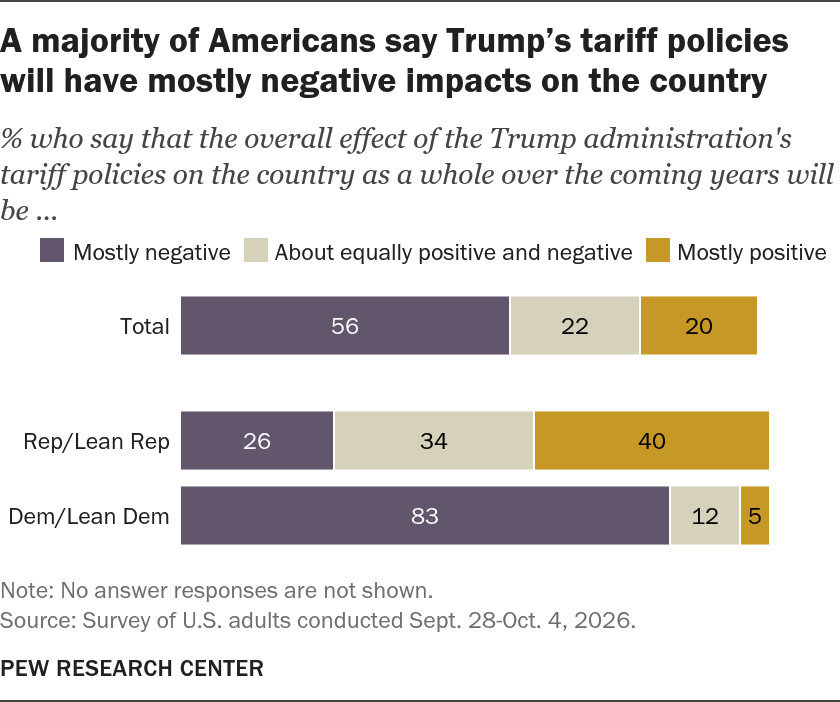
Central to the ongoing economic debate is the administration’s aggressive approach to international trade. The survey indicates that the public is highly skeptical of current tariff policies. A full 56% of Americans believe that the administration’s use of tariffs will have a "mostly negative" impact on the country in the coming years, compared to just 20% who view the policy as a net positive.
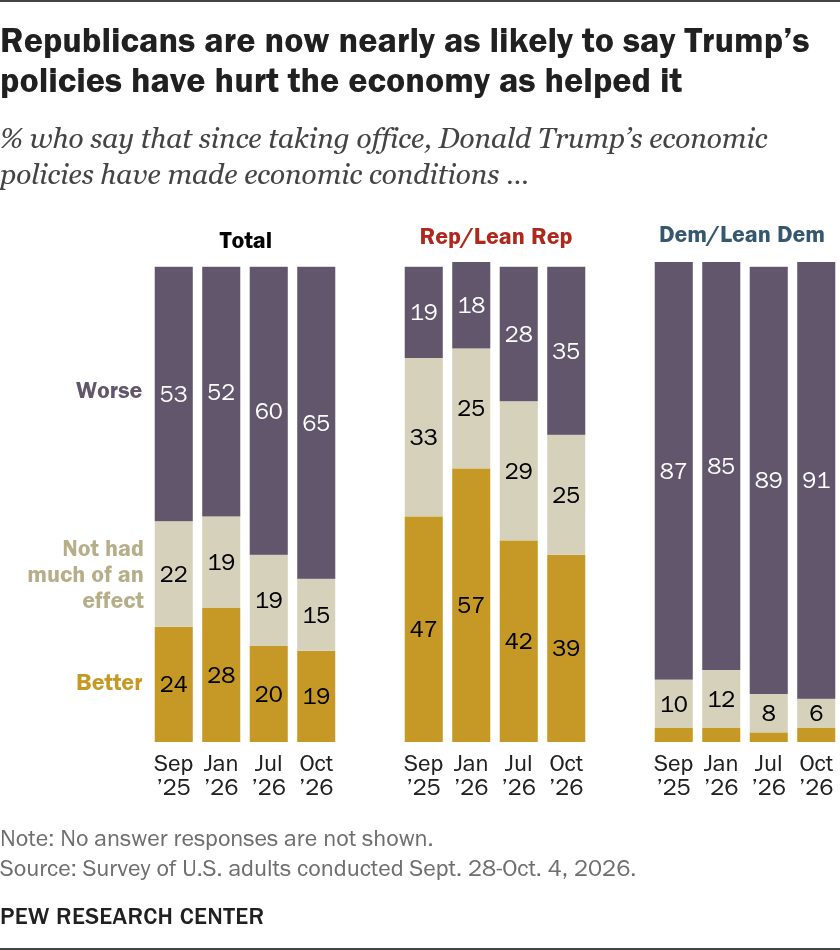
This sentiment is heavily filtered through a partisan lens. Among Democrats, 83% expect a negative impact from tariffs. Perhaps more concerning for the administration, however, is the erosion of support within its own party. While Republicans remain more likely to favor tariffs than their Democratic counterparts, their enthusiasm is slipping. In August 2025, 52% of Republicans believed tariffs would have a "mostly positive" impact; that figure has since dropped to 40% as of October 2026. The shift suggests that the economic ripple effects of protectionist policies are beginning to reach voters who previously championed the strategy.
Labor Market and Emerging Economic Threats
While inflation remains the primary driver of public concern, the labor market is also beginning to show signs of instability in the eyes of the workforce. In October 2022, 29% of respondents were "very concerned" about the difficulty of finding jobs for those who want to work. That figure has risen consistently, reaching 48% in the latest data. This increase may reflect a cooling labor market or a mismatch between available jobs and the needs of the workforce.
Furthermore, the public is expressing a new, distinct category of anxiety: the role of artificial intelligence in the economy. Half of the American public (50%) now reports being "very concerned" about the impact of AI on the labor market and general economic stability. This data point suggests that beyond immediate price concerns, there is a burgeoning fear regarding long-term job security and the rapid pace of technological change.
Partisan Divides and the Midterm Stakes
The findings highlight a nation divided not just by policy, but by the intensity of economic distress. Democrats express higher levels of concern across nearly every category—including healthcare costs, food prices, and housing—when compared to Republicans. For instance, 81% of Democrats are very concerned about gasoline prices, compared to 65% of Republicans.
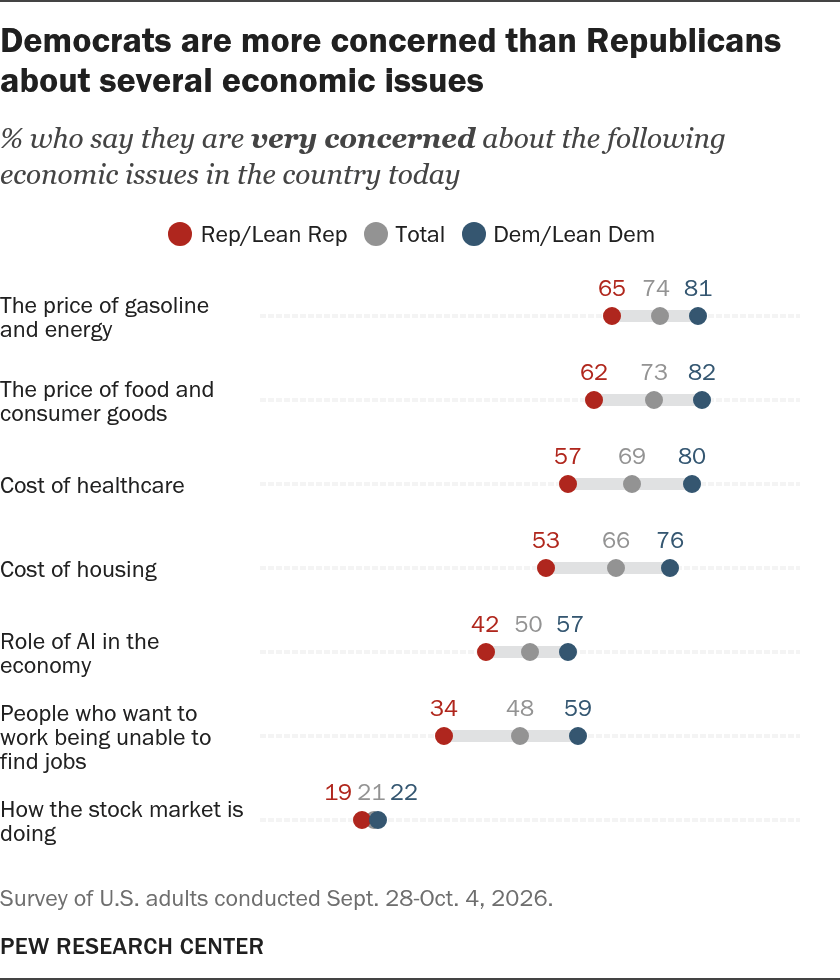
However, despite these gaps, the sheer breadth of these concerns across the political spectrum creates a challenging environment for incumbents. When a supermajority of the public—regardless of party affiliation—expresses high levels of concern over basic necessities like food and housing, the "economic sentiment" becomes an independent variable that can override traditional partisan loyalty.
Implications for the Future
Looking toward the next year, the economic outlook remains pessimistic. Only 26% of Americans expect that economic conditions will improve in the next 12 months, while 39% expect conditions to worsen. The remaining 34% anticipate that the status quo will continue.
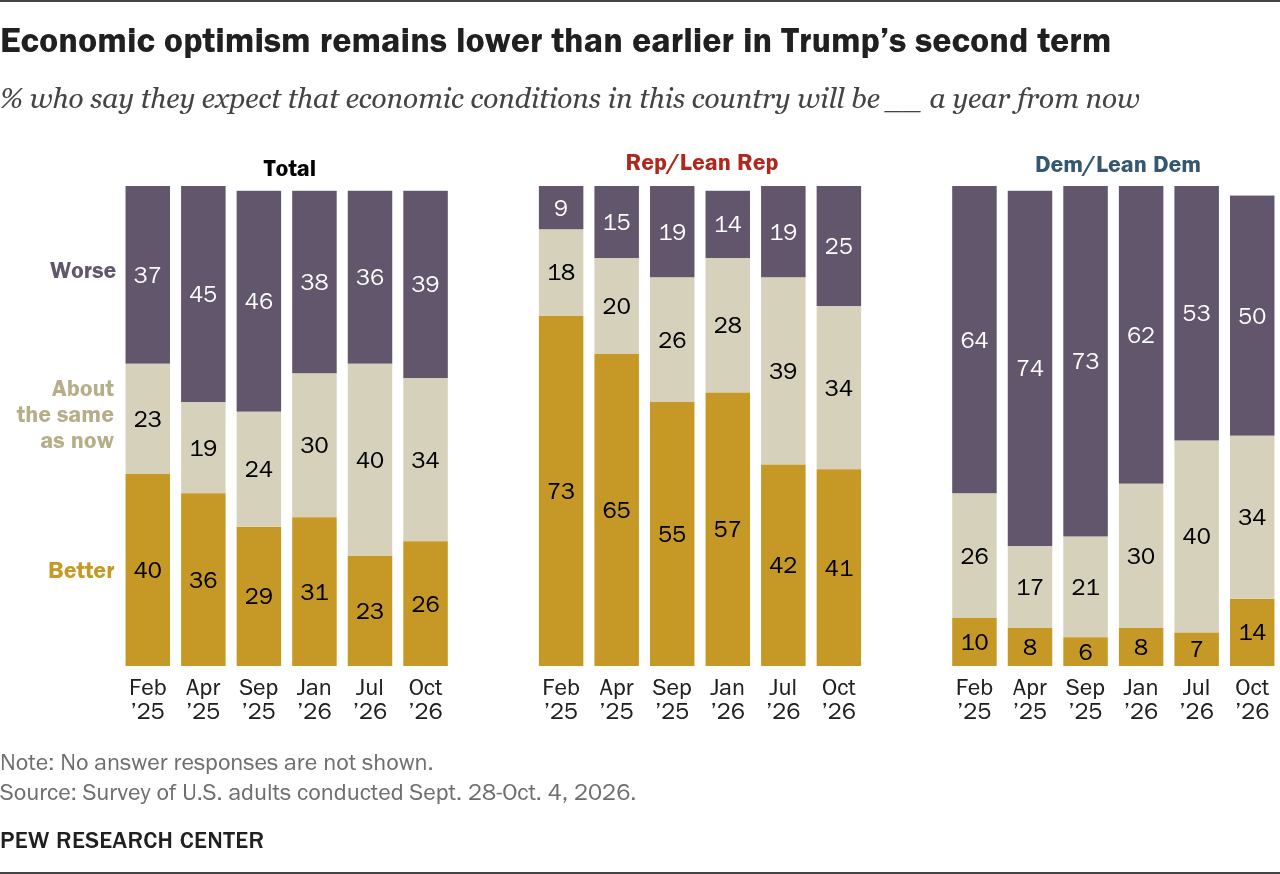
The political implications of these findings are substantial. Historically, voters hold the sitting administration responsible for the state of the national economy. With high levels of concern regarding inflation, skepticism toward trade policies, and an increasingly uncertain labor market, the administration faces a difficult task in convincing the electorate that its current economic trajectory is sustainable.
As the midterm elections approach, the data suggests that candidates who can offer concrete, relatable solutions to the high cost of living are likely to capture the attention of a frustrated public. With nearly 75% of the population expressing intense concern over energy and food prices, the narrative of the 2026 election cycle is set: it is a referendum on the cost of American life. The results of the upcoming vote will likely serve as a definitive verdict on whether the current economic policies have adequately addressed these systemic pressures or if the public is demanding a fundamental shift in direction.
The survey methodology, which utilized the Pew Research Center’s American Trends Panel, provides a rigorous snapshot of these sentiments. By tracking these metrics over years, researchers have been able to isolate the specific events—such as the conflict with Iran or the implementation of specific trade tariffs—that have most acutely rattled the consumer psyche. As of October 2026, the data is clear: the American public is in a sour mood, and the economy is the primary driver of that discontent.