
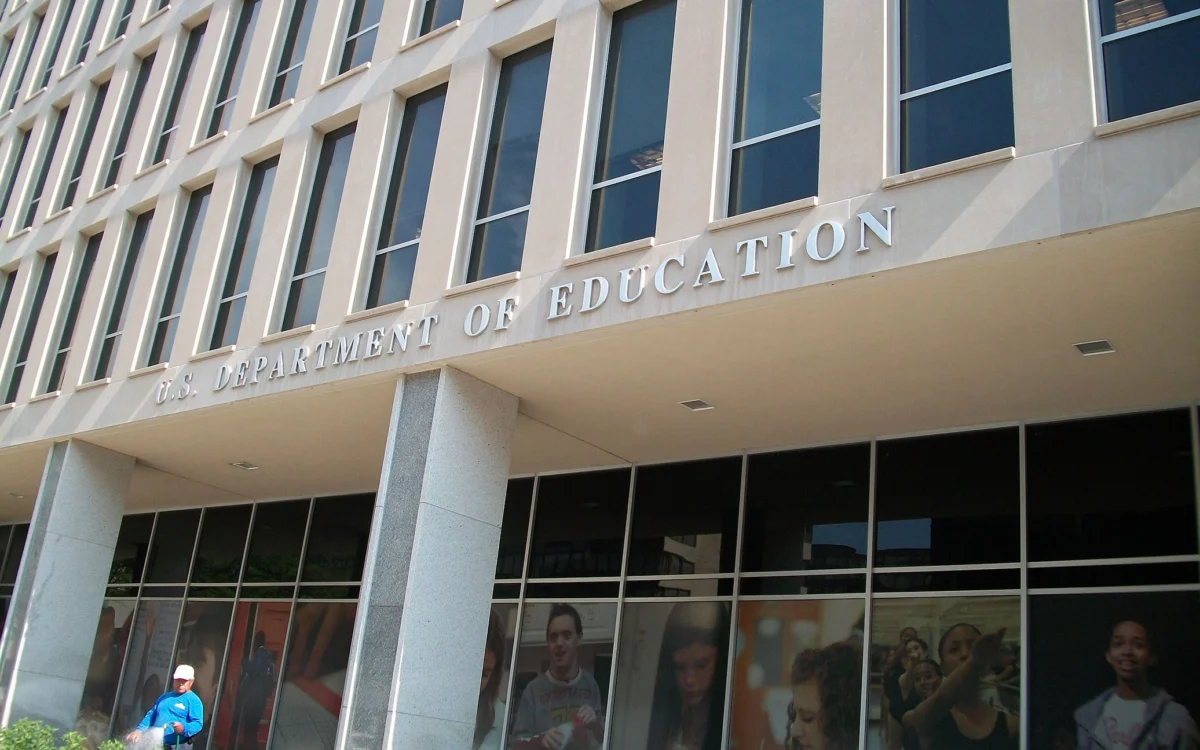
Leadership turmoil has struck the highest levels of federal special education administration as Kelly Rogers, the acting assistant secretary for the Office of Special Education and Rehabilitative Services (OSERS), announced her unexpected resignation. The departure comes at a critical juncture, coinciding precisely with the Department of Education’s execution of controversial interagency agreements designed to outsource core responsibilities and relocate hundreds of federal personnel to other executive departments. Rogers, who assumed the role in May, informed agency staffers on a Wednesday that she would vacate her post by Friday and return to her home state of Florida, leaving the agency’s leadership vacuum unresolved as structural overhauls press forward.
The abrupt exit compounds a turbulent period for the federal education agency, which is actively decentralizing its workforce and downsizing its physical footprint. According to the American Federation of Government Employees (AFGE) Local 252, a union representing Department of Education workers, more than 100 OSERS employees are being physically transferred this week to the Department of Health and Human Services (HHS). Simultaneously, 57 personnel from the Department’s Office for Civil Rights (OCR) are slated to relocate to the Department of Justice (DOJ) the following week. These sweeping moves operationalize interagency compacts initially unveiled earlier in the summer, fundamentally altering how federal oversight of disability support and educational equity is administered.
A Timeline of Administrative Restructuring and Transition
The ongoing friction between federal agencies, advocacy organizations, and Capitol Hill is the culmination of a rapidly accelerated restructuring timeline that has alarmed educators and legal experts alike:
- June 2026: The U.S. Department of Education formally announces interagency agreements to offload significant special education functions to HHS and shift specific civil rights enforcement duties to the DOJ.
- July 2026: Kelly Rogers details the operational rollout of the OSERS transition, assuring stakeholders that while staff would physically move to HHS, she would maintain direct supervision from her position within the Department of Education, backed by auxiliary support from the health agency.
- Late July 2026: Congressional pushback intensifies. The Senate Health, Education, Labor and Pensions (HELP) Committee advances legislation intended to block the Department of Education from transferring OSERS functions or executing cross-agency compacts, while a parallel bipartisan proposal is introduced in the House of Representatives.
- August 2026: The structural transition culminates with the physical relocation of OSERS and OCR personnel. Days before the move, Rogers abruptly tenders her resignation, creating immediate ambiguity regarding executive oversight and long-term administrative accountability.
Unresolved Leadership Questions and Official Responses
In an email obtained by disability advocacy media outlets, Rogers struck an optimistic tone regarding her departure, expressing confidence in the resilience of the civil service workforce. "While I am stepping away, I remain confident in the team’s ability to continue moving forward with strengthened outcomes for individuals with disabilities through the HHS partnership," she wrote to colleagues. However, her departure leaves critical operational questions unanswered.
Department of Education officials have declined to clarify who will assume leadership of OSERS following Rogers’ departure, whether the incoming official will report through the Department of Education or HHS, or how the leadership void will impact the execution of the multi-agency transition. Despite these internal uncertainties, the agency maintains that the reorganization is both necessary and beneficial. A Department of Education spokesperson defended the strategy, stating, "ED is excited to take this next step in our partnerships as we work in pursuit of better outcomes for students with disabilities and bolstered civil rights enforcement in schools and on campuses across America."
Broader Workforce Reductions and Structural Downsizing
The migration of OSERS and OCR personnel represents only a fraction of a broader downsizing effort within the federal education apparatus. Union representatives report that nearly 180 Department of Education staffers have been transferred across four distinct federal agencies over the course of the summer.
Compounding these personnel shifts, the agency has initiated the logistical process of relocating its primary headquarters to a smaller commercial facility. Internal union projections indicate that additional offices are scheduled to move either to the new headquarters or to external federal departments in the coming months, signaling a permanent contraction of the Department of Education’s centralized operational capacity.
Concerns From Disability Advocates and Educational Experts
The ongoing fragmentation of the department has drawn sharp criticism from civil rights advocates, former government officials, and professional associations who argue that dispersing responsibilities will harm the vulnerable populations the agency is mandated to protect. Critics contend that the administration’s stated goal of reducing federal bureaucracy is a misnomer that will result in a more convoluted regulatory environment for state educational agencies, local school districts, and families.
Stephanie Smith Lee, who directed the Department of Education’s Office of Special Education Programs under President George W. Bush and currently serves as co-director of policy and advocacy at the National Down Syndrome Congress, voiced deep concern over the logistics of the transition. "It is deeply disturbing that OSERS staff are being physically moved to HHS this week and OCR staff are being moved to DOJ," Smith Lee said. "The administration claims that dismantling the Department of Education will lead to reduced bureaucracy. In fact, the opposite will occur as states, schools and families will need to deal with multiple agencies for guidance, funding and regulatory issues and we lose the current collaboration among offices."
Chad Rummel, chief executive officer of the Council for Exceptional Children, echoed these sentiments, emphasizing the disruptive psychological and administrative toll the transition is taking on the education sector. "Having the OSERS leader step down during this transition from the Department of Education to HHS adds chaos and uncertainty, raising concerns among educators, families and advocates," Rummel noted. "Department of Education staff should be focusing on supporting educators, strengthening special education and improving outcomes for students with disabilities, rather than getting bogged down in reporting structures, internal agreements and unclear priorities."
Legislative Resistance and Future Outlook
The executive branch’s aggressive push to outsource special education oversight is colliding directly with legislative efforts on Capitol Hill. Lawmakers from both major political parties have expressed skepticism regarding the legality and practicality of shifting statutory educational duties to agencies without primary educational mandates, such as HHS and the DOJ.
While the Senate HELP Committee successfully advanced legislation in July to halt the transfer of OSERS, and a companion bill was introduced in the House, the Department of Education has continued to execute the relocations unabated. This creates a high-stakes standoff between executive implementation and legislative oversight.
Jacqueline Rodriguez, CEO of the National Center for Learning Disabilities, summarized the anxiety gripping the advocacy community as the fall academic term approaches. "OSERS staff are moving to HHS now, and basic questions remain about who will be in charge and how this will work in practice," Rodriguez said. "We continue to urge Congress to stop these transfers."
As federal workers pack their desks and relocate across Washington, D.C., the departure of Kelly Rogers leaves an agency adrift at the exact moment steady leadership is most required. For millions of students with disabilities, their families, and the educators dedicated to serving them, the ultimate impact of this unprecedented bureaucratic realignment remains a profound and unsettling unknown.




