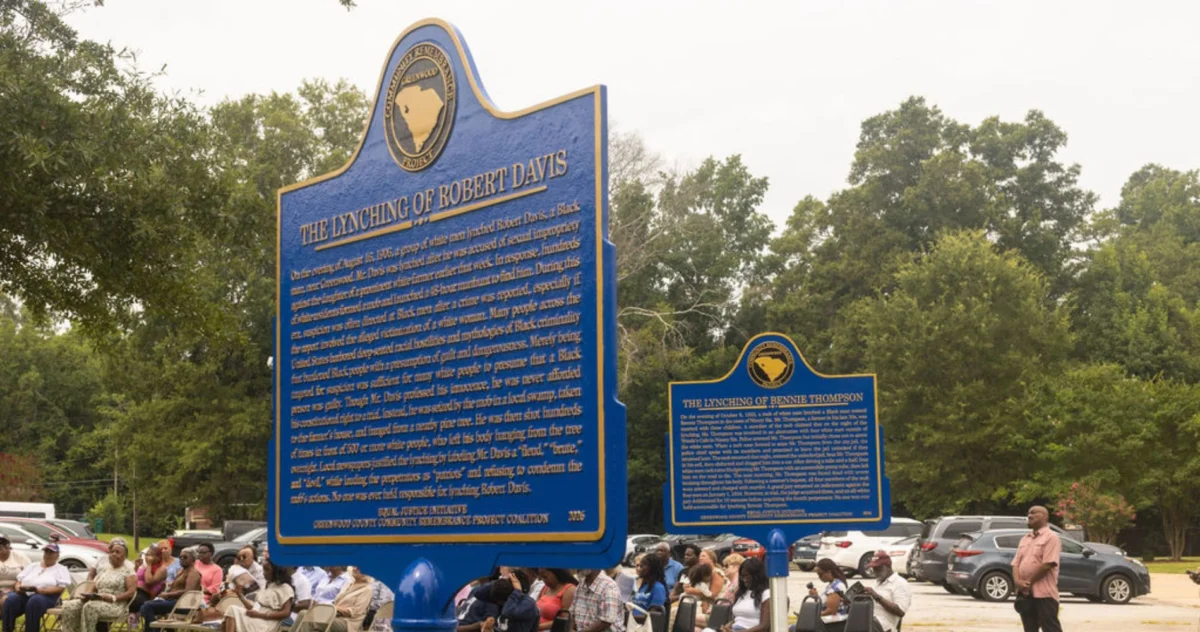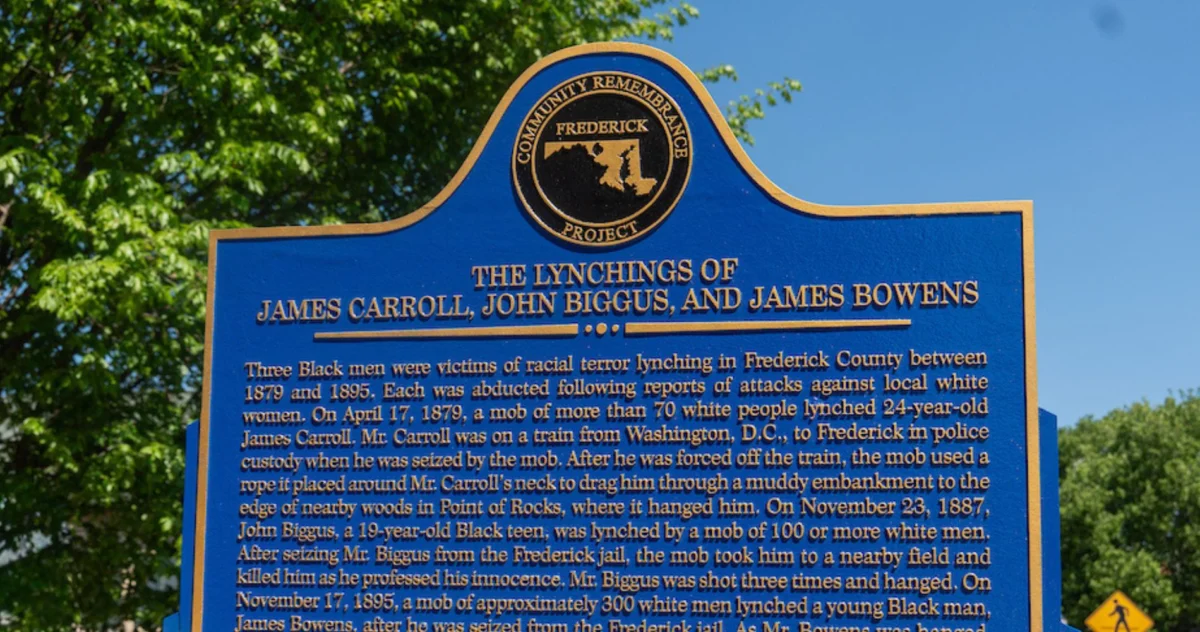
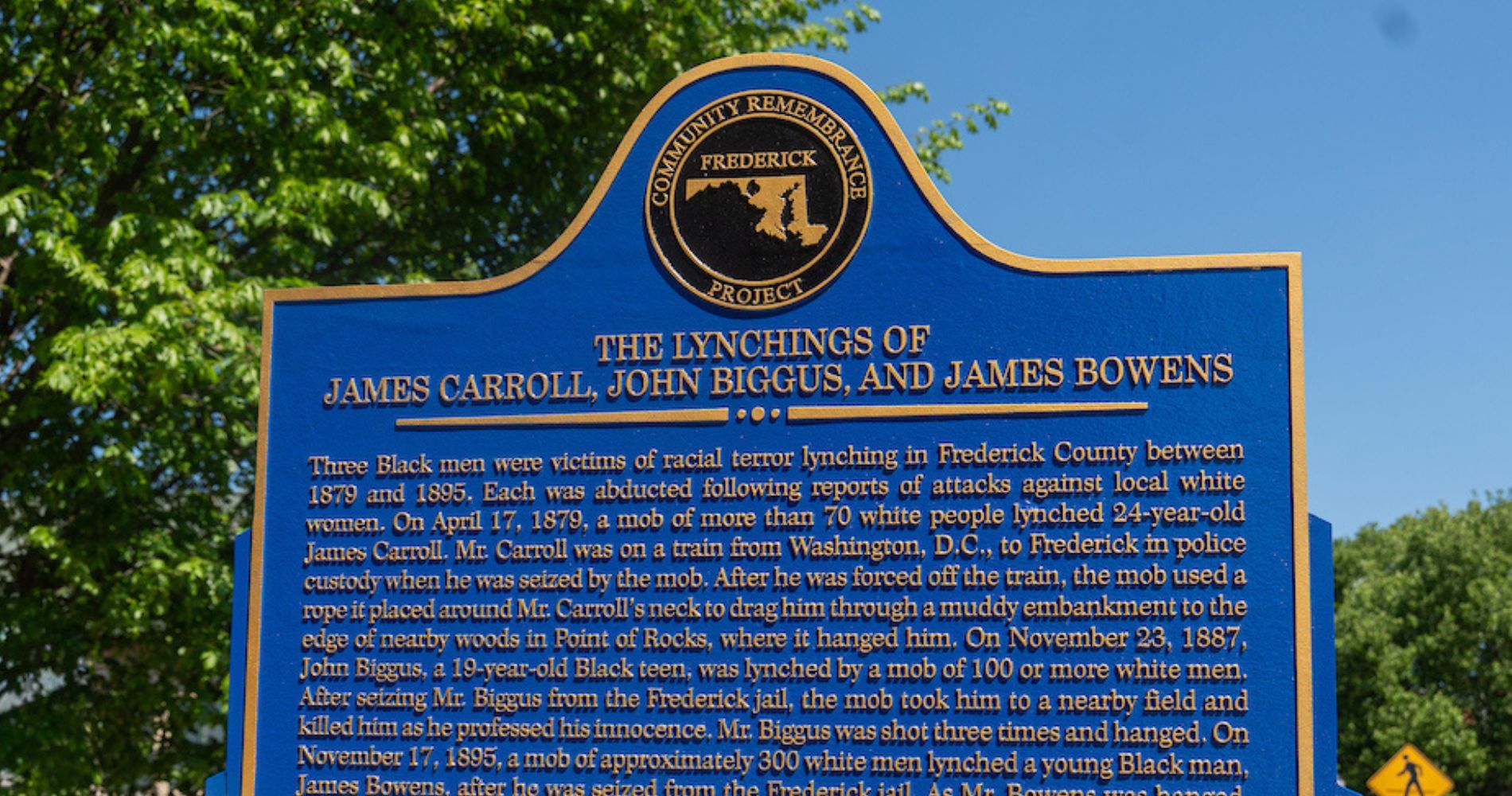
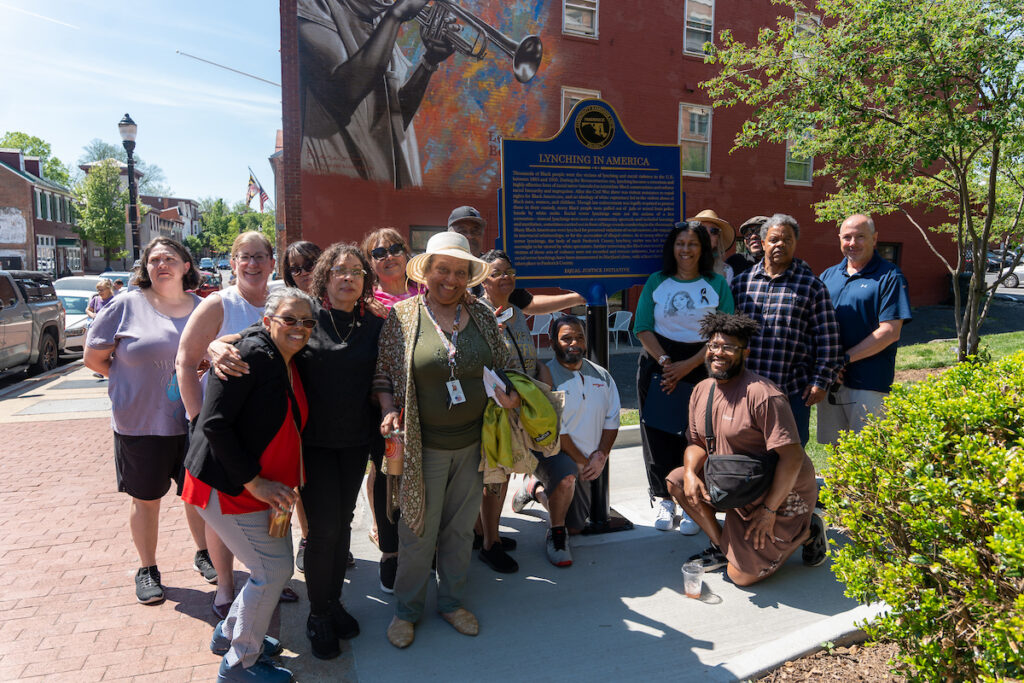
In a profound act of remembrance and a significant step towards racial reconciliation, community leaders and descendants, in collaboration with the Equal Justice Initiative (EJI), dedicated a historical marker on April 18, 2026, in Frederick County, Maryland. The monument stands as a permanent memorial to James Carroll, John Biggus, and James Bowens, three Black men who were victims of racial terror lynchings in the late 19th century. The dedication ceremony, orchestrated by the Frederick Remembrance Memorial Coalition, unfolded on historic South Market Street, adjacent to Carroll Creek in downtown Frederick, drawing a diverse crowd committed to confronting the painful truths of the past.
The event served as a poignant reminder of a dark chapter in American history, specifically the era of racial terror that gripped the nation following the Civil War. Organizer Tina Allen initiated the proceedings by underscoring the critical importance of memorializing these victims and actively addressing the enduring legacy of racial terror. "Today, we are here to honor the lynching victims James Carroll, John Biggus, and James Bowens," Allen stated, setting the tone for a ceremony steeped in solemn reflection and a forward-looking commitment to justice. This dedication in Frederick County is part of EJI’s broader Community Remembrance Project, a national initiative that partners with communities across the United States to install historical narrative markers recognizing victims of racial terror lynchings. Maryland counties, in particular, have actively engaged with EJI to bring these untold histories to light.
A Solemn Call for Truth and Reconciliation
The ceremony commenced with an opening prayer led by the Rev. Ernest Thomas, who invoked a plea for the county to possess "the strength to confront the legacy of this violence, to speak truth, and to walk humbly towards true racial reconciliation and justice." Rev. Thomas articulated the core purpose of the gathering: "to honor the lives of all the victims by ensuring this history is not forgotten, and by building a community where all are safe, protected, and treated with dignity." His words resonated with attendees, emphasizing that remembrance is not merely about looking back, but about actively shaping a more equitable future.
Official recognition of this crucial endeavor came from County Executive Jessica Fitzwater, who presented the Frederick Remembrance Memorial Coalition with a certificate of recognition. She further cemented the day’s significance by sharing a proclamation declaring April 18th as Frederick Remembrance Memorial Day in Frederick County. Fitzwater remarked on the unique character of Frederick County, noting its contemporary status as home to diverse multi-ethnic communities. "It is essential that all residents become aware of the painful legacy of racism and discrimination faced by African Americans through openly commemorating, reflecting on, and grieving past injustices," she asserted, articulating the county’s commitment to promoting healing and advancing reconciliation for all its inhabitants.
Unveiling the Painful Narratives: The Victims’ Stories
The heart of the dedication lay in recounting the harrowing stories of James Carroll, John Biggus, and James Bowens, ensuring their lives and the injustices they faced are not consigned to oblivion. Jane Weir, a diligent local family history researcher, painstakingly brought these narratives to the forefront, expressing her fervent hope that their stories would never be forgotten. "It’s important for the truth to come out and to be taught," Weir emphasized, "not silenced."
James Carroll: A Mob’s Brutality in 1879
On April 17, 1879, 24-year-old James Carroll became the victim of a brutal mob exceeding 70 white individuals. Carroll, who was in police custody, was en route by train from Washington, D.C., to Frederick when the mob forcibly seized him. Dragged from the train, a rope was tied around his neck, and he was pulled through a muddy embankment to the edge of the woods in Point of Rocks, where he was lynched. The brutality did not end with his death; members of the mob shockingly took "souvenirs" from the tree and even a tip of Mr. Carroll’s finger. His lifeless body was left on public display until the following afternoon, when the Frederick County coroner and a constable arrived to cut him down. Despite the presence of numerous witnesses and the assembly of a coroner’s jury, no one was identified, let alone prosecuted, for Mr. Carroll’s murder, a grim testament to the systemic failure of justice during this era.
John Biggus: A Jailbreak and a Public Execution in 1887
Eight years later, on November 23, 1887, 19-year-old John Biggus suffered a similar fate. A mob of 100 or more white individuals, utilizing axes and a rope pilfered from a nearby fire station, violently broke into the Frederick jail where Biggus was held. As recounted by Ms. Weir, the perpetrators dragged Mr. Biggus from the jail by a rope around his neck, pulling him down South Street to a nearby field. Throughout this horrific ordeal, Biggus steadfastly professed his innocence. The mob then threw the rope over a tree limb, slowly hoisting him from the ground. As he agonizingly suffocated, he was shot three times, a chilling display of extreme violence and disregard for human life. Like Carroll, no one was ever held accountable for his murder.
James Bowens: A Repeated Atrocity in 1895
The chilling pattern of mob violence repeated itself on November 17, 1895, when an even larger mob, estimated at approximately 300 white people, seized a young Black man named James Bowens from the Frederick jail. Ms. Weir detailed how the mob dragged Mr. Bowens to the very same field where John Biggus had been murdered just eight years prior. As Bowens was hanged, one of the perpetrators fired a gunshot into his head, ensuring his immediate death. The perpetrators then openly declared their motive: to "teach men of his class that they must let the white women of Frederick county alone or suffer the consequences." This statement underscores the pervasive and often fabricated accusations of sexual impropriety against white women that frequently served as pretexts for racial terror lynchings. In a further act of dehumanization, some individuals took photographs of Mr. Bowens’s corpse as mementos, and after the coroner cut him down, the rope used to hang him was divided into pieces and distributed as souvenirs, showcasing the horrific normalization of such atrocities within the community.
The Enduring Scars of Lynching in America
These three lynchings in Frederick County are not isolated incidents but represent a pervasive and systematic campaign of racial terror that plagued the United States for nearly a century after the Civil War. Between 1865 and 1950, over 6,500 Black men, women, and children were killed in racial terror lynchings across the nation. This period, often termed the Jim Crow era, saw many white people in the South, and indeed across the country, vehemently oppose equal rights for Black people. Lynching emerged as the most public and notorious form of racial terrorism, strategically employed to enforce a brutal racial hierarchy and suppress Black aspirations for freedom and equality.
A significant proportion of documented lynchings—nearly 25%—were ignited by charges of inappropriate behavior between a Black man and a white woman. These accusations, frequently characterized as "assault," were often baseless and served as a convenient pretext for fatal mob violence, reflecting deeply ingrained racist stereotypes and anxieties about interracial relationships. The judicial system offered little recourse; it was common for lynch mobs to seize their victims directly from jails, prisons, courtrooms, or out of police custody. Despite being armed and charged with protecting those in custody, law enforcement officials almost invariably failed to use force to resist white lynch mobs intent on killing Black people. In numerous documented cases, police officials were found to be complicit or even active participants in these lynchings, highlighting the systemic nature of racial injustice and the breakdown of legal order.
The lynching of African Americans was, in essence, a widely supported campaign of terrorism designed to enforce racial subordination and segregation. The extreme violence inflicted by lynch mobs, often involving mutilation and torture, aimed to destroy the victim’s body and instill fear throughout the Black community. Victims were frequently left to hang for hours, preventing families from claiming their loved ones and further cementing the racial order through the omnipresent threat of violence. James Carroll, John Biggus, and James Bowens are three of at least 34 Black victims of racial terror lynching recorded in Maryland between 1865 and 1950, underscoring that this horrifying practice was not confined to the Deep South but extended into border states like Maryland.
Voices of Descendants and the Path Forward
The ceremony provided a platform for the descendants of the victims to share their stories and affirm the importance of this historical reckoning. Robin Dorsey-Cosley, the grand-niece of John Biggus, movingly described her family’s arduous journey of discovering this painful history and their unwavering efforts to unearth—and share—the truth about what happened to their loved one. "We should be able to talk about it," she told participants, expressing profound gratitude for the community support that made possible "this commemorative moment in honor of the ones whose lives were taken without true justice being served." Her words underscored the generational trauma inflicted by these acts and the enduring need for acknowledgement and healing.
Mia Taylor, a Project Manager at EJI, spoke eloquently about the profound significance of the community uniting to confront and address the damage wrought by this history. "You are embracing the process of truth, justice, and reconciliation with difficult histories that is essential for us to recover from a history of racial injustice," Taylor stated, articulating EJI’s core belief that confronting historical truths is a prerequisite for societal healing. The poignant musical rendition of "Total Praise" by Terrence Boyd offered a moment of solace and reflection, preceding another significant address.
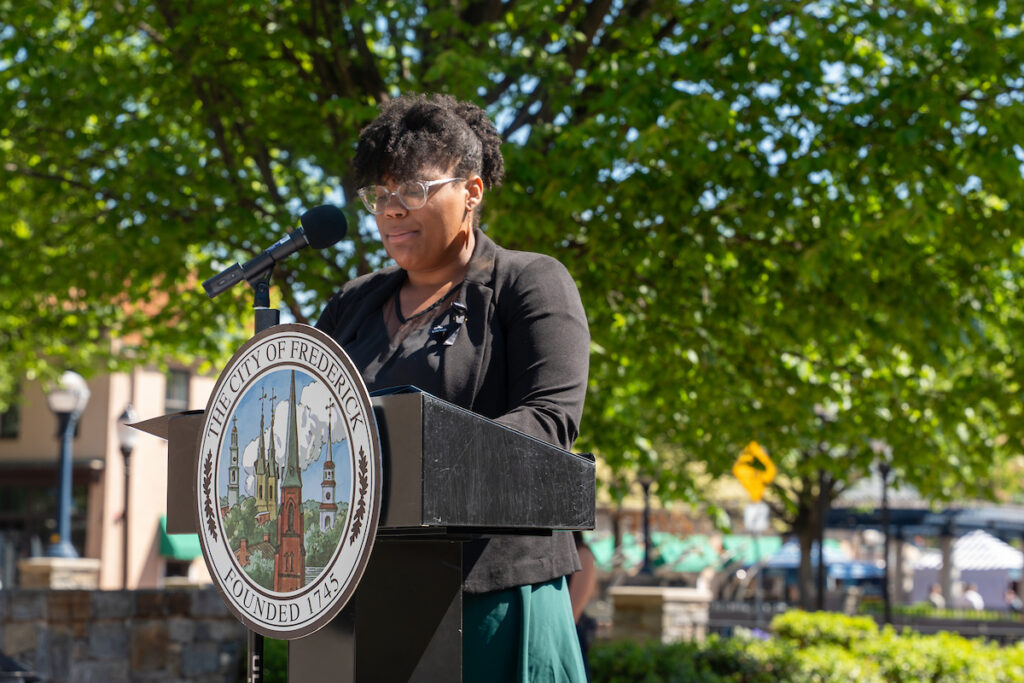
Mayor Michael O’Connor then took the podium, delivering a powerful apology on behalf of the city. He expressed regret for the "acts and omissions of government officials that contributed to the three racial terror lynchings," a rare and critical acknowledgment of institutional complicity. "I ask each of us to let this moment guide us, let it deepen our commitment to being a community where truth is not feared, where justice is not delayed, and where every person’s story is honored," the mayor urged. He concluded by stating, "May this place serve as a place of reflection, a place where we remember James Carroll, John Biggus, and James Bowens," cementing the marker’s role as a perpetual reminder and a catalyst for change.
The Community Remembrance Project: Building a Legacy of Truth
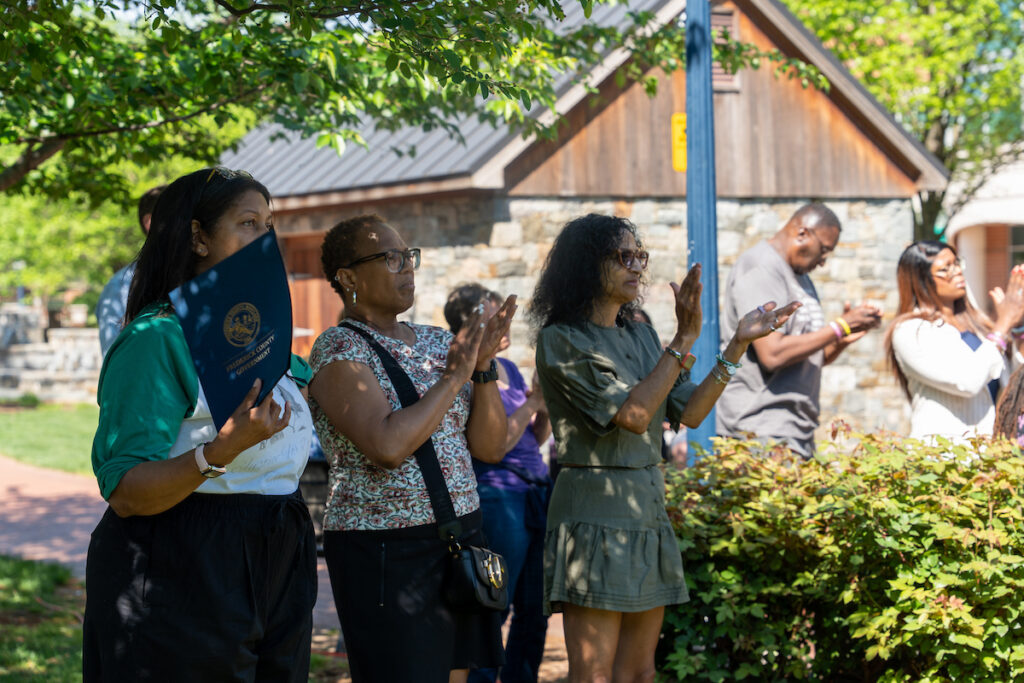
Before the historical marker was officially unveiled, organizer Tina Allen announced that the marker would be formally handed over to the city, signifying its integration into the public landscape and its lasting legacy. Allen also reiterated the ongoing commitment of the Frederick Remembrance Memorial Coalition. "The Frederick Remembrance Memorial Coalition will continue its work," she affirmed, declaring with conviction, "This is just the beginning."
The dedication in Frederick is a vital component of EJI’s overarching Community Remembrance Project, an ambitious campaign designed to recognize the victims of lynching through multiple avenues. This project includes collecting soil from lynching sites, erecting historical markers like the one in Frederick, and developing the Legacy Sites in Montgomery, Alabama, including the National Memorial for Peace and Justice and the Legacy Museum. EJI’s foundational belief is that by courageously reckoning with the truth of racial violence, communities can initiate a necessary and transformative conversation that fosters healing and advances reconciliation.
These historical markers serve multiple critical functions. They provide tangible, public recognition of injustices that were often suppressed or erased from official histories. They educate current and future generations about the systemic nature of racial terror and its devastating impact. Furthermore, they offer a space for mourning and remembrance for descendants and the broader community, allowing for a collective acknowledgment of suffering and a commitment to prevent such atrocities from recurring. The Frederick marker, now a permanent fixture in the city, stands not only as a memorial to James Carroll, John Biggus, and James Bowens but also as a beacon for truth, a testament to resilience, and a powerful symbol of Frederick County’s ongoing journey toward a more just and equitable future. The work of the Frederick Remembrance Memorial Coalition and EJI underscores that true healing begins with truth, and that remembering the past is an essential step toward building a better tomorrow.