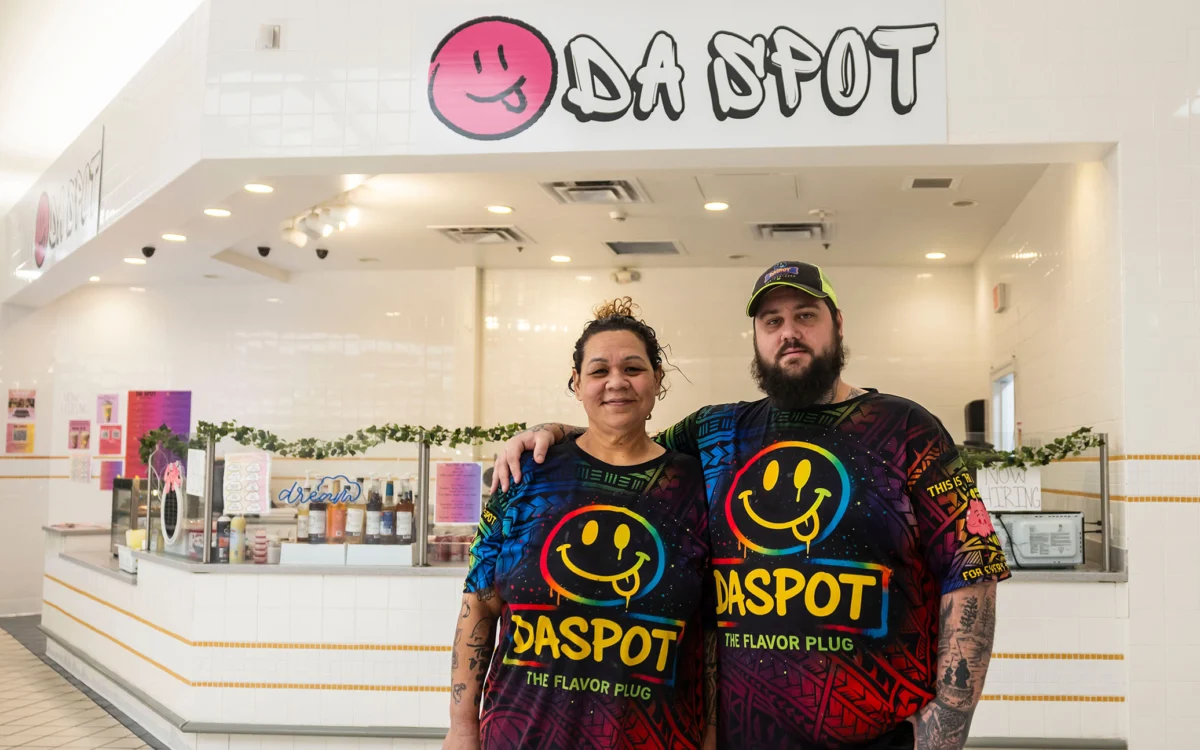
The journey of Shariece Simbahon and Coltin Sisk, parents of a five-year-old daughter Skye diagnosed with autism, took an unexpected but profoundly meaningful turn, leading to the creation of "Da Spot," a unique dining establishment designed to be a sanctuary for families facing similar challenges. Their decision to cease dining out stemmed from a desire to shield their daughter, Skye, from potential judgment and discomfort due to her active nature and stimming behaviors, which they observed could disrupt the dining experiences of others. This personal struggle quickly evolved into a mission to provide a welcoming and understanding environment for all families, particularly those with neurodivergent children, to enjoy meals without fear of stigma.
The genesis of Da Spot was rooted in a simple yet powerful observation: the isolating effect that dining out could have on families with children who have autism or other sensory processing differences. Simbahon explained that Skye is "constantly on the move and stims often." Witnessing the subtle, and sometimes not-so-subtle, reactions from other patrons, Simbahon and Sisk felt a growing unease. "We didn’t want to ruin anybody’s experience," Simbahon stated, encapsulating the considerate yet disheartening reality they faced. This sentiment, coupled with a desire to reclaim the simple pleasure of family outings, spurred them to brainstorm innovative solutions. Their goal was not to stop going out altogether, but to find a way to do so comfortably and joyfully.
From Personal Struggle to Community Solution
The idea for Da Spot began to take shape as Simbahon and Sisk explored ways to create a "safe dining space for families like theirs." Their efforts culminated in the establishment of their first location in Gladwin, Michigan, at 1210 N. State St., which opened its doors in August. Recognizing the significant demand and the widespread need for such a concept, they soon expanded, opening a second location within the Bay City Town Center, 4101 Wilder Road, in February. The response from the community was immediate and overwhelming. "We were amazed at how many families stopped going out as well, until they heard about our spot," Simbahon shared. "That’s kind of how it took off. We wanted to create a safe place where the children could come and eat with their families and not be judged."
The dual locations, while operating under the same name, offer distinct yet complementary concepts, catering to a broader spectrum of needs and preferences within the neurodivergent community and their families.
The Gladwin Location: A Sensory Playground for Culinary Delights
The Gladwin branch of Da Spot is designed as an immersive experience, transcending the traditional restaurant model to become a vibrant hub for families. Here, the environment is deliberately crafted to accommodate and encourage a wide range of behaviors that might be considered disruptive in conventional settings. Simbahon described the Gladwin location as a place where "people can draw on the walls, play on PlayStation 5s, and enjoy sensory-friendly toys and games." This approach acknowledges that for many children, particularly those with autism, remaining seated and still for extended periods can be a significant challenge. The emphasis is on creating an atmosphere where families can "enjoy a meal and not have to worry about their child staying put in their chair."
A particularly poignant anecdote shared by Simbahon highlights the profound impact of the Gladwin location. She recounted a recent visit from a family with children ranging in age from nine to fourteen, who had themselves ceased dining out years prior due to their children’s needs. The experience at Da Spot was transformative. One child, described as highly artistic, channeled their energy into creating a mural on the walls, while another engaged with video games. Meanwhile, their parents were finally able to "sit and enjoy their dinner together," a simple act that had likely become a distant memory. "They had a great time. It was something different for them," Simbahon emphasized. "It’s good to make that connection when you feel like you’re the only one." This sentiment underscores the deep sense of community and shared understanding that Da Spot fosters.
Beyond the daily offerings, the Gladwin location actively cultivates a sense of community through regularly scheduled events. These include "game nights, movie nights with themed food and contests," further enriching the experience and providing consistent opportunities for families to connect and create positive memories.
The Name "Da Spot": A Fusion of Culture and Purpose
The unique name, "Da Spot," is a reflection of Simbahon’s Hawaiian heritage and a collaborative brainstorming session with Sisk. Simbahon, accustomed to shortening words and using "da" instead of "the," recalled the moment the name emerged. "We need a spot; we need a spot," she said to Sisk. The phrase naturally evolved into "The Spot." Sisk, however, recognized the inherent cultural significance and personal connection for Simbahon. "I was like, ‘There’s no way I’m going to let you do The. You’re Hawaiian. We’re throwing the Da on there,’" he recounted. The name ultimately became a playful yet meaningful descriptor, as Sisk elaborated, "We call it Da Spot because it hits the spot. … There’s just so many different things you can do." This duality of meaning – a colloquial term for a favorite place and a nod to cultural identity – imbues the establishment with a warm and inviting character.
A Culinary Canvas: Waffles and Creative Confections
At the heart of Da Spot’s culinary offerings is a commitment to innovative and accessible food, with a particular focus on waffles. This choice is deeply rooted in personal experience. Simbahon explained that Skye, like many children with autism, can be "very picky with foods and textures." Waffles, however, are a consistent favorite for Skye, making them an ideal foundation for their menu. This insight allowed Simbahon and Sisk to channel their creativity into developing a diverse range of waffle-based dishes, meticulously "test[ing] all their new creations on Skye, topping the waffles with different concoctions." This process was not just about menu development; it was a way for them to "just get creative."
The menu at Da Spot is a testament to this creativity, featuring a variety of "sweet or savory Belgian waffles, doughnuts, croffls (croissant waffles), dirty sodas, boba and refreshers." Sisk highlighted their approach to menu design, which involves staying abreast of current culinary trends. They offer their unique takes on popular items, such as a "strawberry Dubai waffle" and "Cookie Monster doughnuts and Biscoff doughnuts." Sisk’s driving philosophy is to "stick out" and create "crazy waffles, something to remember." He finds particular satisfaction when a creation is so visually appealing that customers "pull out their phone and have to snap a picture before they take it." This visual artistry is a hallmark of their commitment to making dining a memorable and shareable experience.
Among the standout items is Sisk’s personal favorite, the "cowboy waffle," a unique combination of cornbread waffle topped with chili, shredded cheese, and green onions. This innovative dish exemplifies their willingness to push culinary boundaries. Simbahon further detailed their dedication to quality and freshness, noting that "most of their fillings and toppings are made in-house." The waffle batter itself is a customizable canvas, with options including "red velvet batter, taco batter, cornbread batter and pizza batter," offering a truly bespoke dining experience.
The Bay City Location: Accessibility and Takeaway Options
The Bay City location, while sharing many of the same food and drink offerings as its Gladwin counterpart, adopts a slightly different operational model. It primarily functions as a takeaway and casual dining spot, focusing on accessibility for those who may not require or desire the full sensory-playground environment of the Gladwin branch. This strategic differentiation allows Da Spot to reach a broader audience and cater to varying needs and preferences within the community.
A Mission Beyond Profit
Crucially, Simbahon and Sisk emphasize that their business is not primarily driven by profit. Instead, their core mission is "offering a welcoming space for families like theirs." They have personally experienced the challenges of navigating public spaces with a neurodivergent child and the often-unwelcoming attitudes they encountered. "We’ve experienced firsthand how judgmental and cruel some people can be, you know? Not everybody, but there’s some people who just don’t understand," Simbahon articulated. Their entrepreneurial endeavor is a direct response to this, a commitment to ensuring that "other people never feel that way."
This altruistic approach has resonated deeply within the community, fostering a loyal customer base and generating significant goodwill. The concept of a business intentionally designed to mitigate social barriers and promote inclusivity is a powerful testament to the owners’ empathy and vision.
Future Horizons: Expanding the Vision
Looking ahead, Simbahon and Sisk harbor ambitious plans for Da Spot’s future. They aim to "continue to grow and are dreaming big with the hopes of expanding their concept internationally." This aspiration reflects a belief in the universal applicability of their model and the potential for Da Spot to become a global beacon of understanding and acceptance for families navigating the complexities of dining out with neurodivergent children. The success of their initial ventures in Michigan suggests a strong foundation for such expansion, built on a genuine need and a heartfelt mission.
The establishment of Da Spot represents a significant contribution to the growing awareness and support for individuals with autism and other developmental disabilities. By transforming a personal challenge into a community-focused solution, Simbahon and Sisk have not only created a successful business but have also paved the way for more inclusive and understanding public spaces, demonstrating the profound impact of empathy and innovation.