The Equality Trust, a prominent UK-based organization dedicated to reducing social and economic inequality, has announced the departure of Gerry Boyle from its Board of Trustees following the completion of his maximum six-year tenure. Mr. Boyle, who served two consecutive three-year terms in accordance with the organization’s constitution, concluded his service on March 23, 2026. His departure marks the end of a pivotal era for the Trust, during which the organization navigated a series of complex socio-economic shifts, including the long-term impacts of austerity, a global pandemic, and a significantly tightening landscape for charitable funding.
During his tenure, Mr. Boyle brought a unique synthesis of private-sector business acumen and international development experience to the board. His background provided a critical counterpoint to the academic and campaigning expertise typically found within the social justice sector. Having previously chaired a small volunteer-led organization focused on overseas campaigning, Mr. Boyle’s transition to the Equality Trust board coincided with a period of heightened public discourse surrounding the "Spirit Level" thesis—the foundational research by Professors Richard Wilkinson and Kate Pickett which posits that societies with greater income equality perform better across nearly every metric of social well-being.
The Evolution of the Equality Trust and the Spirit Level Foundation
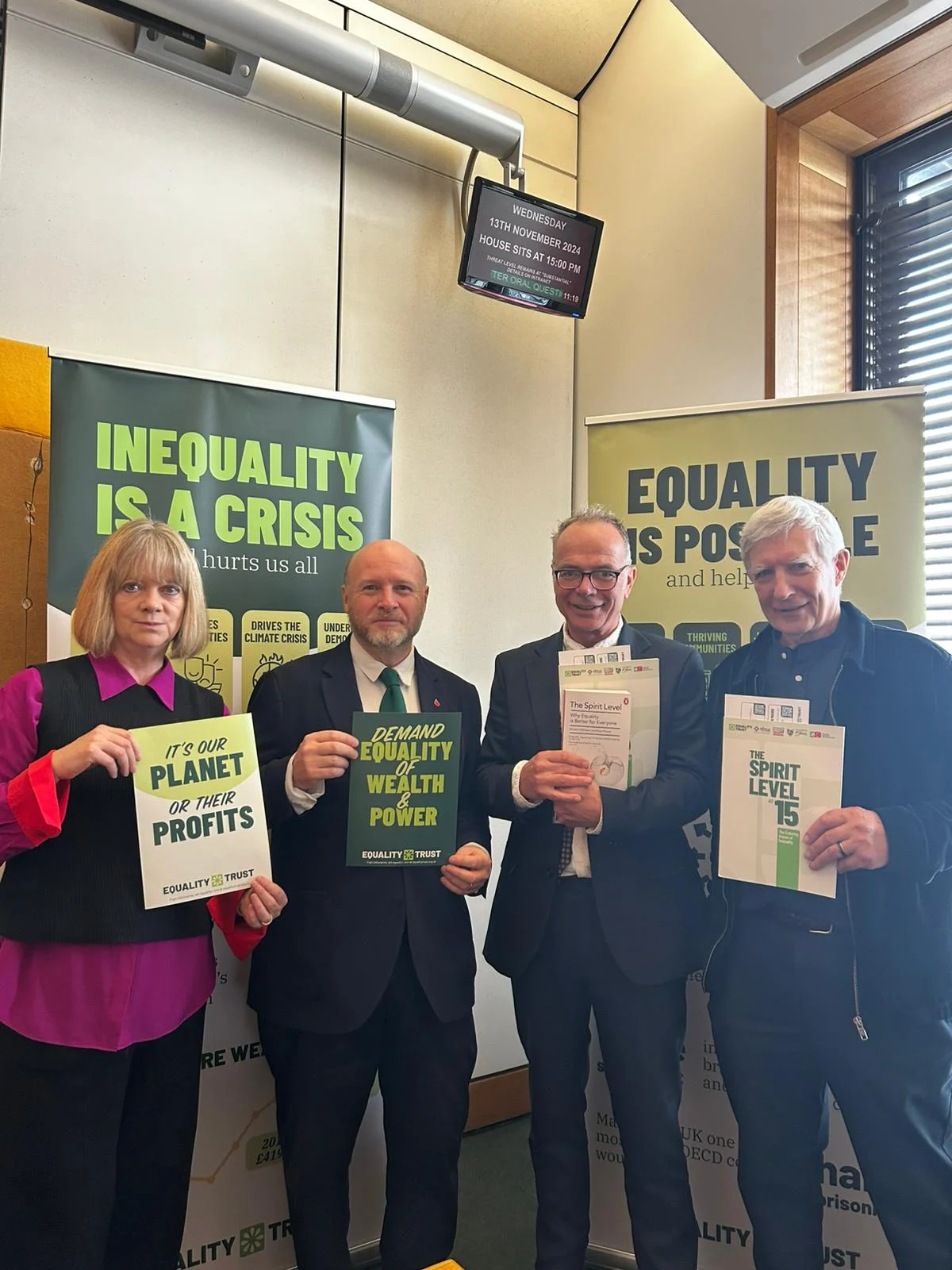
To understand the context of Mr. Boyle’s six-year service, it is necessary to examine the origins of the Equality Trust. Founded in 2009, the Trust was established to translate the findings of The Spirit Level: Why More Equal Societies Almost Always Do Better into actionable policy changes. The book provided empirical evidence that high levels of inequality correlate with lower life expectancy, higher rates of incarceration, increased mental illness, and lower levels of social trust.
When Mr. Boyle joined the board in 2020, the organization was entering a decade defined by the "polycrisis"—a confluence of economic stagnation, public service cuts, and social fragmentation. His role on the board’s finance committee became particularly significant as the Trust sought to maintain its independence and campaigning efficacy amidst a volatile financial environment. Over his two terms, the Trust focused on several key pillars: advocating for the implementation of the Socio-Economic Duty, empowering youth voices, and exposing the widening gap between executive pay and average worker wages.
A Chronology of Challenges and Achievements (2020–2026)
The period between 2020 and 2026 was characterized by significant shifts in the UK’s political and economic landscape, which directly influenced the Trust’s strategic direction.
2020–2021: The Pandemic and the Inequality Gap
As Mr. Boyle began his first term, the COVID-19 pandemic laid bare the structural inequalities within the UK. The Trust responded by highlighting how the crisis disproportionately affected low-income households and ethnic minority communities. This period saw an increased focus on the "Socio-Economic Duty" (Section 1 of the Equality Act 2010), which requires public bodies to consider how their decisions can reduce the inequalities of outcome which result from socio-economic disadvantage.
2022–2023: The Cost-of-Living Crisis and Funding Volatility
Midway through Mr. Boyle’s tenure, the UK faced a sharp rise in inflation and energy costs. For the Equality Trust, this meant advocating for systemic change while simultaneously grappling with a "difficult funding environment." The UK government’s decision to reduce international aid from 0.7% to 0.5% of Gross National Income (GNI) in 2021 had a ripple effect across the third sector, increasing competition for domestic grants. Mr. Boyle’s experience in the finance committee was instrumental during this period as the Trust navigated what he described as "lumpy funding"—a reliance on a small number of large institutional grants that created financial vulnerability.
2024–2026: Institutional Strengthening and Transition
In the final years of Mr. Boyle’s service, the Trust prioritized diversifying its income streams. This involved a strategic shift toward grassroots fundraising and individual donations to ensure "maximum freedom to campaign effectively." By the time of his departure in early 2026, the Trust had successfully integrated more youth-led initiatives, ensuring that those at the "sharp end of inequality" had a direct hand in shaping the organization’s advocacy.
Analyzing the Funding Crisis in the Third Sector
One of the most significant contributions of Mr. Boyle’s tenure was his oversight of the Trust’s financial transition. The UK’s charitable sector has faced a decade of unprecedented pressure. According to data from the National Council for Voluntary Organisations (NCVO), the withdrawal of statutory funding combined with the rising costs of delivery has left many organizations in a precarious position.
The Equality Trust’s experience mirrors a broader trend where "austerity" measures have forced charities to fill the gaps left by a retreating state. Mr. Boyle noted that the reduction in public funding across various sectors has pushed more individuals toward NGOs for support, while simultaneously reducing the pool of available grants. The impact of the US and UK governments slashing international aid budgets further exacerbated this, as organizations that previously operated internationally began competing for the same domestic pots of money.
To mitigate the risks associated with "lumpy funding," where the failure of a single large grant can jeopardize operations, the Trust has moved toward a model supported by a larger base of small-scale donors. Analysis suggests that this model, while harder to build, provides greater political autonomy, as the organization is less beholden to the specific agendas of large foundations or government contracts.
Supporting Data: The State of Inequality in 2026
The necessity of the Equality Trust’s work is underscored by recent economic indicators. As of 2025-2026, the UK continues to exhibit one of the highest levels of income inequality among developed nations.
- Gini Coefficient: The UK’s Gini coefficient—a measure of statistical dispersion intended to represent the income inequality within a nation—has remained stubbornly high, hovering around 0.35, significantly higher than the OECD average.
- Executive Pay Ratios: Research supported by the Trust indicates that the ratio between CEO pay and the average worker’s salary in FTSE 100 companies remains stark, often exceeding 100:1.
- Wealth Concentration: The top 1% of households in the UK continue to hold a disproportionate share of the nation’s wealth, a trend that the Trust argues undermines social cohesion and economic stability.
The Trust’s focus on the Socio-Economic Duty is a direct response to these figures. By encouraging local authorities and devolved administrations to adopt Section 1 of the Equality Act—even where the central government has failed to commence it fully—the Trust has created a patchwork of accountability that protects the most vulnerable.
Reactions and Implications of the Leadership Transition
While the Equality Trust has not yet named a direct successor for Mr. Boyle’s specific seat on the finance committee, the board remains a diverse body comprising academics, activists, and individuals with lived experience of poverty. In statements reflecting on the transition, colleagues described Mr. Boyle as a "highly motivated and smart" contributor who successfully bridged the gap between corporate efficiency and social justice advocacy.
The departure of a long-standing trustee like Mr. Boyle serves as a reminder of the importance of "governance health" within the charity sector. The enforcement of term limits, while resulting in the loss of experienced members, ensures a constant influx of fresh perspectives. This is particularly vital for an organization like the Equality Trust, which must remain agile to respond to shifting political ideologies.
Industry analysts suggest that the Trust’s future success will depend on its ability to continue the work Mr. Boyle championed: the democratization of its funding base. As the UK moves toward the latter half of the decade, the organization is expected to ramp up its focus on "climate inequality," exploring how the transition to a green economy can be managed without placing an undue burden on the poorest members of society.
Conclusion and Future Outlook
Gerry Boyle’s six-year journey with the Equality Trust highlights the grueling yet rewarding nature of charity governance in a period of economic instability. His tenure saw the organization evolve from a research-heavy entity into a more robust, multi-faceted campaigning force that empowers marginalized voices.
The challenges he highlighted—the fragmenting of UK society, the "difficult funding environment," and the "lumpy" nature of institutional grants—remain the primary hurdles for his successors. However, the groundwork laid during these six years, particularly regarding the Socio-Economic Duty and the cultivation of a dedicated supporter base, provides a stable platform for the Trust’s next chapter.
As Mr. Boyle steps down, the Equality Trust continues its mission with a clear mandate: to prove that inequality is not an inevitable byproduct of economic growth, but a policy choice that can—and must—be reversed. The transition signifies not just a change in personnel, but a reaffirmation of the Trust’s commitment to a more egalitarian and socially cohesive United Kingdom.