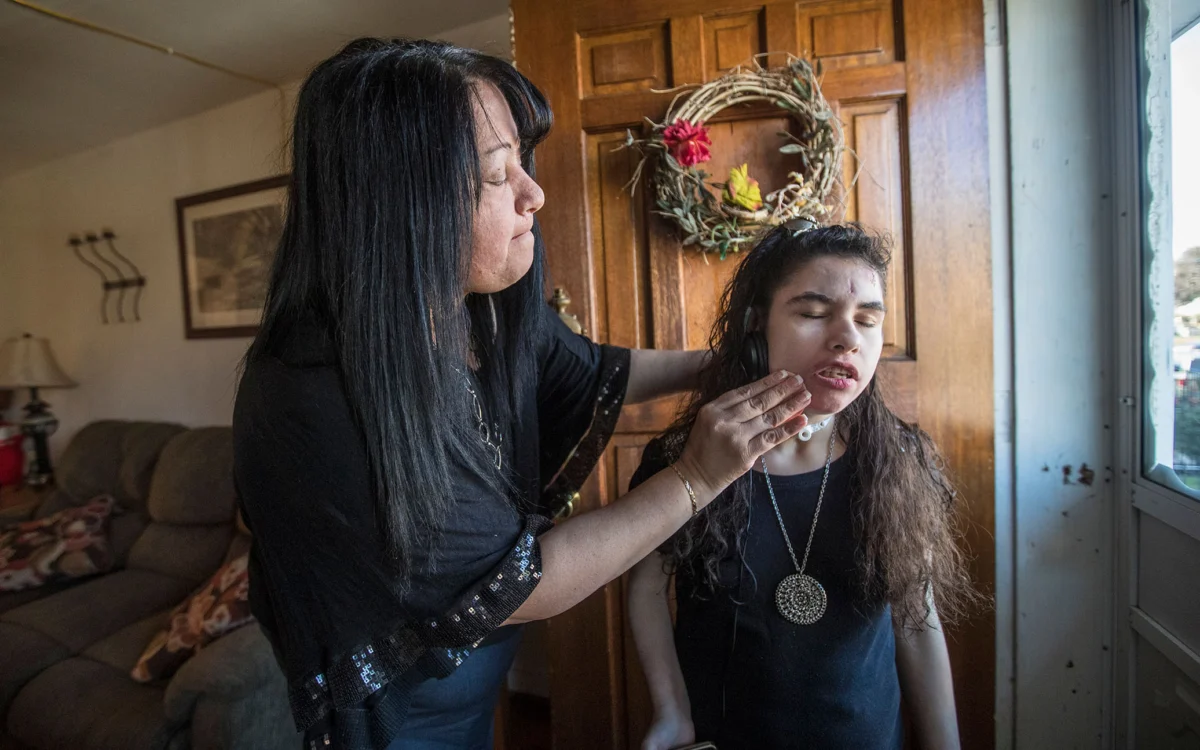
A bipartisan group of federal lawmakers is championing the establishment of a groundbreaking national hotline designed to provide crucial support for individuals who care for loved ones with developmental disabilities. This initiative, spearheaded by U.S. Rep. Rob Menendez, D-N.J., aims to create a vital lifeline for a demographic that often operates with limited resources and overwhelming responsibilities. The proposed legislation, known as the Caregiver Access to Resources and Emotional Support, or CARES Hotline Act, envisions a 24/7 toll-free service staffed by trained professionals capable of offering immediate emotional assistance, brief intervention strategies, and referrals to mental health services.
Beyond a direct crisis line, the CARES Hotline Act mandates the creation and maintenance of a comprehensive national database of caregiver resources. This centralized repository would aim to streamline access to essential information, services, and support networks. Furthermore, the legislation includes provisions for peer-to-peer counseling, fostering connections among caregivers who can share experiences, offer mutual understanding, and provide practical advice. This element acknowledges the unique challenges and isolation often faced by those in caregiving roles, recognizing the profound value of shared lived experiences.
The impetus behind this legislative push stems from direct engagement with advocacy groups and the lived realities of countless families. Representative Menendez articulated the profound need for such a service, stating, “Caregivers are the backbone of support for millions of Americans living with developmental disabilities, but they are too often left without the resources, guidance and support they deserve. Our CARES Hotline Act creates a critical lifeline to provide caregivers with emotional support, counseling and other key services.” His remarks underscore the often-invisible labor and emotional toll associated with caring for individuals with developmental disabilities, highlighting a significant gap in current support systems.
The inspiration for the CARES Hotline Act was significantly shaped by conversations with representatives from Whole Spectrum Autism, an advocacy organization based in New Jersey. Jas Singh, the group’s chief strategy and operations officer, shared the critical need for accessible and immediate support. "No family should be told to figure autism out alone, yet that is the reality for far too many," Singh stated. "The CARES Hotline is a critical step toward changing that by giving caregivers a real place to turn in moments of stress, uncertainty and isolation. This is about more than support, it is about access, guidance and making sure families are no longer navigating this journey without help." This perspective emphasizes that the proposed hotline is not merely a comfort service but a fundamental necessity for empowering families.
The proposed legislation has garnered bipartisan support, with several prominent lawmakers co-sponsoring the bill. Alongside Representative Menendez, the bill is supported by Reps. Lou Correa, D-Calif., Zoe Lofgren, D-Calif., Bennie Thompson, D-Miss., and Frederica Wilson, D-Fla., as well as Del. Eleanor Holmes Norton, D-D.C. This cross-party backing suggests a shared understanding of the urgent need to address the challenges faced by developmental disability caregivers.
The Growing Landscape of Developmental Disabilities and Caregiver Strain
The push for the CARES Hotline Act arrives at a time when the prevalence of developmental disabilities continues to be a significant public health concern. According to the Centers for Disease Control and Prevention (CDC), approximately 1 in 6 children in the United States, aged 3 through 17 years, have a developmental disability. This broad category encompasses conditions such as autism spectrum disorder, intellectual disability, attention-deficit/hyperactivity disorder (ADHD), learning disabilities, and cerebral palsy, among others. The majority of these individuals will require some form of lifelong support, with a substantial portion relying on family members for their daily care.
The demands placed upon caregivers are often immense and multifaceted. These responsibilities can include providing direct personal care, managing complex medical needs, navigating educational and therapeutic services, advocating for their loved ones within various systems, and addressing the emotional and psychological well-being of both the individual with the disability and the family as a whole. This intensive, often 24/7 commitment can lead to significant physical, emotional, and financial strain.
The Silent Crisis: Caregiver Burnout and Mental Health
The consequences of this sustained pressure are well-documented. Caregiver burnout is a pervasive issue, characterized by emotional exhaustion, depersonalization, and a reduced sense of personal accomplishment. Studies have consistently shown that caregivers of individuals with developmental disabilities experience higher rates of depression, anxiety, and stress-related illnesses compared to the general population. A 2020 report by the National Alliance for Caregiving highlighted that over 60% of unpaid caregivers reported experiencing moderate to high levels of stress, with many struggling to find adequate respite or personal time.
The lack of accessible, affordable, and specialized support services exacerbates these challenges. Many caregivers find themselves navigating a fragmented system of services, often facing lengthy waiting lists for government-funded programs or struggling to afford private care options. This often leaves them feeling isolated and ill-equipped to handle the day-to-day complexities of caregiving. The CARES Hotline Act seeks to directly address this systemic deficiency by providing a centralized, easily accessible point of contact for immediate assistance and long-term resource navigation.
A Chronology of Need and Legislative Action
While the CARES Hotline Act is a recent legislative proposal, the recognition of caregiver needs has evolved over decades.
- 1970s-1980s: Growing awareness of developmental disabilities and the deinstitutionalization movement shifted the primary responsibility of care from institutions to families. This period saw an increase in families advocating for community-based services and support.
- 1990s-2000s: Advocacy groups began to highlight the significant strain on families, leading to early initiatives focused on respite care and family support services. However, these were often localized and inconsistent.
- 2010s: Research began to quantify the extent of caregiver burden and its impact on mental and physical health. Calls for national-level support infrastructure became more prominent.
- Early 2020s: The COVID-19 pandemic further exacerbated the isolation and stress experienced by caregivers, bringing the need for accessible support to the forefront of policy discussions. Increased reliance on remote communication and telehealth services highlighted the potential for virtual support models.
- 2024-2026: The introduction of the CARES Hotline Act by Rep. Menendez represents a significant legislative step to formalize and nationalize caregiver support for individuals with developmental disabilities. The bill’s progress through Congress will be closely watched by advocacy groups and families nationwide.
Data and Demographics: The Scale of the Caregiving Effort
The impact of the proposed CARES Hotline can be understood through the lens of current statistics:
- Millions Served: It is estimated that over 6 million Americans provide unpaid care for adults with disabilities, and a significant portion of these are for individuals with developmental disabilities.
- Economic Value of Unpaid Care: The value of unpaid caregiving in the United States is estimated to be in the hundreds of billions of dollars annually, highlighting the immense economic contribution of family caregivers. A 2021 report by AARP valued this unpaid care at $470 billion.
- Time Commitment: Caregivers often dedicate 20 or more hours per week to caregiving tasks, with many dedicating significantly more time. This often encroaches on their ability to maintain full-time employment, pursue personal interests, or engage in social activities.
- Financial Strain: Many caregivers face financial burdens related to medical expenses, assistive devices, and lost income due to reduced work hours or career interruptions.
The CARES Hotline Act, by offering a centralized point of access to emotional support, practical resources, and peer connections, aims to alleviate some of these burdens. The inclusion of a national database of resources could save caregivers countless hours of research and navigation, allowing them to focus more on the well-being of their loved ones and themselves.
Broader Implications and the Future of Caregiver Support
The establishment of a national hotline for developmental disability caregivers has the potential to revolutionize the support landscape. By providing a consistent, accessible, and professional point of contact, the CARES Hotline Act could:
- Reduce Emergency Room Visits: By offering timely emotional support and intervention, the hotline might help de-escalate crises, potentially reducing the need for emergency room visits or hospitalizations related to caregiver stress or behavioral challenges.
- Improve Mental Health Outcomes: Direct access to mental health referrals and peer support can significantly improve the psychological well-being of caregivers, mitigating the risk of burnout and associated health problems.
- Enhance Service Navigation: The national resource database, a key component of the act, could streamline access to crucial services, from respite care and therapy to financial assistance and legal advocacy, ensuring families are better connected to the support they need.
- Foster a Sense of Community: Peer-to-peer counseling can combat the isolation often experienced by caregivers, building a stronger network of mutual support and shared understanding.
- Promote Systemic Change: The hotline’s existence and data collection capabilities could provide valuable insights into the evolving needs of caregivers, informing future policy development and resource allocation at both federal and state levels.
While the CARES Hotline Act represents a significant step forward, it is important to acknowledge that it is one piece of a larger puzzle. Continued advocacy for increased funding for direct services, improved access to affordable healthcare and therapies, and greater societal understanding and inclusion of individuals with developmental disabilities will remain critical. However, the proposed hotline offers a tangible and immediate pathway to providing much-needed support to those who form the bedrock of care for millions of Americans. The bipartisan support for this legislation signals a growing recognition that investing in caregivers is not just an act of compassion but a crucial investment in the health and well-being of individuals with developmental disabilities and their families.