The Gordon Parks Foundation, in celebration of its 20th anniversary, has unveiled a seminal solo exhibition titled Gordon Parks: We Shall Not Be Moved. Curated by acclaimed civil rights attorney Bryan Stevenson and presented by Alison Jacques in partnership with the Foundation, the exhibition stands as a powerful testament to art’s enduring capacity to champion social justice and challenge prevailing narratives. This significant presentation underscores the foundational belief that visual art can serve as an indelible force for change, reflecting on America’s complex racial history through the unparalleled lens of Gordon Parks.
Bryan Stevenson’s Curatorial Vision: A Timely Intervention
Bryan Stevenson, founder and executive director of the Equal Justice Initiative (EJI), selected a profound collection of photographs spanning 25 years of Gordon Parks’ prolific career, from 1942 to 1967. Stevenson, whose life’s work has been dedicated to confronting racial injustice and advocating for the marginalized, brings a unique and deeply personal perspective to the curation. He articulated that "The scope of the images from Parks represents the struggle, resilience, and constant striving of Black Americans." This statement not only frames the exhibition’s thematic core but also highlights the meticulous process behind choosing works that resonate with contemporary struggles for equity.
Stevenson’s curatorial approach is deeply rooted in Parks’ unwavering commitment to social justice. As Stevenson himself noted, "As an African American survivor of racial injustice, Parks was keenly aware of race and class in America, and this palpably informed his work." This insight positions Parks not merely as an observer but as an empathetic participant in the narratives he captured, an artist whose lived experience profoundly shaped his photographic gaze. The exhibition thus becomes a dialogue between two generations of justice advocates, united by a shared dedication to truth and equality.
Gordon Parks: A Camera as a Weapon
Gordon Parks (1912-2006) emerged from a childhood marked by poverty and racial segregation in Fort Scott, Kansas, to become one of the most influential photographers, filmmakers, and writers of the 20th century. His journey into photography began in the late 1930s, almost by chance, when he purchased a camera from a pawn shop. What started as a newfound hobby quickly evolved into a powerful vocation. Parks famously declared his camera his "weapon of choice," a tool he wielded with unparalleled skill and moral conviction against prejudice, poverty, and injustice.
Parks’ early career was shaped by his work with the Farm Security Administration (FSA) and later the Office of War Information (OWI), government agencies tasked with documenting American life during the Great Depression and World War II. It was during this period that he produced American Gothic, Washington, D.C. (1942), an iconic photograph that subverted traditional American imagery by featuring Ella Watson, a Black cleaning woman, holding a broom and mop before an American flag. This image, a direct and poignant response to Grant Wood’s famous painting, became a powerful symbol of racial inequality and the unseen labor that sustained the nation. It laid the groundwork for Parks’ lifelong dedication to exposing societal truths.
Documenting a Nation’s Conscience: Parks’ Iconic Works
The exhibition features a comprehensive selection of Parks’ most recognized and impactful works, tracing his evolution as a visual storyteller. Beyond American Gothic, visitors encounter photographs from the historic 1963 March on Washington for Jobs and Freedom, including his intimate portrait of Dr. Martin Luther King Jr. delivering his seminal "I Have a Dream" speech. These images not only capture pivotal moments in American history but also convey the profound dignity and determination of those striving for civil rights. Parks’ ability to find the human element amidst grand historical events distinguishes his work, allowing viewers to connect with the past on an emotional and intellectual level.
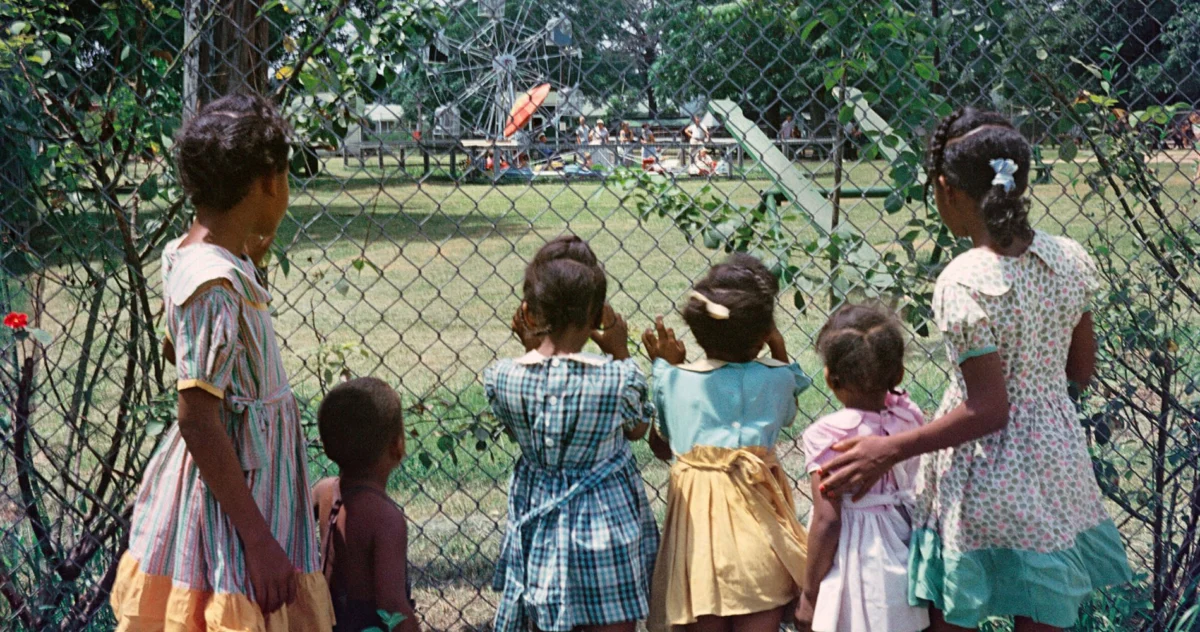
A significant portion of the exhibition is dedicated to Parks’ "Segregation Story" series, commissioned by Life Magazine in 1956 and published under the title "The Restraints: Open and Hidden." This groundbreaking series offered an unprecedented look into the daily lives of Black families living under Jim Crow segregation in Alabama. Works like Outside Looking In, Department Store, and Mr. and Mrs. Albert Thornton from this series are included, each a testament to Parks’ ability to capture both the overt oppression and the subtle dignities of his subjects.
The Gordon Parks Foundation elaborates on the profound impact of this series: "His Segregation Story series humanised the effects of Jim Crow segregation by following the daily lives of Black families in Alabama, creating narratives that consistently expressed the dignity and complex humanity of his subjects, starkly contrasting with mainstream representations." Parks often penned the accompanying articles for his photographic essays, a practice that allowed him to "inject his personal perspective and challenge stereotypes," further enhancing the authenticity and impact of his storytelling. This integrated approach, combining visual artistry with incisive journalism, was revolutionary for its time and remains a benchmark for socially conscious reporting.
A Legacy Forged in Struggle: Parks’ Life and Times
Gordon Parks was born in the early 20th century, a period when systemic racial oppression was deeply entrenched across the United States. Following the Civil War and the nominal emancipation of four million enslaved people in 1865, the promise of a more just America quickly eroded. The Reconstruction era, a brief period of federal intervention to protect the rights of newly freed Black Americans, was swiftly dismantled. By the late 19th and early 20th centuries, Jim Crow laws had codified racial segregation, stripping Black citizens of their voting rights, economic opportunities, and fundamental human dignity. Terroristic violence, including lynchings, was rampant, enforcing a racial hierarchy that denied Black Americans their constitutional entitlements.
Parks’ own life experiences were deeply shaped by this oppressive environment. He witnessed and endured the psychological and physical toll of racial hierarchy. Yet, amidst this pervasive struggle, he also recognized and celebrated the "strength, resilience, artistry, resolve, and beauty that animated Black life." His work consistently highlighted the profound courage and cultural richness of Black communities, counteracting the dehumanizing narratives propagated by mainstream media.
His career coincided with the rise of the Civil Rights Movement, a period of intense activism and social upheaval. Parks was energized by this resistance, documenting the burgeoning movement, the emergence of "Black power," and the triumphs of Black athletes, musicians, and community leaders. He captured these "counter-narratives to racial discrimination" with a brilliance that helped challenge the legitimacy of the racial caste system. By illuminating the pain of segregation, the despair of poverty, the violence of law enforcement, and the hypocrisy of an America preaching democracy abroad while denying it at home, Parks’ art played a crucial role in mobilizing public opinion and inspiring a new generation of leaders to dismantle Jim Crow. He helped envision a more hopeful future, echoing the words of Langston Hughes, "America be America."
The Gordon Parks Foundation: Two Decades of Preserving a Vision
The exhibition arrives as The Gordon Parks Foundation commemorates its 20th anniversary, a milestone that underscores its enduring commitment to preserving and promoting Parks’ legacy. Established to permanently preserve the work of Gordon Parks, the Foundation also fosters artistic and educational activities that advance the understanding of his contributions to art and humanity. Through exhibitions, publications, and educational programs, the Foundation ensures that Parks’ powerful visual narratives continue to inspire and educate new generations about the ongoing struggle for social justice. Their partnership with Alison Jacques Gallery for Gordon Parks: We Shall Not Be Moved exemplifies their dedication to bringing Parks’ work to broader audiences and reaffirming its contemporary relevance.
Alison Jacques, a prominent contemporary art gallery, serves as the presenting partner, providing a vital platform for this historically significant exhibition. Their collaboration with The Gordon Parks Foundation highlights the growing recognition within the art world of the critical role art plays in social commentary and historical remembrance. The presentation of such an impactful show in a contemporary gallery setting ensures that Parks’ work engages not only art historians and enthusiasts but also a wider public interested in the intersection of art, history, and social change.
Contemporary Echoes: Art as Resistance in a Challenged Era
Bryan Stevenson argues passionately that Parks’ images hold renewed significance in the current sociopolitical climate. He states, "In a moment when there is an intense and active effort of erasure, retreat from civil rights and silencing of Black voices and history in the United States," Gordon Parks’ images "provide insight and relevance to our current discourse. His work absolutely suggests resistance to bigotry and oppression." This assertion transforms the exhibition from a historical retrospective into a potent contemporary intervention.
Indeed, the present moment is characterized by significant challenges to historical truth and civil rights gains. Across the United States, there are concerted efforts to restrict discussions of race and racism in education, to minimize the harms of slavery, lynching, and segregation, and to demonize communities of color. The political landscape sees ongoing attempts to suppress Black political power through various legislative schemes, with some judicial bodies appearing poised to legitimize these efforts. This retreat from a full commitment to equality and justice for all creates an environment where the lessons of history are threatened with erasure.
In this context, the art and photography of Gordon Parks become indispensable. His work meticulously details "the reality and history of America that is now being distorted and denied." Parks’ unflinching gaze captured the essence of systemic injustice and the resilience of those who resisted it. His images serve as undeniable historical documents, powerful counter-narratives to any attempt to whitewash or distort the American past. As Stevenson emphasizes, "This exhibition is history, education and protest." It reminds viewers that the struggle for civil rights is not a closed chapter but an ongoing narrative, one that demands continued vigilance and action.
The Call to Action: We Shall Not Be Moved
The exhibition culminates in a powerful call to action, echoing the spiritual from which its title is drawn. In a world where silence might seem safer amidst rising censorship, historical revisionism, and attacks on artistic freedom, Gordon Parks stands as an artist who "absolutely rejected silence or retreat." He understood the profound persistence and strength of the human spirit, refusing to lay down his camera even in the face of immense prejudice and power. His art, therefore, serves as a retort to those who seek to force Americans back to an earlier era of perceived greatness, an era defined by racial and gender hierarchy.
The artistry of Gordon Parks makes it clear that turning back, remaining silent, or retreating from the pursuit of true justice are not options. His work inspires a profound commitment to truth-telling and advocacy. The exhibition, therefore, is not merely a display of photographs; it is an affirmation of unwavering resolve. It articulates what many are prepared to declare: "We shall not be moved." Through Parks’ enduring legacy, the exhibition champions the belief that art can continue to be a vital force in shaping a more equitable and just society, compelling us all to confront historical injustices and work towards a future where dignity and equality are universally upheld.