In an era characterized by unprecedented volatility, uncertainty, complexity, and ambiguity (VUCA), exemplified by global pandemics, geopolitical shifts, rapid technological advancements, and evolving socio-economic landscapes, the strategic composition of organizational teams has never been more vital. While significant strides have been made in championing demographic diversity—focusing on gender, race, ethnicity, and other visible attributes—a growing body of research increasingly highlights the often-overlooked yet profoundly impactful dimension of cognitive diversity. This distinct form of diversity, centered on varying thought processes, problem-solving approaches, and information processing styles, is emerging as a critical differentiator for innovation, resilience, and superior performance in complex environments.
Defining Cognitive Diversity: A Deeper Dive into Thought Processes
Cognitive diversity refers to the differences in how individuals perceive, process, and apply information, solve problems, and approach new or uncertain situations. It encompasses a spectrum of mental frameworks, perspectives, and intellectual styles, extending far beyond the more commonly addressed demographic markers. While demographic diversity enriches teams with varied life experiences and cultural viewpoints, cognitive diversity delves into the fundamental mechanisms of thought, offering a wider array of approaches to challenges. This can include differences in personality styles (e.g., introversion vs. extroversion), risk appetite, preferences for detail versus big-picture thinking, analytical versus intuitive reasoning, and the propensity for convergent versus divergent thinking. The premise is that a team composed of individuals who think differently, even if they share similar backgrounds, will inherently possess a richer repertoire of solutions and perspectives than a team where members think alike.
The business case for diversity, in its broadest sense, has long been established. Diverse teams are consistently shown to enhance innovation, improve problem-solving capabilities, and mitigate risks. When these diverse perspectives are coupled with inclusive leadership, the result is not only better decision-making but also smoother implementation due to increased buy-in, trust, and a shared sense of ownership. However, many organizational diversity, equity, and inclusion (DEI) initiatives have historically focused on achieving demographic parity and representation, sometimes inadvertently neglecting the profound benefits derived from a deliberate cultivation of cognitive differences. Recognizing and harnessing cognitive diversity is the next frontier in maximizing the potential inherent in a truly diverse workforce.
The Foundational Research: Reynolds and Lewis on High-Performing Teams
Decades of meticulous research by professors Alison Reynolds and David Lewis have provided foundational insights into the mechanisms of cognitive diversity. Their extensive studies have focused on understanding how individuals approach and engage with new, uncertain, and complex situations, and what characteristics define the most effective and fastest problem-solving teams. Their findings consistently underscore two critical elements for high-performing teams: cognitive diversity and psychological safety.
Reynolds and Lewis observed that teams excelling in complex scenarios typically exhibit high levels of curiosity and experimentation. Conversely, teams lacking these traits often fell prey to groupthink and conformity or, at the other extreme, became overly combative and unproductive. To systemize their observations, their research categorizes cognitive diversity into two primary types, drawing upon an assessment tool initially developed by psychiatrist Peter Robertson, which evaluates information processing style and expertise facilitation:
-
Knowledge and Information Processing: This dimension assesses an individual’s inherent preference when confronted with new situations, uncertainty, and complex issues. Some individuals predominantly prefer to consolidate and implement existing knowledge, leaning on established frameworks and proven solutions. Others exhibit a strong preference for generating new knowledge, exploring novel concepts, and challenging conventional wisdom. A cognitively diverse team would ideally comprise individuals across this spectrum, ensuring both grounded application and innovative exploration.
-
Perspective and Expertise Facilitation: This aspect delves into how individuals leverage expertise within a team setting. It examines whether an individual prefers to apply their own specialized knowledge and expertise primarily, or if they are more inclined to orchestrate and synthesize the ideas and expertise of others. Teams with diversity in this area benefit from both deep individual contributions and a collaborative synthesis of collective intelligence, preventing reliance on a single point of view or a siloed approach to problem-solving.
The synergy between these two parameters is crucial. Reynolds and Lewis found that teams with a high degree of diversity across both knowledge processing and expertise facilitation consistently perform best in novel, uncertain, and complex environments. Such teams inherently access a broader reservoir of knowledge and a wider array of perspectives. When combined with a culture of psychological safety, this diversity fosters an environment where constructive conflict, open exploration, and the challenging of assumptions are not only tolerated but actively encouraged, leading to more robust and innovative outcomes.
Empirical Evidence and Quantitative Benefits
The research by Reynolds and Lewis is corroborated by a growing body of empirical evidence from various institutions and consulting firms, all pointing to the tangible benefits of cognitive diversity.
-
Innovation and Problem-Solving: A 2017 Harvard Business Review article, building on Reynolds and Lewis’s work, highlighted that cognitively diverse teams solve problems faster. This efficiency stems from the ability to generate a wider range of solutions and perspectives, leading to more thorough analysis and creative breakthroughs. McKinsey & Company’s research consistently demonstrates that companies with diverse leadership teams, including cognitive diversity, are more likely to outperform their peers in terms of profitability and value creation. A diverse thinking pool prevents "tunnel vision" and encourages exploration of unconventional paths.
-
Risk Mitigation and Decision Quality: Homogeneous teams are often susceptible to confirmation bias and groupthink, leading to flawed decision-making and overlooked risks. Cognitively diverse teams, by nature, challenge assumptions and scrutinize proposals from multiple angles, leading to more comprehensive risk assessments and more resilient strategies. Research by Deloitte Australia, for instance, has underscored that inclusive teams, which inherently leverage cognitive diversity, make better business decisions up to 87% of the time. This translates directly into reduced exposure to unforeseen challenges and enhanced strategic foresight.
-
Organizational Resilience and Adaptability: In rapidly changing market conditions, an organization’s ability to adapt and pivot is paramount. Teams that are cognitively diverse are better equipped to anticipate changes, interpret complex data, and devise agile responses. Their varied thinking styles allow them to see emerging trends and potential disruptions that a homogeneous team might miss, thereby bolstering organizational resilience and ensuring sustained competitive advantage. Studies have shown that organizations embracing cognitive diversity exhibit greater agility and faster response times to market shifts.
The Evolution of Diversity Initiatives: From Representation to Cognition
The journey of diversity in organizational discourse has been one of continuous evolution. Early efforts in the mid-20th century were largely compliance-driven, focusing on equal employment opportunity (EEO) and affirmative action to address historical discrimination. The late 20th and early 21st centuries saw a pivot towards "diversity and inclusion" as a business imperative, emphasizing the moral and economic benefits of representation across gender, race, age, and other demographic categories. This phase brought about significant awareness and laid the groundwork for more equitable workplaces.
However, the current discourse marks a maturation, moving beyond mere visible representation to a deeper understanding of how differences in thought contribute to organizational success. While demographic diversity remains crucial for ensuring equity and bringing diverse life experiences to the table, the emerging consensus is that true leverage comes when this is combined with cognitive diversity. The challenge now lies in how organizations can move from acknowledging the importance of cognitive diversity to actively identifying, fostering, and integrating it into their team structures and leadership practices. The focus on demographic diversity, while vital, must not overshadow the equally critical, albeit less visible, benefits of diverse ways of processing information, applying expertise, and approaching problems.
Challenges in Implementation: Overcoming the Overlooked Aspect
Despite the compelling evidence, many organizations struggle to adequately prioritize cognitive diversity. One significant challenge is its inherent invisibility compared to demographic traits. It is easier to measure gender ratios or racial representation than to assess an individual’s cognitive style. This makes it harder to identify gaps and implement targeted interventions. Furthermore, fostering cognitive diversity often requires navigating constructive conflict and challenging established norms, which can be uncomfortable for leaders and team members accustomed to consensus-driven environments.
Another hurdle is the prevalent misconception that "diversity of thought" will naturally emerge once demographic diversity is achieved. While demographic diversity often correlates with some level of cognitive diversity, it is not a guarantee. Two individuals from different demographic backgrounds might still share similar cognitive styles, leading to a less diverse thinking pool than anticipated. This highlights the need for intentional strategies that go beyond surface-level diversity metrics.
Inclusive Leadership: The Linchpin for Cognitive Diversity’s Success
The full potential of cognitive diversity can only be realized within an inclusive culture, spearheaded by inclusive leadership. Leaders play a pivotal role in shaping an environment where team members feel treated with fairness and respect, valued for their unique contributions, and possess a strong sense of belonging. Crucially, inclusive leaders actively invite team members to speak up, encouraging them to share their diverse perspectives and empowering them to contribute fully without fear of retribution or marginalization.
Deloitte Australia’s diversity research underscores the profound impact of leadership behavior, indicating that it can account for up to a 70 percentage point difference between the proportion of employees who feel highly included and those who do not. For members of minority groups, the effect of inclusive leadership is even more pronounced, directly impacting their engagement, psychological safety, and retention.
However, many leaders openly admit to feeling ill-equipped to act inclusively, particularly when it comes to facilitating dialogues around exclusion or discrimination. There is a common sentiment that they lack the "how-to" knowledge and fear making mistakes or being blamed for missteps. This gap between awareness and action represents a significant barrier to cultivating cognitively diverse and inclusive environments.
Actionable Strategies and Frameworks
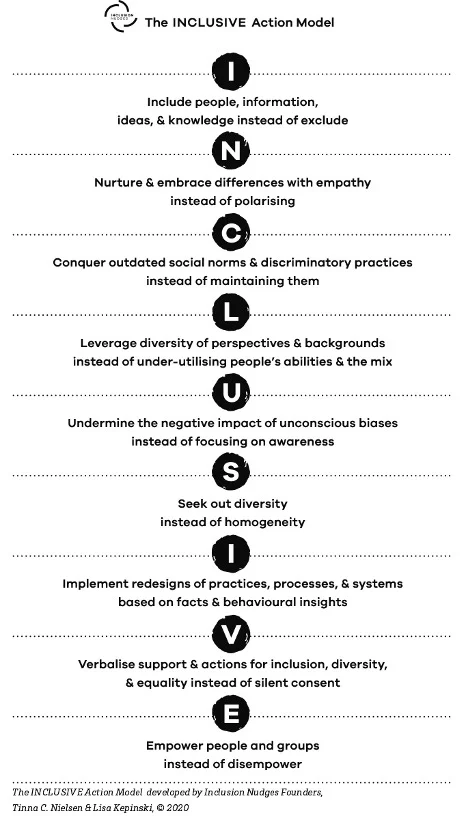
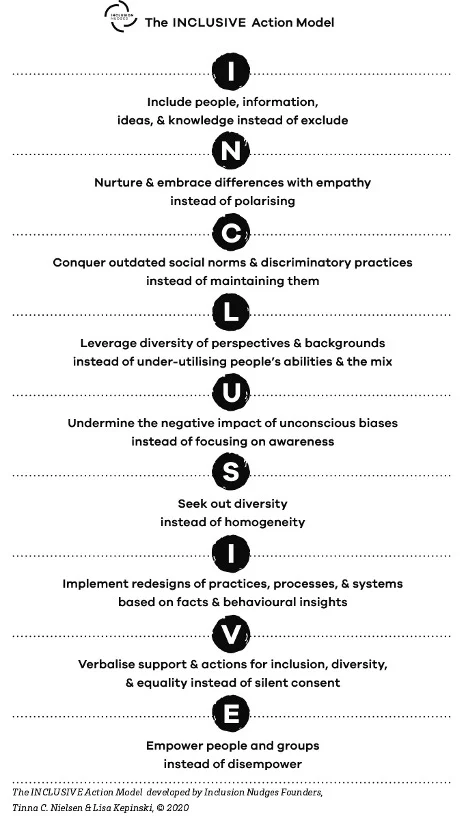
To bridge this gap, practical frameworks and tools are essential. The "Inclusion Nudges Inclusive Action Model," developed by Tinna C. Nielsen and Lisa Dingelstad, offers a holistic approach to creating inclusive cultures, structures, and behaviors. This model provides an overview of the multifaceted aspects that leaders and team members must address concurrently to foster genuine inclusion. It recognizes that culture change is not a top-down mandate but a continuous process driven by consistent, intentional actions at all levels.
Furthermore, the "Inclusion Nudges for Leaders" guide, authored by Nielsen and Dingelstad, specifically addresses the need for actionable strategies. This guide provides 30 easy-to-apply inclusive actions, leveraging behavioral science principles (nudges) to make inclusion the default and norm in leadership practices. By providing step-by-step descriptions, the guide empowers leaders to confidently apply proven designs in their daily work. This practical support increases leaders’ confidence in taking initial inclusive actions, which in turn sparks a wider, self-reinforcing cycle of cultural change. The goal is to dismantle the inertia caused by leaders feeling uncertain about how to act or fearing negative repercussions, thereby accelerating the transition to truly inclusive and cognitively diverse organizations.
Broader Societal and Economic Implications
The deliberate cultivation of cognitive diversity extends its impact beyond individual organizations, carrying significant societal and economic implications. Organizations that successfully harness cognitive diversity are not only more profitable and innovative but also contribute to a more robust and adaptable economy. They are better positioned to tackle complex global challenges, from climate change to public health crises, by bringing a wider array of intellectual horsepower to bear on solutions.
Moreover, a focus on cognitive diversity can foster a more meritocratic environment, where individuals are valued for their unique contributions and ways of thinking, rather than solely for their adherence to conventional norms. This can lead to greater equity in opportunities and a more engaged, satisfied workforce. As the world continues to grapple with unprecedented levels of complexity, the ability of organizations and societies to effectively leverage the full spectrum of human intellect—especially cognitive diversity—will be a defining factor in their capacity for progress and sustainable success.
In conclusion, while demographic diversity remains a cornerstone of equitable and representative workplaces, the strategic imperative of cognitive diversity is undeniable in today’s intricate global landscape. By intentionally composing teams that embrace a wide range of thinking styles, supported by strong inclusive leadership and psychological safety, organizations can unlock unparalleled levels of innovation, problem-solving prowess, and resilience, ensuring not just survival, but thriving in the face of future uncertainties.