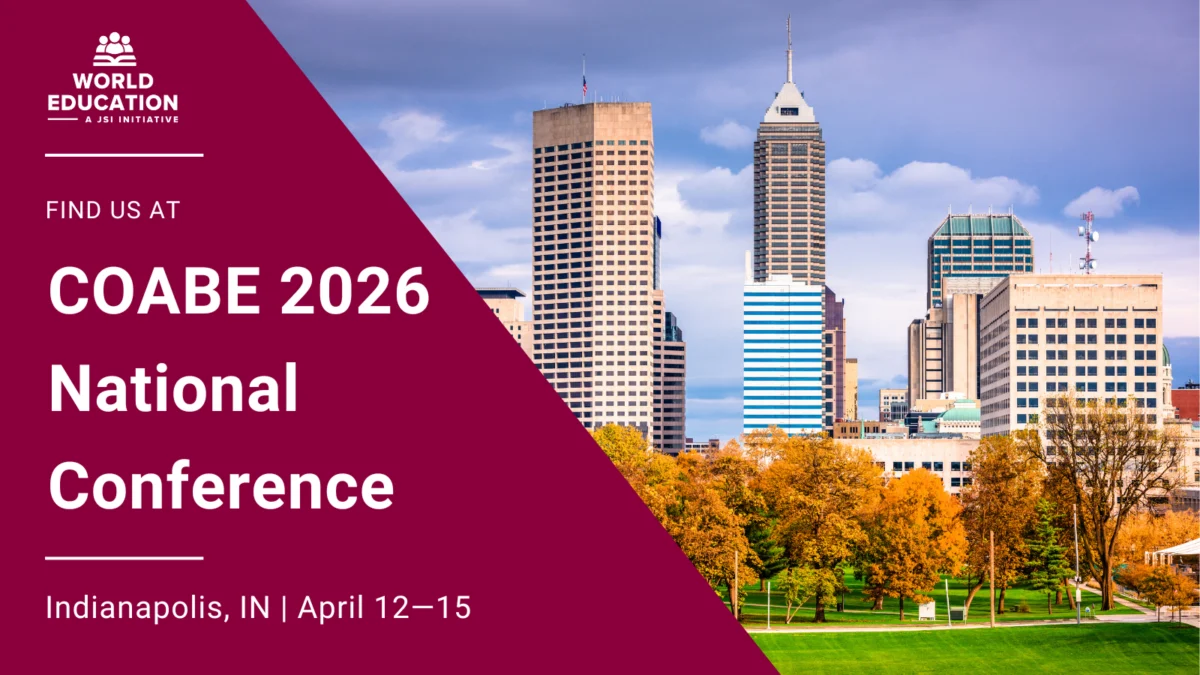
World Education, a prominent initiative of JSI Research & Training Institute, Inc., has officially announced its comprehensive participation in the Commission on Adult Basic Education (COABE) 2026 National Conference, scheduled to take place in Indianapolis, Indiana, from April 12 to April 15. As the landscape of adult education undergoes a rapid transformation driven by technological advancement and shifting economic demands, World Education’s delegation of experts will present a series of workshops and sessions focused on the critical intersection of digital literacy, artificial intelligence, and professional development. The conference, which serves as a cornerstone event for thousands of educators, administrators, and policymakers across the United States, provides a platform for World Education to share evidence-based strategies aimed at closing the digital divide and enhancing learning outcomes for adult students.
Contextualizing the 2026 National Conference
The COABE National Conference is widely recognized as the premier gathering for the adult education sector. In 2026, the event arrives at a pivotal moment. National data from the Program for the International Assessment of Adult Competencies (PIAAC) continues to highlight significant gaps in literacy and numeracy among the U.S. adult population, with an estimated 43 million adults possessing low literacy skills. Furthermore, as the workforce becomes increasingly digitized, the "digital skill gap" has emerged as a primary barrier to economic mobility. World Education’s presence at the conference is designed to address these systemic challenges by providing practitioners with the tools and frameworks necessary to integrate modern technology into traditional classroom settings.
The 2026 theme emphasizes innovation and accessibility, reflecting a broader shift in the field toward "edtech" integration. World Education’s involvement is particularly significant given its history of systems strengthening and its role as a leader in applied research. By presenting in Indianapolis, the organization aims to bridge the gap between high-level policy and grassroots classroom practice.
Monday, April 13: Establishing Frameworks for Digital Skill Development
The formal programming for World Education begins on Monday, April 13, with a series of sessions designed to provide immediate, actionable resources for educators. The day opens with a presentation titled "Using BRIDGES Skills Checklists to Drive Digital Skills Development in Any Context," led by Jeff Goumas from 8:00 AM to 9:10 AM in the JW Grand Ballroom 2. This session, available to both in-person and virtual attendees, introduces the BRIDGES framework—a tool designed to standardize the assessment of digital competencies. In an era where "digital literacy" is often a vague term, these checklists provide a concrete roadmap for both learners and instructors to track progress across various software and hardware environments.
Later in the morning, from 11:50 AM to 1:00 PM, Sandy Goodman and Catalina González will present "From Policy to Practice: Implementation Lessons from Boston’s Digital Literacy Initiative." This session in JW Grand Ballroom 4 will analyze a specific urban case study, providing a blueprint for how municipal governments and educational non-profits can collaborate to fund and execute large-scale literacy programs. By detailing the challenges and successes of the Boston initiative, the presenters will offer a scalable model for other metropolitan areas facing similar demographic and economic hurdles.
The afternoon concludes with a research-heavy session, "Practical Solutions from Research: Digital Tools to Support Teaching and Learning from the CREATE Network," held from 3:50 PM to 5:00 PM in Room 205. Featuring Jen Vanek and Jeff Goumas alongside teams from the American Institutes for Research (AIR), this presentation highlights the importance of data-driven instruction. The CREATE Network (National Center for Research on Adult Education for Teaching and Learning) has been instrumental in evaluating which digital tools actually yield improvements in adult learner retention and comprehension, and this session will translate those academic findings into practitioner-friendly strategies.
Tuesday, April 14: The Integration of Artificial Intelligence and Open Resources
Tuesday’s agenda shifts toward the cutting edge of educational technology, specifically focusing on the role of Generative AI (GenAI). Rachel Riggs will lead a critical morning session from 8:00 AM to 9:10 AM titled "Aligning AI Literacy with Learning and Work Goals in Adult Ed." As AI becomes a standard tool in the modern workplace, World Education argues that adult learners must not only know how to use these tools but must also understand the ethical and practical implications of AI output. This session aims to demystify AI for educators, showing how it can be used to personalize learning and prepare students for high-demand jobs.
Simultaneously, the focus on accessible content remains strong. From 11:50 AM to 1:00 PM, Jen Vanek and Jeff Goumas, joined by Stephen Sireci of UMass Amherst, will present "Free and Open Online Literacy Curriculum: Leveraging SkillBlox and ASAP for Adult Readers." SkillBlox has gained national attention as a platform that aggregates free, high-quality open educational resources (OER), allowing teachers to build custom learning playlists without the high costs associated with traditional textbooks.
The 2:00 PM to 3:10 PM timeslot on Tuesday offers a dual-track opportunity for attendees. In Room 206, Vanek and Goumas will join Stephanie Cronen and Neha Nanda of AIR for "Practitioner-Friendly Findings: How to Leverage Free Research-based Resources to Teach In-Demand Skills." This session is designed to help educators navigate the overwhelming amount of free content available online, identifying which resources are truly backed by pedagogical research. Meanwhile, in JW Grand Ballroom 3, Rachel Riggs will host "Generative AI and the EdTech Maker Space: Leveraging GenAI to Fill Learning Resource Gaps." This workshop explores how teachers can use AI to generate their own customized teaching materials—such as reading passages, quizzes, and vocabulary lists—thereby solving the perennial problem of the lack of age-appropriate materials for adult learners with low literacy levels.
Wednesday, April 15: Professional Development and Sustainable Implementation
The final day of the conference focuses on the sustainability of educational initiatives through professional development and specialized instructional strategies. Dani Scherer will present "Maximum Impact Professional Development: A Three-Pronged Approach" from 11:50 AM to 1:00 PM in Room 209. This session addresses a common problem in the sector: the "one-and-done" workshop model. Scherer will propose a more holistic approach that includes ongoing coaching, peer learning communities, and administrative support, ensuring that new skills are actually implemented in the classroom over the long term.
In the afternoon, Eliana Stanislawski will lead two back-to-back sessions that focus on the practicalities of digital instruction. The first, "EdTech in Action: Structuring a Digital Literacy Learning Series for Adult Educators" (1:30 PM to 2:40 PM), provides a curriculum for training the trainers. The second, "Engaging Strategies for Online Instruction of Literacy-Level Adults" (3:00 PM to 4:10 PM), tackles one of the most difficult challenges in the field: keeping learners with limited reading skills engaged in a virtual environment. Stanislawski’s expertise in user experience and inclusive design will be central to these discussions, providing educators with visual and interactive techniques to maintain student motivation.
Supporting Data and Sector Impact
The significance of World Education’s 2026 schedule is underscored by recent labor statistics. According to the U.S. Bureau of Labor Statistics, nearly 80% of jobs that require a high school diploma or less now also require some level of digital proficiency. However, a 2023 report by the National Skills Coalition found that roughly one-third of workers lack the digital skills necessary to enter these roles.
By focusing on AI and digital literacy at COABE, World Education is positioning itself as a vital intermediary in the national effort to modernize the workforce. "The transition to a digital-first economy cannot leave behind the millions of adults currently enrolled in basic education programs," noted an industry analyst following the announcement of the conference schedule. "The move toward integrating Generative AI specifically represents a major leap forward in how we think about equity in education."
World Education’s collaborative approach—working with institutions like UMass Amherst and the American Institutes for Research—further validates the sessions. These partnerships suggest that the strategies presented are not merely theoretical but are grounded in rigorous evaluation and multi-sector cooperation.
Broader Implications for Policy and Practice
The themes presented by World Education in Indianapolis reflect a broader shift in federal policy, particularly regarding the Workforce Innovation and Opportunity Act (WIOA). As policymakers look toward the next reauthorization of WIOA, there is increasing pressure to include digital literacy as a core requirement for adult education funding. World Education’s sessions on "Policy to Practice" and "Research-based Resources" provide the evidentiary basis that legislators often require when drafting such mandates.
Furthermore, the emphasis on "Free and Open Online Literacy Curriculum" addresses the chronic underfunding of the adult education sector. By empowering educators to use OER and AI-generated content, World Education is helping programs maximize limited budgets while still providing high-quality, modern instruction.
As the COABE 2026 National Conference approaches, the sessions led by World Education are expected to draw significant attendance, both in person and via the virtual platform. The organization’s commitment to "fostering enduring partnerships" and "systems strengthening" remains a central pillar of its mission. For the thousands of educators attending the Indianapolis event, these presentations offer more than just information; they offer a vision for a more inclusive, technologically proficient future for adult learners across the globe.
World Education continues to invite stakeholders, from state directors to classroom volunteers, to engage with their experts throughout the four-day event. Through continued research, capacity development, and the application of emerging technologies, the initiative remains at the forefront of the movement to ensure that education remains a basic human right, accessible to all in the digital age.