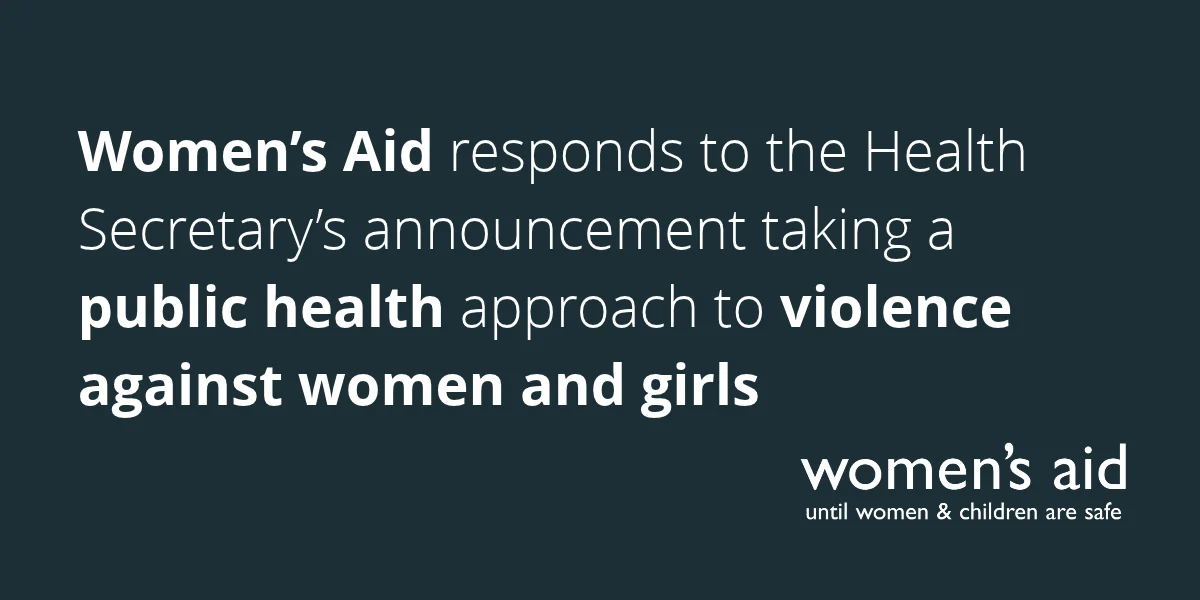
The United Kingdom government has officially announced a sweeping transformation in its strategy to tackle violence against women and girls (VAWG), formally shifting toward a public health methodology. This major policy pivot, unveiled by the Health Secretary earlier this week, has been met with widespread acclaim from healthcare professionals, advocacy groups, and social policy experts alike. For decades, institutional responses to domestic abuse and gender-based violence have been predominantly anchored within the criminal justice system. However, mounting evidence regarding low reporting rates, systemic barriers to justice, and the pervasive nature of abuse has necessitated a broader, preventative framework.
The newly introduced strategy acknowledges that healthcare settings—ranging from general practitioner surgeries and emergency departments to mental health clinics and sexual health services—represent critical frontline touchpoints for victims. By integrating routine inquiry, trauma-informed care, and robust referral pathways into everyday medical practice, the government aims to identify abuse early and intervene before situations escalate into fatal tragedies. Central to this new chapter is the appointment of a dedicated national Clinical Head of VAWG, a role designed to oversee the clinical implementation of these policies, standardize training across the National Health Service (NHS), and ensure that healthcare professionals are adequately equipped to handle disclosures of abuse with sensitivity and expertise.
Context and Background: The Evolution of VAWG as a Public Health Crisis
To understand the significance of this week’s announcement, it is necessary to examine the historical trajectory of how gender-based violence has been categorized and managed within the United Kingdom. Historically, domestic abuse, sexual assault, and harassment have been treated primarily as criminal matters. While law enforcement agencies play an undeniably vital role in apprehending perpetrators and maintaining public safety, criminal justice responses inherently rely on victims coming forward, enduring protracted investigative processes, and participating in adversarial court proceedings.
Data collected over the past twenty years has consistently demonstrated that the traditional criminal justice pipeline fails the vast majority of victims. According to statistics from the Office for National Statistics (ONS) and specialized sector watchdogs, fewer than one in five women feel confident or secure enough to report their experiences of abuse to the police. This immense reporting gap is driven by a multitude of factors, including fear of reprisal, social stigma, institutional mistrust, financial dependence on perpetrators, and the psychological trauma associated with reliving abuse through formal legal channels.
In response to these systemic failures, public health advocates, epidemiologists, and domestic abuse charities have long campaigned for a paradigm shift. Treating violence against women and girls as a public health issue reframes the problem away from solely punishing perpetrators after the fact toward preventing harm, treating the physical and psychological consequences of trauma, and addressing the social determinants of abuse. Under a public health model, violence is viewed much like a communicable disease or chronic illness: it has risk factors, symptoms, and long-term health consequences that can be tracked, prevented, and treated through coordinated community and systemic interventions.
Chronology of Policy Shifts Leading to the New Health Strategy
The journey toward a fully integrated public health approach to VAWG has evolved through several key milestones over the last decade, marked by increasing pressure from civil society and parliamentary inquiries.
In 2015, the landmark cross-government strategy on violence against women and girls began emphasizing early intervention, though funding and execution remained heavily skewed toward policing and criminal justice. Over the subsequent years, healthcare bodies such as the Royal College of Nursing and the British Medical Association began publishing internal guidelines urging their members to treat domestic abuse as a clinical priority.
By 2021, the Home Affairs Select Committee and various health committees released comprehensive reports highlighting the glaring gaps in NHS training regarding domestic abuse. Studies revealed that many healthcare practitioners felt under-trained and ill-equipped to recognize the subtle, non-physical signs of coercive control, emotional abuse, and economic exploitation.
The turning point accelerated between 2022 and 2023, following several high-profile domestic homicide cases that exposed severe failures in multi-agency communication and risk assessment. Independent domestic homicide reviews repeatedly pointed to missed opportunities within healthcare settings where victims had presented with unexplained injuries, anxiety, or chronic pain conditions—symptoms frequently linked to ongoing domestic abuse—without the underlying cause being identified.
The culmination of these persistent findings and advocacy efforts materialized this week with the Health Secretary’s formal announcement. By institutionalizing the public health approach, the government has signaled that tackling VAWG is no longer merely a law enforcement duty, but an essential component of national healthcare delivery.
Financial Commitments and Resource Allocation
While the conceptual framework of the new policy has received near-universal praise, sector stakeholders have scrutinized the financial mechanisms underpinning it. The government package includes an initial investment of £5 million per year specifically earmarked for improving referral pathways and bolstering local service provision.
While health experts and domestic abuse charities acknowledge that any influx of funding is a positive development, significant concerns have been raised regarding the scale of the investment relative to the immense demand. Independent sector organizations point out that local domestic abuse services have faced severe austerity-driven budget cuts over the past decade, leaving refuges, community outreach programs, and advocacy networks stretched to their absolute limits.
To maximize the impact of the £5 million annual allocation, advocacy groups have emphasized the critical need for funds to reach frontline specialist services directly. Furthermore, experts are urging the government to establish clear, transparent expectations for Integrated Care Boards (ICBs)—the statutory NHS organizations responsible for developing plans for meeting health needs in local areas.
Crucially, stakeholders are calling for procurement and tendering processes that do not inadvertently exclude grassroots organizations. Specifically, life-saving “by and for” domestic abuse services—which are founded, led, and run by the specific communities they serve, such as Black, Asian, minority ethnic, and migrant women—possess unique expertise and trust within marginalized populations. Ensuring these organizations can successfully participate in funding bids is viewed as a prerequisite for achieving equitable health outcomes across diverse demographics.
The Unique Role of Healthcare Services in Early Intervention
Healthcare providers occupy a privileged and trusted position within society. For many women and girls experiencing abuse, a medical professional may be the only external person they interact with away from the direct surveillance of a perpetrator. General practices, antenatal clinics, sexual health hubs, and emergency departments are therefore optimal environments for discreetly identifying abuse and offering safe pathways to support.
Research indicates that victims of domestic abuse utilize health services at a significantly higher rate than non-abused individuals, frequently presenting with somatic complaints such as chronic headaches, gastrointestinal disorders, sleep disturbances, depression, and anxiety. Despite this high utilization rate, opportunities for intervention are frequently missed due to a lack of routine inquiry and standardized screening protocols.
By adopting a public health approach, the NHS is moving toward systematic identification models. These models encourage clinicians to ask routine, sensitive questions about safety and relationships in safe clinical environments, much like screening for high blood pressure or mental health struggles. When abuse is identified, healthcare workers can connect patients directly with independent domestic violence advisors (IDVAs) embedded within or linked to health facilities, bridging the gap between clinical medicine and specialist social support.
Reactions from Stakeholders, Medical Professionals, and Advocacy Groups
The policy announcement has prompted a wave of formal responses from across the healthcare sector, legal reform groups, and domestic abuse charities.
Dr. Sarah Jenkins, spokesperson for a coalition of frontline medical professionals, remarked on the transformative potential of the clinical leadership appointment: "For years, doctors, nurses, and midwives have stood on the frontlines witnessing the devastating physical and psychological fallout of domestic abuse, often feeling helpless due to fragmented referral systems. The appointment of a national Clinical Head of VAWG gives us a centralized voice and a clear mandate. This is not just about treating broken bones or managing trauma; it is about saving lives by intervening before violence reaches a fatal threshold."
Meanwhile, national domestic abuse charities have released joint statements commending the government’s directional shift while maintaining a pragmatic stance on resource distribution. Representatives emphasized that while the integration of healthcare pathways is a masterstroke in preventive strategy, its success relies entirely on sustainable, long-term financial backing.
"We welcome the Health Secretary’s commitment to viewing violence against women and girls through a public health lens," noted a senior policy officer from a leading domestic abuse advocacy organization. "However, £5 million per year is a modest sum when measured against the sheer scale of the crisis we face nationwide. We urge the government to view this announcement as the foundational first step. The upcoming budgetary allocations must scale up proportionately to match the ambition of this policy."
Legal and human rights observers have similarly praised the initiative for acknowledging that criminal justice solutions alone are insufficient. Legal analysts point out that because the vast majority of perpetrators never face prosecution—owing to low conviction rates and pervasive evidential hurdles—preventative healthcare interventions provide an essential safety net that bypasses the courtroom entirely, offering immediate practical assistance and psychological stabilization to survivors.
Broader Implications and Future Outlook
The adoption of a public health approach to VAWG carries profound implications for the future of public policy, social care, and healthcare delivery in the United Kingdom.
First and foremost, it signals a cultural shift within the NHS. Training curricula for medical students, nursing candidates, and practicing clinicians will need to be systematically overhauled to incorporate mandatory education on coercive control, trauma-informed care, and safeguarding protocols. This ensures that future generations of healthcare workers enter the workforce with a comprehensive understanding of gender-based violence as a primary health determinant.
Secondly, the strategy forces a cross-sectoral collaboration that has historically been weak or bureaucratic. Effective implementation requires seamless communication channels between the NHS, local authorities, social services, housing providers, and specialist third-sector charities. If executed correctly, this multi-agency framework will dismantle institutional silos, ensuring that a woman who discloses abuse in a hospital setting receives coordinated support spanning emergency housing, legal advocacy, and psychological therapy.
Finally, the success of this policy will be measured by longitudinal data tracking. Key performance indicators will likely include increases in early identifications within healthcare settings, higher rates of successful referrals to specialist services, and, ultimately, a reduction in the prevalence and lethality of domestic abuse.
As the newly appointed national Clinical Head of VAWG assumes office and begins the complex work of rolling out these clinical pathways, the eyes of the medical community, advocacy groups, and the public remain fixed on Westminster. This week’s announcement has set a ambitious standard; the challenge ahead lies in translating high-level political intent into durable, adequately funded, and life-saving frontline realities for women and girls across the country.