May 3 marks World Press Freedom Day, a global observance underscoring the fundamental right to freedom of the press, recognized by the United Nations as indispensable to democracy and the rule of law. However, in the isolated and often neglected Indigenous communities of Guatemala, journalists navigate this critical terrain under profoundly adverse conditions, frequently lacking the protective framework of specific legislation. The recent, tragic news of the murder of journalist Carlos Cal Ical, from the department of Cobán in northern Guatemala, during the last week of April 2026, has sent shockwaves through the journalistic community, igniting urgent demands for justice and an end to impunity. This incident serves as a stark reminder of the precarious existence faced by those who strive to inform and empower their communities against a backdrop of systemic neglect and escalating risks.
Escalating Threats and a Climate of Fear
The gravity of the situation for journalists in Guatemala is underscored by a stark report from Human Rights Watch in 2026, which detailed the critical challenges faced by media professionals. The report highlighted the plight of 19 journalists currently in exile and documented over 4,000 incidents of aggression against human rights defenders and media workers in 2024 alone. Compounding this grim picture, Reporters Without Borders, in a report published in August 2025, identified journalists covering extractive projects, forced evictions, and other sensitive environmental and social issues as being at particularly heightened risk. These reports paint a concerning picture of a nation where the pursuit of truth can carry a deadly price, especially for those operating outside the established media centers.
Lorenzo Mateo, affectionately known as "Lencho" within activist circles and a founding member of Radio Jolom Konob, a community radio station established in Santa Eulalia, Huehuetenango, in 1998, eloquently captures the vital role of these local media outlets. "In these communities, the lack of local and regional news coverage makes community radio the true voice of the people," Mateo states. Radio Jolom Konob began broadcasting just two years after the signing of the Peace Accords in Guatemala, a period of hope and reconstruction that, for many Indigenous communities, has yet to fully materialize into tangible rights and protections.
The Pivotal Role of Community Radio in Indigenous Rights Advocacy
Since its inception, Radio Jolom Konob’s primary mission has been to disseminate news and content focused on human rights and the rights of Indigenous Peoples. Mateo recalls a critical juncture in the late 1990s when mining and hydroelectric projects began to proliferate across several municipalities in Huehuetenango. During this period, the Guatemalan State largely disregarded the communities’ fundamental right to prior, informed consultation and consent—a cornerstone of Indigenous rights recognized internationally. This systemic neglect ignited a spectrum of reactions within the affected populations, leading to organized resistance and demands for the government to uphold these principles.
Community radio stations, such as Radio Jolom Konob, played an indispensable role in this burgeoning movement. They provided crucial coverage of consultation proceedings, meticulously educating the public about their rights as Indigenous Peoples, and reporting on the ultimate outcomes of these vital democratic processes. In Santa Eulalia, the community ultimately voiced a resounding "NO" to the installation of extractive projects. However, this victory was not without its challenges. Companies, determined to proceed, launched aggressive disinformation campaigns through commercial radio stations, attempting to sow division and undermine the community’s unified stance. This tactic highlights a recurring pattern where economic interests seek to manipulate public discourse, making the objective reporting of community media all the more essential.

Photo by Radio La Niña.

The Personal Toll: Risks Inherent in Community Journalism
The challenges faced by community journalists are deeply personal and deeply rooted in the fabric of their communities. Noé Ismalej, a communicator for Uqul Tinamit, an Indigenous community radio station in northern Guatemala, articulates this reality with poignant clarity: "In these communities, being a journalist isn’t easy; everyone knows you—they know where you live and which family you come from. If you publish something, people say… ‘So-and-so published that.’" He emphasizes a critical legal void: "As of now, there is no law in place to protect our journalistic work."
Concepción Ajanel, from the community radio station La Niña, echoes this sentiment, adding another layer of systemic disadvantage: "The State has not authorized radio frequencies for Indigenous community broadcasters, thereby increasing the vulnerability of these communicators." This lack of official recognition and legal standing places these journalists in a precarious position, making them susceptible to intimidation and lacking formal avenues for recourse.
The void left by commercial media is stark. "In these communities, commercial radio stations don’t provide news; they merely entertain the audience with music," explains Lencho. "Those that ‘do’ broadcast news rely on reports produced in the city, thereby diminishing interest in what is actually happening within the communities—even when those local events are of high significance." This deficit creates an information vacuum that community radio actively strives to fill, often at considerable personal risk.
A Chronicle of Resistance and Reprisal
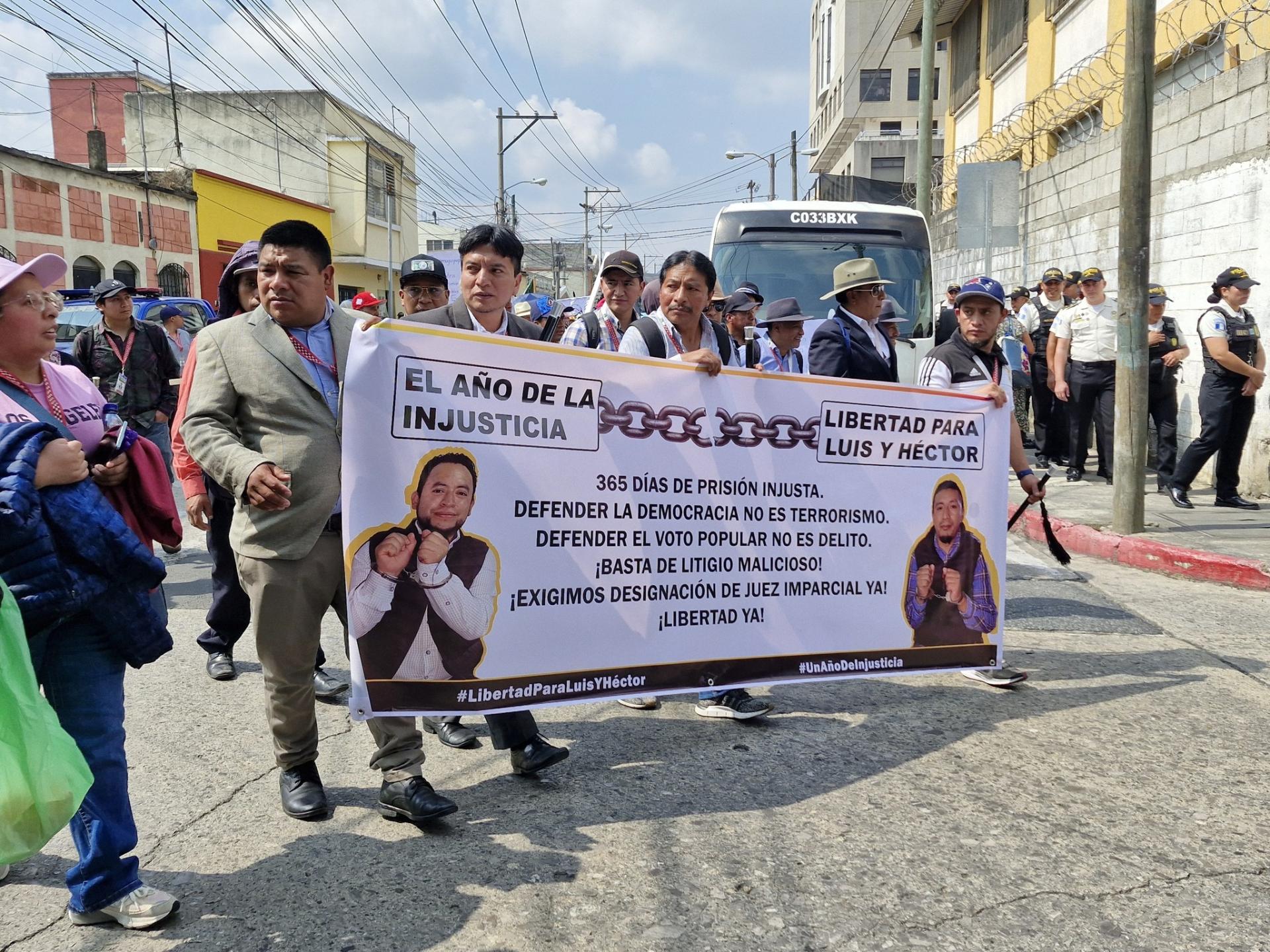
The 2023 general elections in Guatemala provided a stark example of the critical role community media plays and the backlash it can provoke. When the authorities of the 48 Cantons of Totonicapán staged a prolonged sit-in outside the Public Prosecutor’s Office in the capital, protesting the seizure of election records and ballots, it garnered widespread support. Radio La Niña deployed two correspondents to cover the entire three-month duration of the protest. Their mission was to provide daily updates to the people of Totonicapán, ensuring transparency and citizen engagement. However, this dedication to reporting came at a cost. "Since then, we have received numerous threatening phone calls and anonymous messages accusing us of being corrupt and ‘bought off’ by the government—all simply for reporting on the injustices perpetrated by the ‘Pact of the Corrupt,’" Ajanel recounts, referring to a colloquial term for alleged entrenched corruption within the political system.
The risks are not confined to verbal threats. Noé Ismalej recounts a harrowing personal encounter: "On one occasion, a government official—ostensibly as a ‘joke’—tried to run me over with his vehicle, because just days earlier I had published a report regarding the lack of potable water service in the municipality." Ismalej’s decision not to formally report the incident stems from a deep-seated distrust in the judicial system, borne out of negative precedents: "There are precedents involving journalists in other departments who presented their cases to judicial authorities—cases that failed to advance, were shelved or dismissed, or in which the complaint was turned back against the journalists themselves—due to possible connections between public officials and members of the judiciary." This pervasive sense of impunity fuels the cycle of intimidation and violence.
The history of Radio Jolom Konob is also marked by such confrontations. "In 2015, the municipal mayor shut down our community radio station, Jolom Konob, with the specific aim of preventing us from reporting on a crime he had committed," Lencho recalls. "Using social media, we alerted the public to the station’s closure and the events involving the mayor. This action forced us to hide in the mountains for a couple of days, as the mayor’s staff was actively searching for us." The trauma of that period was compounded by a more profound tragedy: "The event that most deeply shook us—the members of the radio station—was the kidnapping and murder of our colleague, communicator, and community leader, Daniel Pedro, a key organizer of the 2006 community consultation in Santa Eulalia. Although the perpetrator who carried out the killing has since been convicted, those who masterminded the crime have yet to face justice." This lingering injustice highlights the often-unseen architects of violence against those who dare to speak truth to power.

Noé Ismalej interviewing Nicole Friederichs, lead counsel on the Indigenous Maya Kaqchikel Peoples of Sumpango vs. Guatemala case and Clinic Director at Suffolk University Law School.
The Absence of a Protective Shield: A Systemic Failure
The current government, like its predecessors, faces a significant debt to the press: the establishment of a robust protection mechanism for journalists that explicitly includes Indigenous community communicators. These individuals are exceptionally vulnerable, operating in territories where state institutions are either minimal or entirely absent, leaving them exposed to localized power structures and potential reprisades.
The Office of the Human Rights Ombudsman, in its report submitted during the 2022 Universal Periodic Review, explicitly highlighted the State’s failure to uphold its international commitments. Since 2012, Guatemala has pledged to implement a protection program for journalists, a promise that remains unfulfilled. This inertia allows the existing climate of impunity to persist, emboldening those who seek to silence critical voices.
Laura Ajcalón of Radio Juventud, a community radio station in Sololá, who formerly coordinated "Ix," a news program focused on women’s participation and other social issues, underscores the evolving tactics of disinformation. "Threats and defamation targeting communicators are frequent; moreover, ‘netcenters’ and fake social media profiles now serve to amplify disinformation or discredit journalists." This digital dimension of harassment adds another layer of complexity to the challenges faced by community media.
Ajcalón also recounts the systemic exclusion faced by Indigenous women journalists: "In our experience, whenever we attempted to cover a press conference, we were sometimes denied access—either because we were Indigenous women, because we lacked a press credential from a corporate media outlet, or simply because we represented an Indigenous community radio station—actions that served to disparage our work." The lack of recourse for such discriminatory practices is profound: "We have nowhere to report these actions, which constitute violations of the right to information and freedom of expression. Although the Public Prosecutor’s Office is the designated investigative body, we cannot turn to it for help, as it is the very institution that criminalizes Indigenous community radio stations." This paradoxical situation, where the supposed arbiter of justice is also perceived as an antagonist, further isolates these journalists and undermines their ability to seek redress.
The Movement of Community Radio Stations of Guatemala has been persistent in denouncing these incidents at both national and international forums. During a recent evaluation by the Committee against Discrimination and Racism in November 2025, a panel of experts called for updated information from Guatemala regarding guarantees for freedom of expression by Indigenous peoples. They specifically requested details on the adoption of a legal framework for community media, in line with a landmark judgment by the Inter-American Court of Human Rights dated December 17, 2021. Furthermore, they sought information on concrete actions taken to effectively protect journalists, human rights defenders, and leaders and members of Indigenous and Afro-descendant communities. To date, the Guatemalan government has offered no substantive response, a silence that speaks volumes about its commitment to these critical issues.
Sustaining the Fight for Truth: A Mission Driven by Purpose
Despite the formidable challenges and palpable risks, the commitment of community journalists remains unwavering. "Even if I risk my life, I cannot stop reporting to my community; it runs in my blood," emphasizes Lencho, encapsulating the deeply ingrained sense of duty that fuels their work. Ajanel echoes this resolve, stating, "We see how justice institutions are criminalizing human rights activists who raise their voices. We cannot remain silent in the face of this injustice; we must report using accurate sources." For Ajcalón, the practice of journalism is more than a profession; it is a calling. "It demands a clear vision—that we are working for our community—for we are the spokespersons for our peoples, and this is what sets us apart from other media outlets. We tell the news exactly as it is." This commitment to unvarnished truth stands in stark contrast to the manipulated narratives often disseminated by other actors.
Ismalej offers a path toward de-escalation and improved relations: "It is essential that public officials receive training regarding the role of community communicators so that they do not view us as enemies, and so they understand that we merely serve as a conduit for conveying information and that [our function is] to serve the community." He elaborates on the principle of journalistic ethics: "If they are mentioned in any publication, they have the right of reply, which allows them to clarify or offer their perspective on what is taking place. They should no longer view [journalists] as enemies." This plea for mutual understanding and respect highlights a fundamental disconnect between the state and the communities it serves.
The pursuit of knowledge and empowerment is a continuous journey for these journalists. "We are knowledgeable about people’s rights—as well as our own rights—thanks to the training we have received from human rights organizations. I now even hold a bachelor’s degree in Communication Sciences," Ajanel concludes. This dedication to professional development, combined with an acute awareness of the responsibility that comes with conveying truth, uncensored, particularly in the Maya K’iche’ language, underscores the profound impact and enduring significance of Indigenous community journalism in Guatemala. Their work is not merely reporting; it is a vital act of resistance, an assertion of rights, and a testament to the enduring power of the human voice in the face of adversity.