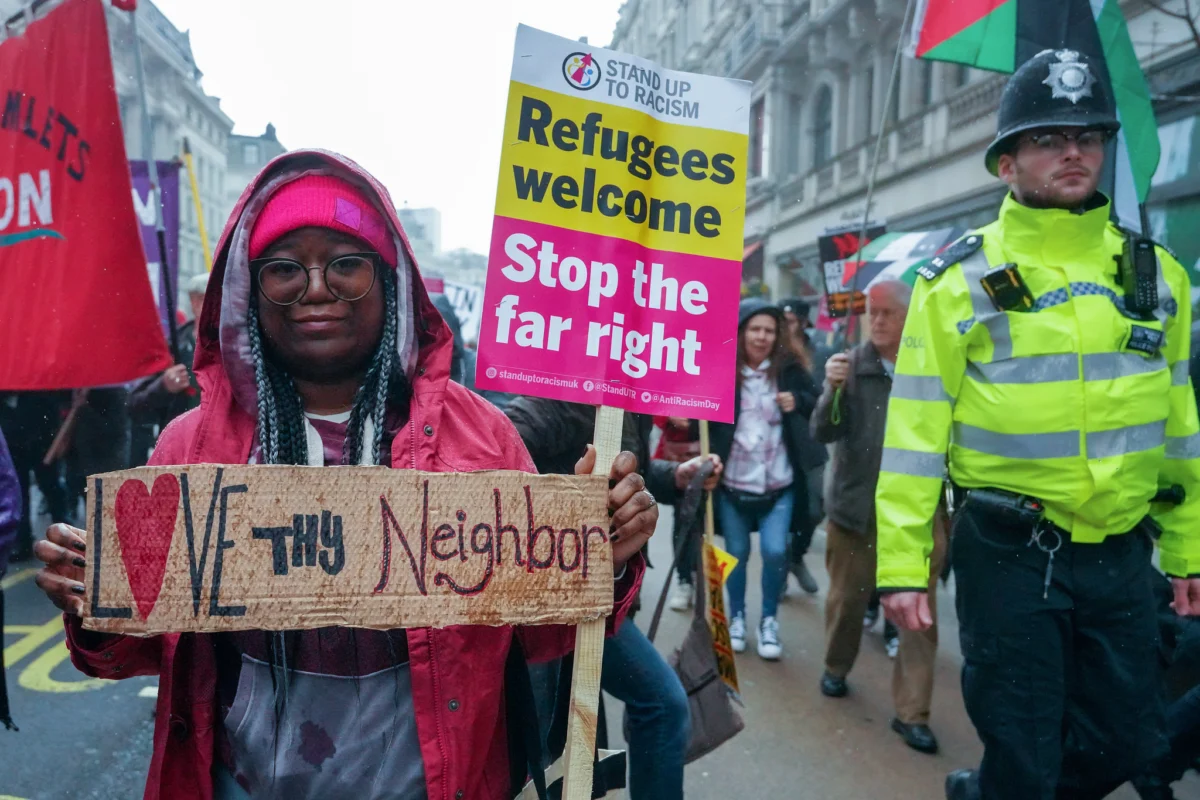
The legal framework governing civil liberties in the United Kingdom stands at a critical juncture as political shifts and media narratives increasingly challenge the foundations of the Equality Act 2010 and the Human Rights Act 1998. While these statutes are often perceived as permanent fixtures of the British constitution, they remain vulnerable to the legislative priorities of the government of the day. Recent developments indicate a growing trend toward the dilution of these protections, prompted by a combination of ideological shifts, political campaigning, and a media landscape dominated by a narrow set of interests. As of March 2026, the debate surrounding the preservation of these rights has intensified, with civil society organizations warning that the erosion of such laws could lead to a significant regression in social justice and governmental accountability.
The Human Rights Act 1998 and the Equality Act 2010 serve as the dual pillars of modern British civil law. The former incorporates the rights set out in the European Convention on Human Rights (ECHR) into domestic law, allowing individuals to seek redress in UK courts rather than having to bypass them for the European Court of Human Rights in Strasbourg. The latter consolidated various anti-discrimination laws into a single, comprehensive framework designed to protect individuals from unfair treatment based on specific "protected characteristics." However, the stability of these acts is no longer guaranteed, as recent political manifestos and legislative proposals have signaled a desire to either replace or significantly weaken their reach.
The Legislative Foundations: Protecting the Individual from the State
To understand the current risks, it is necessary to examine the original intent and impact of these laws. The Human Rights Act was designed to protect the citizenry from the overreach of the state and its public bodies. It guarantees fundamental rights, including the right to life, freedom from torture, the right to a fair trial, privacy, and freedom of expression. Historically, the UK played a leading role in drafting the ECHR following the atrocities of World War II, operating under the mantra of "never again" to prevent the persecution and abuse of power that characterized the mid-20th century.
The Equality Act 2010 serves a different but complementary purpose. It makes it unlawful to deny an individual employment, services, housing, or access to public spaces based on race, sex, disability, sexual orientation, religion, age, gender reassignment, marriage/civil partnership, or pregnancy and maternity. Before this legislation, discrimination was often legal and systemic. Examples included the refusal of entry to disabled individuals with assistance dogs, the denial of hotel bookings to same-sex couples, and the dismissal of employees due to pregnancy or caregiving responsibilities. By codifying these protections, the Act established a baseline for social participation that had previously been absent.
A Chronology of Erosion: 2010–2026
The trajectory of these rights over the past fifteen years reveals a pattern of incremental weakening rather than immediate repeal. Following the passage of the Equality Act in the final days of the last Labour government in 2010, subsequent Conservative-led administrations began a process of "streamlining" and "de-regulatory" reform.
In 2012, the Enterprise and Regulatory Reform Act began chipping away at certain health and safety liabilities, while the introduction of employment tribunal fees in 2013—later ruled unlawful by the Supreme Court—significantly hampered the ability of workers to seek justice under the Equality Act. By the early 2020s, the political rhetoric shifted toward the Human Rights Act. In 2022, the government proposed a "Bill of Rights" intended to replace the Human Rights Act, which critics argued would make it harder for individuals to challenge state failings and would create a hierarchy of rights.
By 2024 and 2025, the political landscape shifted further. Reform UK, gaining significant traction in the polls, pledged to scrap the Equality Act entirely, labeling it a "barrier to productivity" and a "source of social division." Meanwhile, the Labour Party, despite its historical role in passing these acts, has signaled a willingness to review how rulings from the European Court of Human Rights are applied, citing the need for "modernization." This bipartisan shift toward "review and reform" has created an environment where the fundamental permanence of these rights is in question.
Data and the Socio-Economic Duty
One of the most significant but overlooked aspects of the Equality Act is Section 1, known as the "Socio-economic Duty." This clause requires public bodies to consider how their decisions can reduce the inequalities resulting from socio-economic disadvantage. While the governments of Scotland and Wales have commenced this duty, it remains dormant in Westminster. Advocacy groups, including the Equality Trust, have noted that the failure to activate this duty in England has contributed to widening wealth gaps and the unequal distribution of public resources.
Data from the Office for National Statistics (ONS) and various human rights monitors highlight the consequences of uneven legal protections. In regions where socio-economic duties are not enforced, the disparity in life expectancy between the wealthiest and poorest deciles has continued to widen. Furthermore, the Equality and Human Rights Commission (EHRC) has reported a steady rise in discrimination claims related to disability and race, suggesting that while the law exists, its enforcement is underfunded and its guidance is increasingly narrowed by political pressure.
Media Monopoly and the Misinformation Campaign
The role of the British media in shaping the narrative around human rights cannot be understated. Currently, approximately 90% of the UK’s national newspaper circulation is controlled by just three billionaire-owned companies. This concentration of media power has facilitated a decades-long campaign to frame human rights as "special treatment" for marginalized groups or as a "lawyer’s charter" that benefits criminals at the expense of the public.
Journalistic analysis suggests that this "divide-and-rule" strategy uses misleading headlines to whip up public anger. By presenting human rights as something exploited by "others," the media obscures the fact that these laws protect every citizen. When the right to privacy or the right to a fair trial is weakened, it is weakened for the entire population, not just the groups currently being targeted in tabloid headlines. This misinformation has created a "regression risk," where public support for repealing protections is manufactured through a misunderstanding of what those protections actually do.
International Context and Comparative Regression
The United Kingdom does not exist in a vacuum. Civil liberties groups have drawn parallels between the current UK climate and recent events in the United States, where the overturning of established precedents has demonstrated that long-held rights can be revoked with surprising speed. The global trend toward "illiberal democracy" often begins with the dismantling of equality frameworks and the restriction of judicial oversight.
In the UK, the move to distance the nation from the European Court of Human Rights is seen by international observers as a potential breach of the Good Friday Agreement, which relies on the ECHR as a safeguard for peace in Northern Ireland. The Council of Europe has previously warned that any move by the UK to significantly decouple from the Convention would undermine the international human rights system and set a dangerous precedent for other member states.
The Impact of Underfunded Enforcement
Beyond the threat of legislative repeal lies the more subtle danger of "atrophy through neglect." Rights can be eroded without a single vote in Parliament if the mechanisms for their enforcement are removed. Over the last decade, the EHRC has seen its budget significantly reduced, limiting its ability to launch strategic litigation or conduct large-scale investigations into systemic discrimination.
Furthermore, the reduction in legal aid has made the Human Rights Act inaccessible to the very people it was designed to protect: the vulnerable, the impoverished, and those in state care. When individuals cannot afford to bring a case against a public body, the law effectively ceases to exist for them. This creates a "rights vacuum" where the wealthy can still protect their interests through private legal action, while the majority of the population is left with "paper rights" that cannot be enforced in a courtroom.
Implications and the Path Forward
The potential repeal or replacement of the Equality Act and the Human Rights Act would have profound implications for British society. Without the Equality Act, the legal obligation for employers to provide "reasonable adjustments" for disabled employees would vanish, and the protections against sexual harassment in the workplace would be significantly compromised. Without the Human Rights Act, the ability of families to seek the truth about the deaths of loved ones in state custody—such as in prisons or mental health facilities—would be severely curtailed.
The Equality Trust and other advocacy organizations are currently leading research-led policy initiatives to counter these trends. Their focus remains on the commencement of the socio-economic duty and the strengthening of the existing legal safeguards. However, the success of these efforts depends on public awareness and the recognition that human rights are not a luxury or a niche interest, but the essential infrastructure of a fair society.
As the political cycle moves toward the late 2020s, the defense of these acts has become a litmus test for the UK’s commitment to the rule of law. The challenge for proponents of equality is to bridge the gap between complex legal statutes and the daily lived experience of the public, ensuring that the protections won in the 20th century are not traded away in the political maneuvers of the 21st. The current climate suggests that the protection of rights is no longer a settled matter, but an ongoing struggle that requires constant vigilance, accurate reporting, and robust legal defense.