Cultural Survival has officially unveiled its 2026 cohort of Indigenous Youth Fellows, a pivotal initiative under its expansive Capacity Building Program. This prestigious fellowship, designed for Indigenous leaders aged 18-28, is dedicated to fostering the next generation of change-makers committed to the vital work of strengthening their communities. The program focuses on elevating, defending, and revitalizing Indigenous cultures and Traditional Knowledge systems, while simultaneously equipping these young leaders with essential skills in leadership, organization, and project management. Since its inception in 2018, the fellowship has successfully awarded 157 fellowships, providing crucial support to over 368 Indigenous youth across the globe. The 2026 cohort comprises 30 promising young leaders representing diverse Indigenous communities worldwide, with this report specifically highlighting the impactful work of 15 fellows from Africa and Asia. Their collective projects address a spectrum of critical issues including climate change, food sovereignty, decolonization efforts, language revitalization, land protection, media and storytelling initiatives, the arts, and the reclamation of ancestral traditions. This program underscores the indispensable role of Indigenous youth as agents of change, carrying forward ancestral wisdom and ensuring the continuity and vibrancy of their cultural heritage.
Fostering Global Indigenous Leadership
The Indigenous Youth Fellowship Program, a cornerstone of Cultural Survival’s commitment to empowering Indigenous Peoples, operates on the principle that investing in young leaders is paramount for the long-term sustainability of Indigenous cultures and rights. The program’s inception in 2018 marked a significant step towards recognizing and actively supporting the unique contributions of Indigenous youth. Over the years, the fellowship has evolved, adapting to emerging challenges and opportunities faced by Indigenous communities. The 2026 cohort continues this legacy, bringing together a dynamic group of individuals poised to make a substantial impact.
The 30 fellows selected for the 2026 program represent a broad geographical and cultural spectrum. This year’s announcement particularly shines a light on the 15 fellows based in Africa and Asia, whose compelling narratives and ambitious community-driven initiatives are at the forefront of cultural preservation and advocacy. These individuals are not merely recipients of support; they are active architects of change within their own communities, leveraging their newfound skills and the fellowship’s resources to address pressing local and global concerns.
Asia: Champions of Cultural Resilience and Environmental Justice
The fellows from Asia embody a spirit of resilience and a deep-rooted connection to their ancestral lands and traditions. Their projects are designed to confront complex challenges, from environmental degradation to the erosion of cultural identity in the face of rapid development and climate change.
Indonesia:
-
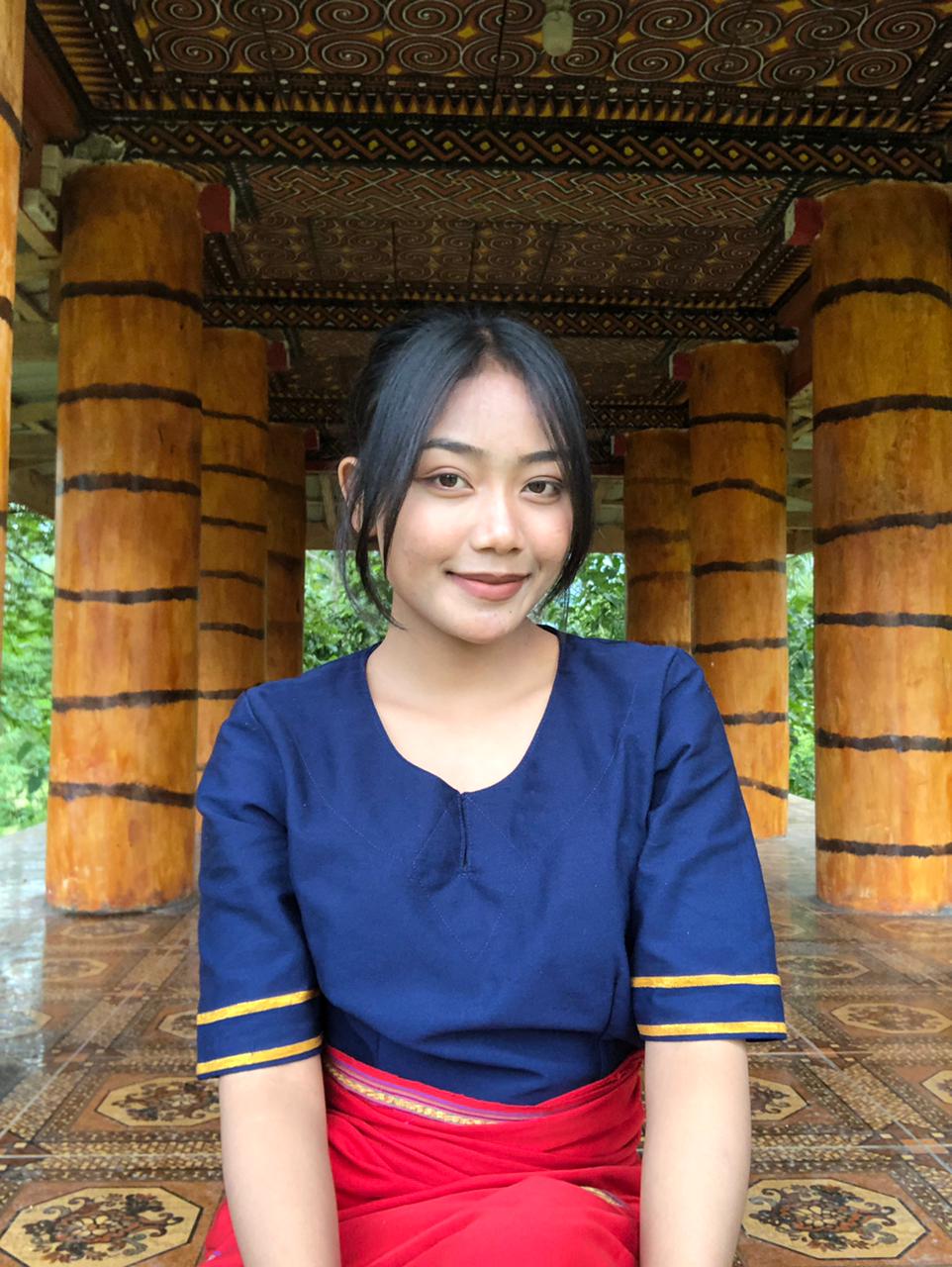
Flaviona Gabriel Sirumba Pasorong (Toraya) is a dedicated advocate for Indigenous Land Rights, Free, Prior and Informed Consent (FPIC), and Environmental Justice in the Pali community of Bittuang District, Tana Toraja Region, South Sulawesi. Flaviona is actively engaged in safeguarding her ancestral lands from the detrimental impacts of environmental damage, unchecked natural resource exploitation, and development projects that threaten Indigenous territories. As a board member of the Indigenous Youth of Toraya, she collaborates with her team to bolster awareness and collective action across four Indigenous communities: Pali, Balla, Bittuang, and Se’seng. Their work critically analyzes the environmental consequences of extractive and energy projects, while simultaneously strengthening the Indigenous movement’s capacity to resist land grabbing and defend their ancestral territories.
Through the Cultural Survival Indigenous Youth Fellowship Program, Flaviona and her team are implementing a vital project titled "Raising Awareness and Organizing Indigenous Communities to Face Geothermal Energy." This initiative is designed to empower Indigenous communities in their efforts to resist geothermal development that proceeds without their Free, Prior and Informed Consent. The project will facilitate community-led activities aimed at increasing awareness regarding the rights of Indigenous Peoples and the potential adverse effects of geothermal exploitation on land, culture, livelihoods, water sources, and the future well-being of Indigenous communities. Furthermore, it will foster community organizing through Indigenous assemblies, thereby creating secure spaces for open dialogue, collective decision-making, and robust movement-building. -
Sucia Lisdamara Yulmanda Taufik (Kasepuhan Bayah) hails from Lebak Regency, Banten Province, Indonesia. Her upbringing, deeply intertwined with nature, ancestral traditions, and local wisdom, has fueled a profound commitment to protecting Indigenous knowledge systems and community autonomy. Since 2021, Sucia has been an active participant in Barisan Pemuda Adat Nusantara, an Indigenous youth organization dedicated to defending customary territories, nurturing Indigenous youth leadership, and ensuring meaningful participation in decision-making processes concerning Indigenous land rights and governance. She also contributes as a facilitator of Indigenous education at Sekolah Adat Banten Kidul, promoting community-based learning rooted in Indigenous language, culture, and values. Her efforts are driven by a pressing concern over the accelerating loss of Traditional Knowledge, exacerbated by environmental degradation impacting Indigenous territories, particularly due to extractive industries like mining and large-scale corporate projects.
Sucia will implement a project entitled "Indigenous School for Disaster Preparedness: Strengthening Local Knowledge in Facing Earthquakes and Tsunamis in Kasepuhan Bayah." This project aims to integrate Indigenous knowledge of natural signs and traditional practices into disaster preparedness education, ensuring that local wisdom is incorporated into both formal and informal learning pathways. Employing a participatory methodology, the project will develop community-based disaster risk maps to enhance traditional evacuation routes. It also seeks to preserve ancestral narratives concerning earthquakes and tsunamis as invaluable intergenerational learning resources, while simultaneously building the capacity of Indigenous youth to serve as key facilitators in disaster education and preparedness simulations within their communities.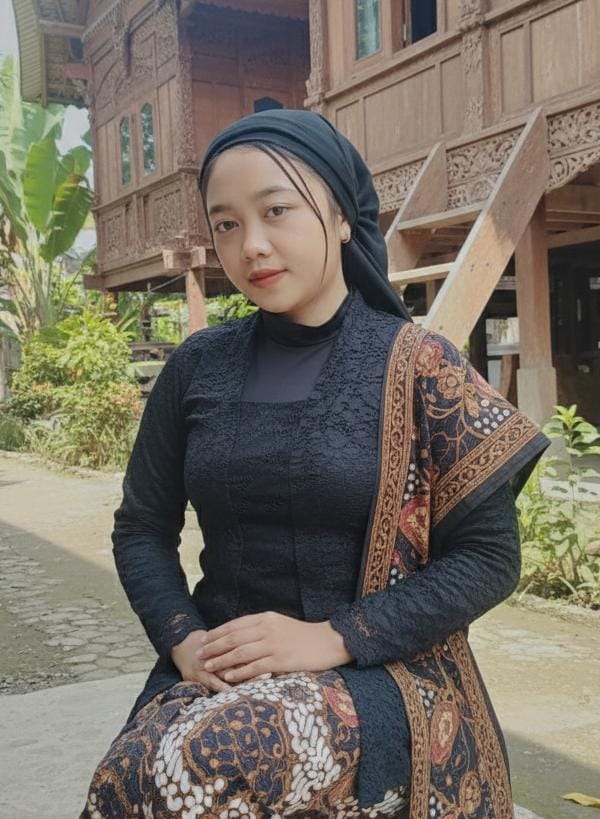
Nepal:
-
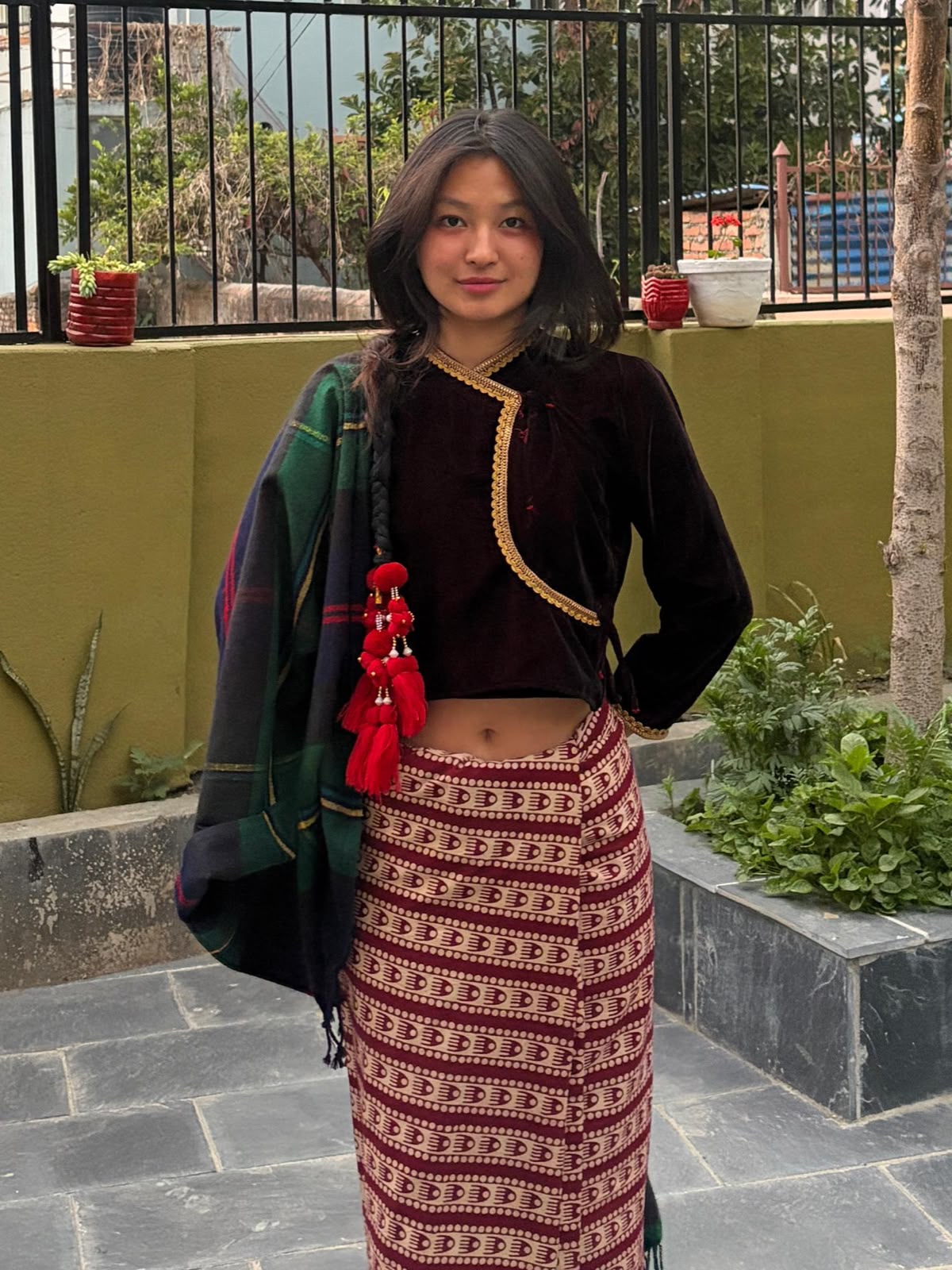
Anisha Buda (Kaike Magar) is an Indigenous youth leader from Nepal, currently serving as a Program Officer at the National Indigenous Women Forum (NIWF). Her work centers on advancing the social, cultural, and environmental rights of Indigenous and marginalized women and girls in Nepal. Her initiatives bridge climate justice, biodiversity conservation, ecosystem restoration, capacity building, and the economic empowerment of women and girls. Anisha is also an interim committee member of the International Indigenous-Led Fire Adaptation Network, affiliated with the Food and Agriculture Organization of the United Nations. She actively participates in the Asia Pacific Network of Environmental Defenders, raising awareness about the critical challenges faced by Indigenous environmental defenders in Nepal. Furthermore, she contributes to the Secretariat Committee at Indigenous Peoples and Community Conserved Areas – ICCA Network Nepal, focusing on biocultural conservation projects from an Indigenous youth perspective. Anisha has also presented her research, "Rungma, a Ritual of Reinforcing Ecological Awareness: A Case of Tarali Magars in Dolpa District," at a youth conference organized by ICCA Network Nepal.
Through the Cultural Survival Indigenous Youth Fellowship Program, Anisha will implement a project titled "Climate Week New York City 2026." This initiative will support her participation in Climate Week NYC, where she will document and articulate the perspectives of an Indigenous youth actively engaged in climate change initiatives at local and national levels in Nepal. Her contribution will bring lived experiences, invaluable traditional knowledge, and demonstrated leadership into the global climate discourse.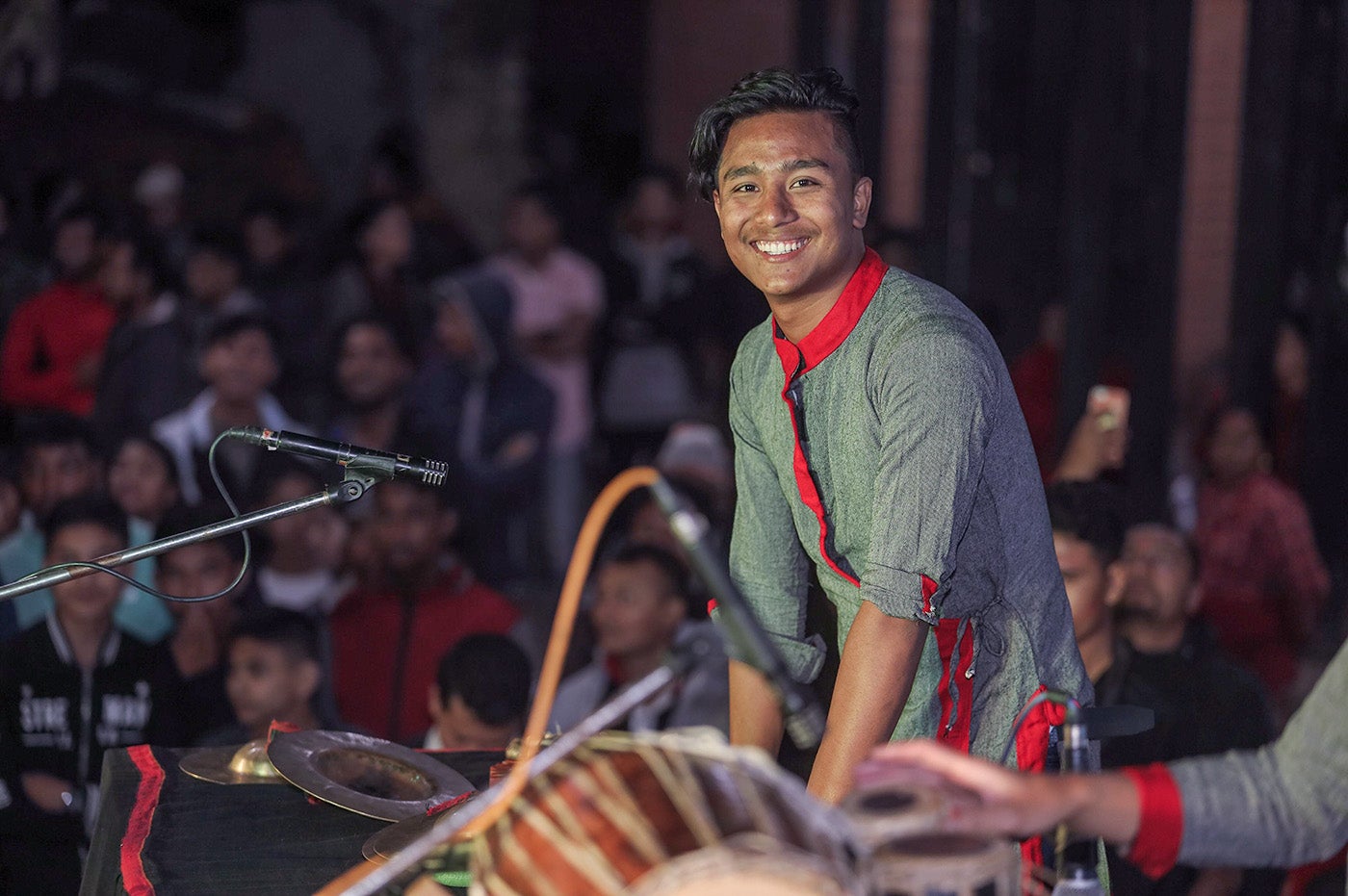
-
Ashim Maharjan (Newa), a resident of Khokana, Nepal, holds a Bachelor’s degree in Social Work and is pursuing a Master’s degree in Sociology. His academic and professional pursuits are concentrated on the livelihoods of youth and women, land rights, and community resilience, with a strong emphasis on participatory and culturally grounded development methodologies. Ashim contributes as a researcher with the Community Empowerment and Social Justice Network, undertaking field research, facilitating community consultations, collecting data, documenting findings, and preparing reports on social and development issues in close collaboration with local communities and civil society organizations. He has also participated in the International Citizen Service program, supporting community engagement, cross-cultural collaboration, and community-led development initiatives. Ashim is actively involved in cultural preservation through music as a member of Shreekali, a Newa cultural music group, where he promotes the Newa language, music, and cultural identity through community performances and cultural events, utilizing art as a potent tool for youth engagement, intergenerational learning, and community cohesion.
Ashim will implement the project, "Promoting Land Rights and Traditional Livelihoods in a Fast Track Expressway and Other Infrastructure Projects Affecting Indigenous Newa Communities in Khokana in the South of Kathmandu." This project aims to integrate traditional knowledge with community-based initiatives to bolster food security, preserve cultural heritage, and foster resilient economic opportunities, thereby countering the adverse impacts of infrastructure projects imposed on Newa lands.
Africa: Safeguarding Heritage and Adapting to a Changing World
The fellows from Africa are at the forefront of efforts to protect Indigenous languages, preserve traditional ecological knowledge, and adapt to the intensifying impacts of climate change, often in the context of resource extraction and land disputes.
South Africa:
-
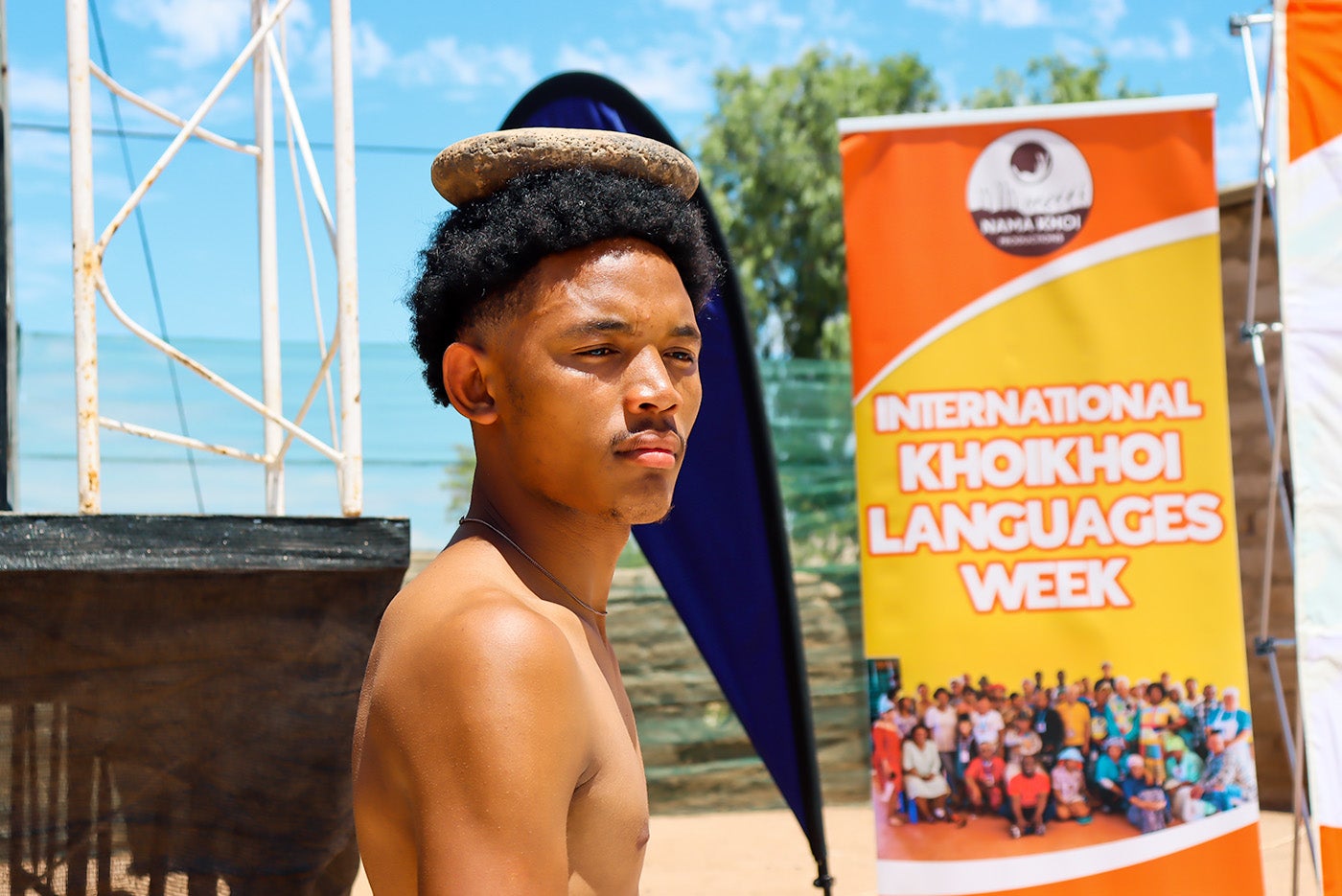
Jayden Cloete (Nama Khoi), a theater practitioner and cultural activist from South Africa, is an integral member of Nama Khoi Productions, a theater collective dedicated to protecting and advancing the rights, language, and cultural heritage of the Nama Khoi community through artistic expression. For Jayden, theater transcends performance; it serves as a conduit for memory, resistance, education, and a platform for Indigenous voices to challenge injustice. His work employs theater as a tool for cultural preservation, social awareness, and community dialogue. He has contributed to several activist-driven productions, including "Naeb/Naelstring" (2025), "Ons Gister Dans" (2024), "Dwaling/Ihare m’tso” (2024), and "Bosveld Klong" (2024). In addition to stage productions, Jayden has participated in community-based protest theater initiatives, such as "The Silent Protest" (2024), which addressed issues of governance and community accountability. Through his creative endeavors, he continues to amplify Indigenous youth voices and fortify cultural identity through performance.
As part of his fellowship, Jayden is implementing a project titled "What Remains?" This project critically examines the environmental, social, and cultural ramifications of lithium and mineral sand extraction on Indigenous lands. It poses urgent and profound questions: What endures of the land when extraction irrevocably alters its landscape? What remnants of culture persist when ancestral territories face mounting pressure? What is the fate of identity when communities are compelled to bear the burden of global demand for transitional minerals?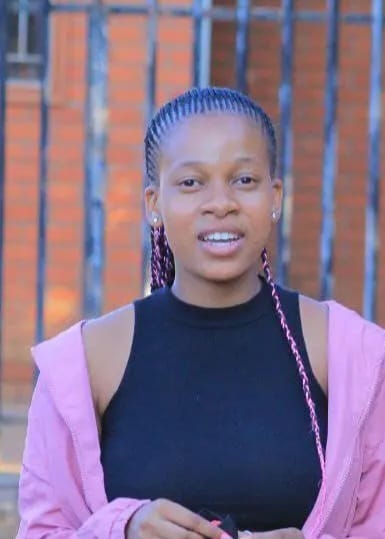
-
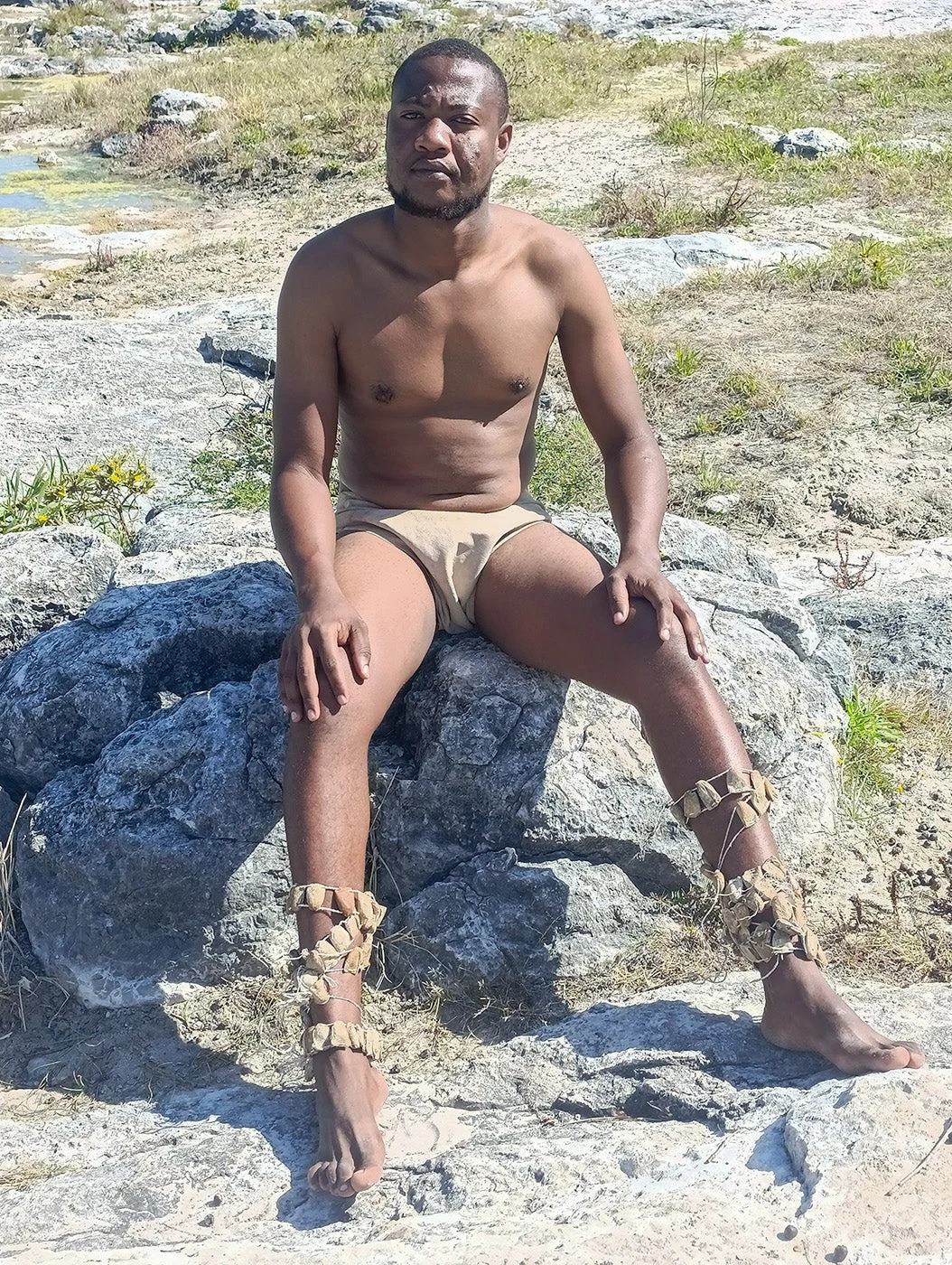
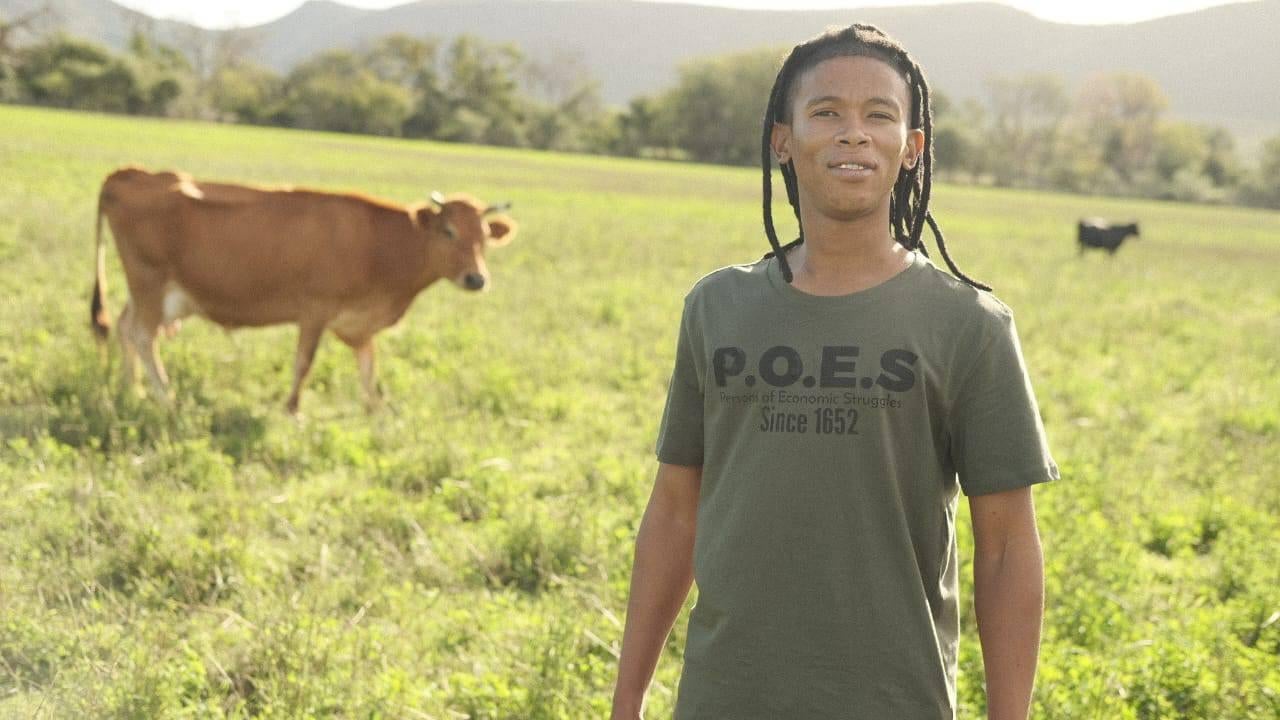
Zandry Gaai (Khoikhoi), from the Eastern Cape, the ancestral homeland of Sarah Baartman, is engaged in a profound journey of healing, reclaiming an erased Khoikhoi identity, reviving the language of his ancestors, and sharing Khoikhoi narratives of resistance. His work is dedicated to using storytelling as a means to raise awareness of the enduring Khoikhoi presence in the Eastern Cape and across South Africa, while also supporting other Khoikhoi youth navigating complex questions of identity, belonging, and cultural loss.
Gaai will implement a project titled "The Khoikhoi Eco-Memory Project." This initiative aims to empower Khoikhoi youth to document and disseminate Traditional Ecological Knowledge passed down by Elders, with a specific focus on water systems, ancestral grazing cycles, medicinal plants, and drought indicators, particularly within the arid Karoo region. The project will culminate in the production of a bilingual Khoikhoi and English booklet, a public mural visually representing ancestral knowledge of the land, and a series of intergenerational climate workshops. This endeavor seeks to bolster climate resilience, foster cultural pride, and promote language preservation within Inqua Khoikhoi First Nation communities in the Eastern Cape. The project will also critically engage with issues pertaining to transitional minerals by conducting interviews with Khoikhoi Elders, land defenders, and activists in the Eastern Cape. These discussions will explore Indigenous perspectives and viable alternatives to transitional mineral extraction, generating knowledge crucial for community education and advocacy efforts in legal and policy arenas.
Botswana:
-
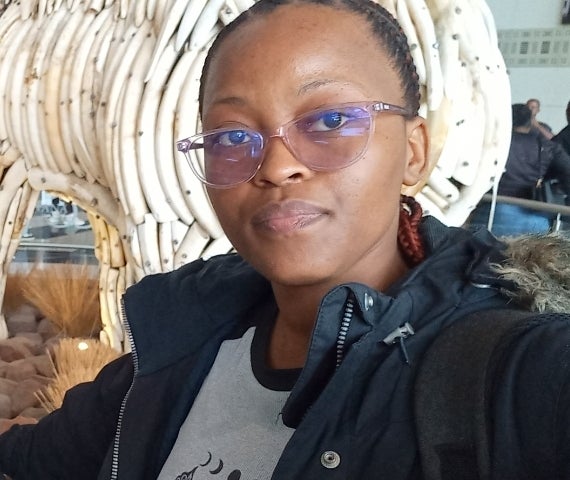
Tebogo Sendelinah Xhao (Ju/’hoansi) is a youth leader from Botswana deeply committed to protecting her mother tongue from extinction and exploitation, ensuring the enduring vitality of the Ju/’hoansi language, culture, and identity for future generations. Her work focuses on Indigenous language revitalization, cultural heritage preservation, intergenerational knowledge transmission, and championing the rights of Indigenous Peoples to safeguard and celebrate their unique knowledge systems. Through diligent learning from Elders, engagement with linguistic resources, and connection with organizations dedicated to language revitalization, Tebogo has gained a profound understanding of the challenges confronting the Ju/’hoansi language and the inherent strength within her community to forge its own solutions.
Through the Indigenous Youth Fellowship, she will implement a project titled "Ju/’hoansi Language Immersion Project." This project aims to document, preserve, and celebrate the distinctive cultural heritage of the Ju/’hoansi people. It will establish dedicated spaces for language learning, oral history sharing, and intergenerational knowledge transmission among Elders, youth, and community members. -
Cynthia Nurse Shadi Soso (San/Naro), a dedicated student at the University of Botswana pursuing a Bachelor’s degree in Lifelong Learning and Community Development, is a passionate advocate for Indigenous knowledge revitalization and community development. She is also an active member of the San Youth Network, navigating the intricate landscape of development work where cultural preservation, donor accountability, and youth agency intersect. Her journey is propelled by a steadfast commitment to inclusive education, social justice, the preservation of Indigenous knowledge, and sustainable community empowerment. She possesses a particular interest in designing and implementing community-based interventions that address participatory development, social inequalities, Indigenous methodologies, and provide support for vulnerable populations in Botswana. Her academic studies have equipped her with knowledge and skills in adult education, participatory development, monitoring and evaluation, and community engagement. Her academic work has specifically focused on empowering marginalized groups, with a keen emphasis on peacebuilding and substance abuse prevention. Cynthia firmly believes that education is a transformative instrument capable of empowering individuals, strengthening communities, and fostering social cohesion.
During the fellowship, Cynthia will implement a project designed to revitalize and reinforce the use of the Naro language and cultural knowledge among Naro youth in Botswana, particularly in the village of D’Kar, where Naro language usage is experiencing a rapid decline. Through intergenerational learning, storytelling, and cultural mentorship, the project aims to re-establish a connection between young San individuals and their mother tongue, oral traditions, and cultural identity.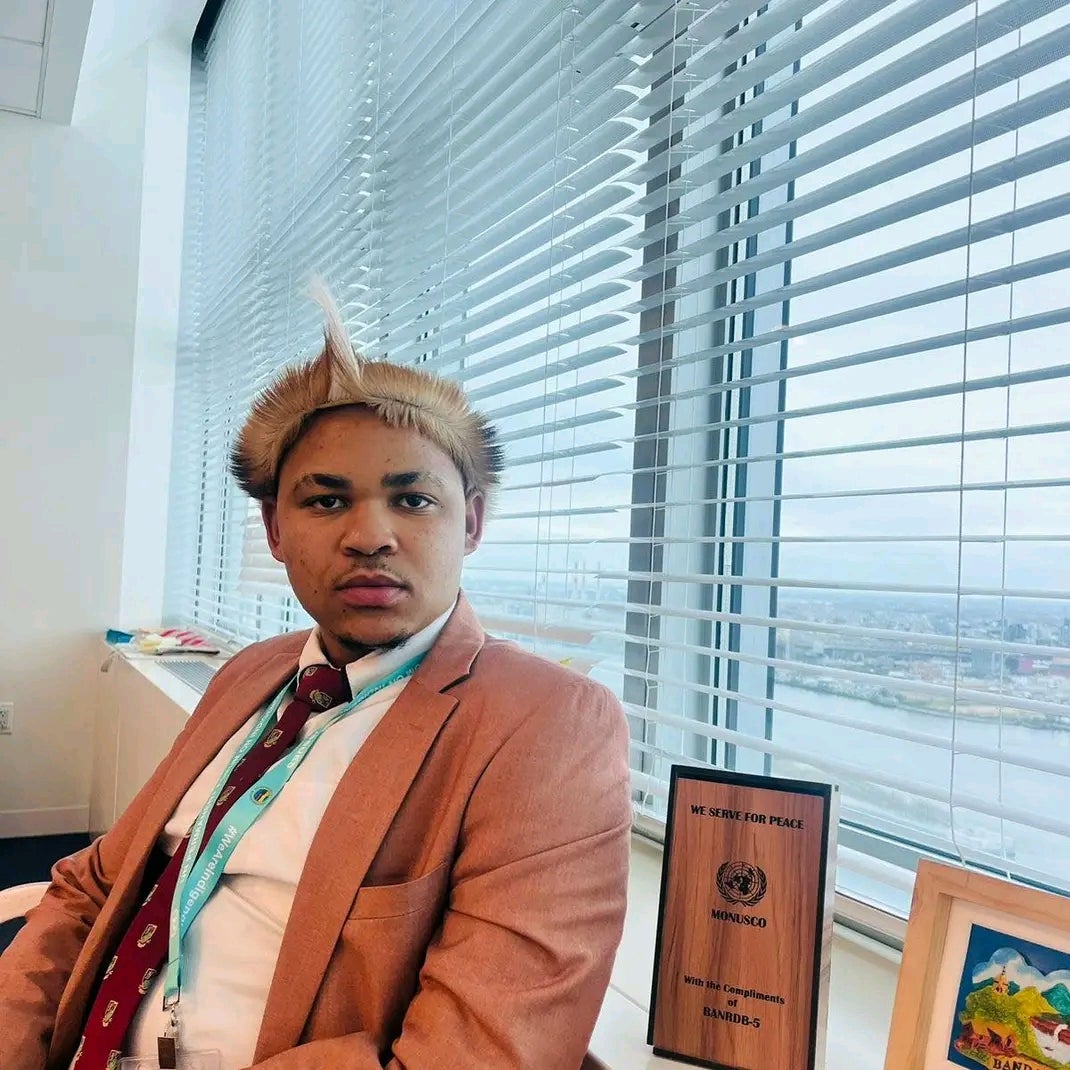
-
Samuel Stanley (San), a prominent Indigenous youth leader, motivational speaker, and climate advocate from Chobokwane Village in the Ghanzi District of Botswana, is also a legal professional. A proud member of the San community, Samuel is dedicated to advancing Indigenous rights, youth empowerment, environmental sustainability, cultural heritage preservation, and community development. He serves on the committee of the International Indigenous-led Fire Adaptation Network under the Food and Agriculture Organization. He holds a Bachelor’s degree from the University of Botswana, a certificate in Paralegal Studies from the Dollar Orman Institute in Cape Town, South Africa, and a certificate in Rock Art Site Documentation from the University of Namibia. His academic and professional trajectory clearly reflects his dedication to legal empowerment, social justice, Indigenous knowledge, and the protection of cultural heritage. He currently holds the position of African Focal Point for the Global Indigenous Youth Caucus, where he champions Indigenous youth engagement across Africa and advocates for Indigenous rights, food systems transformation, climate action, and sustainable development in international policy forums.
As a fellow, Samuel will implement the project "Indigenous Climate Voices: Raising Climate Change Awareness and Revitalizing Indigenous Knowledge among Youth in Ghanzi District, Botswana." This project aims to enhance climate change awareness among Indigenous youth and community members while simultaneously promoting San Indigenous knowledge as an invaluable asset for climate adaptation and resilience. -
Gofaone Tsaae (Ju/’hoansi) is a youth leader, cultural advocate, and community organizer from Qangwa, Botswana. With a fervent passion for preserving Indigenous knowledge systems, Gofaone is dedicated to protecting and promoting the cultural heritage, identity, and Traditional Knowledge of the Ju/’hoansi people.
Through this fellowship, Gofaone is implementing a project titled "Indigenous Knowledge Systems." The project’s core objective is to facilitate the transfer of knowledge from Knowledge Keepers to youth and children, ensuring that Ju/’hoansi cultural practices, oral histories, environmental knowledge, and traditional skills are effectively passed down to future generations. The project will involve documenting oral histories, environmental knowledge, traditional tracking skills, and cultural practices through interviews with Elders and digital archiving. By creating dedicated spaces for dialogue and knowledge exchange between youth and Elders, the project endeavors to strengthen cultural identity, bridge generational divides, and foster robust intergenerational learning.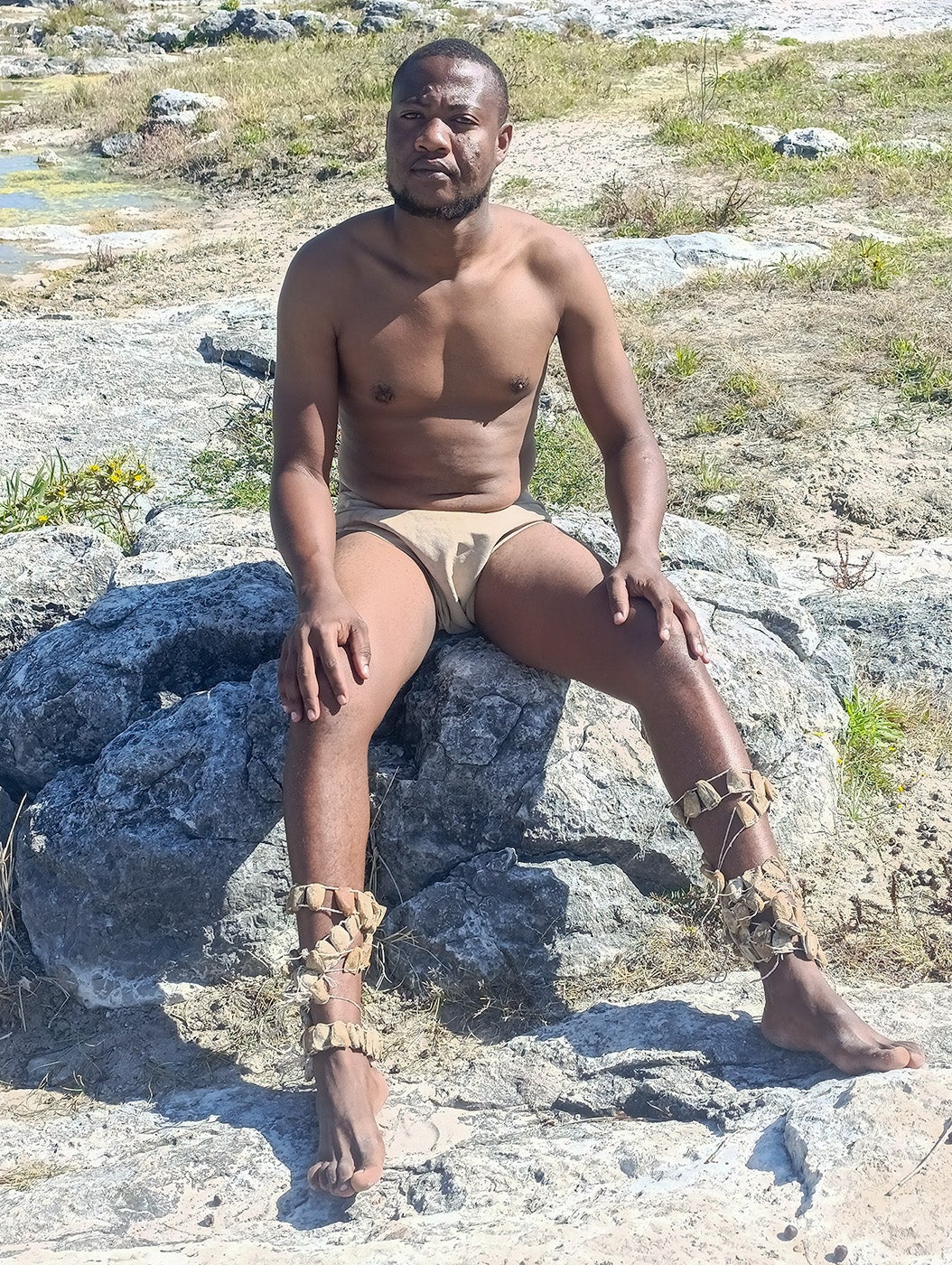
Cameroon:
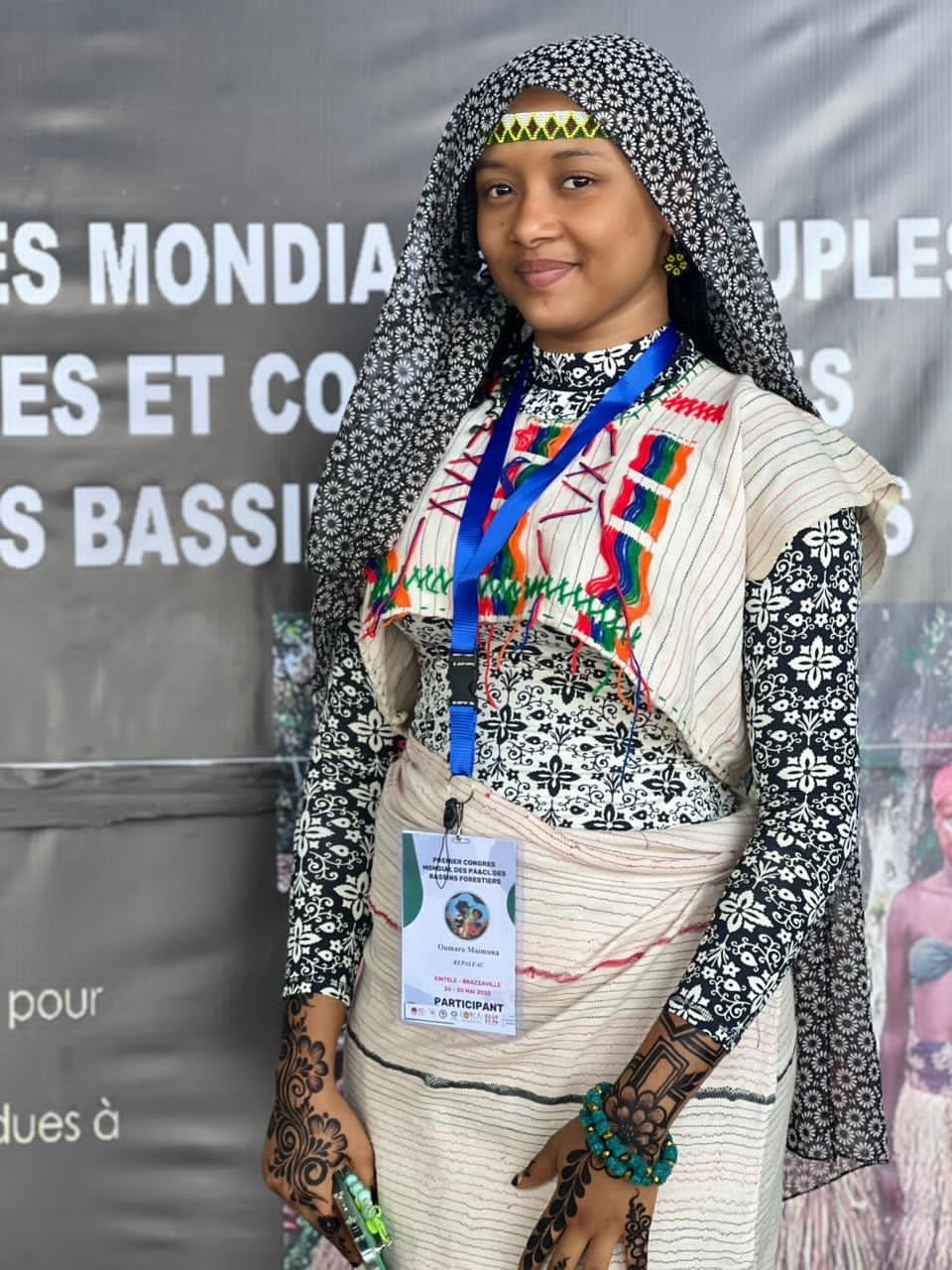
- Nana Faizatou Ibrahim (Mbororo), from the Fulani pastoralist community of Cameroon, developed a profound appreciation for Traditional Ecological Knowledge, traditional medicine, and biodiversity conservation during her upbringing. As a communication volunteer with the REPALEAC Youth Women’s Movement, she has actively contributed to community-based initiatives focused on gender equality, health education, and climate resilience. Her work encompasses community sensitization on sustainable resource utilization, advocacy for reproductive rights, and fostering dialogue between traditional healers and healthcare professionals. She has also participated in national and regional training programs on Indigenous rights, biodiversity policy, and youth leadership. Nana is currently developing a community-centered initiative to document Mbororo women’s ecological knowledge, with the aim of preserving plant biodiversity and transmitting this vital knowledge to younger generations.
Nana’s project, "Indigenous Mbororo Girls Building Resilience for Climate Action," seeks to empower Mbororo girls with the knowledge and practical tools necessary to become effective climate change advocates and solution providers within their pastoralist communities. The project aims to increase awareness of climate resilience, promote sustainable environmental practices, and cultivate leadership among Mbororo girls, enabling them to spearhead grassroots environmental actions.
Democratic Republic of Congo:
- Carine Bahati (Pygmy Batwa/Mbuti), from South Kivu, Democratic Republic of Congo, became an activist following her community’s displacement from their ancestral lands within Kahuzi-Biega National Park. As a co-founder and coordinator of Indigenous Girls Advocacy, she is dedicated to empowering Indigenous girls, combating food insecurity, and preserving Traditional Knowledge. Her mission centers on bridging the intergenerational gap between Elders and youth to safeguard ancestral medicinal and culinary practices, recognizing these traditions as fundamental to the community’s health, food security, and dignity.
Carine will implement a project named "Promoting Batwa Traditional Knowledge for Food Security and Community Health in Shabunda." She plans to establish community gardens where young people can learn to cultivate local food and medicinal plants while receiving invaluable knowledge from Elders and traditional healers. This project also aims to restore cultural pride and strengthen intergenerational bonds, empowering young people to become custodians and innovators of their ancestral heritage, thereby working towards a sustainable future for their people.
Tanzania:
- Mommon Makko (Maasai) is an environmentalist specializing in dryland agriculture and rangeland restoration. Currently serving as project coordinator for the Nyangulo Environmental Conservation Alliance in Northern Tanzania, he possesses over five years of leadership experience in this capacity. His work is focused on developing evidence-based, community-driven solutions to address desertification and climate change.
Mommon will implement a project titled "Restoration of Degraded Rangelands in Northern Tanzania." The primary objective is to rehabilitate degraded lands through community-led conservation and sustainable land management practices. By promoting sustainable grazing, reforestation, and soil restoration, the project aims to enhance ecosystem resilience and improve the livelihoods of pastoralist communities, with a particular emphasis on empowering women and youth.
Namibia:
-
Louivenzia Komases (Nama) operates at the nexus of youth leadership, civic engagement, and public management. Trained in political science and international relations, her work is grounded in both academic governance frameworks and the lived realities of marginalized rural and Indigenous communities. Her professional experience includes policy-oriented research on media integrity and democratic participation with the Institute for Public Policy Research, where she contributed to initiatives addressing misinformation and democratic accountability. She has also held advisory and coordinating roles within the Nama Traditional Leaders Association Youth Forum, engaging directly with Indigenous governance structures, intergenerational dialogue, and community-based advocacy.
Louivenzia’s fellowship project, "Indigenous Economies for Resilient Futures: Youth Training in Social Entrepreneurship and Sustainable Livelihoods," centers on the practical revitalization of Indigenous economies as a pathway to youth resilience and self-determination. The project equips Indigenous youth with hands-on skills to transform ancestral knowledge, land-based practices, and cultural resources into sustainable social enterprises. Emphasis is placed on value addition rooted in Nama relationships to land, environmentally responsible resource utilization, and culturally grounded economic models. By integrating remembrance, land stewardship, and livelihood creation, Louivenzia’s work seeks to ensure that Indigenous youth are not only custodians of memory but also active agents shaping resilient, dignified, and self-determined futures for their communities. -
Evesty Afrikaner (Nama), a cultural preservationist from the Kai||khaun (//Aes), also known as the Red Nation, focuses her work on the protection and revitalization of the Nama language, history, and cultural heritage, with a strong emphasis on intergenerational knowledge transfer and community-based cultural education. She has contributed to youth development through her involvement with the Hoachanas Children’s Fund, where she supported initiatives aimed at mentoring and empowering Nama children within culturally grounded learning environments. Her work demonstrates a consistent commitment to sustaining Indigenous identity through early education and community engagement.
Through her participation in the Indigenous Youth Fellowship, Evesty is launching a project titled "Nama Youth Voices: Reclaiming Our Heritage, Shaping Our Future Tour." This initiative is designed to empower young people across all 13 Nama clans by deepening their understanding of Indigenous rights, ancestral heritage, and pathways for socio-economic growth. By strengthening these foundational elements, the project aims to cultivate active leadership in community-led development and promote transparent, accountable governance within the NTLA Youth Forum.
The Broader Impact and Implications
The Cultural Survival Indigenous Youth Fellowship Program represents a critical investment in the future of Indigenous communities. By providing young leaders with the resources, training, and platform to implement their community-driven projects, the program fosters a new generation of skilled advocates, cultural keepers, and environmental stewards. The diverse range of thematic areas addressed by the fellows – from climate action and land rights to language revitalization and decolonization – underscores the multifaceted challenges and opportunities facing Indigenous Peoples globally.
The success of these fellows not only strengthens their individual communities but also contributes to a global movement advocating for Indigenous rights, cultural diversity, and sustainable development. Their work serves as a powerful testament to the resilience, innovation, and deep-rooted wisdom inherent in Indigenous cultures, offering valuable lessons and solutions for a more equitable and sustainable world. As these 30 young leaders embark on their fellowship journeys, their efforts promise to create lasting positive change, echoing the importance of empowering Indigenous youth to lead the way in preserving their heritage and shaping their futures.