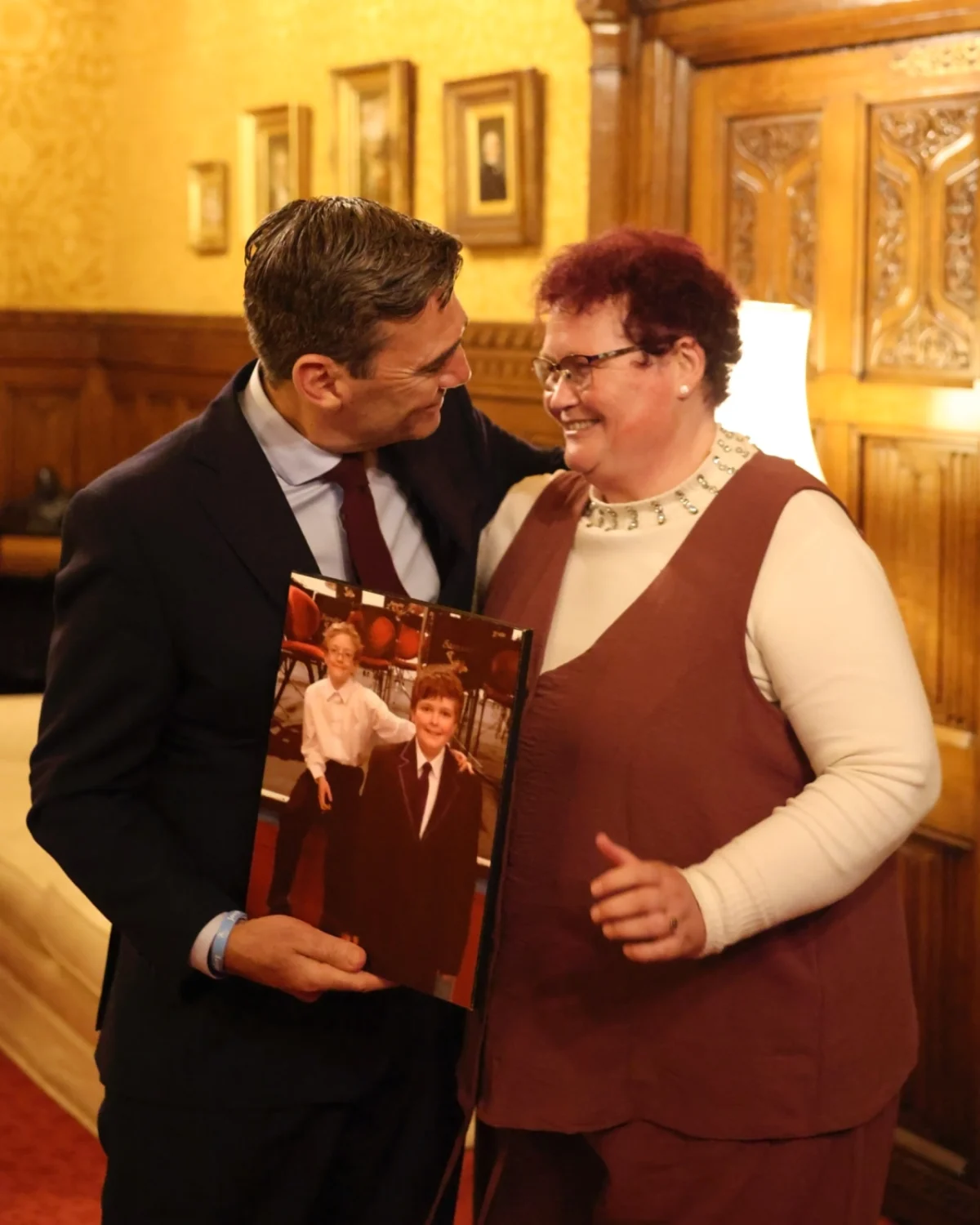
In what is being hailed as a monumental victory for child safety and domestic abuse survivors across the United Kingdom, the Courts and Tribunals Bill has successfully passed its Third Reading in Parliament. This crucial legislative milestone brings the nation significantly closer to repealing the long-standing legal presumption of parental contact in family court proceedings—a systemic rule that advocacy groups and campaigners have spent decades fighting to dismantle. Following the successful parliamentary debate, prominent survivor ambassador Claire Throssell MBE and representatives from Women’s Aid were received at Downing Street by the Prime Minister and the Lord Chancellor. The high-level meeting marks a pivotal moment in a decades-long crusade to reform a family justice system that critics argue has historically prioritized the rights of abusive parents over the safety and welfare of children.
The Journey to Legislative Reform: A Decades-Long Struggle
The path toward repealing the presumption of parental contact has been forged through years of relentless campaigning, heart-wrenching personal testimony, and systemic advocacy led by Women’s Aid alongside sector partners and bereaved families. For over twenty years, advocacy groups have sounded the alarm regarding the dangers embedded within family court proceedings, where the default legal stance has frequently favored contact with both parents regardless of documented histories of domestic abuse, coercion, or violence.
The human cost of this legislative framework is starkly exemplified by the tragedy suffered by Claire Throssell MBE. Over two decades ago, Mrs. Throssell’s two young sons, Jack and Paul, were brutally murdered by their abusive father during a contact visit that had been explicitly authorized by the family court. Despite repeated, desperate pleas from both Claire and her children warning of the clear and present danger posed by the father, the legal system enforced contact arrangements that ultimately culminated in an entirely preventable double murder.
Throughout the decades following this and similar tragedies, Women’s Aid published seminal research and investigative reports highlighting how unsafe parental contact orders routinely place vulnerable children in mortal peril. The organization’s persistent lobbying underscored a grim reality: the family courts were operating under a cultural bias that frequently dismissed mothers’ concerns as malicious alienation while minimizing the severe impacts of domestic abuse on children. The passing of the Courts and Tribunals Bill through its Third Reading represents a watershed moment that validates the tireless efforts of survivors who turned their personal grief into a national movement for systemic justice.
Inside Parliament and Downing Street
The atmosphere inside Parliament during the Third Reading was charged with a mixture of solemn reflection and hard-fought optimism. Sitting in the public gallery, Claire Throssell witnessed lawmakers debate the intricacies of the legislation, knowing firsthand the profound implications the vote held for families navigating the court system today.
Following the successful parliamentary session, Throssell, accompanied by senior figures from Women’s Aid, traveled to meet with the Prime Minister and the Lord Chancellor. During the closed-door meeting, Throssell spoke movingly about Jack and Paul, ensuring that her sons’ memory and legacy remained firmly at the center of discussions regarding national child protection policy. Government engagement at this level signals a profound political shift, indicating that executive leadership recognizes the urgent need to overhaul family law to center the rights and safety of children above all else.
Farah Nazeer, Chief Executive of Women’s Aid, underscored the historical significance of the meeting and the parliamentary vote. In a formal statement released following the events, Nazeer praised the collective effort required to reach this juncture.
"Government support for the repeal of the presumption is a historic campaign win for Women’s Aid, our sector partners, the survivors we work with, and of course, Claire herself," Nazeer stated. "Claire’s two sons, Jack and Paul, were murdered by their abusive father as a direct result of unsafe contact, which had been authorized by the family court, despite repeat pleas from Claire and her children. Claire spoke movingly about her sons during last night’s meeting with the Prime Minister and the Lord Chancellor, keeping them, and their legacy, firmly at the centre of the conversation."
Systemic Failures in the Family Courts

To understand the magnitude of the Courts and Tribunals Bill, legal and social policy experts point to the systemic deficiencies that have long characterized the family justice sector. Historically, the Children Act 1989 established a welfare checklist, but legal interpretations and judicial guidelines evolved to create a powerful judicial presumption that a child benefits from having a relationship with both parents, unless there is definitive, quantifiable evidence of risk.
Critics and domestic abuse charities have long argued that this evidentiary threshold placed an insurmountable burden of proof on protective parents—predominantly mothers—who were forced to substantiate claims of coercive control, emotional abuse, and psychological manipulation in adversarial court environments. Often, judges lacking specialized training in domestic abuse dynamics failed to recognize non-physical forms of abuse, interpreting a mother’s protective resistance as uncooperative behavior or hostility toward the other parent.
Consequently, thousands of children per year were ordered into contact arrangements with perpetrators of domestic violence. Research compiled by various child protection organizations over the years indicates that numerous children have been seriously harmed or killed during or following contact arrangements sanctioned by the courts. The repeal of the statutory presumption effectively removes the legal bias toward contact in cases involving domestic abuse, compelling the judiciary to evaluate cases strictly through the lens of child safety and well-being.
The Road Ahead: Remaining Legislative Steps and Required Reforms
While the passage of the Third Reading is a monumental milestone, Women’s Aid and legal experts emphasize that the legislative process is far from complete. The Bill must now successfully navigate the House of Lords, undergo further scrutiny, and receive Royal Assent before it is officially enshrined onto the statute books. Furthermore, legal scholars note that legislative changes alone will not instantly reform a deeply entrenched institutional culture.
Women’s Aid has outlined a comprehensive roadmap of subsequent reforms required to ensure that statutory changes translate into genuine, everyday safety for families entering the court system. Chief among these demands is the implementation of mandatory, specialist domestic and sexual abuse training for all judges, magistrates, and legal professionals operating within the family courts.
"There is more to be done—the Bill must make it through the Lords and onto the statute books and translate into meaningful change in the family courts," Farah Nazeer emphasized. "We also want to see mandatory specialist domestic and sexual abuse training for judges, in recognition of the fact that years of pro-contact culture will take time to reverse. The justice system must work to protect those most vulnerable and recognise those that seek to harm them. Last night’s successful debate in parliament, and our subsequent meeting with the Prime Minister bring us one step closer to making a safer future for children a reality."
Broader Implications for the UK Justice System
The implications of repealing the presumption of parental contact extend far beyond individual courtrooms, signaling a fundamental philosophical shift in how the United Kingdom approaches child protection and domestic violence. For decades, family law experts have debated the delicate balance between parental rights and child welfare. By shifting the legal baseline, the state is effectively signaling that a parent’s right to contact is contingent upon their ability to provide a safe, non-abusive environment.
Legal analysts predict that the successful passage of this legislation will reduce the protracted, re-traumatizing legal battles endured by domestic abuse survivors, who are frequently subjected to weaponized litigation via the family courts as a continuation of post-separation abuse. When judges are no longer bound by a presumption that favors contact, the judicial discretion shifts toward a rigorous assessment of risk, prioritizing trauma-informed practices and safeguarding principles.
As the Courts and Tribunals Bill prepares to enter the House of Lords, all eyes remain on Parliament. For campaigners like Claire Throssell, whose tireless advocacy has spanned generations, the movement represents a bittersweet victory born from unimaginable loss. Yet, as the political landscape shifts toward tangible reform, there is a renewed sense of collective hope that future generations of children will be spared the tragic fates of Jack, Paul, and countless others whose lives were cut short by systemic failures in the family justice system.