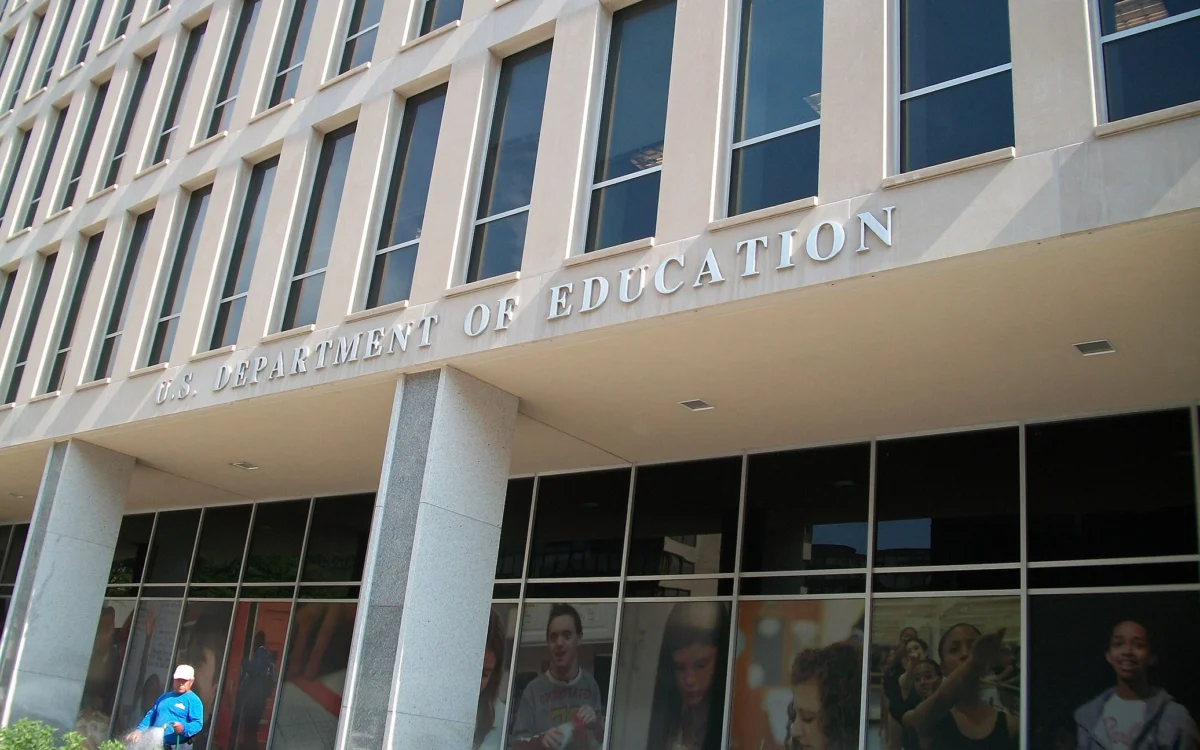
A significant restructuring initiative by the U.S. Department of Education, which aims to transfer substantial responsibilities from its Office of Special Education and Rehabilitative Services (OSERS) and Office for Civil Rights (OCR) to other federal agencies, is igniting widespread concern among disability rights advocates, civil rights organizations, and a growing number of lawmakers. The proposed move, which would send key special education functions to the Department of Health and Human Services (HHS) and civil rights enforcement related to disability discrimination in schools to the Department of Justice (DOJ), is being characterized as a potential catalyst for confusion, disarray, and a significant setback for the rights and protections of students with disabilities.
Roots of the Restructuring: A Long-Term Vision for Departmental Consolidation
The current proposal is not a sudden development but rather a culmination of a more than year-long effort by the Trump administration to fundamentally alter the landscape of federal education policy. At its core, the initiative is linked to a broader aspiration to ultimately close the Department of Education itself. Lacking the congressional approval necessary for such a drastic measure, the administration is employing a strategy of utilizing "interagency agreements" (IAAs). These agreements, while allowing for the transfer of management and operational responsibilities of major governmental functions, are designed to permit the Department of Education to retain its statutory obligations and legal authority.
The genesis of this approach can be traced back to public statements made as early as March 2025, when the administration signaled its intent to reduce the Department of Education’s purview over special needs education. This initial announcement set the stage for the more detailed plans revealed in June 2026, outlining the specific agencies slated to absorb critical functions. The overarching rationale, as articulated by proponents of the move, is to streamline government operations and consolidate related services under different departmental umbrellas, ostensibly to create more efficient service delivery. However, critics argue that this fragmentation of educational oversight, particularly for a population with complex and multifaceted needs, risks undermining decades of established policy and practice.
A Unified Front of Opposition: Advocates Voice Grave Concerns
The response from the disability and civil rights advocacy community has been swift and overwhelmingly negative. More than 600 organizations, spanning the spectrum of disability, civil rights, and education reform, have united in a joint statement urging Congress to reject the proposed transfers. Their collective message highlights a deep-seated fear that the move will dismantle the carefully constructed federal framework designed to support individuals with disabilities throughout their educational and professional lives.
"These agreements undermine the core foundation of federal disability, education and civil rights policy and implementation," the statement declares, underscoring the potential for a systemic breakdown. Advocates emphasize that Congress deliberately established a continuum of support, from early intervention through postsecondary education and employment, recognizing the interconnectedness of these stages for individuals with disabilities. The proposed relocation of OSERS to HHS and OCR to DOJ is seen as a direct assault on this cohesive approach, potentially jeopardizing the significant progress achieved in advancing educational, employment, and civil rights outcomes for students with disabilities.
Chad Rummel, CEO of the Council for Exceptional Children, articulated specific anxieties regarding the transfer of special education responsibilities. "While there are not immediate concerns for the delivery of a free appropriate public education, the future for students with disabilities is unclear, as we have no blueprint for how compliance with (the Individuals with Disabilities Education Act) will be ensured under HHS," he stated. Rummel further elaborated, "The system that ensures students get the support they need requires leadership and expertise in education, and we are unclear how that will be provided under the health department." This sentiment reflects a broader apprehension that a health-focused agency may not possess the specialized pedagogical understanding and experience necessary to effectively oversee educational mandates like IDEA.
The implications of shifting civil rights enforcement to the Department of Justice are equally troubling for many. Jacqueline Rodriguez, CEO of the National Center for Learning Disabilities, pointed to the potential for "confusion and delay" as a primary concern. "Families need to know where to turn when a student’s civil rights are violated, who is responsible for investigating a complaint, and whether the people handling it understand how schools actually operate," she emphasized. Beyond the practical challenges, Rodriguez also voiced a significant ethical concern: "We are also deeply concerned that involving a law-enforcement agency could discourage some families, particularly those from marginalized communities, from filing complaints at all. Even the perception that seeking help could expose a family to scrutiny or retaliation may have a chilling effect." This suggests a potential for reduced access to justice for those who are already vulnerable.
Congressional Crossroads: A Key Senate Panel Weighs its Options
The widespread opposition has resonated within Congress, with key legislative bodies now poised to scrutinize and potentially halt the proposed transfers. Senator Bill Cassidy, R-La., the chairman of the Senate Committee on Health, Education, Labor and Pensions (HELP), has indicated that his committee will hold a vote in July on a measure designed to prevent the Education Department from moving special education responsibilities to HHS. This bipartisan effort is being spearheaded by Senator Tim Kaine, D-Va.
"I agree that that should not be moved to HHS," Senator Cassidy stated during a recent committee meeting. He further suggested that if a transfer of special education functions were to occur, the Department of Labor might be a more appropriate destination, citing the relocation of other key K-12 functions to that department. This sentiment from a Republican committee chair signals a potential for bipartisan consensus on blocking at least the OSERS transfer. Senator Kaine expressed optimism about garnering support from members across the political aisle for his initiative to prevent the move to HHS.
The legislative action underscores the significant unease within Congress regarding the administration’s approach. The use of interagency agreements to bypass traditional legislative oversight and approval processes is a point of contention, with lawmakers asserting their constitutional role in shaping federal policy and agency structures. The pending vote in the HELP committee represents a critical juncture, with the potential to either affirm or reject the administration’s restructuring plans.
Broader Implications and Future Uncertainty
Should the Education Department’s plans proceed as intended, the ripple effects for students with disabilities and their families could be profound and far-reaching. The immediate concern, as highlighted by advocates, is the potential for significant bureaucratic disruption and a loss of specialized expertise.
The Individuals with Disabilities Education Act (IDEA), a landmark piece of legislation that guarantees a free appropriate public education (FAPE) for eligible children with disabilities, is a cornerstone of federal disability policy. Advocates worry that shifting the oversight of IDEA implementation from an agency steeped in educational policy to a health-focused department could dilute its educational focus. The "blueprint" for ensuring compliance under HHS remains undefined, creating a vacuum of certainty regarding how the intricate requirements of IDEA will be managed and enforced. This lack of clarity poses a direct threat to the consistent and effective provision of services that students with disabilities rely upon.
Similarly, the transfer of civil rights enforcement to the Department of Justice, while ostensibly placing these matters within a legal enforcement framework, raises questions about the agency’s capacity to understand and address the nuances of disability discrimination within educational settings. The DOJ’s primary mandate is criminal justice and civil enforcement, which may differ significantly from the specialized investigative and mediation processes typically employed by the OCR. The potential for increased legalistic approaches, as opposed to educational and rehabilitative solutions, could alter the nature of complaint resolution and potentially create barriers for families seeking redress.
The assertion by the Education Department that these transfers will not impact legal responsibilities or individual rights is met with skepticism by many. Secretary of Education Linda McMahon, in an open letter to parents, emphasized that IDEA and the obligation to enforce civil rights predate the Department of Education and will continue to exist. She stated, "No partnership can alter OSERS’ or OCR’s legal responsibilities, or the rights individuals are afforded under federal law." The department also assured that it would maintain involvement to ensure "seamless communication" and that school-related discrimination complaints could still be directed to the agency.
Savannah Newhouse, press secretary at the Education Department, reiterated this reassurance, stating that the partnership with HHS "does not impact the critical protections enshrined in IDEA law or the federal funding allocated for students with disabilities." She added, "Students, parents and teachers should experience no impact from this partnership – rather, this partnership is meant to streamline the bureaucracy here in Washington, D.C. to ensure teachers and local leaders can do what they do best: serve their students." This perspective frames the move as an administrative efficiency measure, designed to reduce federal red tape.
However, for advocates and many lawmakers, the administration’s assurances do not fully allay their concerns about the fundamental nature of these responsibilities and the potential for unintended consequences. The long-term implications of fragmenting specialized federal oversight of disability education and civil rights remain a significant point of contention, with the coming months likely to reveal whether Congress will intervene to preserve the existing structure.