As the 2026 midterm election cycle enters its final, decisive weeks, American voters are projecting starkly different outcomes for the two chambers of Congress, reflecting a deeply polarized electorate and a high-stakes legislative environment. According to a comprehensive survey conducted by the Pew Research Center between September 28 and October 4, 2026, a majority of U.S. adults believe that the Democratic Party is positioned to secure a majority in the House of Representatives. Conversely, the outlook for the Senate remains deadlocked, with public opinion evenly divided on which party will hold the gavel when the 120th Congress convenes.
The survey, which engaged a representative sample of 5,062 U.S. adults through the American Trends Panel, reveals that 55% of Americans expect a Democratic-controlled House, while 40% anticipate a Republican-led chamber. The Senate picture is significantly murkier: 48% of respondents believe Republicans will maintain their current standing, while 46% express confidence that Democrats will successfully flip the upper chamber. These findings provide a window into the "citizen forecast"—a measurement of voter sentiment that, while not a predictive poll, serves as a mirror for how the public perceives the current political momentum.
A Chronology of the 2026 Midterm Landscape
The path to these current voter expectations has been defined by a series of critical inflection points. The 2026 midterms follow a legislative session characterized by intense debates over economic policy, international stability, and the long-term sustainability of social safety nets.
Early in 2026, the political narrative was dominated by concerns over inflation and the Federal Reserve’s interest rate trajectory, which many analysts initially believed would act as a drag on the party holding the White House. However, by mid-summer, shifts in the national discourse toward infrastructure investment and emerging technological regulations began to recalibrate the electoral map. As the calendar turned to September, campaign spending reached record levels, with both major parties pouring resources into competitive "toss-up" districts across the Rust Belt and the Sun Belt. This period of intensified campaigning appears to have solidified the public’s perception of a potential split-decision in Congress—a scenario that could lead to significant legislative gridlock if the House and Senate are held by opposing parties.
Dissecting Partisan Polarization in Predictions
A closer examination of the data reveals that these collective predictions are heavily filtered through the lens of partisan affiliation. The phenomenon of "wishful thinking" is evident, as majorities in both the Democratic and Republican camps express firm belief that their party will emerge victorious.
Among respondents who identify as Democratic or lean Democratic, 80% believe their party will secure the House, while 71% anticipate a Democratic takeover of the Senate. On the other side of the aisle, 68% of Republican or Republican-leaning voters expect their party to retain the House, and a robust 75% believe the GOP will hold the Senate.
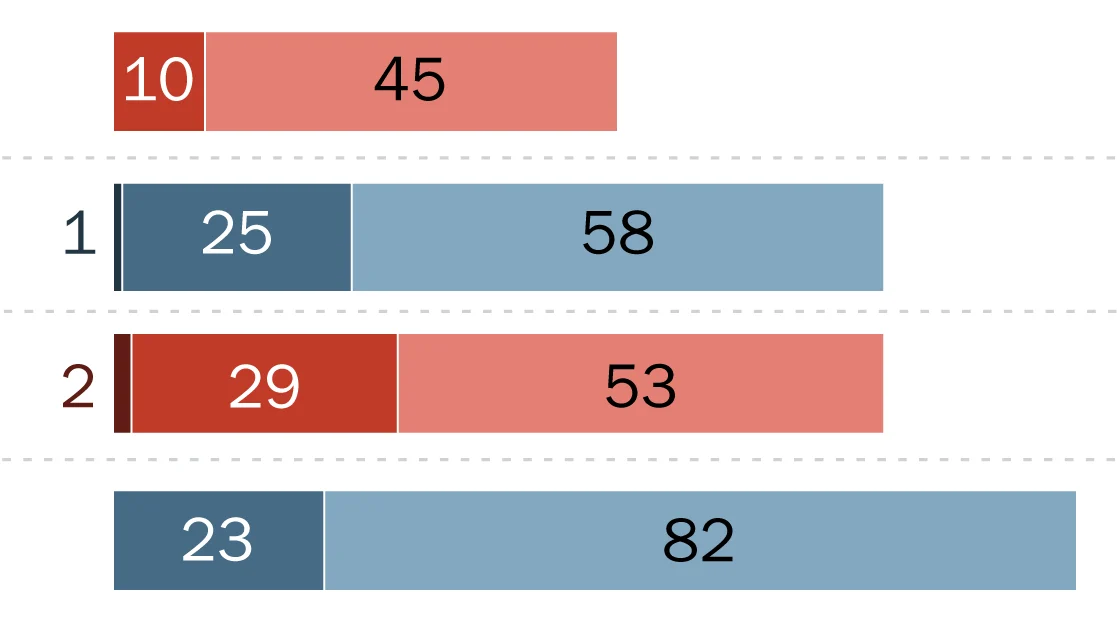
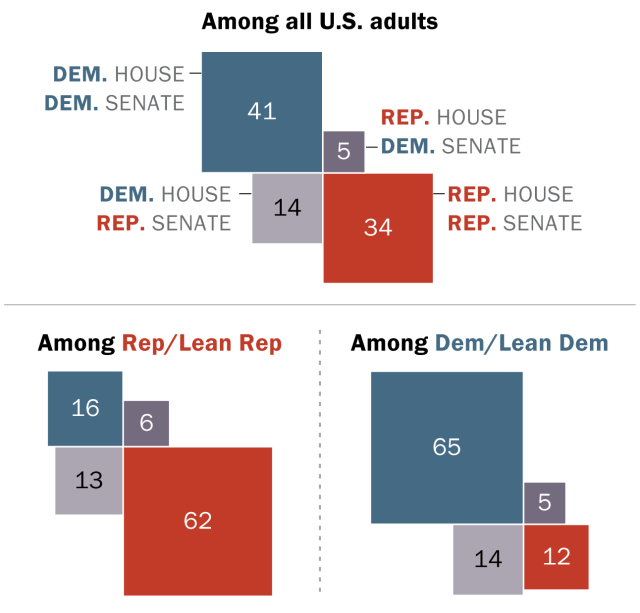
This deep-seated partisan divide extends to expectations for a total sweep of Congress. Approximately 65% of Democrats believe their party will capture both the House and Senate, while 62% of Republicans maintain that the GOP will successfully defend both chambers. These figures underscore a broader trend in American politics where voters’ perceptions of the "political environment" are often indistinguishable from their personal political preferences.
Data-Driven Context: What the Numbers Suggest
To understand the weight of these findings, it is helpful to look at the historical context of midterm election predictions. Historically, the party not in power has often seen electoral gains during midterm cycles. The fact that a majority of Americans now predict a Democratic win in the House—despite the traditional headwinds faced by the incumbent party—suggests that the 2026 environment may be deviating from historical norms.
The survey data further breaks down the expectations by demographic and political leanings, illustrating that the uncertainty regarding the Senate is particularly concentrated among independent voters. While the core bases of both parties remain locked in their predictions, the "swing" demographics remain the primary source of the 48-46 split on Senate control. The 41% of all adults who believe in a total Democratic sweep, contrasted with the 34% who anticipate a total Republican victory, highlights a narrow but distinct lean toward the Democratic outlook in the public consciousness regarding the lower chamber.
The Institutional Implications of a Split Congress
The prospect of a divided legislature—a Democratic-controlled House and a Republican-controlled Senate, or vice versa—has profound implications for the governance of the United States in 2027 and beyond. Political analysts and legislative observers have noted that if the public’s prediction of a Democratic House and a closely contested Senate holds true, the 120th Congress will likely face severe constraints in passing major legislation.
Historically, divided government has led to a reliance on executive orders and a slowing of the federal budgetary process. If the Senate remains in the hands of the GOP, any Democratic agenda passed in the House would face a formidable firewall, necessitating a period of intense bipartisan negotiation that has become increasingly rare in the modern political climate. Conversely, if the Senate were to flip, the upper chamber would become a center of gravity for confirmational power, potentially creating a "gatekeeper" effect for judicial and cabinet appointments that could alter the trajectory of the federal judiciary for a generation.
Official Responses and Campaign Rhetoric
While official campaigns are rarely keen to acknowledge internal polling that suggests a loss, the rhetoric from both parties in recent weeks reflects the urgency captured by the Pew survey. Leadership from both sides of the aisle has been engaged in a frantic effort to mobilize their bases, emphasizing the "critical importance" of every single seat.
Democratic leaders have focused their messaging on the protection of key legislative achievements from the current term, arguing that a loss of the House would result in a rollback of recent environmental and healthcare initiatives. Meanwhile, Republican leadership has centered its campaign on the promise of "fiscal accountability" and a reversal of current economic policies, arguing that the public’s skepticism regarding the Senate is a reflection of a growing desire for checks and balances.
Neither party has issued a formal statement on the specific Pew Research Center findings, but the internal strategy of both committees appears to be driven by the understanding that the race is effectively a dead heat in the Senate, while the House remains a battle of voter turnout.
Conclusion: The Final Stretch
As the election approaches, the discrepancy between the public’s confidence in a House turnover and their hesitation regarding the Senate suggests a electorate that is both engaged and deeply cautious. The "citizen forecasts" captured in this survey serve as a testament to the volatility of the current political moment.
The 2026 midterm election will be determined not by the aggregate expectations of the public, but by the specific actions of voters in contested districts. Whether the final results will mirror the predictions of the majority—a Democratic House and a split-decision Senate—remains to be seen. What is clear, however, is that the American public is hyper-aware of the stakes, and the resulting legislative composition will likely be a reflection of a nation that remains as divided as the polls suggest.
For researchers and political observers, this cycle will provide extensive data on the reliability of public sentiment as a proxy for election outcomes. As the final ballots are cast and the votes are tallied, the accuracy of these 2026 predictions will become a focal point of post-election analysis, helping to refine our understanding of how partisan affiliation continues to color the way Americans view the mechanisms of their own democracy. The 120th Congress will ultimately be defined by its ability to navigate these deep-seated divisions, regardless of which party holds the majority in either chamber.