FORT WORTH, Texas – A harrowing situation is unfolding within the Tarrant County Jail, where a 26-year-old man with intellectual and developmental disabilities, Shawn Fraraccio, has been held for over a year without conviction. His mother, Christy Bridgman, is increasingly distressed by his deteriorating health and well-being, fearing for his life as he remains incarcerated in a system ill-equipped to address his unique needs.
Fraraccio has been in custody since December 2024, facing a charge of continuous violence against a family member. The alleged victim is his mother, Bridgman, who resides in Azle. However, Bridgman asserts that her son possesses the cognitive capacity of a child aged six to eight and is pleading for his release from jail, emphasizing that he is not a danger but rather a vulnerable individual in need of specialized care.
Bridgman recounted a deeply disturbing visit with her son, during which she observed a drastic decline in his physical condition. Fraraccio, who once weighed over 200 pounds, appeared emaciated, unkempt, and unshaven. More alarmingly, Bridgman noted signs of self-inflicted injuries, stating he had been banging his head against his cell wall. Her deepest fear is that Fraraccio, isolated in a single cell, will sustain severe harm without immediate intervention. "He looks like he’s dying," Bridgman stated with palpable anguish. "He’s meat and bones."
The mother also expressed grave concerns about Fraraccio’s inability to perform basic self-care tasks. She explained that he requires assistance with bathing, shaving, and brushing his teeth, duties she previously managed. Bridgman has seen no evidence that jail staff are providing her son with this essential level of support. Furthermore, she suspects that Fraraccio may not be receiving his prescribed seizure medication, a critical element in managing his health.
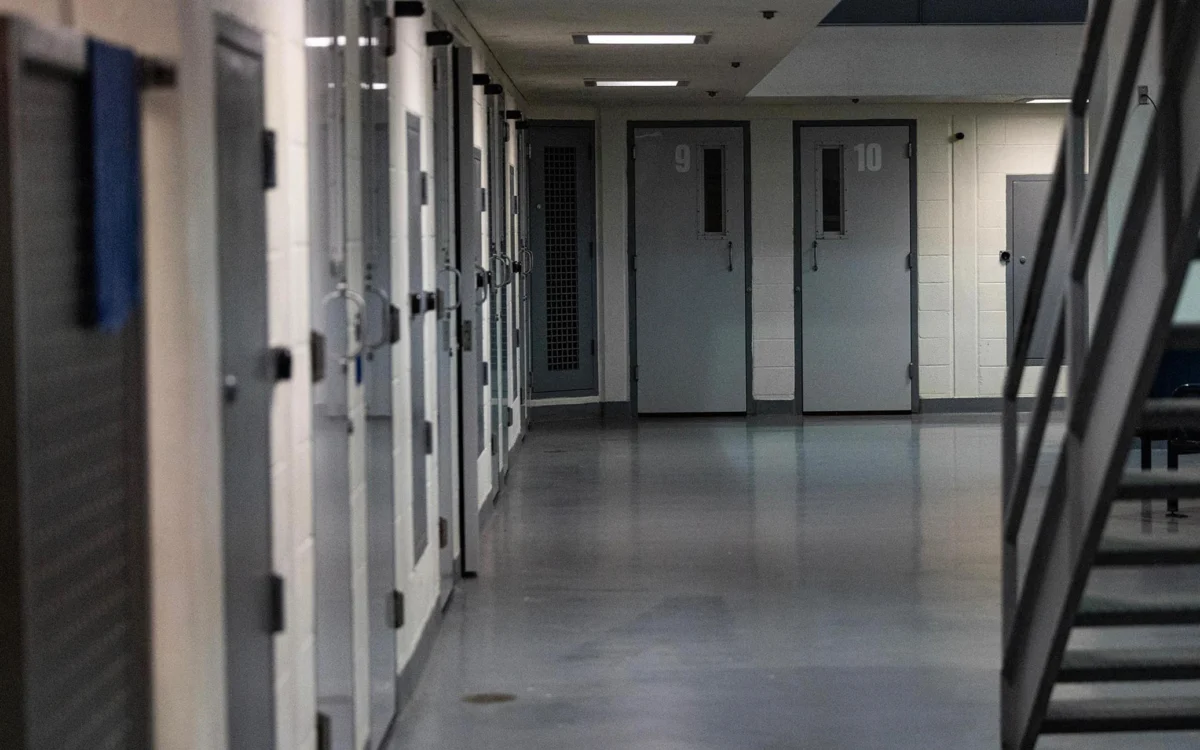
Responding to inquiries, a spokesperson for the Tarrant County Sheriff’s Office could not comment on Fraraccio’s specific medical treatment due to privacy regulations. However, the spokesperson confirmed that Fraraccio is housed near the jail’s infirmary nurse’s station, a placement designed to facilitate closer observation. According to jail protocols, Fraraccio has access to a private toilet and is permitted to shower every other day, which aligns with minimum jail standards.
The Sheriff’s Office detailed additional accommodations provided to Fraraccio, suggesting that he receives a level of attention exceeding that of most inmates. These accommodations reportedly include a more comfortable mattress and the allowance to change clothes three times per week, a privilege not extended to the general population who typically change uniforms once weekly. In response to concerns about his caloric intake, the spokesperson stated that Fraraccio has the option to request a liquid supplement to ensure he receives adequate nutrition.
Regarding Bridgman’s anxieties about Fraraccio being left unattended, the Sheriff’s Office spokesperson outlined their monitoring procedures. In areas housing inmates identified as potentially assaultive, suicidal, mentally ill, or exhibiting bizarre behavior, staff conduct checks every 20 minutes. This frequency, the spokesperson emphasized, surpasses state minimum standards, which mandate checks every 30 minutes for at-risk or high-risk inmates.
The Legal Labyrinth: Incompetence and Extended Incarceration
Fraraccio’s prolonged detention raises a critical question: why has he remained in Tarrant County Jail for over a year without being convicted of any crime? His legal predicament began with two arrests in December 2024, both stemming from accusations of domestic violence. Court records indicate he was alleged to have struck his mother on both occasions.
Bridgman provided context for these incidents. The first arrest occurred after a neighbor overheard an altercation and contacted the authorities. The second incident involved Bridgman speaking with a representative from My Health My Resources of Tarrant County (MHMR) when an argument with Fraraccio ensued. The MHMR representative, alarmed by the situation, also alerted the police. MHMR is a state-contracted non-profit organization dedicated to providing mental health services and support for individuals with intellectual disabilities. They collaborate with the Tarrant County Sheriff’s Office to offer resources to incarcerated individuals.
While acknowledging Fraraccio’s tendency to become agitated and act out, Bridgman vehemently believes her son does not understand the consequences of his actions, describing his behavior as childlike.
Following these arrests, a Tarrant County grand jury indicted Fraraccio in March 2025. His court-appointed attorney has not responded to requests for comment on the case.
A significant turning point occurred in May 2025 when Fraraccio was deemed incompetent to stand trial. A county mental health magistrate subsequently ordered him to remain in jail without bond, contingent upon his placement in a State Supported Living Center (SSLC). These facilities are designated for individuals with intellectual disabilities. Upon admission to an SSLC, Fraraccio will undergo evaluation to determine if his competency can be restored to allow his criminal case to proceed.
Susan Garnett, chief executive officer of MHMR, explained the complex bureaucratic hurdles involved in such placements. She stated that decisions regarding SSLC admissions rest solely with Texas Health and Human Services, the state agency overseeing these facilities. MHMR, despite its role in providing services, has limited authority to expedite transfers from jails to SSLCs.
Garnett further elaborated that the judicial process for individuals with intellectual disabilities can be protracted, often spanning months or even years before an SSLC placement is secured. During this interim period, these individuals frequently remain incarcerated without viable alternatives, unless prosecutors choose to dismiss the charges.
A spokesperson for the District Attorney’s Office confirmed that Fraraccio’s case is essentially on hold until his competency can be restored, which is anticipated to occur at an SSLC. However, Bridgman expressed her apprehension, having been informed that her son might face another year before admission to an SSLC. Even then, she harbors doubts about the possibility of his competency ever being restored.
Garnett characterized delays in SSLC transfers as a pervasive issue, citing a statewide shortage of beds. Texas possesses only 2,700 SSLC beds, with a fraction designated as "forensic beds" for individuals involved in the criminal justice system. This scarcity of resources contributes to the lengthy waits experienced by many, including those like Fraraccio.
A Mother’s Activism and Broader Concerns
As the alleged victim in the case, Bridgman has taken proactive steps to advocate for her son. She filed an affidavit of non-prosecution with the District Attorney’s Office, formally requesting that the charges against Fraraccio be dropped. To date, she has not received a response.
The District Attorney’s Office spokesperson acknowledged that such affidavits are considered and factored into prosecutorial decisions. However, they do not guarantee the dismissal of charges. In a statement to the Star-Telegram, the spokesperson outlined their priorities: "The safety of our community is our goal. Medical professionals have told us this defendant needs to be in a state supported living center. Our concern is for the safety of his mother, his safety and the safety of the community in general. Mr. Fraraccio needs the proper care to accomplish this goal."
Bridgman, joined by supporters, took her plea directly to the Tarrant County Commissioners Court on March 10, urging them to expedite Fraraccio’s transfer to an SSLC. Her decision to publicize her son’s story and appeal to the commissioners stems from a profound fear that he will not survive his current incarceration.
The Tarrant County Jail has a documented history of inmate deaths. Since Sheriff Bill Waybourn assumed office in 2017, over 70 inmates have died within the facility. These deaths have been attributed to various causes, including malnutrition and dehydration, and in some instances, use of force by jail staff, as was the case with Anthony Johnson, whose death was ruled a homicide.
The Sheriff’s Office has, however, asserted that Tarrant County Jail has experienced fewer in-custody deaths compared to other major Texas counties like Dallas, Harris, and Bexar. Data provided by the Sheriff’s Office indicates that from 2017 through 2025, Bexar County recorded 109 inmate deaths, while Dallas County saw 77 deaths and Harris County, which has a larger jail capacity, reported 140 deaths during the same period.
Garnett estimates that there are approximately five to six inmates in Tarrant County with circumstances similar to Fraraccio’s, awaiting transfer to an SSLC. While unable to discuss Fraraccio’s case specifically due to privacy constraints, she expressed her deep concern over the systemic issues. "It’s discouraging and often heartbreaking when someone with intellectual and developmental disabilities languishes in jail because of a lack of state resources and an unwillingness on the part of prosecutors to fully consider the defendant’s cognitive capacity," Garnett stated.
The prolonged incarceration of individuals with intellectual and developmental disabilities like Shawn Fraraccio highlights critical gaps in the justice and healthcare systems. The current situation underscores the urgent need for improved coordination between state agencies, mental health providers, and the judicial system to ensure that vulnerable populations receive appropriate care and do not become casualties of bureaucratic delays and insufficient resources. The implications extend beyond individual cases, raising questions about the capacity of the current system to adequately serve individuals with complex needs within the correctional framework.