A significant shift in accessibility is on the horizon for air travelers with disabilities, as a new federal mandate will soon require medium and large airports across the United States to provide universal changing stations. This development, stemming from the 2024 FAA Reauthorization Act, aims to address a critical unmet need for individuals with significant disabilities who require assistance with toileting and personal care. The U.S. Access Board is currently soliciting public input to establish the technical standards for these much-needed facilities, marking a crucial step towards ensuring dignified and accessible travel for all.
The New Mandate: A Milestone for Accessible Travel
The 2024 FAA Reauthorization Act, a comprehensive piece of legislation governing aviation policy, includes a landmark provision mandating the installation of at least one private universal changing station in each terminal of medium and large airports. This requirement will take effect starting in 2030. For an airport to be considered "medium" or "large" under the Federal Aviation Administration’s classification, it typically handles a substantial number of passenger enplanements annually. While specific thresholds can fluctuate based on FAA updates, these categories generally encompass airports serving hundreds of thousands to millions of passengers per year. This means a vast network of airports will be impacted by this new regulation, significantly enhancing travel accessibility for a population segment often overlooked in public infrastructure design.
The term "universal changing station" refers to a specialized adult-sized changing table. Unlike the compact, wall-mounted units found in many public restrooms designed for infants, these stations are engineered to be larger, sturdier, and capable of safely supporting the weight of an adult. They are specifically designed to accommodate individuals with significant physical or cognitive disabilities who require the assistance of a caregiver for toileting and dressing. This often involves transferring from a wheelchair to the changing table, a process that can be physically demanding and pose safety risks without appropriate equipment.
The U.S. Access Board’s Role in Shaping Standards
The implementation of this mandate is being carefully managed by the U.S. Access Board, an independent federal agency that develops and enforces accessibility guidelines under laws like the Americans with Disabilities Act (ADA). The Access Board is currently in the crucial phase of developing the technical standards that will govern these universal changing stations. To ensure these standards are practical, effective, and meet the diverse needs of the disability community, the agency is actively seeking public comment.
A recent notice published in the Federal Register outlines the Access Board’s efforts to gather input. The agency is considering two primary approaches for establishing these standards: either adopting an existing industry standard or developing a new, comprehensive one. The proposed standards will address critical design elements, including:
- Size and Dimensions: Ensuring sufficient space for an individual and a caregiver.
- Weight Capacity: Guaranteeing the table can safely support an adult.
- Height Adjustability: Allowing for ergonomic positioning for both the individual being changed and the caregiver.
- Maneuvering Clearances: Providing adequate space around the station for wheelchairs and caregivers to move freely.
- Side Rails and Safety Features: Incorporating elements to ensure the safety and security of the individual during transfers and while on the table.
Beyond the physical specifications of the changing tables themselves, the Access Board is also soliciting feedback on the design of the associated rooms. This includes considerations for privacy, ensuring that changing can occur without public view. Accessibility is paramount, meaning the rooms must be easily reachable and navigable for individuals using mobility devices. Furthermore, sanitation is a key concern, with the board seeking input on how to best maintain hygiene within these dedicated spaces.
The Human Impact: Addressing a Persistent Challenge
The absence of accessible adult changing facilities has long been a significant barrier to travel and participation in public life for individuals with disabilities and their families. Without these resources, many are forced into undignified and unsanitary situations. The most common alternative has been to use the restroom floor, a practice that poses serious hygiene risks for both the individual and the caregiver. Moreover, the physical act of transferring a person from a wheelchair to the floor and then back again is a strenuous and potentially dangerous undertaking for everyone involved. Caregivers, often family members, can suffer from back injuries or other musculoskeletal issues due to the repeated strain. For the individual with a disability, the lack of a safe and comfortable changing environment can lead to anxiety, embarrassment, and a reluctance to travel or engage in activities outside the home.
The introduction of universal changing stations in airports directly addresses these profound challenges. It signifies a commitment to ensuring that air travel is not an insurmountable obstacle but a viable option for people of all abilities. This mandate recognizes that the right to travel should not be contingent on one’s physical capabilities or the availability of specialized private facilities.
A Growing Trend: Expanding Accessibility Beyond Airports
The inclusion of universal changing stations in airports is part of a broader, growing movement towards greater accessibility in public spaces. In recent years, there has been an increasing awareness and demand for such facilities. This has led to their gradual integration into various public venues. For example, some states have proactively installed adult-sized changing tables in highway rest areas, recognizing the need for travelers to have access to these amenities during long journeys. Furthermore, certain types of public venues, such as large entertainment complexes, convention centers, and shopping malls, are beginning to incorporate these stations into their restroom facilities, either voluntarily or in response to local mandates.
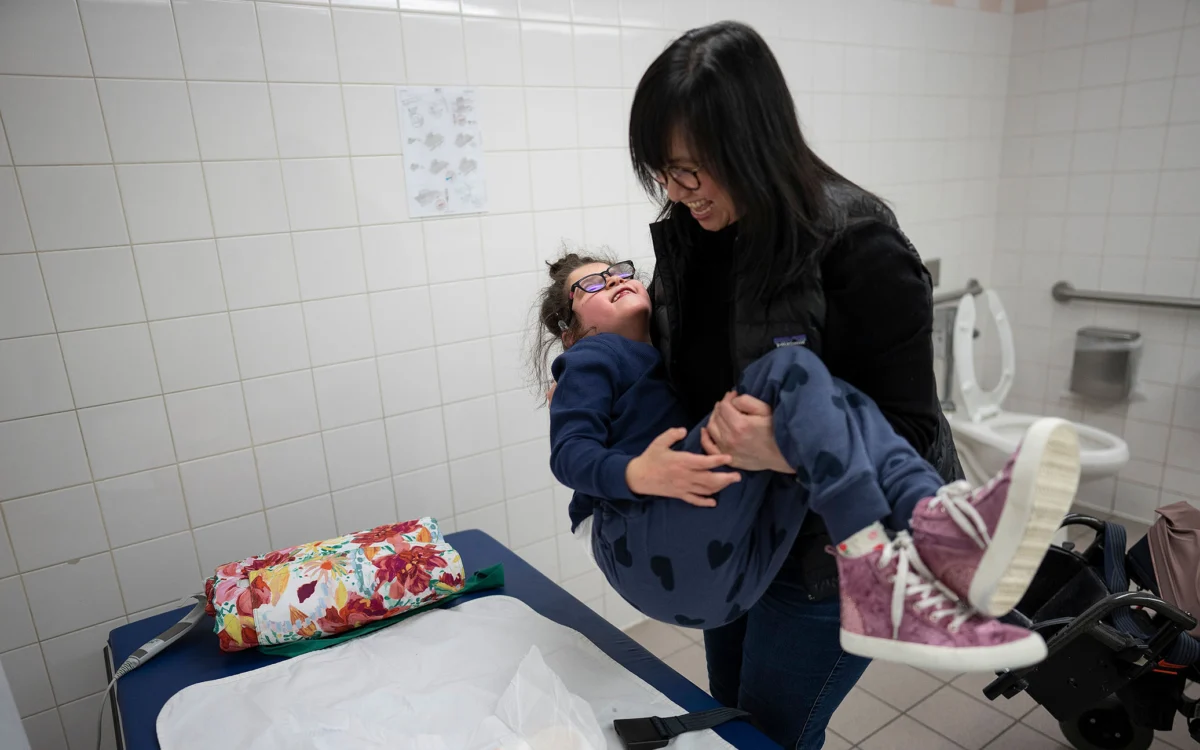
The Mall of America in Bloomington, Minnesota, is one such example where a family restroom equipped with an adult changing table is available, as depicted in the accompanying photograph from 2023. These instances, though still not universally present, demonstrate a growing understanding of the importance of inclusive design and a recognition that the needs of individuals with disabilities extend beyond basic ADA compliance. The airport mandate, however, represents a significant federal push to standardize and expand this crucial amenity on a national scale.
The Road Ahead: Public Comment and Implementation Timeline
The U.S. Access Board is accepting public comments on the proposed standards until April 20. This period is vital for stakeholders – including disability advocates, individuals with disabilities, caregivers, airport operators, and manufacturers – to voice their experiences, concerns, and recommendations. The feedback received will directly inform the final technical specifications, ensuring that the implemented changing stations are functional, safe, and user-friendly.
The timeline for implementation is also critical. With the mandate taking effect in 2030, airports have approximately six years to plan, budget, and construct or retrofit their facilities to meet the new requirements. This timeframe allows for thoughtful design and integration of these stations into existing or new terminal layouts. Medium and large airports, which serve a significant portion of the traveling public, will be the initial focus. The FAA’s classification system for airports, which determines the size and scope of operations, will be the basis for identifying which airports fall under this mandate.
Broader Implications and Future Outlook
The federal requirement for universal changing stations in airports carries profound implications that extend beyond mere compliance. It signals a cultural shift towards a more inclusive society where the needs of all individuals are recognized and accommodated. For individuals with disabilities and their families, this mandate means greater freedom, independence, and the ability to participate more fully in society. It can alleviate the stress and planning associated with travel, making spontaneous trips and longer journeys more feasible.
From an economic perspective, enhanced accessibility can boost tourism and business travel by making destinations more welcoming to a wider range of travelers. Airports that proactively embrace these changes may find themselves at the forefront of accessible travel, attracting passengers who prioritize inclusive facilities.
The development of standardized technical specifications by the U.S. Access Board will also likely drive innovation in the design and manufacturing of universal changing stations. This could lead to more cost-effective, robust, and user-friendly options becoming available not only for airports but for other public and private venues as well.
While the 2030 deadline provides a clear target, the period leading up to it will be characterized by collaboration between federal agencies, airport authorities, disability organizations, and industry stakeholders. The success of this mandate will hinge on effective communication, adequate funding, and a shared commitment to ensuring that the skies are truly open to everyone. The upcoming public comment period is a critical opportunity for the public to shape this vital aspect of accessible infrastructure, ensuring that the implementation of universal changing stations in airports creates a more equitable and dignified travel experience for all.