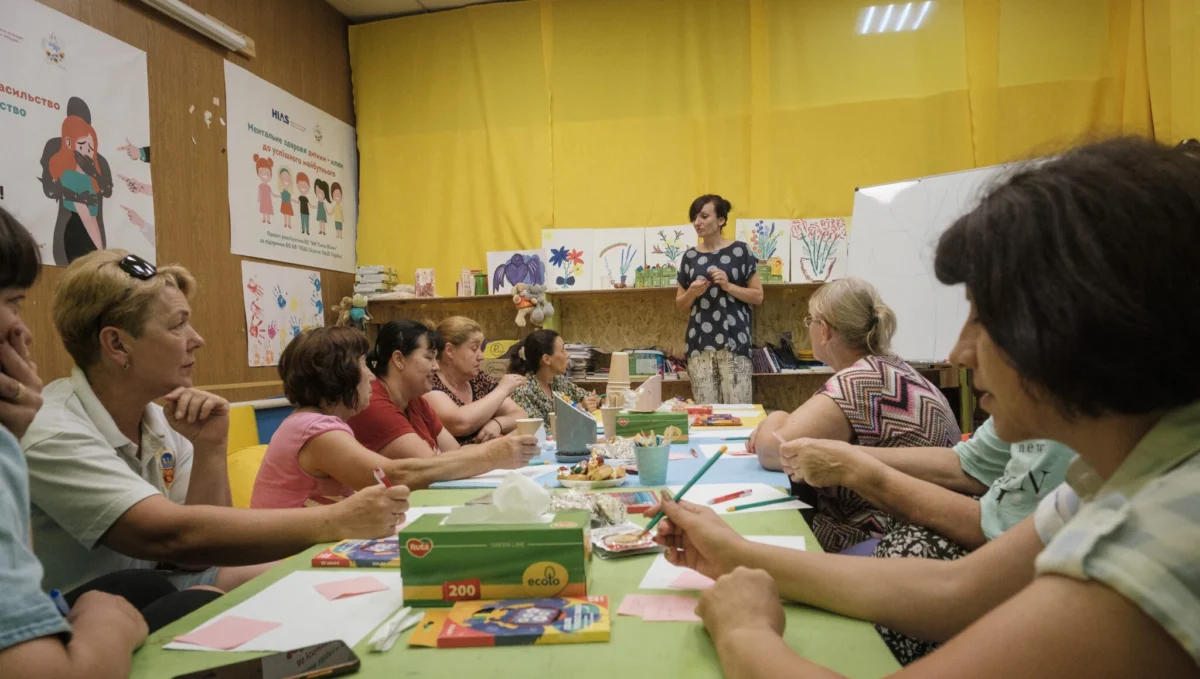
As the full-scale invasion of Ukraine by the Russian Federation approaches its fourth anniversary in February 2026, the humanitarian crisis continues to cast a long shadow, displacing millions and inflicting profound trauma, particularly on women and children. In the neighboring Republic of Moldova, a nation that has generously opened its borders to a significant influx of refugees, the focus has shifted from immediate emergency response to the critical, long-term work of healing and rebuilding lives. Supported by funding from the German Federal Foreign Office (GFFO), HIAS Europe, in collaboration with its local partners, is implementing vital programs designed to enhance access to essential mental health services and foster social integration for Ukrainian refugees.
The ongoing conflict, which began with the full-scale invasion in February 2022, has resulted in an unprecedented displacement crisis. According to data from the United Nations High Commissioner for Refugees (UNHCR), as of late 2025, over 6.3 million refugees from Ukraine have been recorded globally, with a substantial portion seeking safety in neighboring countries. Moldova, a country with a population of approximately 2.6 million, has hosted a disproportionately high number of these displaced individuals, many of whom arrived with little more than the clothes on their backs and the weight of unimaginable experiences. The initial wave of refugees was largely composed of women and children, fleeing active combat zones and facing immense uncertainty. The protracted nature of the conflict means that these individuals are now grappling with the sustained psychological toll of displacement, loss, and the absence of their homes and loved ones.
In Moldova, HIAS is strategically partnering with two dynamic, women-led local organizations: CASMED (Center for Assistance and Rights for Victims of Domestic Violence and Family Abuse) and the Female Support Force (FSF). These collaborations are crucial for delivering tailored services to Ukrainian women and children. CASMED is at the forefront of providing comprehensive mental health care, robust social integration programs, and essential economic support. This multifaceted approach includes direct cash assistance to meet immediate needs and vocational training opportunities designed to empower refugees with new skills and pathways to self-sufficiency.
The Female Support Force, an organization founded by Ukrainian refugees themselves, plays a pivotal role in mobilizing and empowering other displaced women within Moldova. FSF is instrumental in advocating for the rights of refugees, establishing vital peer support groups, and delivering leadership training that equips women to become agents of change within their new communities. The founding of FSF by refugees underscores a powerful model of solidarity and lived experience, ensuring that support services are informed by the nuanced realities faced by those who have undergone displacement.
The GFFO’s commitment to this initiative, spanning into 2025 and beyond, highlights a recognition of the protracted needs of refugees and the importance of sustained psychological support. The German government has been a leading provider of humanitarian assistance to Ukraine and its neighboring countries since the outset of the full-scale invasion, dedicating significant resources to both immediate relief and long-term recovery efforts. This funding mechanism allows for a more flexible and responsive approach to the evolving challenges faced by refugees, enabling organizations like HIAS and its partners to adapt their programming as needs change.
Galina’s Journey: From Stagnation to Self-Discovery
The war in Ukraine irrevocably altered Galina’s life, forcing her to abandon the established routines and comforts of her homeland and embark on a new, uncertain existence in Moldova. While she adeptly navigated the practicalities of resettlement, a profound internal exhaustion, which she described as "living in stop mode," lingered. This pervasive feeling of being stuck, despite her best efforts, left her physically drained, emotionally overwhelmed, and profoundly out of balance.
"I wanted to understand why, despite knocking on every door, nothing seemed to work," Galina shared, her voice reflecting a journey of deep introspection. Driven by a fierce determination not to remain a passive recipient of aid, she actively sought support through CASMED’s psychosocial services for refugees. These services are a critical component of the program funded by the GFFO and implemented with the invaluable support of HIAS. It was within this supportive environment that Galina connected with Ana, a psychologist who, drawing from her own experiences as a refugee, offers profound empathy and understanding to women grappling with the aftermath of war.
The therapeutic relationship between Galina and Ana was built on a foundation of trust, nurtured by Ana’s compassionate approach. Together, they explored a range of therapeutic modalities, including attentive listening, open and honest dialogue, the use of metaphorical cards to access deeper emotions, psychological assessments, art therapy to facilitate self-expression, and elements of cognitive-behavioral therapy (CBT) to reframe negative thought patterns. Each session served as a step forward, enabling Galina to confront her internal resistance and uncover the underlying factors that had been impeding her progress.
Ana’s guidance was instrumental in helping Galina internalize a simple yet transformative realization: she had survived, and she was now in a safe environment. This newfound sense of safety provided a stable anchor from which Galina could begin to foster renewed openness within herself, with her children, and with her broader community. She learned to articulate her emotions more effectively and cultivate healthier communication patterns within her family and social circles.
After enduring months of relentless stress, the prospect of experiencing joy seemed almost unattainable. Yet, gradually, Galina began to reacquledge herself with the small, often overlooked moments of peace. A quiet evening spent with her children, for instance, became a source of grounding and comfort. She consciously practiced patience, adopting a more responsive approach to her teenage son’s needs and maintaining a calm demeanor when attending to her younger child’s demands.
"I learned to feel my emotions instead of drowning in them," Galina reflected. "I stopped demanding the impossible from myself and from others. I learned to find compromises with my family. I was searching for support in others, but in the end, I discovered it within myself."
Three years after her arrival in Moldova, Galina has not only regained her confidence but is actively pursuing her entrepreneurial ambitions, establishing her own business. The support she received from CASMED, coupled with the profound trust she built with Ana, has empowered her to speak with a renewed sense of balance, patience, and the courage to embrace joy once more. Her story exemplifies the profound impact of targeted mental health support in enabling refugees to move beyond mere survival and towards a future of self-realization and well-being.
Ninel: Empowering a New Generation Through Community Leadership
Following her escape from the war in Ukraine to Moldova, Ninel quickly channeled her energy into becoming an active volunteer and a pillar of her new community, dedicated to assisting fellow refugees in their adaptation and rebuilding efforts. Her inherent desire to support others found a structured outlet through the Women Leaders Network, a community leadership program meticulously developed by FSF. This initiative, generously funded by the GFFO and implemented under the auspices of HIAS, provides a platform for refugee women to develop their leadership capacities and implement impactful community projects.
With the crucial support provided through this program, Ninel established the Leisure Center for Children and Youth. This initiative has created a secure and stimulating environment where children can learn, express their creativity, and engage in personal development. The Center hosts a diverse array of activities, including art workshops that foster imaginative thinking, emotional development sessions designed to help children process their experiences, and interactive workshops addressing critical issues such as bullying and conflict resolution.
"I am deeply grateful for the support and the opportunity to implement my project," Ninel stated, her voice resonating with purpose. "In our region, there are almost no activities for refugee children, so this initiative became a breath of fresh air." Her observation underscores a significant gap in services for displaced children in Moldova and highlights the vital role that community-led initiatives can play in filling these voids.
The impact of Ninel’s project has been substantial, reaching approximately 50 children and positively influencing over 250 community members. By fostering a sense of belonging and providing structured activities, the Center has been instrumental in strengthening the bonds between families, educators, and the broader local community. Despite facing numerous challenges, including periods of severe infrastructure disruption such as a lack of heating, gas, and intermittent electricity, the Center has persevered, evolving into an essential hub for connection, trust, and resilience for both children and refugees.
"We worked through tough conditions, without heating, gas, and sometimes without electricity for hours, but the project gave us strength and hope," Ninel recounted, a testament to the unwavering spirit of the community.
Beyond the establishment of the Leisure Center, Ninel has continued to leverage her growing leadership skills and received an additional small grant to organize an environmental awareness event for her community. This initiative demonstrates her commitment to holistic community development and her ability to mobilize resources for diverse projects.
Ninel is actively developing new programs for the Center, with plans to introduce graphic design courses for teenagers and basic cosmetology workshops for girls. These forward-thinking programs are designed to unlock the potential of young individuals and build their confidence in their future prospects, equipping them with marketable skills and fostering a sense of self-worth.
The Women Leaders Network continues to flourish, serving as a powerful force that unites refugee women across Moldova. These women are not only rebuilding their lives in safety but are also making significant and valuable contributions to their new host communities, transforming adversity into opportunity and demonstrating the enduring strength of the human spirit. The GFFO’s investment in such programs reflects a strategic approach to refugee assistance, recognizing that empowering individuals and fostering community resilience are paramount for long-term integration and well-being. The ripple effect of Ninel’s initiative, in particular, illustrates how a single project can catalyze broader social cohesion and provide vital support for a vulnerable population.
The ongoing efforts in Moldova, facilitated by organizations like HIAS and its dedicated local partners, represent a critical pathway toward healing and recovery for Ukrainian refugees. As the conflict persists, the demand for comprehensive psychosocial support, economic empowerment, and community integration initiatives remains exceptionally high. The success stories of individuals like Galina and Ninel serve as powerful testaments to the transformative impact of sustained, well-resourced humanitarian aid, underscoring the imperative for continued global support for those displaced by war. The commitment of partners like the German Federal Foreign Office is not merely an act of charity but a strategic investment in human potential and the rebuilding of lives shattered by conflict.