Indigenous women artists are prominently featured in the 2026 Whitney Biennial at the Whitney Museum of American Art in New York City, presenting a compelling collection of works that challenge conventional notions of rationality and explore the intricate relationships between humanity, environment, technology, and infrastructure across generations. This year’s exhibition, a highly anticipated event in the contemporary art world, highlights artists who are pushing the boundaries of their mediums to engage with urgent global themes. Among the standout participants are Raven Halfmoon (Caddo Nation), Anna Tsouhlarakis (Navajo), Nani Chacon (Navajo and Cree), and Teresa Baker (Mandan/Hidatsa).
A Curatorial Vision of Interconnectedness
The 2026 Whitney Biennial, as articulated by the museum’s curatorial team, is conceptualized around the idea of artists using their creative practices to interrogate and redefine what is considered "rational" in the context of human existence and its surrounding environments. This exploration spans intergenerational dialogues, the complex dynamics of ecological systems, the evolving landscape of new technologies, and the dual nature of infrastructures that can both sustain and destroy daily life. The inclusion of these four Indigenous women artists is a significant testament to their critical contributions to contemporary art and their unique perspectives on these multifaceted themes. Their diverse artistic expressions, media, and disciplines not only reference their rich heritages but also offer profound insights into their perceptions of the world at large and their situatedness within and beyond it.
Spotlight on Featured Artists and Their Works
Anna Tsouhlarakis: Deconstructing Myth and Identity
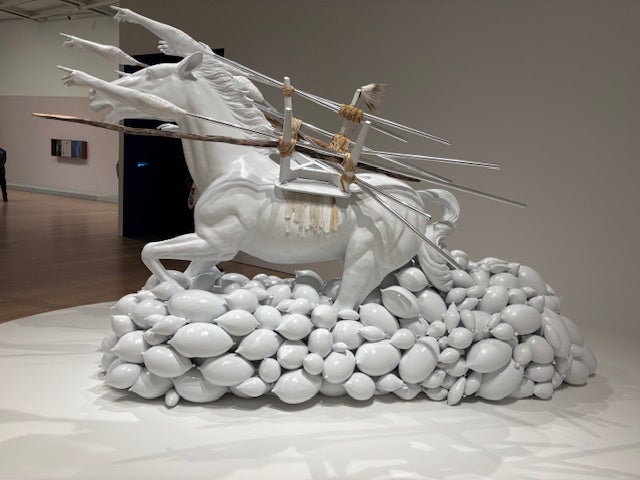
Anna Tsouhlarakis, a Caddo Nation artist, has garnered considerable attention for her monumental 2023 sculpture, "She Must Be A Matriarch." Its imposing scale and prominent placement on the museum’s sixth floor have captivated visitors, prompting widespread admiration and contemplation. The sculpture is a complex assemblage of materials, including fiberglass, paint, adhesive, resin, plaster, wood, foam, metal, IKEA remnants, leather, deer hair, menstrual cups, prophylactics, and an array of found objects. Through this work, Tsouhlarakis employs feminist satire to offer a powerful and humorous critique of James Earle Fraser’s iconic 1919 sculpture, "End of the Trail." Fraser’s piece depicts a Native American man slumped over a horse, symbolizing exhaustion and defeat. In stark contrast, Tsouhlarakis presents a female Indigenous warrior, equipped with realistic weaponry alongside domestic items such as IKEA furniture and elements referencing sexuality and reproduction. This juxtaposition serves to reframe narratives of Indigenous identity, moving beyond colonial stereotypes to assert strength, agency, and a multifaceted contemporary existence. The incorporation of everyday, modern objects, like menstrual cups and condoms, alongside traditional and historical references, underscores the artist’s exploration of continuity and change in Indigenous lifeways and the ongoing relevance of matriarchal figures in contemporary society.
Nani Chacon: Bridging Worlds Through Sculpture
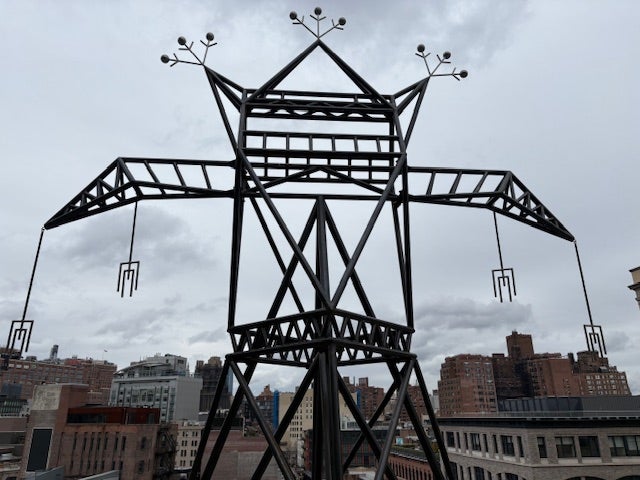
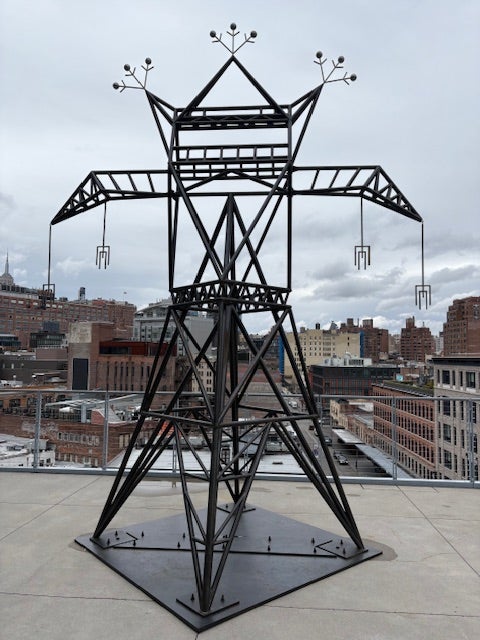
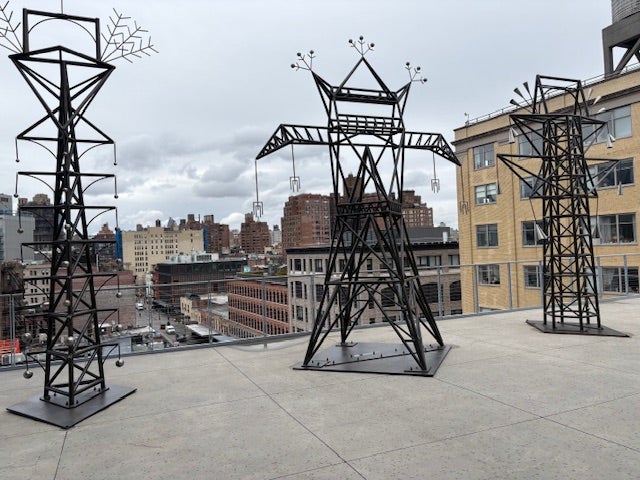
Nani Chacon, of Navajo and Cree heritage, contributes a series of imposing iron and steel sculptures to the Biennial, strategically positioned on the sixth-floor outdoor terrace with a panoramic view of the New York City skyline. Titled "Our Gods Are Above Us," "Our Gods Are Below Us," and "Our Gods Walk Among Us," these powerful works, all completed in 2026, establish a visual dialogue between traditional Navajo sand paintings and the utilitarian electrical towers that characterize the industrial landscape of the Navajo Nation. Chacon’s artistic practice is deeply rooted in her commitment to transforming environmental degradation into new narratives of resilience and remembrance. By drawing visual parallels between the sacred iconography of Dine/Navajo deities and the imposing structures of coal refineries, she highlights the complex interplay between cultural heritage and the impact of industrialization on Indigenous lands. The decision to permanently install one of these sculptures on the Navajo Nation after the Biennial concludes signifies a powerful act of repatriation and a commitment to grounding these critical dialogues within the ancestral homeland. This gesture emphasizes the enduring connection between art, land, and cultural continuity, offering a tangible manifestation of the artist’s vision to heal and reimagine the landscape.
Teresa Baker: Weaving New Realities from Materiality
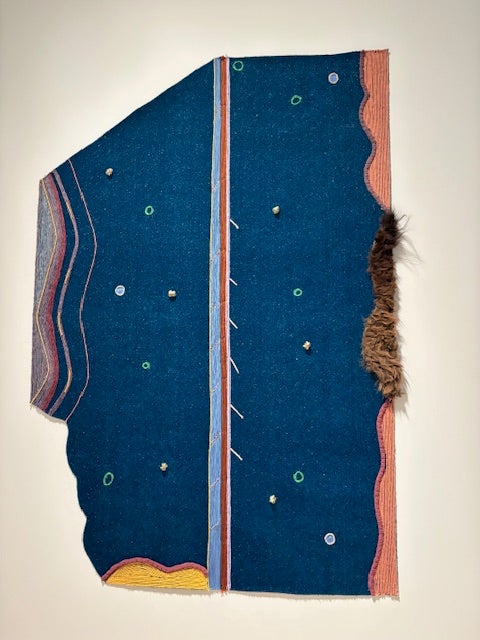
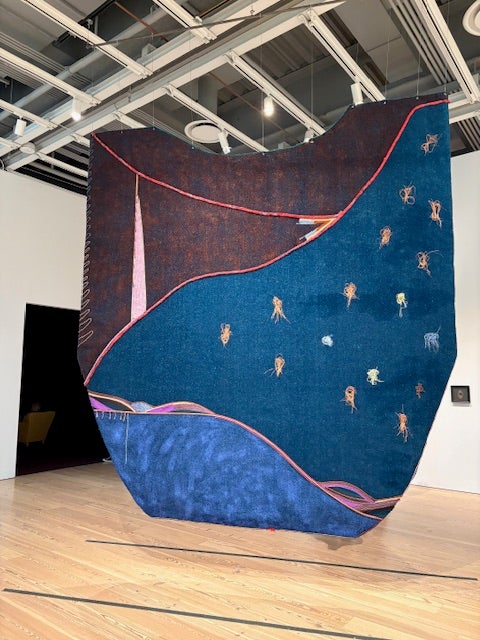
Teresa Baker, a Mandan/Hidatsa artist, transcends conventional artistic boundaries with her innovative works that merge painting and weaving. Her pieces, "Voluminous Day" (2025) and "The Harvest Melting On Our Tongue" (2025), are striking compositions created using yarn, parfleche, buffalo hide, and artificial sinew, all mounted on synthetic turf. Baker’s unique approach involves layering these diverse materials onto the artificial ground, creating textured surfaces that invite viewers to reconsider the relationship between the natural and the artificial. She explains her deliberate choice of synthetic turf, stating, "I was drawn to the material because it suggests the land and the space between natural and artificial." The vibrant hues of blue in her works can be interpreted as expansive skies or flowing waterways, while the delicate fragments of yarn scattered across them evoke imagery of marine life, airborne creatures, or insects. This meticulous layering and material selection allow Baker to explore themes of ecological memory, cultural sustenance, and the ongoing processes of transformation in both natural and human-made environments. The works prompt reflection on what constitutes "land" in the 21st century and how traditional materials and techniques can be recontextualized to address contemporary ecological concerns.
Raven Halfmoon: Ancestral Techniques and Contemporary Power
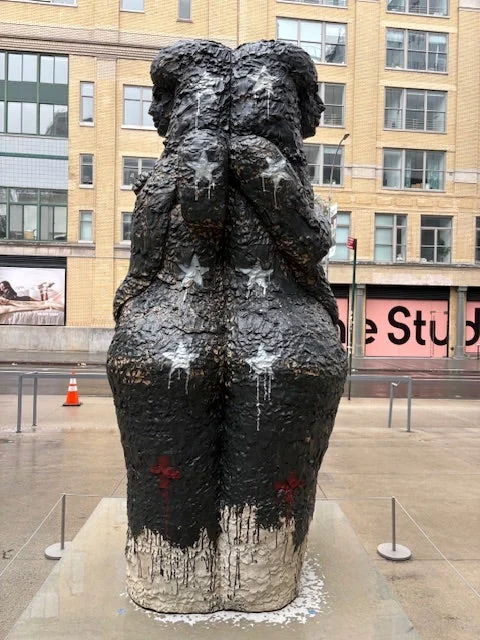
Raven Halfmoon, a Caddo Nation artist, presents her powerful figurative sculptures both within the museum’s interior and on the bustling street, ensuring accessibility to a broad audience. Her stoneware and glaze sculpture, "Sun Twins" (2023), is situated inside the museum, strategically placed near an entrance to the outdoor terrace where Chacon’s sculptures are displayed. Halfmoon employs a Caddo ancestral coil technique in her sculptural process, a method that speaks to deep-rooted cultural traditions. She frequently creates twinned figures, a choice that reflects her preference for collaborative artistic endeavors with her family rather than working in isolation. The "Sun Twins" displayed outdoors are adorned with striking black and white patterns, punctuated by black and blue stars and crosses, inviting viewers to engage with the sculptures from multiple perspectives. These voluptuous, full-figured representations of women exude a palpable sense of sensuality and power, challenging conventional representations and celebrating the multifaceted nature of feminine strength and presence within Indigenous cultures. The public placement of these works ensures that their message of cultural continuity and artistic innovation reaches beyond the confines of the gallery space.
Broader Context and Impact of the Biennial
The 2026 Whitney Biennial is notable for its significant diversity, showcasing an expansive range of American artists from various backgrounds, including those born in the United States, immigrants, and Indigenous peoples from across Turtle Island. The exhibition appears to strive for gender parity, with a notable representation of female, male, and 2SLGBTQ+ artists, reflecting a contemporary commitment to inclusivity in the art world. The Whitney Museum’s stated mission for the Biennial is to present "the most relevant art and ideas of our time," aiming to be a catalyst for "dynamic conversations that spark cultural shifts." This year’s exhibition endeavors to capture the complexity of the present moment through diverse artistic mediums such as painting, photography, film, sculpture, and the written word, while also proposing new creative pathways for coexistence.
Chronology and Historical Significance
The Whitney Biennial has a long-standing history of reflecting and shaping contemporary American art discourse. Established in 1932, it has evolved from an annual exhibition to a biennial event, consistently offering a snapshot of the nation’s artistic pulse. The inclusion of a substantial number of Indigenous artists, particularly women, in the 2026 iteration marks a significant moment in the Biennial’s history, underscoring a growing recognition of Indigenous voices and artistic contributions within mainstream art institutions. This year’s focus on themes of rationality, ecology, and infrastructure can be seen as a response to the pressing social and environmental challenges of the early 21st century, a period marked by increased awareness of climate change, technological advancements, and the ongoing legacies of colonialism.
Supporting Data and Analysis
The works featured in the 2026 Biennial offer rich ground for analysis. Tsouhlarakis’s reinterpretation of "End of the Trail" highlights a critical shift in how Indigenous narratives are being reclaimed and recontextualized. By replacing the trope of the defeated warrior with a powerful matriarch, she challenges a century of ingrained imagery and asserts the enduring strength and agency of Indigenous women. Chacon’s sculptures, by juxtaposing sacred imagery with industrial landscapes, serve as potent reminders of the environmental injustices faced by Indigenous communities and their ongoing struggle for land rights and ecological preservation. Her work also demonstrates how art can act as a form of environmental activism, transforming symbols of blight into sites of cultural reclamation. Baker’s innovative use of materials like synthetic turf and buffalo hide invites a critical examination of authenticity, tradition, and the evolving definition of "natural" in a technologically mediated world. Her work resonates with contemporary discussions about sustainability and the interconnectedness of all living things. Halfmoon’s embrace of ancestral techniques, such as Caddo coil pottery, within large-scale contemporary sculptures, signifies a powerful act of cultural continuity. Her emphasis on twinned figures and family collaboration further underscores the importance of community and shared heritage in artistic creation.
Implications for the Art World and Beyond
The prominent display of these Indigenous women artists at the Whitney Biennial carries significant implications. It signals a potential shift in the art world’s engagement with Indigenous art, moving beyond tokenistic representation towards a deeper integration and appreciation of its critical and innovative contributions. The works challenge dominant cultural narratives, prompting viewers to reconsider their understanding of history, identity, and their relationship with the environment. The Biennial’s focus on themes of interconnectedness and resilience offers a vital counterpoint to narratives of division and ecological despair. By showcasing artists who are actively engaged in reimagining these complex issues, the exhibition provides a platform for dialogue and potential solutions. The long-term impact of such a diverse and thematically rich Biennial could extend beyond the art world, influencing broader cultural conversations about environmental stewardship, decolonization, and the importance of diverse perspectives in shaping a more equitable and sustainable future. The exhibition’s duration, extending until August 23, 2026, provides ample opportunity for the public to engage with these powerful artistic statements and contribute to the ongoing cultural dialogue they inspire.