Illinois and New York have recently enacted legislation permitting physician-assisted death, joining a growing number of states that recognize the right of terminally ill individuals to end their lives with medical assistance. This expansion of medical aid-in-dying laws reflects a significant shift in American public opinion, with a majority of citizens now viewing the practice as morally permissible or not a moral issue, according to a comprehensive survey by the Pew Research Center.
The recent legislative actions in Illinois and New York underscore a national trend toward greater acceptance of medical aid in dying. Illinois Governor J.B. Pritzker signed a bill into law, following New York Governor Kathy Hochul’s earlier approval of similar legislation. These states now join the ranks of the 11 other states and the District of Columbia that have legalized some form of physician-assisted death. This evolving legal framework is occurring against a backdrop of changing societal attitudes, as evidenced by the Pew Research Center’s findings.
A Growing Public Acceptance of Medical Aid in Dying
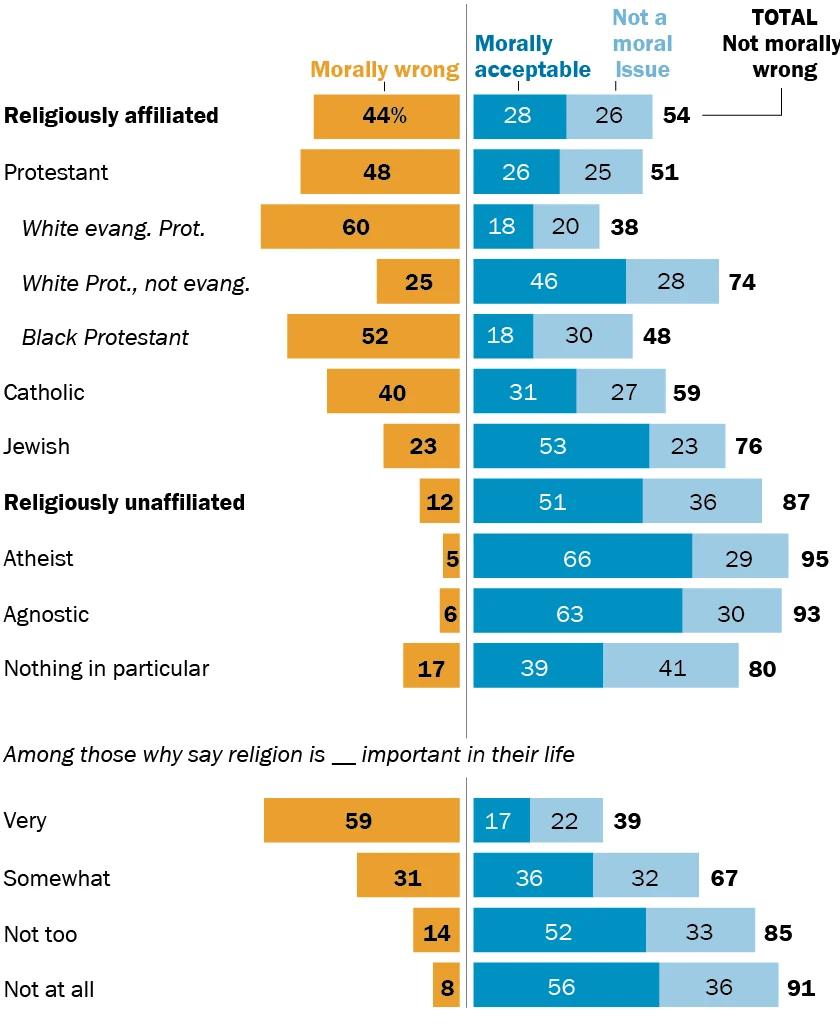
A landmark Pew Research Center survey, conducted in the spring of 2025, reveals that approximately six-in-ten Americans (60%) consider physician-assisted death to be either morally acceptable (34%) or not a moral issue (29%). This sentiment indicates a broad, albeit not unanimous, acceptance of the practice across the nation. Conversely, 35% of Americans still hold the view that physician-assisted death is morally wrong.
The terminology surrounding this deeply personal and often contentious issue is multifaceted. While the Pew survey utilized the phrase "patients choosing to end their lives with the help of a doctor," common parlance includes terms such as "medical aid in dying," "doctor-assisted death," and "physician-assisted suicide." The Pew Research Center has adopted "physician-assisted death" as a neutral shorthand for its analysis, acknowledging the politicized nature of the language and the ongoing evolution of discourse, with advocates often preferring "death with dignity" or "the right to die."
Political Divides on the Morality of Physician-Assisted Death
As is often the case with complex ethical and social issues, political affiliation plays a significant role in shaping views on physician-assisted death. The Pew Research Center’s data highlights a clear divergence between Democrats and Republicans on this matter.

Democrats and those who lean Democratic overwhelmingly view physician-assisted death favorably. A substantial majority, around 76%, consider it either morally acceptable (43%) or not a moral issue (33%). This contrasts sharply with Republicans and Republican-leaning individuals, where only about half hold similar views. Notably, Republicans are twice as likely as Democrats to deem the practice morally wrong, with 48% of Republicans expressing this sentiment compared to 23% of Democrats.
Delving deeper into these political alignments, the data reveals nuances within each party. Among Democrats, liberals are the most accepting, with 87% either seeing it as morally acceptable or not a moral issue. Even conservative and moderate Democrats show a high level of acceptance, with 68% holding similar views.
Within the Republican party, a more divided picture emerges. While 51% of Republicans and GOP leaners believe it is not morally wrong (combining "morally acceptable" and "not a moral issue"), a significant portion, 48%, still consider it morally wrong. A deeper examination shows that conservative Republicans are more likely to object, with 55% finding it morally wrong, compared to 34% of moderate to liberal Republicans.
Religious Affiliation and Moral Stances
Religious beliefs and practices are also strongly correlated with attitudes toward physician-assisted death. The Pew Research Center’s analysis indicates that while majorities across several religious groups find the practice morally permissible, there are significant differences in the intensity of these views.
The religiously unaffiliated population, a growing demographic in the United States, overwhelmingly supports medical aid in dying. Atheists (95%), agnostics (93%), and those identifying as "nothing in particular" (80%) express little to no moral opposition. This group shows a high proportion finding it morally acceptable or not a moral issue.
Among religiously affiliated Americans, the landscape is more varied. Jewish individuals exhibit a high degree of acceptance, with 76% viewing the practice as morally permissible or not a moral issue. Similarly, a majority of Catholics (59%) hold this view, despite official Catholic doctrine prohibiting medical assistance in dying. White Protestants who are not evangelical also show strong support, with 74% finding it morally permissible.
However, certain religious subgroups express strong moral objections. White evangelical Protestants are the most likely to deem physician-assisted death morally wrong, with 60% holding this view. Black Protestants also show significant opposition, with 52% considering it morally wrong.
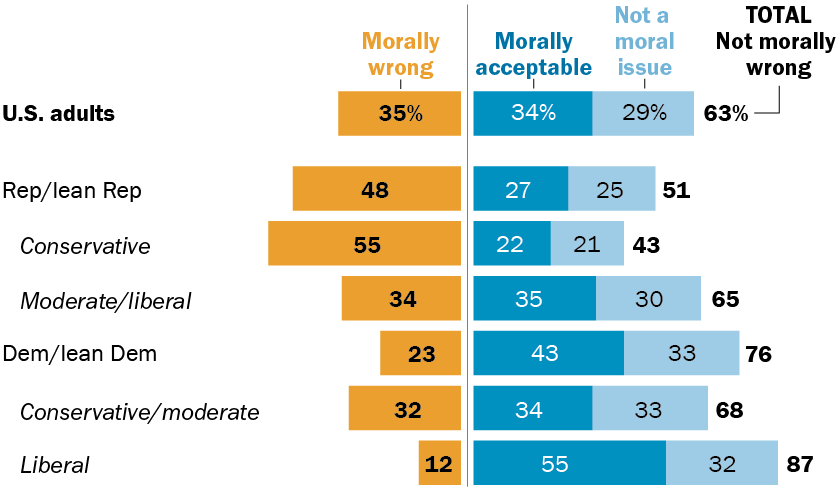
A clear trend emerges when examining the importance of religion in individuals’ lives. Those who report religion as being "very important" are considerably more likely to view physician-assisted death as morally wrong (59%) compared to those for whom religion is "not at all important" (8%). This suggests a direct correlation between the perceived salience of religious faith and opposition to medical aid in dying.
A Historical Context: The Evolving Debate
The debate surrounding physician-assisted death in the United States has a significant history, gaining national prominence in the 1990s. Oregon’s passage of the "Death with Dignity Act" in 1997 marked a pivotal moment, establishing the first state-sanctioned framework for medical aid in dying. This legislation aimed to provide terminally ill patients with greater autonomy and control over their final days, allowing them to escape unbearable suffering.
Since Oregon’s pioneering law, other states have gradually followed suit, enacting their own versions of medical aid-in-dying legislation. These laws typically include stringent eligibility requirements, such as a terminal diagnosis with a prognosis of six months or less to live, the capacity to make informed decisions, and multiple requests for medication from the patient.
The ethical and legal challenges surrounding physician-assisted death are profound. Concerns about potential coercion, the definition of "terminal illness," and the mental capacity of patients are frequently raised by opponents. Religious organizations and ethicists have historically voiced strong opposition, often framing the practice as a violation of moral or divine law. For instance, the Catholic Church’s doctrine, as articulated in documents like "Samaritanus Bonus," explicitly prohibits medical assistance in dying, emphasizing the sanctity of life and the role of palliative care.
Broader Implications and Future Trajectories
The increasing legalization of medical aid in dying across American states signifies a societal shift toward prioritizing patient autonomy and the relief of suffering. This trend is likely to continue as more states consider similar legislation and public opinion solidifies.
The implications of this evolving legal and moral landscape are far-reaching. Healthcare providers face the challenge of navigating ethical dilemmas and legal requirements. Advocacy groups on both sides of the issue continue to engage in robust debate, shaping public discourse and influencing legislative action.
The Pew Research Center’s findings provide crucial data for understanding the complex and often deeply personal views Americans hold on medical aid in dying. As more states grapple with this issue, ongoing research and public dialogue will be essential for informing policy and ensuring that individuals facing terminal illnesses have access to compassionate and dignified end-of-life care options, aligned with their values and beliefs. The convergence of legal advancements, shifting public opinion, and ongoing ethical considerations suggests that the conversation around physician-assisted death will remain a significant and evolving aspect of American society.
Methodology of the Pew Research Center Survey
The insights presented in this article are derived from a survey conducted by the Pew Research Center from May 5 to May 11, 2025. The survey involved 8,937 U.S. adults who are members of the Center’s American Trends Panel (ATP). The ATP is a nationally representative online survey panel designed to capture the views of the broader U.S. adult population. The methodology employed by the Pew Research Center ensures that the findings are robust and representative of the diverse perspectives within the United States. Detailed survey questions and the full methodology can be accessed through links provided by the Pew Research Center.
Conclusion
The recent legislative actions in Illinois and New York, coupled with the comprehensive data from the Pew Research Center, illustrate a nation at a crossroads regarding physician-assisted death. While moral objections persist, particularly within certain political and religious demographics, the prevailing sentiment points towards a growing acceptance of medical aid in dying as a matter of personal autonomy and relief from unbearable suffering. As this trend continues, the ongoing dialogue will undoubtedly shape the future of end-of-life care in America, prompting further consideration of ethical, legal, and personal dimensions of this complex issue.